If you don’t have a roof rack, transporting a kayak without a roof rack can feel tricky, but it’s definitely manageable with the right approach. You’ll want to contemplate your vehicle type and how to secure the kayak safely without risking damage or instability on the road.
From using foam blocks and straps to exploring hitch-mounted options, there are practical solutions to keep your kayak secure and protected. The key is knowing which method fits your setup best.
Key Takeaways
- Secure the kayak in the bed of a pickup truck using foam blocks and sturdy straps to prevent shifting and protect both kayak and vehicle.
- Use a kayak cart or trailer for smaller cars to transport the kayak safely without a roof rack.
- Place foam blocks at contact points and use adjustable straps to cushion and tightly secure the kayak during transport.
- Protect the vehicle interior by using blankets, foam padding, and waterproof mats when transporting the kayak inside the car.
- Inspect all securing knots and strap tension before departure and recheck periodically during long trips for safe travel.
How to Choose the Best Kayak Transport Method Without a Roof Rack
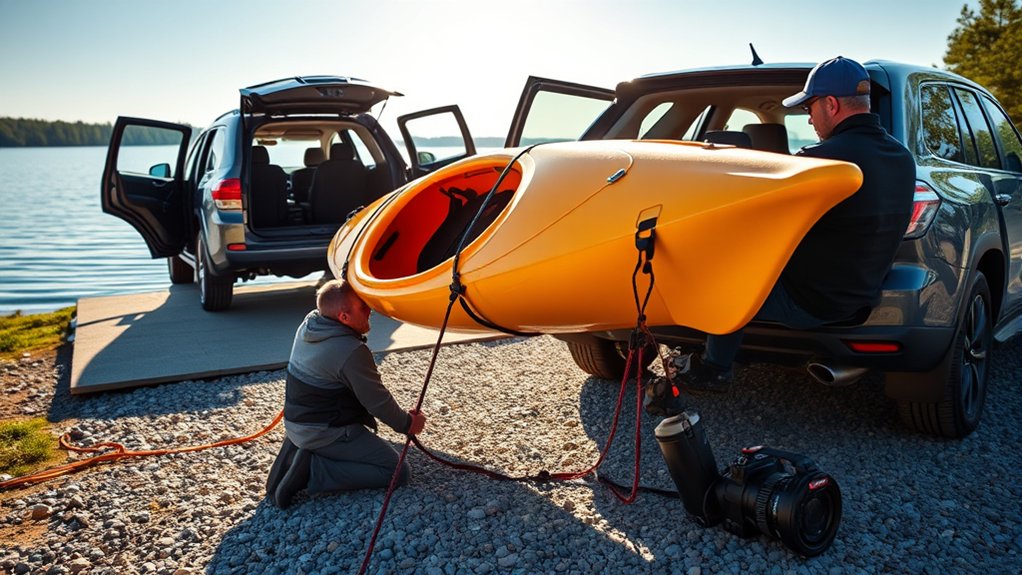
How do you decide which kayak transport method suits you best without a roof rack? Start by considering your kayak storage options and travel planning needs. If you have a pickup truck, placing the kayak in the bed is straightforward and secure.
For smaller cars, using a kayak cart or trailer might be more practical. Think about how far and often you’ll travel. Long trips may require sturdier solutions.
Also, evaluate your vehicle’s size and available space to avoid damage or inconvenience. Don’t forget to factor in ease of loading and unloading, as well as protection from scratches during transport.
Choosing the right method ensures your kayak arrives safely and saves you time while planning your next adventure.
How to Secure Your Kayak With Foam Blocks and Straps
Where should you place foam blocks to keep your kayak stable during transport? Position kayak foam blocks at the front and rear of your kayak, as well as underneath it where it contacts your vehicle. These blocks cushion your kayak, preventing scratches and absorbing shocks from bumps or vibrations.
Once the foam blocks are in place, use sturdy straps to secure the kayak tightly. Pay close attention to strap tension. Too loose, and your kayak could shift; too tight, and you risk damaging the kayak’s hull. Loop the straps over the kayak and anchor them firmly to your vehicle’s frame or bumper.
Check that the foam blocks haven’t shifted and that the strap tension holds the kayak snugly in place before hitting the road. This method ensures safe, damage-free transport without a roof rack.
How to Transport a Kayak Inside Your Vehicle Safely
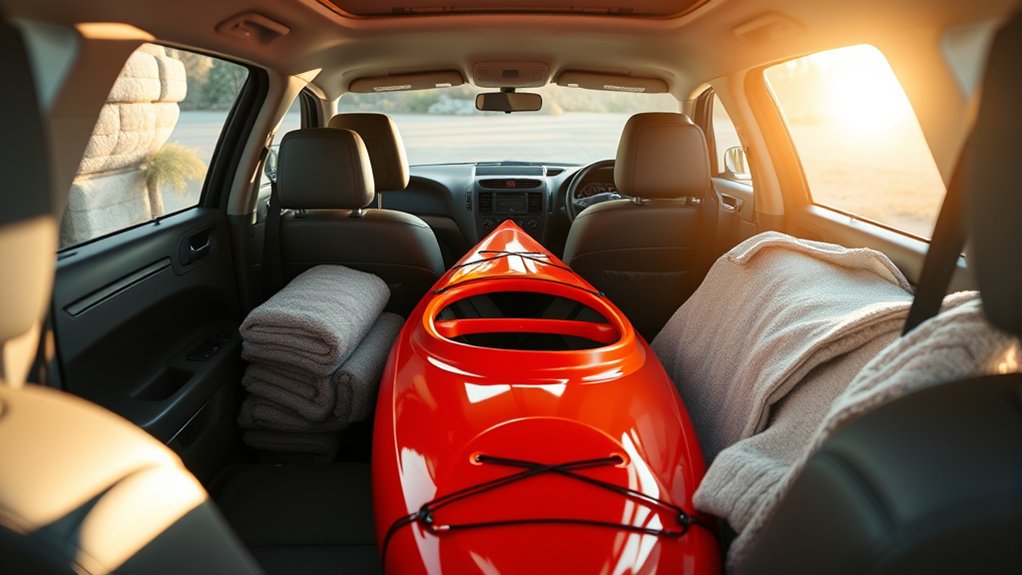
To guarantee a safe trip for you and your gear, when transporting a kayak inside your vehicle, you need to secure it firmly to prevent shifting during transit. Use soft padding or blankets to protect both your kayak and your car’s interior from scratches and dents.
Taking these steps ensures a safe trip for you and your gear.
Securing Your Kayak Properly
Although transporting a kayak inside your vehicle might seem tricky, securing it properly is essential to keep both your gear and passengers safe. Start by placing foam padding between the kayak and your vehicle’s interior to prevent scratches and absorb shocks during transit.
Next, use strong, adjustable straps to hold the kayak firmly in place. Loop the straps around stable anchor points like seat frames or built-in tie-down hooks, ensuring the kayak doesn’t shift or slide. Avoid overtightening, which can damage your kayak’s structure.
Check the straps periodically on longer trips to maintain secure transport. By combining foam padding with reliable strapping techniques, you’ll minimize movement and protect your kayak and passengers, making your journey smooth and worry-free every time.
Protecting Vehicle Interior
Securing your kayak inside your vehicle is a great start, but protecting your car’s interior from potential damage is just as important. Use blankets or foam padding as protective storage to cushion your kayak and prevent scratches.
Cover seats and floors with waterproof mats to avoid dirt and moisture buildup. After each trip, adopt cleaning routines to remove sand, mud, and water, which can cause stains or odors.
| Protection Method | Purpose | Maintenance Tip |
|---|---|---|
| Blankets/Foam Padding | Cushion kayak, prevent scratches | Wash regularly to remove dirt |
| Waterproof Mats | Protect seats and floors | Clean after every use |
| Towels | Absorb moisture | Replace when damp or dirty |
Following these steps helps keep your vehicle interior in great shape while transporting your kayak safely inside.
How to Use a Kayak Cart or Dolly for Easy Transport
Using a kayak cart or dolly can make moving your kayak much easier, especially over long distances or rough terrain. You’ll want to pick one that fits your kayak’s size and weight for smooth handling.
Once loaded, keep the kayak balanced and use steady, controlled movements to navigate safely to your destination.
Choosing the Right Cart
Where should you start when picking a kayak cart or dolly for easy transport? Begin by assessing your kayak’s weight and size to ensure the cart can handle the load. Look for sturdy wheels that perform well on the terrain you’ll navigate. Bigger, inflatable tires handle rough surfaces better.
Keep security risks in mind; choose a cart with locking mechanisms or the option to add locks to prevent theft during stops. Cost considerations matter too. While cheaper carts might save money upfront, investing in a durable, reliable model often pays off by lasting longer and reducing hassle.
Finally, check the cart’s ease of assembly and storage to suit your needs. By balancing these factors, you’ll pick the right cart to make transporting your kayak safer and smoother.
Loading and Maneuvering Tips
Start by positioning your kayak properly on the cart, centering the weight to keep it balanced during movement. Secure the kayak with straps or bungee cords to prevent shifting.
When maneuvering, push rather than pull the cart to maintain better control and reduce strain. Choose smooth, flat paths to avoid tipping or damage.
If you’re brainstorming discussion ideas about kayak transport, don’t get sidetracked by unrelated topics; stay focused on practical tips. Remember, practicing loading and unloading a few times helps you gain confidence and efficiency.
Also, check the cart’s wheels and frame for any wear before each trip, ensuring a smooth ride. Following these loading and maneuvering tips makes transporting your kayak hassle-free and safe.
How to Attach a Kayak to a Hitch-Mounted Carrier
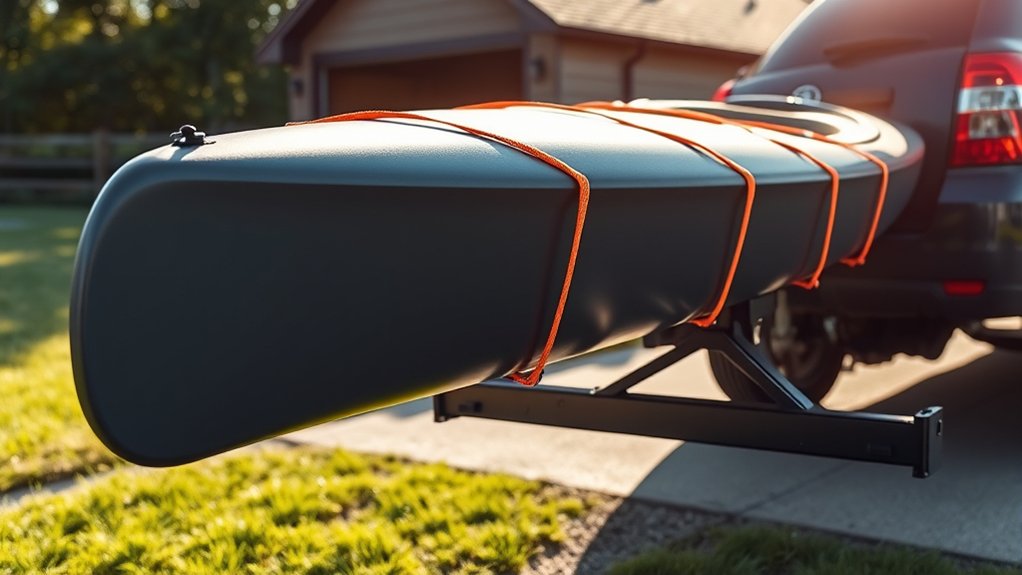
Wondering how to secure your kayak when you don’t have a roof rack? A hitch-mounted carrier is a solid alternative. First, detach your kayak carefully from the ground or vehicle. Then, place it on the carrier, ensuring it’s centered for balance.
Use quality straps to secure the kayak tightly, following these hitching tips:
| Step | Action |
|---|---|
| 1. Detaching kayak | Lift kayak with two people |
| 2. Positioning | Center kayak on carrier |
| 3. Securing straps | Tighten straps to avoid movement |
| 4. Final check | Test stability before driving |
Remember to double-check all straps and connections before you hit the road. Proper hitching ensures your kayak stays safe and stable throughout your trip.
How to Protect Your Kayak From Damage During Transport
How can you make sure your kayak stays in pristine condition while you’re on the move? Start by using soft padding between the kayak and any surfaces it touches to prevent scratches and dents.
Secure the kayak firmly but avoid overtightening straps, which can cause pressure damage. Once you arrive, focus on proper kayak storage to maintain its shape and integrity. Store it in a cool, shaded area away from direct sunlight.
After transport, inspect your kayak carefully for any signs of wear or damage. Clean off dirt and saltwater promptly as part of your post transport care routine to prevent corrosion and material degradation. These simple steps will help keep your kayak in excellent condition for many adventures ahead.
How to Keep Your Kayak Stable and Safe on the Road
Where you place your kayak and how you secure it can make all the difference in keeping it stable and safe during transport. Start by choosing a flat, secure spot, like your car’s trunk or bed if you have a truck, for easy kayak storage.
Use strong straps or ropes to tie down the kayak tightly, ensuring it won’t shift or slide on bumpy roads. Place soft padding between the kayak and your vehicle to prevent scratches and damage.
Double-check all knots and tension before you hit the road. Don’t forget to pack your road trip snacks in an accessible spot, so you stay energized without distracting yourself from safe driving.
Staying organized and attentive means your kayak arrives ready for adventure and so do you.
Frequently Asked Questions
What Is the Best Time of Day to Transport a Kayak?
The best time to transport your kayak is early morning or late afternoon. These times avoid heavy traffic patterns, offer favorable weather windows, and reduce harsh sunlight exposure, making your trip safer and more comfortable.
Can I Transport a Kayak on a Motorcycle?
You can transport a kayak on a motorcycle, but it’s tricky. For roofless transport, use secure straps and padding to balance the kayak safely.
Always check local laws and ride cautiously to avoid accidents.
How Do Weather Conditions Affect Kayak Transport?
Weather hazards like rain or strong winds can make gear securing tricky, so you’ll want to double-check straps and covers.
Wet conditions can also make surfaces slippery, increasing the risk of damage or accidents during kayak transport.
Are There Legal Restrictions for Kayak Transport Without a Roof Rack?
Yes, you’ll face legal restrictions for kayak transport without a roof rack, like securing loads properly and avoiding overhang violations. Always check local laws to ensure your kayak’s safe, legal, and hassle-free on the road.
What Is the Average Cost of Professional Kayak Transport Services?
You’ll typically pay $100 to $300 for professional kayak transport. Don’t forget insurance considerations and liability coverage. They protect you if damage occurs. Always confirm these details before booking to avoid unexpected costs or risks.
Conclusion
Transporting your kayak without a roof rack might seem like traversing a maze, but with the right method, it’s a breeze. Whether you’re using foam blocks, a kayak cart, or a hitch carrier, securing your kayak properly keeps it safe and stable.
Protect your gear and your vehicle, double-check your straps, and you’ll be ready to hit the water without a hitch. Remember, a little prep now saves you from a million headaches later!
By following these tips, you can transport your kayak without a roof rack easily and safely every time.