If you find yourself with a dead battery but no jumper cables, knowing how to jump a car without jumper cables can be a lifesaver. You can still get your car started using a few reliable methods.
For manual transmission vehicles, push-starting is a practical option when done correctly. Alternatively, a portable battery pack designed for automotive use offers a safe, cable-free jump. Each method requires careful preparation and adherence to safety protocols to avoid damage or injury.
Understanding these techniques could save you time and frustration in an emergency. Taking the time to learn them beforehand is well worth it.
Key Takeaways
- Use a manual push-start by turning the ignition on, depressing the clutch, shifting to second gear, then pushing the car to engage the engine.
- Employ a fully charged portable battery pack designed for automotive jump-starts, connecting clamps to battery terminals and a grounded engine part safely.
- Utilize a power bank with a USB car charger as an emergency power source for starting the vehicle’s electrical system.
- As a last resort, create a temporary conductor using insulated metal wire or a 9V battery to boost small electrical current safely.
- Always ensure safety by wearing protective gear, positioning the vehicle securely, and avoiding standing between wheels or near moving parts.
How to Push-Start a Manual Car Without Jumper Cables
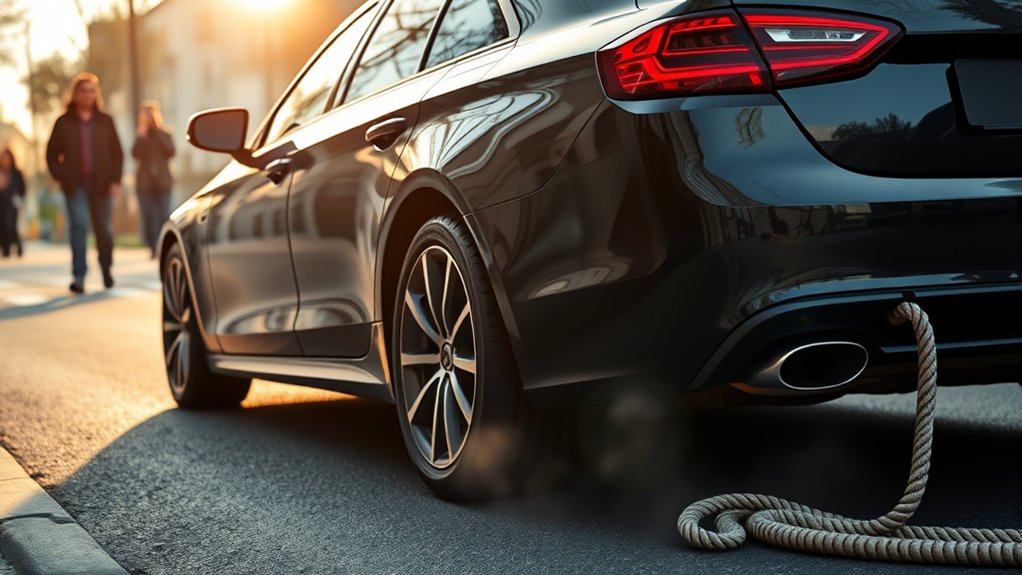
Wondering how to get your manual car started without jumper cables? You can perform a push start by using the vehicle’s manual override. First, ensure the ignition is turned to the “on” position without starting the engine.
Depress the clutch fully and shift into second gear for a smoother start. Have someone push the car until it reaches 5-10 mph, or you can do it on a slight incline. Once moving, quickly release the clutch to engage the engine.
This action should jump start your car by turning the engine over manually. If the engine doesn’t start immediately, depress the clutch and repeat. Remember, this method only works on manual transmissions and relies on mechanical force rather than electrical power.
Jump-Starting With a Portable Battery Pack
How can you jump-start your car quickly without jumper cables? Use a portable battery pack designed for automotive jump-starts. First, ensure the portable battery is fully charged.
Jump-start your car quickly without jumper cables using a fully charged portable battery pack made for automotive use.
Park your vehicle on a flat surface, turn off the ignition, and engage the parking brake. Attach the positive (red) clamp of the portable battery to the positive terminal of your car’s dead battery.
Connect the negative (black) clamp to a metal, unpainted ground on the engine block, not the battery’s negative terminal, to reduce spark risk. Follow the manufacturer’s instructions for your portable battery model.
After connections, turn on the portable battery and then start your car. Once running, disconnect clamps in reverse order.
Always observe jump starting safety: avoid contact between clamps and wear protective gear to prevent injury.
Safe Household Alternatives for Emergency Jump-Starts
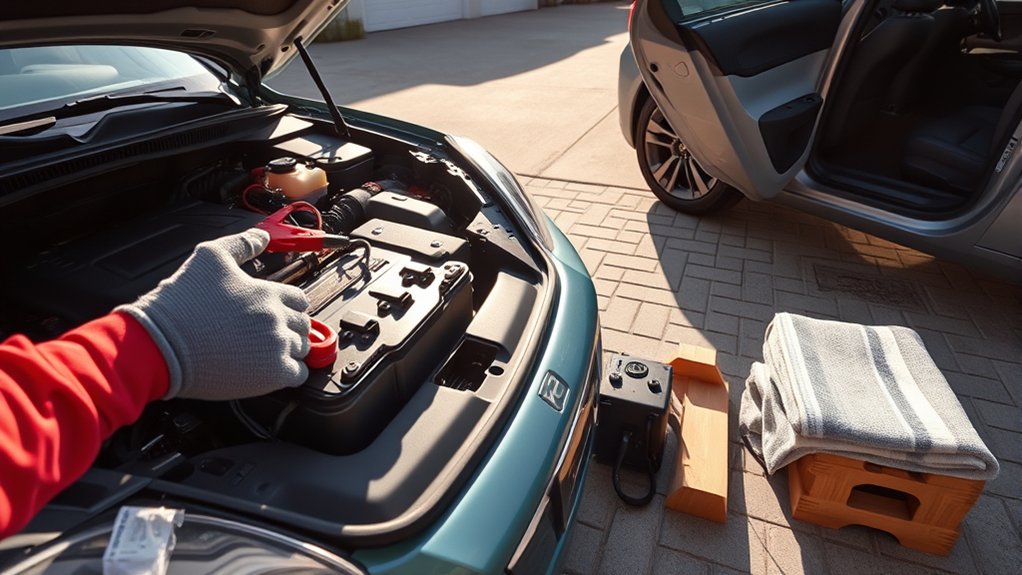
If you don’t have a portable battery pack or jumper cables on hand, you can still attempt an emergency jump-start using common household items. Prioritize safe alternatives that minimize risk and fit into your emergency preparedness plan. For example, a fully charged power bank, a USB car charger, or even a sturdy metal wire can help transfer power under strict safety measures.
| Household Item | Use Case | Safety Tip |
|---|---|---|
| Power Bank | Connect via USB car charger | Ensure power bank is fully charged |
| Metal Wire | Temporary conductor (last resort) | Avoid sparks; insulate connections |
| 9V Battery + Wires | Small current boost | Limit contact time; avoid shorts |
Use these options cautiously, ensuring proper connection to prevent damage or injury.
Troubleshooting When Your Car Won’t Start
Why won’t your car start even after attempting a jump? First, verify the battery connection; loose or corroded terminals often prevent proper current flow. Next, test the battery voltage. If it’s below 12 volts, it likely needs replacement.
Check battery connections and voltage first; below 12 volts means the battery probably needs replacing.
Don’t fall for helpful myths suggesting multiple jump attempts will revive a dead battery. Persistent failure indicates deeper issues. Common misconceptions include assuming the starter motor or alternator is at fault without proper diagnosis.
Use a multimeter to check for voltage at the starter while turning the key. No voltage suggests ignition switch or wiring problems. If the engine cranks but doesn’t start, fuel delivery or spark issues may be the cause.
Systematically eliminate these factors before seeking professional assistance.
Safety Tips for Jump-Starting Without Cables
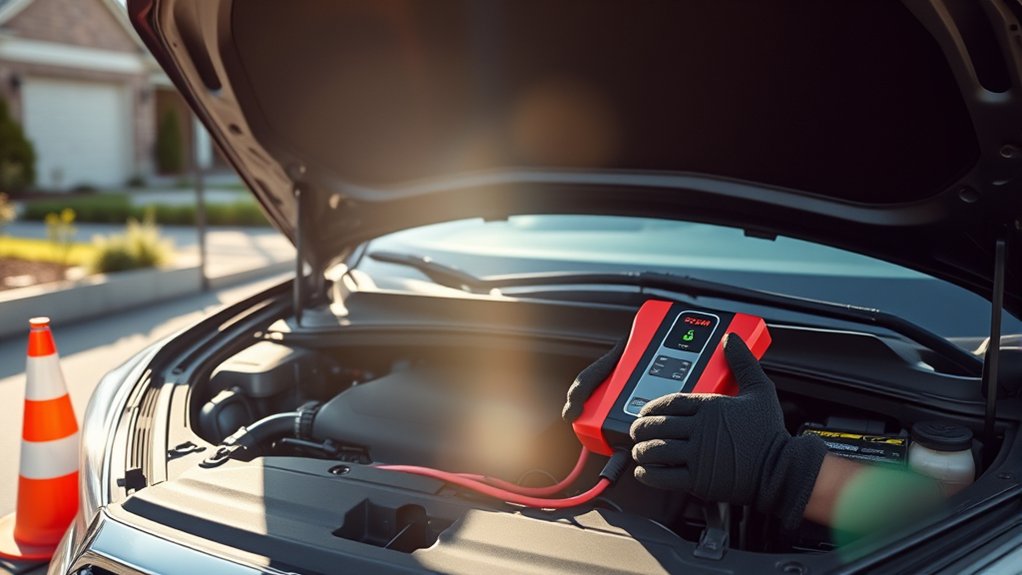
Before attempting to jump-start without cables, carefully assess your surroundings to ensure a safe environment. Always wear proper protective gear like gloves and eye protection to prevent injury.
Keep clear of any moving parts or vehicle contact to avoid accidents during the process.
Assess Surrounding Environment
Where should you position yourself when preparing to jump-start a car without jumper cables? Start by thoroughly assessing surroundings to ensure safety and efficiency. Identify any environmental hazards that could interfere with the process or pose risks.
Follow these steps:
- Locate a flat, stable surface away from traffic to prevent accidents.
- Check for flammable materials, leaks, or debris near the vehicle that could ignite or obstruct movement.
- Ensure adequate lighting and clear visibility to monitor vehicle responses and surroundings during the jump-start.
Use Proper Protective Gear
After securing a safe environment for the jump-start, focus on protecting yourself with the correct gear. Always wear insulated gloves to prevent electrical shocks and avoid burns from hot engine components. Use safety goggles to shield your eyes from potential sparks or debris.
Make sure your clothing fits snugly to prevent entanglement in moving parts. Follow established safety protocols by avoiding metallic accessories such as watches or rings, which can conduct electricity.
Confirm that your protective gear is in good condition with no tears or damage. Proper use of protective gear minimizes injury risk and ensures a safer procedure when jump-starting a car without cables. Prioritize these safety protocols to protect yourself effectively throughout the process.
Avoid Moving Vehicle Contact
Why must you avoid contact with moving vehicles during a jump-start without cables? Moving vehicles introduce significant risk factors that can cause injury or damage, especially when you’re focused on jump-starting. Prioritize avoiding hazards by maintaining a safe distance and staying alert.
Follow these key precautions:
- Position both vehicles securely with parking brakes engaged to prevent sudden movement.
- Do not stand between or near the wheels of either vehicle to avoid accidental contact.
- Watch for suspicious odors indicating fuel leaks or overheating, which increase fire risk during jump-start attempts.
When to Call for Professional Help
If you encounter unsafe conditions or lack the proper tools, stop attempting to jump-start your car. You should call a reliable roadside assistance service to avoid injury or vehicle damage.
Knowing when to seek professional help ensures both your safety and a proper vehicle restart.
Assessing Safety Risks
When should you call for professional help instead of attempting to jump-start your car on your own? Assessing safety and risks awareness is critical before proceeding. If you’re unsure about your car’s condition or the environment, err on the side of caution.
Consider these factors:
- Battery Condition: If the battery is visibly damaged, leaking, or swollen, do not attempt to jump-start; contact a professional.
- Electrical System Issues: Presence of electrical faults or warning lights may indicate complex problems beyond a simple jump.
- Unsafe Environment: Poor lighting, heavy traffic, or inclement weather increase risks significantly.
Finding Reliable Roadside Assistance
How do you guarantee timely and effective help when your car won’t start and jumper cables aren’t an option? Prioritize finding reliable roadside assistance to avoid unsafe attempts with household alternatives.
Contact a trusted provider immediately if the issue persists beyond basic troubleshooting or if you feel unsafe.
| Service Type | Response Time | Cost Range |
|---|---|---|
| Professional Towing | 20-45 minutes | $50-$150 |
| Mobile Battery Service | 30-60 minutes | $75-$200 |
| Roadside Assistance Membership | Varies | $50-$150/year |
Use this table to compare options quickly. Having these contacts saved enables swift action and reduces risk when jumper cables aren’t available.
Frequently Asked Questions
Can You Jump-Start an Automatic Car Without Cables?
You can’t safely push-start an automatic car due to automatic transmission caveats.
For jump start safety, use proper jumper cables or a jump pack to avoid damaging the transmission or electrical systems.
How Long Does a Car Battery Typically Last?
Think of your car battery like a smartphone’s charge. It typically lasts 3 to 5 years.
Your battery lifespan depends heavily on consistent charging habits and avoiding deep discharges to maintain prime performance.
What Are Common Causes of a Dead Car Battery?
You’ll find common causes of a dead car battery include poor battery maintenance, leaving lights on, or parasitic drains.
Using alternative power sources improperly can also damage it, so monitor voltage and connections precisely to avoid failure.
Can Cold Weather Affect Jump-Starting Success?
Yes, cold weather lowers battery efficiency, complicating jump start logistics. You’ll need extra power and patience, ensuring clean, secure connections.
Possibly warming the battery before attempting a jump can improve success chances.
Are There Any Long-Term Effects of Frequent Jump-Starting?
Frequent jump-starting can reduce battery longevity by stressing its cells. You should improve your charging habits, ensuring a full, gradual charge to prevent damage and maintain prime battery performance over time.
Conclusion
When you find yourself stranded, knowing how to jump-start your car without cables can be a lifesaver. Whether you push-start a manual vehicle or use a portable battery pack, following precise steps ensures safety and success.
Remember, your car’s heartbeat depends on proper connections and cautious handling. If all else fails, don’t hesitate to call a professional. Stay calm, act smart, and you’ll be back on the road before you know it.
Mastering how to jump a car without jumper cables can make all the difference in an emergency.