Checking your power steering fluid is like giving your vehicle’s steering system a crucial health check. Power steering fluid levels and quality play a vital role in ensuring smooth and responsive steering. You’ll want to start by locating the translucent reservoir marked with a steering wheel icon, usually near the engine.
With the engine cool and the car on level ground, you’ll wipe, remove, and inspect the fluid level against the MIN and MAX indicators. But knowing exactly what to look for in terms of fluid quality and signs of trouble is crucial before you proceed.
Key Takeaways
- Open the hood and locate the translucent power steering fluid reservoir with a steering wheel icon or label near the engine front or side.
- Ensure the vehicle is on a level surface and the engine is cool before checking fluid levels.
- Remove the reservoir cap, wipe the dipstick clean, reinsert fully, then withdraw it to read the fluid level between “MIN” and “MAX” marks.
- Check fluid color; healthy fluid is clear or slightly amber, while dark, cloudy, or foamy fluid indicates contamination or aeration.
- Regularly inspect fluid during maintenance or if steering issues arise to maintain optimal steering performance and prevent damage.
How to Find Your Power Steering Fluid Reservoir
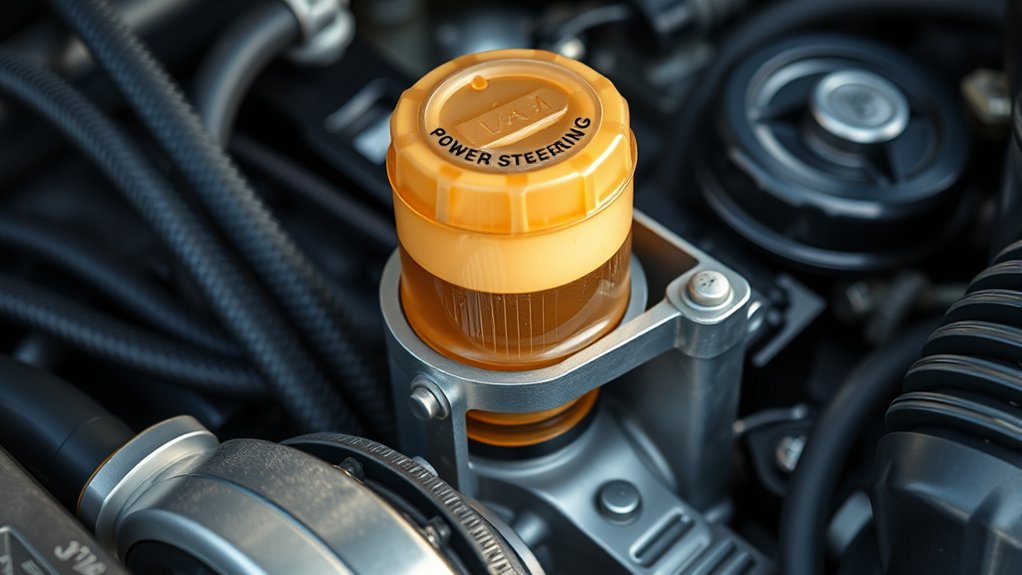
To locate your power steering fluid reservoir, start by opening the hood and identifying the engine bay components. The reservoir is typically a small, translucent container marked with a steering wheel icon or labeled “Power Steering.”
It’s usually positioned near the engine’s front or side, connected to the power steering pump by a hose. When finding the reservoir, look for a cap that’s either screw-on or snap-on, often colored black or yellow. Avoid confusing it with coolant or brake fluid reservoirs, which differ in size and labeling.
For fluid level tips, ensure the vehicle is on a level surface and the engine is cool before checking. Use the markings on the reservoir, “MIN” and “MAX,” to assess the fluid level accurately.
When to Check and How to Measure Fluid Level
When should you check your power steering fluid to ensure peak performance? Regularly checking during routine maintenance, such as oil changes or tire rotations, helps prevent unexpected failures. Also, inspect the fluid immediately if you notice warning signals like difficulty steering or unusual noises.
To measure the fluid level, locate the reservoir, usually translucent with marked indicators. Clean the cap and dipstick before removing it to avoid contamination. Wipe the dipstick clean, reinsert fully, then withdraw to check the fluid level against the “MIN” and “MAX” marks.
Ensure the vehicle is on level ground and the engine is cold or has idled for a few minutes to get an accurate reading. Maintaining proper fluid levels is critical for optimal steering function and system longevity.
How to Spot Low or Contaminated Power Steering Fluid
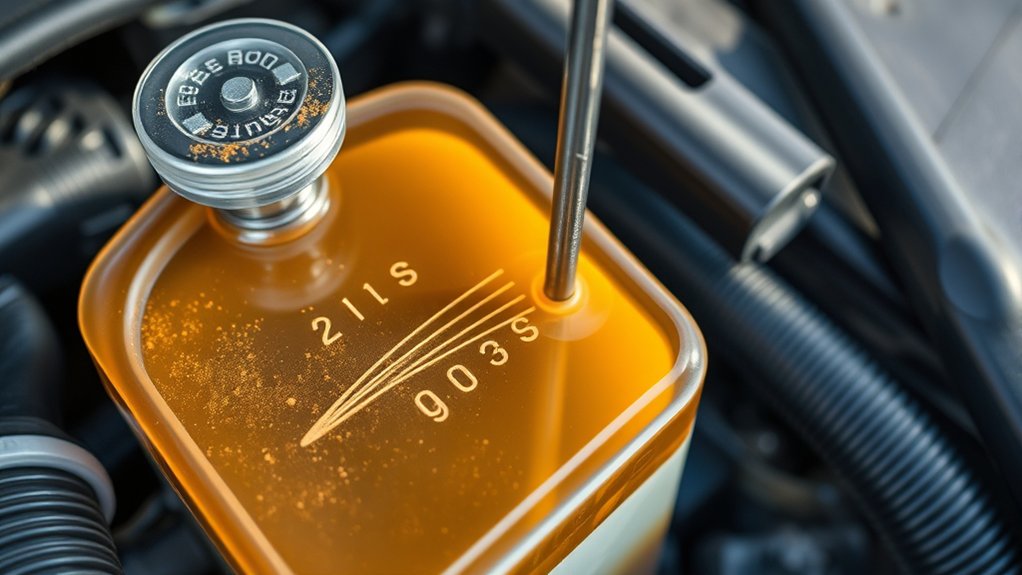
Maintaining the correct power steering fluid level is just one part of keeping your steering system in top shape. To spot low or contaminated fluid, first inspect its color and consistency.
Healthy power steering fluid typically appears clear or slightly amber. Dark, cloudy, or gritty fluid indicates contamination, which can compromise system performance.
Unlike an unrelated topic such as engine oil checks, power steering fluid demands visual and sometimes smell analysis to detect issues early. Avoid making an off topic comparison with unrelated fluids, as power steering fluid’s unique properties require specific attention.
Additionally, listen for unusual noises or notice increased steering effort, which often signals low or degraded fluid. Timely identification prevents steering failure and costly repairs.
Adding or Replacing Power Steering Fluid Safely
Start by ensuring your vehicle is parked on a level surface with the engine cool before you add or replace power steering fluid. This prevents inaccurate readings and reduces risk. When discussing tools, have a clean rag, funnel, and the correct fluid type ready.
Follow these steps:
- Locate and open the power steering reservoir.
- Wipe the dipstick or reservoir cap to remove old fluid.
- Slowly add fluid using a funnel to avoid spills.
- Evaluate spills immediately with a rag to prevent damage.
- Securely replace the reservoir cap and start the engine to check fluid level again.
Using the right tools and promptly evaluating spills ensures safe, effective maintenance while preserving your vehicle’s hydraulic system integrity.
Common Power Steering Fluid Problems to Watch For
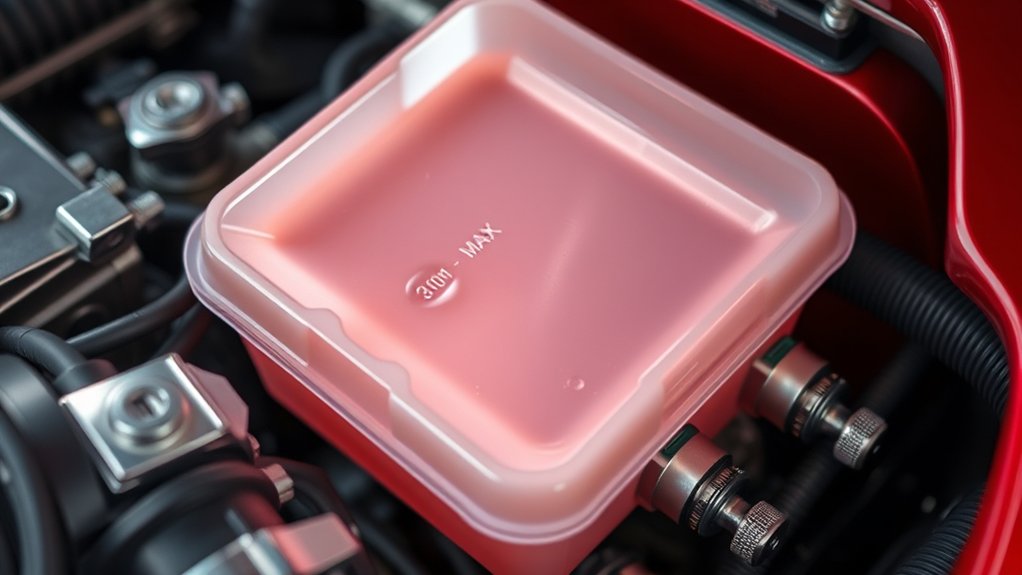
After adding or replacing power steering fluid, you should monitor your system for common issues that could indicate underlying problems. Addressing these early prevents damage and avoids unlikely coupling of symptoms that might lead to unrelated troubleshooting.
| Problem | Symptom |
|---|---|
| Leaks | Fluid puddles under vehicle |
| Foamy Fluid | Aeration causing steering noise |
| Dark or Contaminated Fluid | Reduced steering efficiency |
| Unusual Steering Feel | Stiff or jerky steering motion |
Leaks often indicate worn seals, while foamy fluid suggests air infiltration. Dark fluid signals contamination, requiring a flush. Unusual steering feel may stem from fluid issues or mechanical faults, so don’t jump to unrelated troubleshooting without confirming fluid status.
Regular checks ensure your power steering operates reliably.
Frequently Asked Questions
What Type of Power Steering Fluid Is Best for My Car?
You’ll want to use the power steering fluid specified in your owner’s manual, as techniques and maintenance vary by manufacturer. Using the correct type guarantees optimal system performance and prevents damage during routine checks and fluid replacement.
Can Power Steering Fluid Cause Environmental Harm if Spilled?
If you spill power steering fluid near a storm drain, it can harm aquatic life due to its toxic components. You should always use proper spill containment to minimize environmental impact and prevent soil and water contamination.
How Often Should I Flush My Power Steering Fluid Completely?
You should flush your power steering fluid every 50,000 to 75,000 miles to maintain optimal function.
Avoid unrelated topics or off-topic discussions during service to ensure focused, precise maintenance and prevent system damage.
What Are the Symptoms of a Failing Power Steering Pump?
Imagine steering a ship through choppy waters. If your power steering pump groans, leaks fluid, or makes whining noises, your driving safety and fuel efficiency suffer.
You’ll feel stiffness or jerky steering, signaling urgent repairs to avoid hazards.
Is It Safe to Drive With Low Power Steering Fluid?
You shouldn’t drive with low power steering fluid, as it risks pump damage and steering failure.
Discussing an unrelated topic, like tire pressure, illustrates how ignoring tangential ideas can cause serious vehicle control issues.
Conclusion
Checking your power steering fluid consistently keeps your steering smooth and safe. Start by spotting the translucent reservoir, then swipe, dip, and scrutinize the fluid level against marked limits.
Stay sharp for signs of sludge or smudges, signaling contamination. Swiftly supplement or swap fluid to sustain system strength.
Staying steady with these simple steps safeguards your steering system, saving you stress, steering struggles, and costly repairs down the road. Regularly checking your power steering fluid is essential for maintaining optimal steering performance.