Think of the CV shaft as the critical link that keeps your car’s power flowing smoothly from the transmission to the wheels, even as your suspension flexes and you steer. The CV shaft uses specialized joints to maintain constant rotational speed despite varying angles, which is essential for both performance and safety.
But what happens when these joints wear down or the protective boots fail? Understanding this can save you from costly repairs and unexpected breakdowns.
Regular inspection and maintenance of the CV shaft and its components help ensure your vehicle runs reliably and safely on the road.
Key Takeaways
- A CV shaft transfers torque from the transmission to the wheels while accommodating steering and suspension movements.
- It maintains consistent rotational speed despite angular changes to ensure smooth power delivery.
- CV joints in the shaft flex to absorb suspension impacts and prevent drivetrain stress and vibration.
- Rubber boots protect CV joints from debris and retain lubrication, ensuring joint durability and performance.
- Signs of CV shaft failure include clicking noises, vibrations, and grease leaks, requiring prompt maintenance to avoid safety risks.
What a CV Shaft Is and How It Works
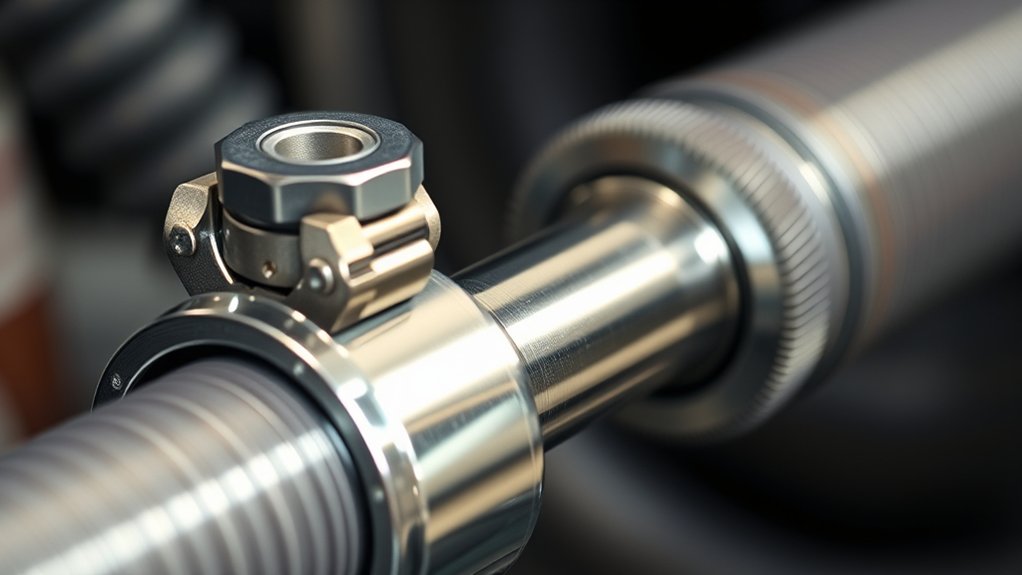
How exactly does a CV shaft function within your vehicle’s drivetrain? The Constant Velocity (CV) shaft transmits torque from the transmission to the wheels while accommodating suspension movement. Unlike irrelevant topics or unrelated concepts, the CV shaft must maintain consistent rotational speed despite angular changes.
It achieves this through CV joints at each end, usually a tripod joint near the transmission and a ball joint at the wheel hub, enabling smooth power delivery during turns and bumps. The shaft consists of a solid steel axle with protective rubber boots that house grease, preventing contamination and wear.
How CV Shafts Handle Steering and Suspension
You rely on CV shafts to accommodate complex joint movement as your wheels steer and your suspension compresses. They maintain consistent power transfer by flexing without losing torque delivery.
Additionally, CV shafts absorb suspension impact, preventing drivetrain stress during uneven road conditions.
Flexible Joint Movement
Why do CV shafts incorporate flexible joints? They allow the shaft to accommodate the complex movements involved in steering and suspension without interrupting motion transfer. The flexible joint, typically a ball-and-cage or tripod design, adjusts to angles created by wheel steering and vertical suspension travel.
This adaptability ensures consistent rotational force reaches the wheels even as the suspension moves up and down or the wheels turn left and right. Without flexible joints, rigid shafts would bind or fail under these dynamic conditions.
Maintaining Power Transfer
A CV shaft maintains power transfer by continuously adapting to the changing angles created by steering and suspension movements. As you turn the steering wheel or drive over uneven terrain, the CV shaft’s joints flex to accommodate varying CV joint angles, ensuring torque flows smoothly from the transmission to the wheels.
This flexibility prevents drivetrain binding and maintains consistent rotational speed despite suspension articulation. Inside each CV joint, specialized drivetrain lubrication reduces friction and heat buildup, preserving joint integrity under dynamic loads.
Without proper lubrication, increased wear would degrade performance and risk joint failure. By managing CV joint angles precisely and relying on effective lubrication, the CV shaft ensures uninterrupted power delivery, enabling your vehicle to respond accurately to steering inputs while maintaining traction through suspension travel.
Absorbing Suspension Impact
Numerous forces from road irregularities and steering inputs constantly impact the suspension system, and the CV shaft must absorb these dynamic loads while maintaining smooth power transmission. As you drive, the CV shaft integrates suspension movement and steering angles, allowing your wheels to move independently without losing rotational power.
It absorbs vibrations caused by uneven terrain, preventing damage and enhancing comfort. Key aspects include:
- Constant velocity joints flex to accommodate suspension travel and steering changes
- Rubber boots protect joints from debris and retain lubrication
- Shaft design allows axial and angular movement to absorb shocks
- Durable materials resist fatigue from repeated suspension impacts
Why the CV Shaft Is Vital for Your Car’s Drivetrain
Understanding the CV shaft’s role reveals how it transfers torque from your car’s transmission to the wheels while accommodating suspension movement and steering angles. This component ensures consistent power delivery even as your wheels pivot and the suspension compresses, maintaining drivetrain efficiency.
Without the CV shaft’s flexibility, your drivetrain would face increased stress, leading to potential failure. When you explore discussion ideas about drivetrain components, it’s crucial to avoid unrelated topics like brake systems or electronics to maintain focus.
The CV shaft’s precision engineering allows it to handle variable angles and rotational forces simultaneously, enabling smooth vehicle operation. In essence, the CV shaft is vital because it bridges the rigid connection between the transmission and wheels, allowing your car to move and steer fluidly under diverse driving conditions.
Common Causes of CV Shaft Damage
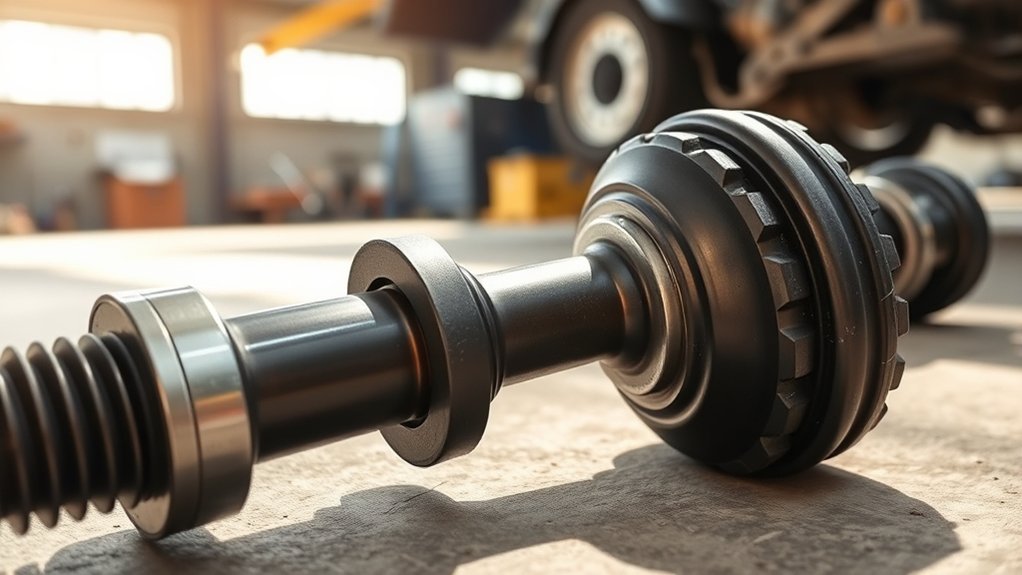
Since the CV shaft constantly manages complex movements and torque transmission, it faces significant mechanical stress that can lead to damage over time. The CV joint and wheel articulation subject the shaft to varying angles and forces, increasing wear risks.
You should watch for these common causes of CV shaft damage:
- Torn or damaged CV joint boots, allowing dirt and moisture to contaminate the joint.
- Excessive wheel articulation from aggressive steering or rough terrain, stressing the shaft beyond its design limits.
- Corrosion due to exposure to road salt or water, weakening the metal components.
- Impact damage from potholes or collisions, causing bending or misalignment.
Understanding these factors helps you maintain the CV shaft’s integrity and prevent premature failure in your drivetrain system.
Signs Your CV Shaft Might Be Failing
How can you tell if your CV shaft is starting to fail? One clear sign is a clicking noise, especially when turning sharply. This noise results from joint wear inside the CV shaft, indicating compromised functionality.
Another symptom is vibration during acceleration, caused by an imbalanced or damaged shaft. You might also notice grease leaking from a torn CV boot, exposing the shaft to contaminants and accelerating wear.
It’s important to focus solely on these technical indicators rather than getting distracted by an unrelated topic or off topic discussion about other vehicle parts. Identifying these specific symptoms early lets you address CV shaft issues precisely, avoiding confusion with unrelated mechanical problems or off topic discussions that don’t pertain to CV shaft failure.
The Risks of Ignoring a Failing CV Shaft
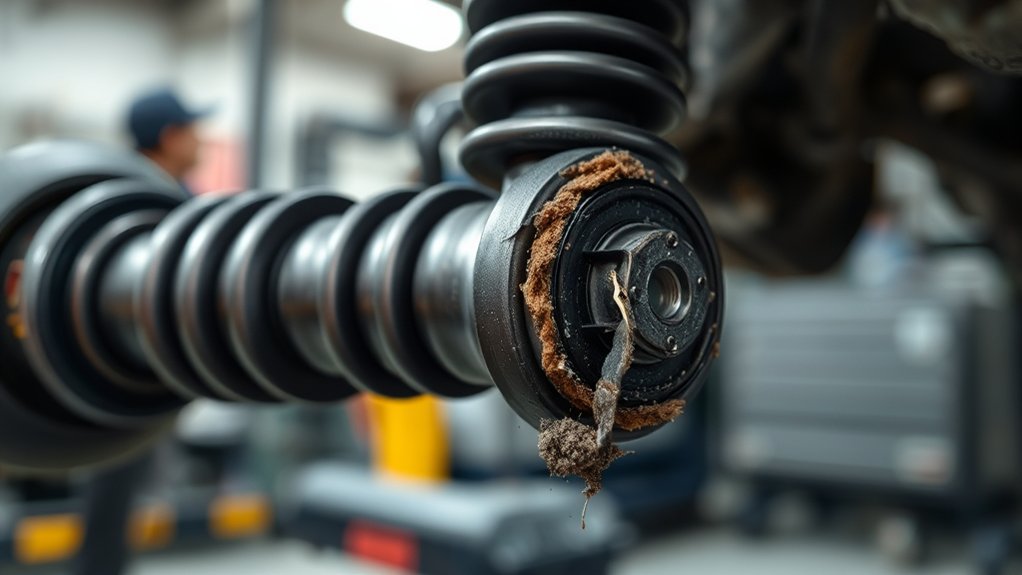
If you ignore a failing CV shaft, your vehicle’s stability will deteriorate, especially during turns and acceleration. This can lead to more extensive damage, resulting in costly repairs beyond just the shaft itself.
Additionally, compromised control increases the risk of accidents, posing serious safety hazards on the road.
Increased Vehicle Instability
Why does a failing CV shaft markedly compromise your vehicle’s stability? When the CV shaft suffers from insufficient lubrication, it accelerates joint wear, leading to uneven torque transfer. This wear can cause a sudden loss of power during acceleration, destabilizing the vehicle.
You’ll notice:
- Vibrations intensify, especially during turns, affecting handling precision
- Irregular wheel movement causes unpredictable steering responses
- Noise from the CV joint indicates mechanical distress, distracting your control
- Sudden power fluctuations reduce traction and increase skid risk
Ignoring these signs means you’re driving with compromised drivetrain integrity. The CV shaft’s inability to maintain consistent power delivery disrupts balance, making your vehicle prone to instability, particularly in sharp maneuvers or slippery conditions.
Addressing CV shaft issues promptly is vital for safe, stable driving.
Costly Repair Consequences
Several severe repair costs can arise when you ignore a failing CV shaft. The CV shaft transmits torque from the transmission to the wheels; if it deteriorates, it can cause joint failure and damage adjacent components like the transmission and wheel hub assembly.
This cascade leads to costly repair bills, often far exceeding the expense of replacing the CV shaft alone. Additionally, neglecting timely maintenance may complicate insurance claims if the failure results in an accident or additional damage.
Insurers could view the neglect as contributory negligence, potentially denying coverage or increasing premiums. By addressing CV shaft issues promptly, you avoid extensive mechanical damage and mitigate adverse insurance implications, ensuring your vehicle remains reliable and your financial exposure stays manageable.
Safety Hazards on Road
How does a failing CV shaft compromise your safety on the road? When the CV shaft deteriorates, it directly affects your vehicle’s ability to transfer power smoothly to the wheels, increasing the risk of sudden mechanical failure. This creates significant safety hazards, especially under challenging road conditions.
Ignoring these risks can lead to:
- Loss of vehicle control during acceleration or turns
- Sudden stops or immobilization in traffic
- Increased likelihood of accidents on uneven or slippery surfaces
- Damage to other drivetrain components, compounding failure risks
A compromised CV shaft reduces your vehicle’s responsiveness and stability, making it dangerous to drive. Addressing CV shaft issues promptly preserves your control and safety, ensuring you navigate varying road conditions without unexpected breakdowns.
Why CV Joints Are Key to a Smooth Ride
What enables your vehicle’s wheels to turn smoothly while steering through sharp bends or uneven surfaces? The answer lies in the CV joints, which allow consistent torque transmission despite angular changes.
CV joints maintain constant velocity between the drive shaft and wheel hub, preventing vibration and drivetrain stress. Their design balances concept feasibility with performance demands, often incorporating alternative materials like advanced polymers or composites to reduce weight and enhance durability.
These materials improve joint flexibility and resistance to wear under varying loads and temperatures. By accommodating suspension movement and steering angles, CV joints ensure seamless power delivery, directly impacting ride smoothness and handling precision.
Without properly functioning CV joints, you’d experience jerky motion, noise, and compromised control, underscoring their critical role in your vehicle’s drivetrain system.
Maintaining and Replacing CV Shafts
Since CV joints play an essential role in delivering smooth power to your wheels, maintaining the CV shafts that house these joints is equally important for drivetrain reliability. Regularly inspecting CV shafts helps you catch wear or damage early.
Focus on inspecting CV boots for cracks or tears, as damaged boots allow contaminants that degrade joint function. Replacing boots promptly prevents joint failure and costly repairs. When shafts show excessive wear, vibration, or clicking noises during turns, replacement is necessary to maintain performance and safety.
Key maintenance steps include:
- Inspecting CV boots for damage and grease leaks
- Checking for shaft play or binding during rotation
- Replacing boots immediately when torn or brittle
- Swapping out the entire CV shaft assembly if joints are compromised or shaft integrity is lost
These practices ensure your drivetrain operates smoothly and reliably.
Frequently Asked Questions
Can I Drive With a Broken CV Shaft Temporarily?
You shouldn’t drive with a broken CV shaft, as it compromises drivetrain reliability and poses serious safety implications.
Temporary driving risks further damage and loss of control, so repair or replacement is urgent for safe vehicle operation.
How Much Does CV Shaft Replacement Typically Cost?
You compare cost by parts, labor, and shop rates; you weigh reliability factors like OEM versus aftermarket parts.
Typically, CV shaft replacement costs between $300 and $800, depending on vehicle type and repair complexity.
Are CV Shafts the Same in Front-Wheel and All-Wheel Drive Cars?
No, CV shafts differ between two-wheel and all-wheel drive cars due to drivetrain differences. You’ll find front-wheel drive vehicles use shorter, simpler shafts, while all-wheel drives require longer, more complex shafts for additional axle connections.
Can Aftermarket CV Shafts Affect My Car’s Warranty?
Yes, aftermarket parts like CV shafts can impact your warranty if they cause damage or failure. You should verify with your manufacturer because warranty coverage may void when non-OEM components affect vehicle performance or safety systems.
Do Electric Vehicles Use CV Shafts Differently?
Yes, electric vehicles use CV shafts differently due to electric propulsion’s torque delivery and varied axle configurations. You’ll find CV shafts designed for smoother power transfer and increased durability, adapting to the instant torque and diverse drivetrain layouts.
Conclusion
Understanding what a CV shaft does helps you appreciate its critical role in your vehicle’s drivetrain. It consistently transfers power while adapting to steering and suspension movements through flexible joints and sealed lubrication. Ignoring wear signs risks joint failure, vibrations, and drivetrain damage.
Regularly inspecting boots and replacing faulty shafts keeps torque transfer smooth and your ride safe. Think of the CV shaft as a dynamic link—constantly adjusting angles while maintaining power flow.
In conclusion, the CV shaft is essential for precise, reliable performance and ensures your vehicle operates efficiently under varying driving conditions.