You rely on your drive shaft to transfer power, maintain alignment, and absorb movement—all while spinning at high speeds.
The drive shaft is a precise component that converts engine torque into the motion that propels your wheels.
Understanding how it manages these tasks under varying conditions can reveal why it’s essential to vehicle performance and durability.
But what exactly makes a drive shaft both strong and flexible enough to handle these demands?
Its design allows it to withstand torque and bending forces while accommodating changes in length and angle.
This balance ensures smooth power delivery and longevity, even on rough terrain or during sudden acceleration.
Key Takeaways
- A drive shaft transmits engine torque to the vehicle’s wheels, enabling rotational power transfer for movement.
- Universal joints enable drive shafts to flex and accommodate angular misalignments during vehicle motion.
- The drive shaft maintains rotational equilibrium while minimizing energy loss in torque transmission.
- Slip yokes adjust drive shaft length to compensate for suspension travel and variations.
- Drive shafts work with the transmission and differential to ensure continuous and efficient power flow.
What Is a Drive Shaft and Why Does It Matter?
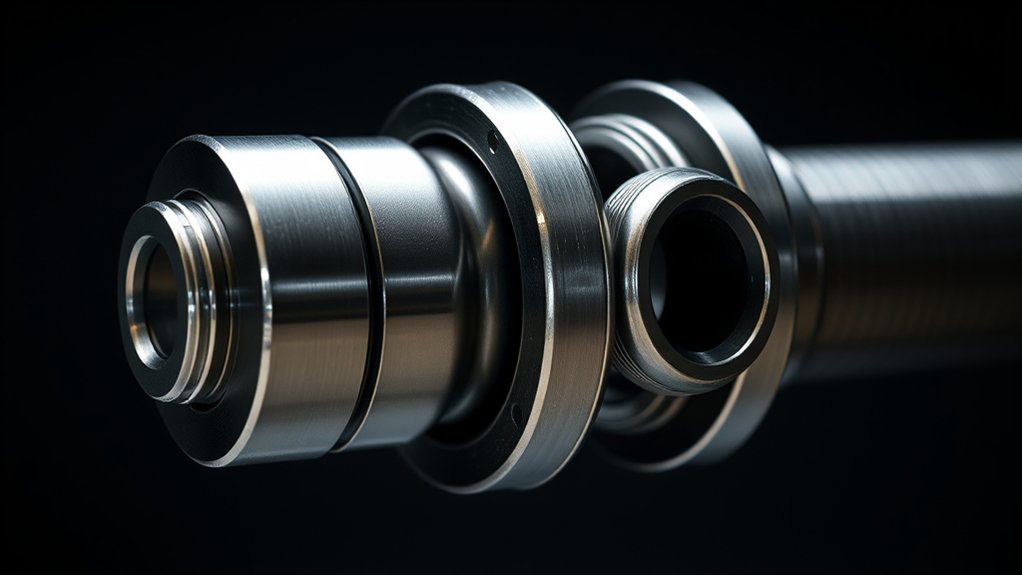
Understanding what a drive shaft is and why it matters is essential for grasping how power transmits in vehicles and machinery. A drive shaft is a mechanical component designed to transfer torque from the engine or motor to the wheels or other driven parts.
Its sizing is critical, as improper drive shaft sizing can lead to inefficiencies or mechanical failure. You need to consider factors such as length, diameter, and material strength to ensure optimal performance.
Additionally, vibration analysis plays a vital role in maintaining drive shaft integrity. By analyzing vibration patterns, you can detect imbalances or misalignments early, preventing excessive wear or catastrophic failure.
Mastering these technical aspects ensures the drive shaft functions reliably under varying operational conditions.
How a Drive Shaft Transfers Power in Your Car
How exactly does a drive shaft transfer power from your car’s engine to its wheels? It converts the engine’s rotational energy into mechanical force that propels your vehicle forward.
When the engine generates torque, it passes through the transmission, which adjusts speed and torque ratios. The drive shaft then transmits this torque along its length to the differential, which distributes power to the wheels.
This process ensures your tires maintain suitable contact with the road, a factor affected by tire pressure. Without efficient torque transfer, your car audio system’s vibrations might become distracting due to drivetrain inefficiencies.
Ultimately, the drive shaft acts as a critical mechanical link, translating engine output into wheel movement, enabling controlled acceleration and maintaining vehicle stability.
The Main Parts That Make Up a Drive Shaft
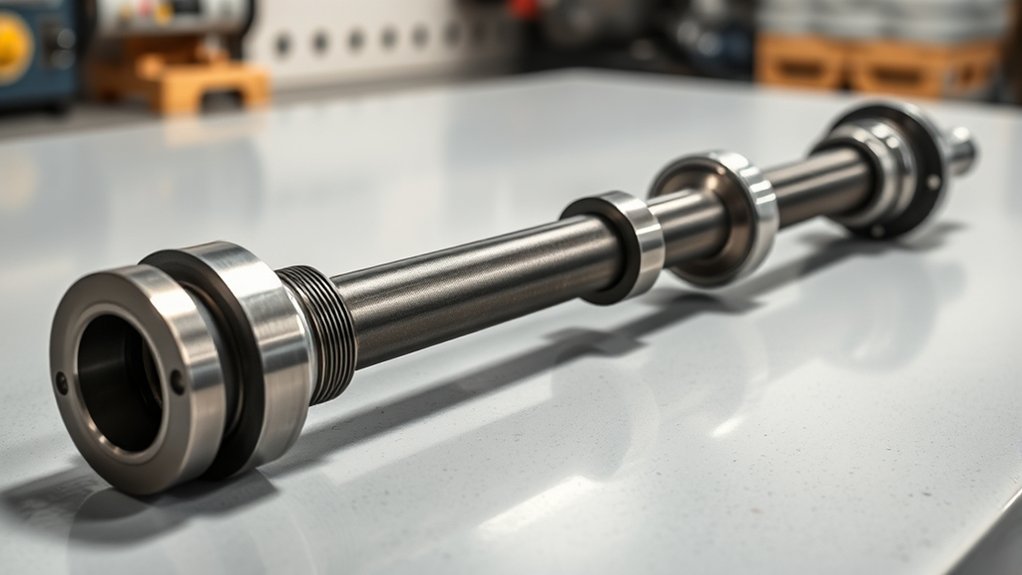
What components enable a drive shaft to efficiently transmit power under varying conditions? Understanding the main parts is essential to grasp its function and the impact of drive shaft design and manufacturing processes.
Here are the four critical components you’ll find:
- Shaft Tube: This cylindrical section transmits torque and must balance strength with weight, a key consideration in design and material selection.
- Universal Joints (U-Joints): They accommodate angular misalignments, ensuring smooth rotation despite suspension movement.
- Slip Yoke: Allows for length adjustment, compensating for changes in distance between components during operation.
- Flanges and Bearings: Secure connections and support rotational stability, minimizing vibration and wear.
Each part results from precise manufacturing processes that optimize durability and performance under dynamic loads.
Types of Drive Shafts and Their Uses
You’ll encounter several common types of drive shafts, each engineered for specific torque and speed requirements. Understanding their distinct designs helps you select the right shaft for applications ranging from automotive to industrial machinery.
Let’s examine how these variations optimize power transmission in different contexts.
Common Drive Shaft Types
Which drive shaft type suits your vehicle’s needs depends on factors like power transmission requirements, vehicle design, and operating conditions. Understanding common drive shaft types helps you choose the right one while navigating drive shaft materials and debunking maintenance myths.
1. Solid Shaft
Single-piece, robust for high torque but less flexible.
2. Tubular Shaft
Hollow, lightweight, reduces rotational mass, improving efficiency.
3. Slip Shaft
Allows length adjustment, essential for variable suspension travel.
4. CV (Constant Velocity) Shaft
Maintains steady rotational speed despite angles, crucial for front-wheel drive.
Each type addresses specific mechanical demands. You’ll find material selection—steel, aluminum, or composites—affects durability and weight. Avoid common maintenance myths; proper lubrication and timely inspection prevent failures more effectively than unnecessary replacements.
Applications of Drive Shafts
Where do different drive shaft types find their best-fit applications? You’ll see tubular steel drive shafts dominate automotive and industrial machinery due to their strength-to-weight ratio and cost-effectiveness.
Carbon fiber shafts, though pricier, excel in high-performance vehicles where reduced rotational inertia is critical. Slip yokes and CV joints cater to applications requiring variable angles and lengths, such as off-road vehicles.
Selecting appropriate drive shaft materials directly influences durability and efficiency, while lubrication requirements vary. Grease-packed CV joints need regular maintenance to prevent wear, whereas sealed tubular shafts demand less frequent attention.
The Role of Universal Joints in Drive Shaft Flexibility
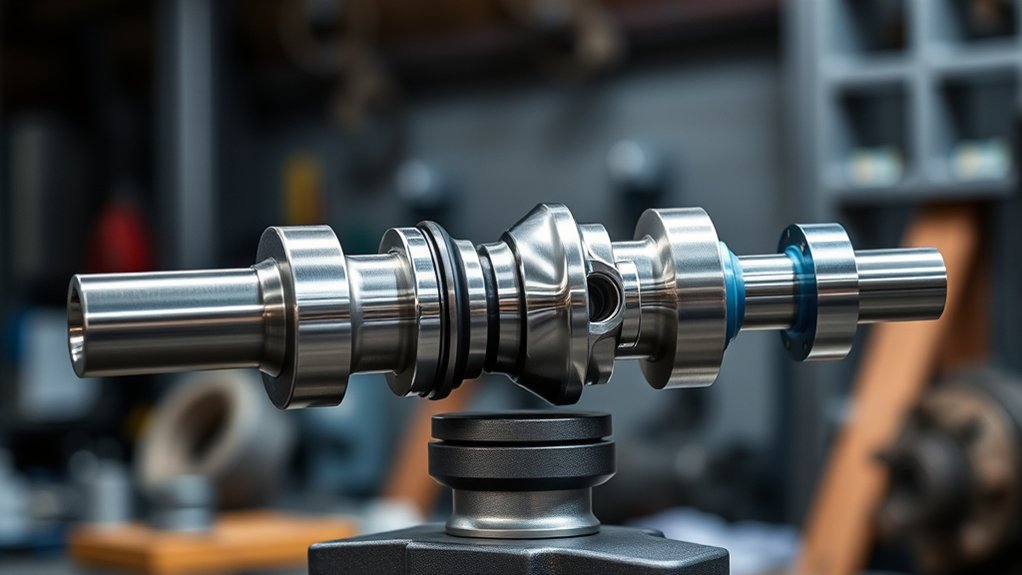
How do universal joints contribute to the flexibility of a drive shaft? Universal joints are essential flexibility factors that allow the drive shaft to transmit torque efficiently despite angular misalignments between connected components. They compensate for changes in alignment caused by suspension movement or chassis flex, maintaining rotational power transfer.
Here’s how universal joints enhance drive shaft flexibility:
- Angular Adjustment: They accommodate varying angles between the drive shaft and connected parts.
- Misalignment Compensation: Universal joints absorb shifts due to vehicle motion or load changes.
- Vibration Dampening: They reduce torsional vibrations, protecting drivetrain components.
- Continuous Power Transmission: Universal joints ensure torque flows uninterrupted despite flexing.
Signs Your Drive Shaft Might Be Failing
When should you start worrying about your drive shaft’s condition? If you notice unusual vibrations during acceleration or deceleration, it’s a critical indicator. These vibrations often stem from imbalances or worn universal joints affecting torque transmission.
Additionally, you might hear clunking noises when shifting gears or applying creative braking, signaling joint play or shaft misalignment. In vehicles with electric propulsion, sudden resistance or irregular drivetrain feedback can suggest drive shaft degradation impacting power delivery.
Excessive movement or visible damage during inspections also warrants concern. Ignoring these signs can lead to drivetrain failure, compromising vehicle control and safety.
Monitoring these symptoms closely allows you to address issues promptly before they escalate, ensuring optimal drive shaft performance and vehicle reliability.
How to Diagnose Common Drive Shaft Problems
Why do vibrations, noises, and drivetrain resistance occur in your vehicle? These symptoms often indicate drive shaft issues. To diagnose common problems effectively, follow these steps:
Vibrations, noises, and drivetrain resistance often signal drive shaft problems needing timely diagnosis.
- Visual Inspection: Check for dents, cracks, or corrosion on the shaft. Damage here disrupts balance.
- U-Joint Examination: Test for play or stiffness in universal joints; worn U-joints cause vibrations.
- Listen for Noise: Clunking or squeaking while accelerating or decelerating signals joint or bearing failure.
- Assess Drive Shaft Pricing and Upgrades: Compare OEM parts and aftermarket upgrades to ensure cost-effective replacements without compromising performance.
How the Drive Shaft Operates Under Driving Conditions
When you accelerate, the drive shaft transmits torque from the engine to the wheels, ensuring smooth power delivery. You’ll notice that variations in road conditions directly affect the shaft’s load and stress levels.
Understanding this interaction is key to analyzing drive shaft performance under real-world driving scenarios.
Torque Transmission Process
How exactly does a drive shaft transmit torque during operation? It plays an essential role in torque conversion by transferring rotational force from the engine to the wheels, governed by rotational dynamics principles.
You can break down the torque transmission process into four key steps:
- Engine output generates torque, initiating rotational motion.
- The transmission modulates torque magnitude and speed to optimize performance.
- The drive shaft receives this torque, maintaining rotational equilibrium while minimizing energy loss.
- Universal joints accommodate angular changes, ensuring continuous torque flow to the differential and wheels.
Impact of Road Conditions
Under varying road conditions, what challenges does the drive shaft face in maintaining efficient power delivery? When you drive over uneven or slippery surfaces, fluctuations in road surface traction cause inconsistent torque demands on the drive shaft. These variations increase mechanical stress, potentially accelerating wear.
Proper drive shaft lubrication becomes critical here, reducing friction between moving components under fluctuating loads. Without adequate lubrication, increased heat and wear can degrade performance and lead to premature failure.
Additionally, you must consider that abrupt traction changes can induce vibration and torsional shock, affecting alignment and balance. To maintain optimal operation, regular inspection of lubrication levels and seals ensures the drive shaft adapts to dynamic driving environments, delivering smooth, reliable power transfer regardless of road conditions.
How to Repair or Replace a Drive Shaft
Why does your vehicle exhibit vibrations or unusual noises during acceleration? These symptoms often indicate drive shaft issues. To repair or replace it, avoid distractions like non automotive or unrelated topics and focus on these steps:
- Safely lift and support the vehicle to access the drive shaft.
- Remove the bolts connecting the drive shaft to the differential and transmission.
- Inspect the drive shaft for damage such as bends, cracks, or worn universal joints.
- Replace the faulty drive shaft or repair components, then reassemble and torque bolts to manufacturer specifications.
This process requires precision and proper tools. If unsure, consult a professional, as improper handling can cause further drivetrain damage or safety hazards.
Tips for Keeping Your Drive Shaft in Good Shape
When should you perform routine inspections and maintenance to guarantee your drive shaft remains reliable? Ideally, check it every 12,000 miles or during regular vehicle servicing. Prioritize drivetrain lubrication to prevent premature wear and reduce friction.
Always address safety considerations by ensuring the vehicle is securely lifted before inspection.
| Maintenance Task | Frequency | Key Focus |
|---|---|---|
| Visual Inspection | Every 12,000 miles | Look for cracks, dents |
| Drivetrain Lubrication | Every 20,000 miles | Maintain smooth rotation |
| Universal Joint Check | Every 15,000 miles | Check for looseness |
| Safety Considerations | Every Inspection | Secure vehicle, wear gloves |
Frequently Asked Questions
Can a Faulty Drive Shaft Affect Fuel Efficiency?
Yes, a faulty drive shaft can reduce fuel efficiency. Poor driveshaft lubrication and misalignment symptoms increase friction and vibration, forcing your engine to work harder.
This ultimately consumes more fuel and decreases overall vehicle performance.
Are Drive Shafts Used in Motorcycles or Only Cars?
Yes, motorcycles use drive shafts, especially in shaft-driven models. You’ll find drive shafts transmitting torque efficiently, reducing maintenance compared to chains or belts. This makes them ideal for specific motorcycle designs focused on durability and performance.
How Does Temperature Impact Drive Shaft Performance?
When it comes to temperature effects, you’ll find thermal expansion can throw a wrench in the gears by altering drive shaft alignment. This causes vibrations or premature wear, so monitoring heat is essential to maintain peak performance.
What Materials Are Drive Shafts Commonly Made From?
You’ll find drive shafts commonly made from steel or aluminum alloys for strength and lightness, while ceramic bearings and magnetic couplings enhance performance by reducing friction and wear. This improves efficiency in high-precision applications.
Can Drive Shafts Be Customized for Racing Vehicles?
You might think custom shafts are too costly, but you can get highly efficient, customized racing drive shafts by optimizing material selection for strength and weight. This precision enhances performance and durability under extreme racing conditions.
Conclusion
Think of your drive shaft as the car’s backbone, flexing and twisting to channel your engine’s power smoothly to the wheels. Without it, your ride would lose its rhythm and strength.
By understanding its parts and functions, you can spot issues before they strike and keep this essential link balanced and lubricated.
With proper care, your drive shaft won’t just transmit torque—it’ll orchestrate a seamless, efficient dance between engine and road, showing exactly how a drive shaft works.