When you need to measure a boat motor shaft, precision is key to ensuring proper fit and performance. Accurate measurement of the boat motor shaft is essential to avoid issues during installation or operation. You’ll want to use calibrated tools like digital calipers and micrometers to capture exact dimensions.
Pay close attention to diameter, length, and any keyways or splines. Skipping steps or guessing measurements can lead to costly errors, so understanding the correct approach will save you time and frustration.
Next, let’s explore how to gather the right tools and prepare your shaft for exact measurement.
Key Takeaways
- Use a calibrated caliper to measure shaft diameter at multiple points, recording the largest value to detect taper or irregularities.
- Measure shaft length from the motor housing base to the shaft tip with a tape measure or digital caliper in the motor’s normal position.
- Clean the shaft thoroughly before measuring to remove debris or corrosion that may affect accuracy.
- Measure keyway dimensions precisely using a caliper for width and depth, documenting all measurements in a dedicated log.
- Verify tool calibration, take multiple readings, and document measurements meticulously to ensure accurate sizing and fit.
How to Gather Tools for Measuring Your Boat Motor Shaft
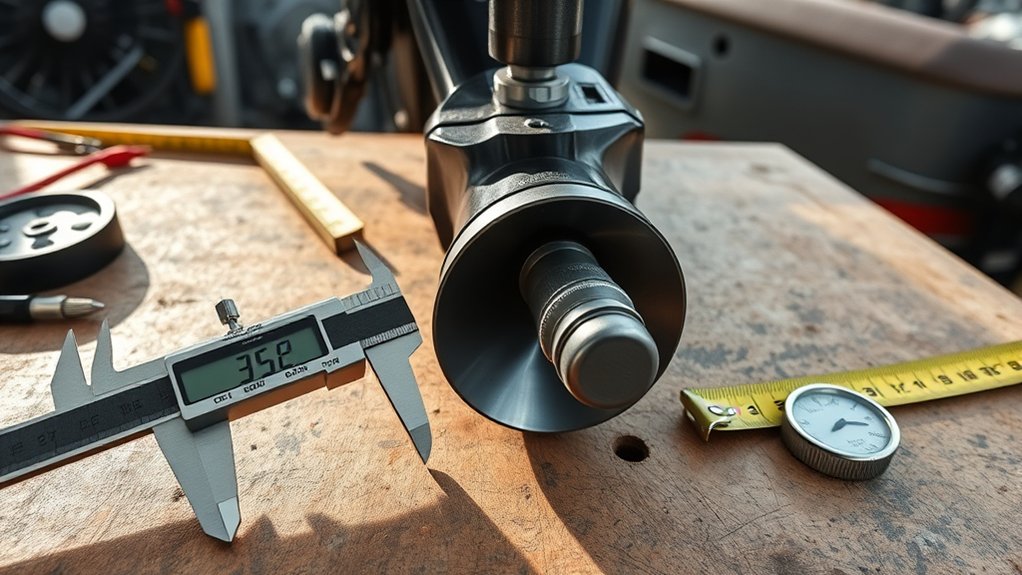
Where do you start when preparing to measure your boat motor shaft? First, gather precise measuring tools: a caliper for diameter, a tape measure or ruler for length, and possibly a micrometer for extra accuracy.
Don’t get distracted by irrelevant topics like general boat maintenance or unrelated engine parts. That’s a random aside you can skip. Focus solely on tools that directly impact your measurements.
Avoid makeshift tools because inaccurate readings lead to poor fitting parts. Confirm your tools are calibrated and in good condition to ensure reliability.
Organize them within easy reach to streamline the process. By concentrating on the essential instruments, you’ll avoid confusion and ensure your measurements are technically sound and practical, setting a strong foundation before you start measuring your boat motor shaft.
Identifying Your Boat Motor Shaft Type: A Quick Guide
How do you quickly determine the type of boat motor shaft you’re working with? Start by visually inspecting the shaft for key features: note whether it’s a straight or tapered shaft, the presence of splines, and the number of splines if applicable. These details are crucial for identifying shaft types accurately.
Next, check the shaft’s mounting style, such as inline, offset, or angled, as this affects compatibility. For estimating shaft length, measure from the transom mounting surface to the center of the propeller hub or the end of the shaft if the propeller is removed.
This method helps provide a reliable baseline before precise measurements. By systematically identifying shaft types and estimating shaft length, you ensure you select the right replacement parts and avoid operational issues.
How to Measure Boat Motor Shaft Diameter Accurately
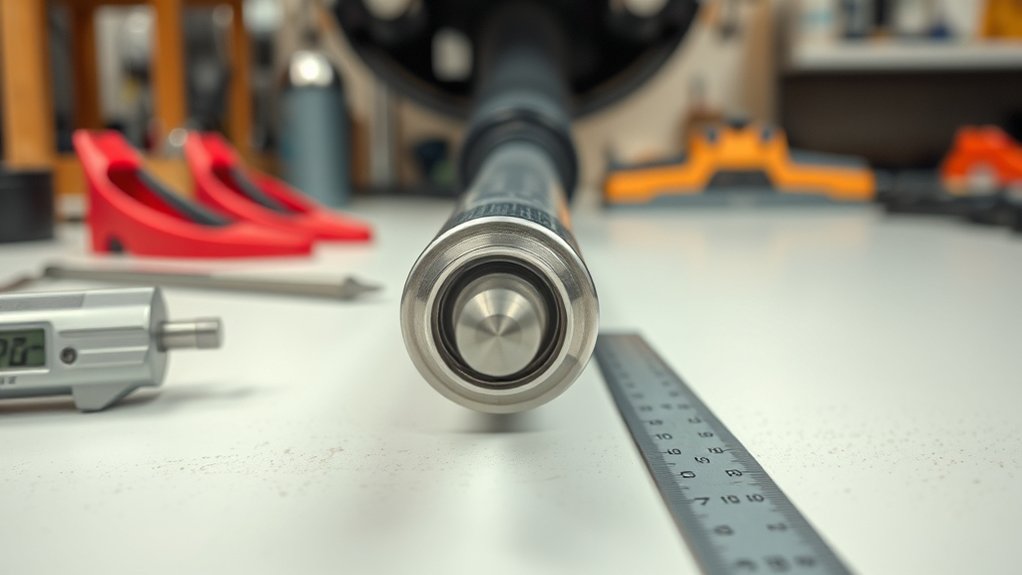
Measuring the diameter of your boat motor shaft requires precision to guarantee proper fit and function. Use a caliper for accurate measurement, ensuring the tool is calibrated first. Measure at multiple points around the shaft to detect any irregularities or wear, which is crucial for effective engine mounting and overall boat maintenance.
Record the largest diameter to avoid fitting issues.
| Measurement Tool | Purpose |
|---|---|
| Caliper | Accurate diameter |
| Micrometer | Fine precision |
| Ruler | Rough estimate |
Always clean the shaft before measuring to remove debris or corrosion. Accurate diameter measurement ensures the engine mounts securely and operates efficiently, preventing costly damage or failure.
Step-by-Step Guide to Measuring Shaft Length
To measure your boat motor shaft length accurately, start by gathering the right tools, like a tape measure or calipers. You’ll then measure from the base of the motor housing to the tip of the shaft, ensuring you record the full exposed length.
Keep in mind common tips, such as measuring on a stable surface and double-checking your readings for precision.
Tools Needed
What equipment do you need to accurately determine your boat motor shaft length? Start with a reliable tape measure or caliper capable of precise readings in inches or millimeters. A straight edge or ruler helps ensure your measurements are linear and true, critical for proper propeller alignment.
For enhanced accuracy during boat maintenance, use a digital caliper to measure diameters and confirm shaft uniformity. Additionally, have a marker or chalk to note measurement points on the shaft. A clean cloth or brush is essential to remove debris, ensuring clear visibility of reference points.
Finally, a flashlight may assist in inspecting hard-to-see areas. Using these tools will provide the precision necessary for effective boat motor shaft measurement and proper propeller alignment.
Measuring Shaft Length
How do you accurately determine the length of your boat motor shaft? First, ensure the motor is securely mounted in its normal operating position. Use a measuring tape to measure from the top of the transom, the flat surface where the motor attaches, to the bottom of the cavitation plate, which sits just above the propeller.
Record this measurement in inches or centimeters, as this represents your shaft length. Avoid confusing this with unrelated topic measurements like overall motor height, which can lead to errors. If you encounter any speculative query about shaft variants, always verify with the manufacturer’s specifications for your model.
Precise measurement avoids improper fit and potential damage, ensuring optimal motor performance and safety.
Common Measurement Tips
When measuring your boat motor shaft length, which details should you prioritize to guarantee accuracy? First, ensure your measuring tool is properly calibrated. Inaccurate tool calibration leads to consistent errors. Use a reliable caliper or tape measure with clear markings.
Avoid common measurement pitfalls such as measuring at an angle or including flanges and fittings that don’t affect shaft length. Measure from the base where the shaft enters the motor housing to the tip of the shaft, holding the tool steady and perpendicular to the shaft.
Double-check your measurement by repeating it at least twice. Record your data precisely, avoiding rounding errors. By following these practical tips, you’ll prevent mistakes and secure accurate shaft length measurements essential for proper motor fit and operation.
How to Measure Boat Motor Shaft Keyway Dimensions
Why is accurately measuring the keyway dimensions on your boat motor shaft essential? Precise keyway measurements ensure proper fit between the shaft and propeller or coupling, preventing slippage and mechanical failure.
To measure, use a caliper to determine the keyway width by placing the jaws inside the slot, avoiding irrelevant topics like overall shaft length or off topic ideas such as unrelated engine parts. Next, measure the keyway depth by inserting a depth gauge or the caliper’s depth rod into the slot.
Note the keyway length with a ruler or tape measure, ensuring you don’t include adjacent shaft features. Recording these three dimensions—width, depth, and length—accurately will help you select or fabricate the correct key that matches your boat motor shaft’s keyway profile precisely.
How to Measure the Shaft Taper Correctly
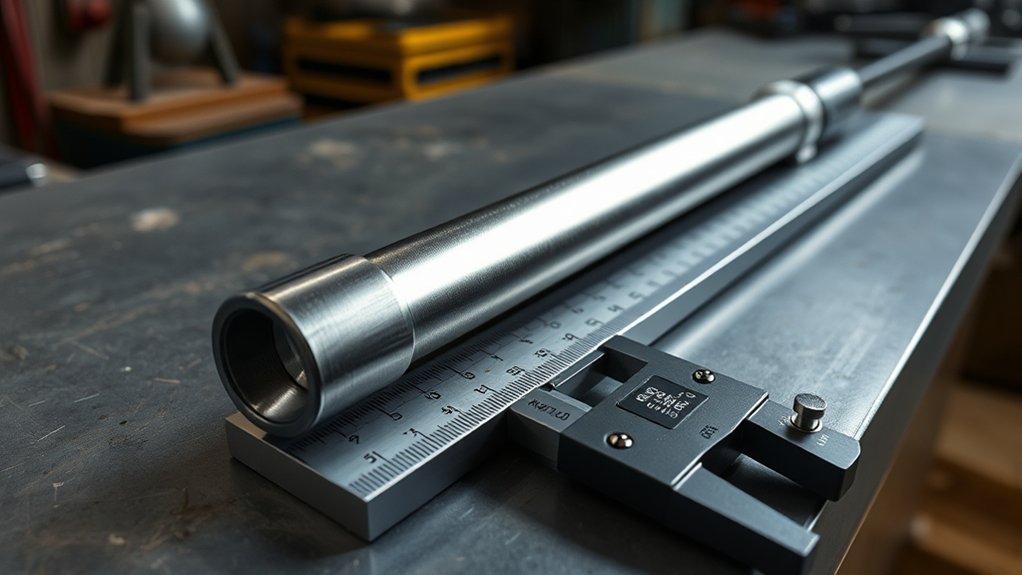
Accurately measuring the shaft taper complements the keyway dimensions by guaranteeing a secure fit between the motor shaft and propeller hub. To measure the taper correctly, use a micrometer or caliper to take diameter readings at two distinct points along the shaft, typically near the base and near the tip.
Record these measurements precisely, then calculate the taper angle or rate by dividing the difference in diameter by the distance between the two points. Avoid drifting into irrelevant topics or unrelated discussions, such as general motor maintenance or propeller types, which don’t affect taper measurement.
Focus strictly on obtaining accurate diameter measurements and calculating the taper to match manufacturer specifications. This precision prevents fitment issues and ensures optimal performance without introducing confusion from unrelated details.
How to Record Shaft Measurements for Ordering Parts
Before ordering parts, you’ll need to document all shaft measurements clearly and systematically. Begin by double-checking that your tools are properly calibrated to ensure accuracy. Use a calibrated micrometer or caliper to capture diameter, taper length, and spline dimensions precisely.
Record each measurement immediately to avoid errors. Maintain measurement safety by securing the shaft and wearing protective gloves to prevent injury during handling. Label each measurement with its corresponding location on the shaft, noting units and tolerances if applicable.
Use a dedicated log sheet or digital form for consistency and easy reference. Accurate documentation ensures the parts you order will fit perfectly, minimizing delays and additional costs. Always review your recorded data before submitting your parts request to guarantee completeness and correctness.
Avoiding Common Mistakes When Measuring Boat Motor Shafts
Once you’ve documented your shaft measurements thoroughly, it’s important to recognize common errors that can compromise your data’s reliability. Avoid relying on nontechnical buzzwords or marketing fluff when noting measurements; stick to precise figures.
Don’t use worn or damaged calipers, as inaccurate tools produce flawed results. Make sure you measure the shaft diameter at multiple points to detect any taper or irregularities.
Avoid guessing or approximating lengths; use a calibrated ruler or micrometer for accuracy. Take measurements in a clean, well-lit area to prevent misreading scales.
Finally, don’t overlook shaft keyways or splines. They affect compatibility and must be measured exactly. By steering clear of these mistakes, you’ll ensure your shaft measurements are reliable for ordering parts without costly delays or returns.
What to Do If Your Shaft Measurements Don’t Match Standard Sizes
If your shaft measurements don’t align with standard sizes, first double-check your tools and technique to rule out errors. If the measurements are accurate, explore custom shaft options tailored to your specifications.
When in doubt, consult marine equipment experts who can provide guidance and recommend suitable solutions.
Verify Measurement Accuracy
How can you guarantee your shaft measurements are accurate when they don’t align with standard sizes? Begin by performing a thorough verification accuracy check. Re-measure the shaft using calibrated tools. Digital calipers or micrometers with recent measurement calibration certificates ensure precise readings.
Confirm that your measuring instruments are zeroed correctly before each measurement. Take multiple readings at different shaft points to identify inconsistencies or irregularities. If discrepancies persist, cross-verify measurements with a secondary calibrated device.
Document all measurements meticulously to track variations. This systematic approach eliminates user error and tool inaccuracies, helping you confidently assess whether your shaft deviates from standard dimensions. Maintaining rigorous verification accuracy protects you from incorrect sizing assumptions and prepares you to make informed decisions based on reliable, reproducible data.
Consider Custom Shaft Options
After verifying your shaft measurements with calibrated tools and confirming their accuracy, you might find that your shaft doesn’t match any standard size. In this case, consider custom shaft options to ensure an exact fit and optimal performance.
Custom shafts are manufactured to your precise specifications, addressing unique dimensions that off-the-shelf models can’t accommodate. While discussing custom solutions, you may encounter a non technical discussion to clarify terms and processes, which helps in making informed decisions.
Remember to evaluate durability, material compatibility, and alignment requirements carefully. Keep future consideration in mind, as a custom shaft can influence maintenance schedules and replacement costs.
Choosing a tailored shaft ensures reliability and longevity, especially when standard options fall short.
Consult Marine Equipment Experts
When your shaft measurements don’t match standard sizes, where should you turn for reliable guidance? Consulting marine equipment experts is your best move. These professionals can verify your measurements and recommend solutions tailored to your boat’s specifications.
Avoid tempting DIY shortcuts that risk misfitting parts or damage.
Here’s what you can expect when consulting vendors:
- Precise dimensional analysis using specialized tools
- Access to custom or less common shaft sizes
- Expert advice on material compatibility and durability
- Recommendations for certified installation services
How to Use Your Shaft Measurements to Choose the Right Propeller
Why does your shaft measurement matter when selecting a propeller? Because it directly affects propeller fit and performance. When you’ve accurately measured your shaft diameter and length, you can avoid a shifted focus toward unrelated considerations like blade pitch or material before confirming shaft compatibility.
Shaft measurements ensure propeller fit and performance, preventing distraction by unrelated factors before confirming compatibility.
Using your shaft measurements, you can choose a propeller with the correct hub bore size and spline count, ensuring a secure fit that prevents slippage and vibration. This precision improves propulsion efficiency and prevents premature wear.
Always cross-reference your measurements with manufacturer specifications to confirm compatibility. By prioritizing shaft dimensions first, you streamline your selection process, reducing trial and error.
Ultimately, using your shaft measurements as the foundation guarantees optimal propeller performance and motor longevity.
Frequently Asked Questions
How Often Should I Measure My Boat Motor Shaft?
You should check your shaft’s wear limits every season or after heavy use. Regular measuring frequency helps identify wear early, preventing damage and ensuring peak performance.
Don’t skip inspections to maintain shaft integrity and safety.
Can I Measure the Shaft Without Removing the Motor?
Like peering through a keyhole, you can measure the shaft while the motor stays put by using calipers or a tape measure carefully around the exposed shaft section. This avoids motor removal and ensures precise, practical results efficiently.
What Materials Are Boat Motor Shafts Typically Made From?
Boat motor shafts typically use stainless steel or nickel-aluminum-bronze due to their excellent material composition. You’ll appreciate their corrosion resistance, essential for enduring harsh marine environments and ensuring long-lasting, reliable shaft performance.
How Do Temperature Changes Affect Shaft Measurements?
You’ll notice temperature shifts gently nudge shaft dimensions due to expansion effects, subtly altering measurements. These changes impact material strength and corrosion resistance, so always account for them to assure accurate, reliable readings under varying conditions.
Are There Professional Services for Measuring Boat Motor Shafts?
Yes, you can rely on professional services specializing in shaft measurement. They use precision tools and calibrated equipment to ensure accurate dimensions. This helps you avoid costly errors and ensures optimal motor performance and alignment.
Conclusion
Now that you’ve mastered measuring your boat motor shaft with precision and care, you’re equipped like a seasoned navigator charting unknown waters. Just as a captain relies on accurate maps, your measurements guide you to the perfect parts, ensuring smooth performance and longevity.
Remember, attention to detail prevents costly missteps—measure thoroughly, record meticulously, and steer confidently toward maintenance success every time. Your shaft’s true course depends on your exacting approach.
By applying these techniques for how to measure a boat motor shaft, you ensure the best fit and function for your motor, keeping your vessel running smoothly on every voyage.