If you’ve noticed power steering fluid leaking, it’s important to address it promptly. Fluid pooling under your vehicle or a heavier steering feel are common signs of a leak in the power steering system.
This usually happens when seals, hoses, or fittings wear down, allowing fluid to escape under pressure. Pinpointing the exact cause can save you from costly repairs.
Several factors could be to blame—from cracked hoses to failing pump seals. Understanding these issues is key before deciding your next step.
Key Takeaways
- Power steering fluid leaks often stem from worn seals and cracked or deteriorated hoses.
- Loose fittings and pressure fluctuations can cause fluid to seep from the system.
- Aging rubber components degrade due to heat, leading to leaks at connections and seals.
- Common leak areas include the pump, hoses, steering rack, and reservoir.
- Regular inspections help identify leaks early by checking fluid levels and signs like puddles or whining noises.
Signs Your Power Steering Fluid Is Leaking
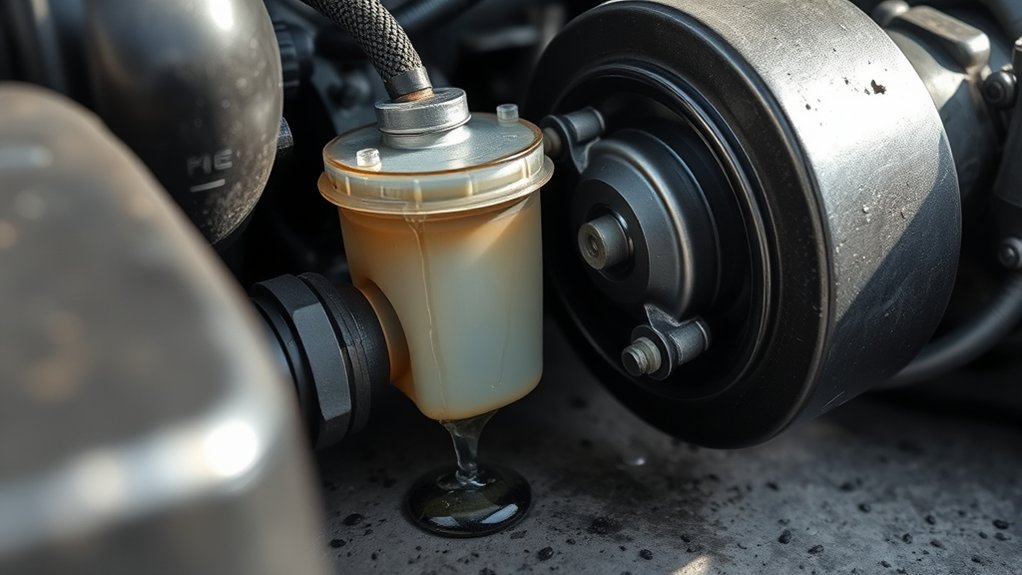
How can you tell if your power steering fluid is leaking? First, check for a reddish or amber puddle under your vehicle. This is a clear sign. You’ll also notice increased steering effort or a whining noise when turning the wheel.
Look for reddish or amber puddles and listen for whining noises when steering to spot power steering fluid leaks.
These symptoms indicate fluid loss affecting hydraulic pressure. Don’t let confusing maintenance tasks delay your response; act promptly. Inspect the reservoir level regularly, as a drop confirms leakage.
Avoid humorless troubleshooting by focusing on these practical indicators rather than guessing. Identifying leaks early prevents steering system damage and costly repairs.
Keep your checks systematic and precise to maintain optimal vehicle control and safety. Recognizing these signs helps you address the issue efficiently without unnecessary downtime or expense.
Identifying the Source of Power Steering Fluid Leaks
Where exactly is your power steering fluid leaking from? Identifying leaks precisely requires a systematic approach. Start by cleaning the suspected area thoroughly to remove dirt and old fluid traces.
Use fluid tracing techniques, such as adding a UV dye to the power steering reservoir, then operate the steering to circulate the fluid. A UV light will help you track the exact leak source, revealing cracked hoses, loose fittings, or damaged seals.
Inspect common leak points: the power steering pump, hoses, steering rack, and reservoir. Pay close attention to hose connections and the pump shaft seal.
Accurate identifying leaks not only prevents misdiagnosis but also ensures you replace or repair the correct component, saving time and costs. Fluid tracing is your most effective diagnostic tool for pinpointing leaks.
Why Does Power Steering Fluid Leak?
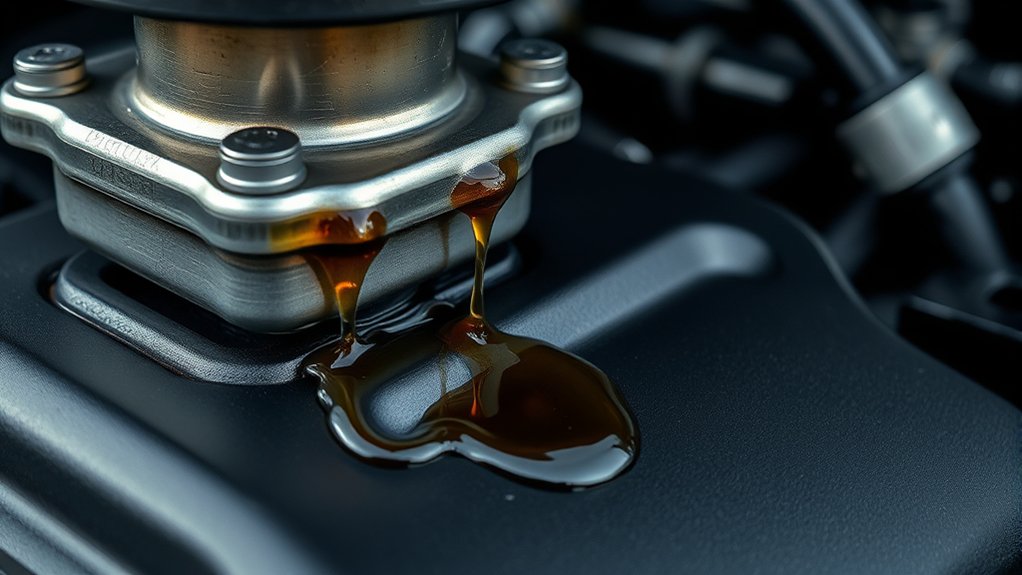
Once you’ve pinpointed the exact location of your power steering fluid leak, understanding the underlying causes becomes the next step. Leaks often result from worn seals, cracked hoses, or loose fittings in the power steering system.
Age and heat cause rubber components to degrade, leading to fluid seepage. Pressure fluctuations inside the system can also force fluid past weakened seals.
When tackling this issue, avoid common troubleshooting myths such as assuming low fluid always means a leak or that all leaks originate from the reservoir. Instead, focus on two word discussion ideas like “seal failure” and “hose deterioration” to guide your diagnosis.
Accurate identification of these causes prevents misdiagnosis and ensures you address the root problem efficiently without wasting time or resources.
Simple Fixes for Power Steering Fluid Leaks
A reliable approach to fixing power steering fluid leaks involves inspecting and replacing faulty components like seals, hoses, and fittings. Start by locating the leak source, then follow these simple fixes:
- Replace worn or cracked hoses to prevent further fluid loss.
- Tighten or swap out loose or damaged fittings to secure connections.
- Change deteriorated seals in the pump and steering rack to stop seepage.
- Thoroughly clean spills immediately to avoid damage to belts and pulleys.
Regular maintenance tips include checking fluid levels and hose conditions during routine service. Keeping the system clean and components in good shape reduces leak risks and prolongs power steering life. By addressing these issues promptly, you ensure safer steering performance and prevent costly repairs.
When to See a Mechanic for Power Steering Fluid Leaks
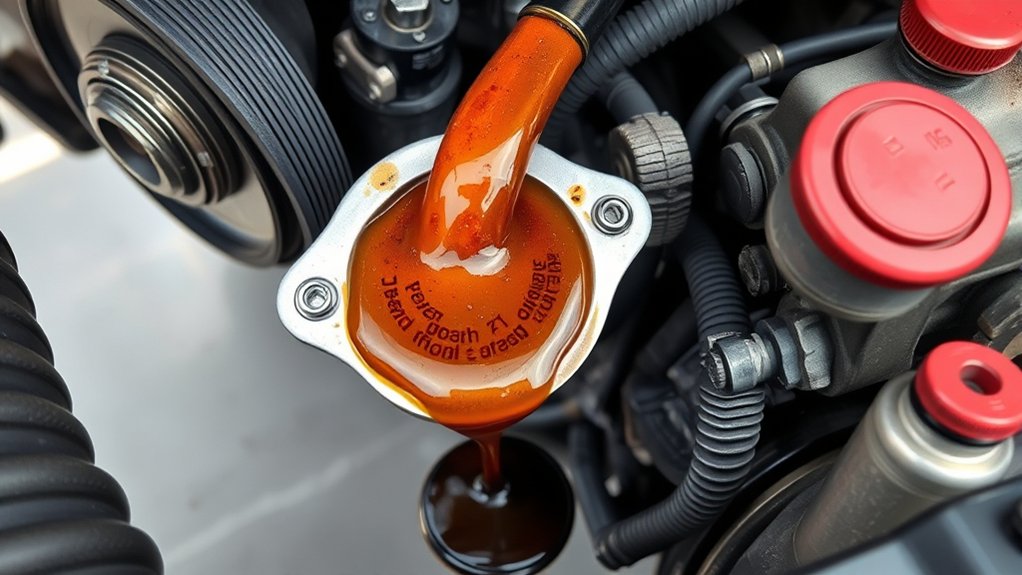
While simple fixes can address many power steering fluid leaks, some situations require professional attention to guarantee safety and system integrity. If you notice persistent leaks despite replacing seals or hoses, it’s time to see a mechanic.
Also, if you experience difficulty steering, unusual noises, or warning lights, these symptoms indicate deeper issues beyond basic troubleshooting. Avoid two word discussion ideas like “fluid check” or “hose replacement” when the problem involves the pump or rack assembly, as those require advanced diagnostics.
Ignoring these signs or relying on subtopic irrelevance, such as unrelated engine problems, can worsen damage and increase repair costs. Trust a qualified technician to accurately diagnose and fix complex leaks to maintain your vehicle’s performance and safety.
Frequently Asked Questions
What Type of Power Steering Fluid Should I Use?
You should use the power steering fluid specified in your vehicle’s manual, considering compatibility with your system’s materials. Using the correct type prevents damage and guarantees optimal performance, so always check manufacturer recommendations before refilling.
Can I Drive Safely With Low Power Steering Fluid?
Driving dangerously with dwindling fluid drives damage deeper. Don’t delay leak diagnosis; low power steering fluid limits lubrication, leading to harder handling and increased risk.
Prioritize prompt repair to preserve driving safety and prevent costly consequences.
How Often Should Power Steering Fluid Be Replaced?
You should replace your power steering fluid every 2-3 years or 24,000-36,000 miles. Regular drivetrain maintenance ensures fluid compatibility and system efficiency, preventing wear and leaks.
Always check your vehicle’s manual for specific intervals.
Does Power Steering Fluid Affect Fuel Efficiency?
You know what they say, “A stitch in time saves nine.” Proper power steering fluid levels won’t directly boost fuel efficiency, but neglecting them can strain your engine, indirectly lowering your car’s overall fuel economy over time.
Are There Additives to Prevent Power Steering Leaks?
Yes, you can use additives designed for leak prevention, but you must ensure additive compatibility with your specific power steering fluid.
Using incompatible additives risks damaging seals and worsening leaks, so always check manufacturer recommendations before adding.
Conclusion
If you notice reddish puddles or your steering feels like lifting a mountain, don’t ignore it—power steering fluid leaks can quickly worsen. Pinpoint the source by cleaning the area and using UV dye to trace the leak.
Replace worn hoses or seals promptly to prevent further damage. Simple fixes often restore function, but persistent leaks require a mechanic’s expertise.
Addressing power steering fluid leaks early ensures your steering stays smooth and safe without unexpected breakdowns. Staying proactive is key to avoiding costly repairs and maintaining optimal vehicle performance.