When you jump-start a dead battery, timing is critical to guarantee the battery gains enough charge without causing damage. Knowing how long to leave jumper cables on a dead battery is essential for a successful jump-start. You’ll want to keep the jumper cables connected just long enough—typically around 3 to 5 minutes after the donor vehicle is running—to allow the battery to stabilize.
Leaving the cables on too long can lead to complications. Understanding the balance between sufficient charging and overexposure is key before you move on to disconnecting safely. This careful timing helps ensure your battery gets the boost it needs without risking damage to either vehicle.
Key Takeaways
- Leave jumper cables connected for about 3 to 5 minutes after starting the donor vehicle to transfer sufficient charge.
- Disconnect cables promptly once the dead battery’s engine starts to prevent overcharging and damage.
- Monitor for signs like engine running and headlights brightening to confirm adequate charging before removal.
- Avoid prolonged cable connection to prevent overheating, battery damage, and alternator strain.
- After removal, run the revived vehicle for 20 to 30 minutes to fully recharge the battery.
How Jumper Cables Bring a Dead Battery Back to Life
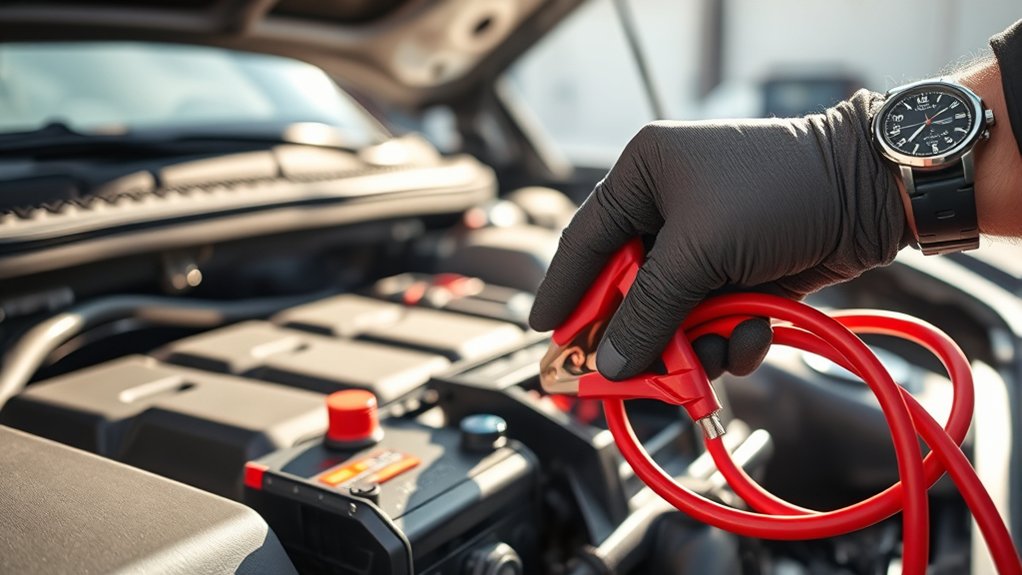
How exactly do jumper cables revive a dead battery? When you connect jumper cables between your dead battery and a charged one, you create a circuit allowing current to flow. This current supplies the dead battery with the necessary voltage to restart the chemical reactions inside, restoring its charge.
You must attach the cables correctly: positive to positive and negative to a grounded metal surface. While jumper cables are effective, alternative jump start methods like portable jump starters offer convenience by providing a compact power source without needing another vehicle.
These devices can be particularly useful if you’re stranded without access to a second car. Understanding these options ensures you can safely and efficiently bring a dead battery back to life, minimizing wait time and potential damage.
How Long Should You Leave Jumper Cables Connected?
You should leave the jumper cables connected for about 3 to 5 minutes to transfer enough charge to the dead battery. Watch for signs like the engine starting or electrical systems powering up before disconnecting.
Disconnect promptly once the car starts to avoid overcharging or damaging the battery.
Optimal Connection Duration
When determining the optimal duration to leave jumper cables connected, several technical factors come into play. You want to ensure the dead battery receives enough charge without risking damage or compromising jump start safety.
Standard roadside procedures recommend keeping the cables connected for about 3 to 5 minutes after starting the donor vehicle. This timeframe allows sufficient current flow to stabilize the battery voltage.
Key considerations include:
- Battery condition and age, which affect charging speed
- Alternator output capacity of the donor vehicle
- Avoiding prolonged connection to minimize heat buildup and electrical stress
Signs To Disconnect
Why should you pay close attention to specific signs before disconnecting jumper cables? Identifying clear indicators ensures jumper cables safety and prevents damage to electrical systems or the need for immediate battery replacement.
Disconnect cables too soon, and the battery won’t hold a charge; wait too long, and you risk sparks or overheating.
| Sign | What It Indicates |
|---|---|
| Engine starts running | Battery has enough charge |
| Voltage stabilizes | Alternator is charging the battery |
| Headlights brighten | Electrical system is functioning properly |
| No sparks or smoke | Safe to disconnect |
| Time elapsed ~5 minutes | Adequate charging duration |
Once these signs appear, carefully disconnect cables in reverse order, prioritizing jumper cables safety.
What Happens If Jumper Cables Stay On Too Long?
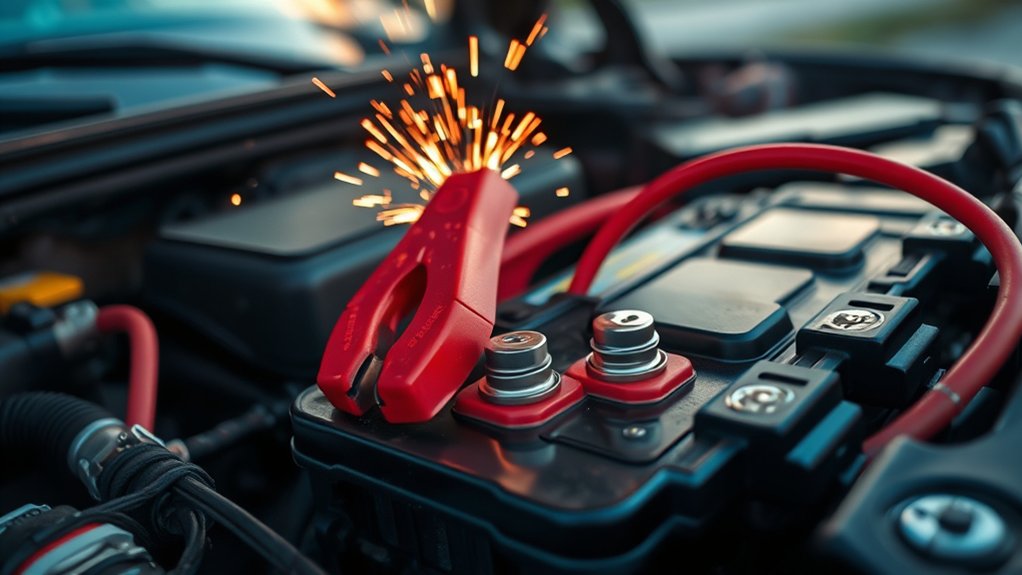
If you leave jumper cables connected too long, you risk overcharging your battery, which can reduce its lifespan. Your alternator may also sustain damage from the excess load, potentially leading to costly repairs.
Additionally, the cables themselves can overheat, posing a fire hazard or damaging insulation.
Battery Overcharge Risks
How long should you leave jumper cables connected before risking battery damage? If you leave them on too long, your dead battery can suffer from overcharging, which stresses the battery’s internal chemistry and the vehicle’s charging system.
Overcharge risks include:
- Excessive heat buildup: Can warp battery plates and damage separators.
- Electrolyte loss: Leads to reduced battery capacity and lifespan.
- Increased internal pressure: May cause battery casing deformation or leaks.
Your vehicle’s charging system regulates voltage, but jumper cables bypass this control, making it crucial to disconnect them promptly after the dead battery gains enough charge. Leaving cables connected beyond necessary can degrade battery performance and safety.
For optimal results, keep jumper cables on just long enough, typically 5 to 10 minutes, to revive the dead battery without triggering overcharge risks.
Alternator Damage Possibility
What happens to your vehicle’s alternator when jumper cables stay connected too long? Prolonged connection forces the alternator to work excessively, generating more current than designed. This overload can cause internal components to overheat and deteriorate, reducing its efficiency and lifespan.
Unlike engine wear caused by mechanical friction, alternator stress stems from electrical strain, but both impact your vehicle’s reliability. If the alternator fails, your battery won’t recharge properly, risking sudden stalls that affect tire grip due to inconsistent power delivery to electronic stability systems.
To avoid this, disconnect jumper cables promptly after the dead battery gains sufficient charge, typically within 5 to 10 minutes of running the engine. Timely disconnection protects your alternator from damage and maintains overall vehicle performance.
Cable Overheating Concerns
Why does leaving jumper cables connected too long pose a risk of overheating? When jumper cables remain attached for an extended period, electrical resistance causes excessive current flow, generating heat. This cable overheating can degrade insulation and increase the burn risk considerably. You need to disconnect cables promptly to avoid hazards.
Key concerns include:
- Insulation melting from sustained high temperatures
- Potential electrical shorts due to damaged wiring
- Increased burn risk when handling overheated cables
Overheated cables can cause serious injuries or even start a fire. To prevent cable overheating, limit jumper cable use to just a few minutes after the dead battery starts the engine. Always monitor cable temperature and remove cables immediately when the vehicle runs smoothly. This practice ensures safety and protects your equipment.
How to Tell When Your Dead Battery Has Enough Charge
When can you safely disconnect jumper cables without risking a stalled engine? After jump-starting a dead battery, you want to ensure it has gained enough charge to power the vehicle independently. Typically, once the donor car has run for about 5 minutes with the cables connected, the dead battery should accumulate sufficient voltage, usually around 12.6 volts or higher.
You can also observe the engine’s stability; if it runs smoothly without hesitation or stalling, the battery is likely ready. Using a multimeter to check voltage provides the most accurate assessment. Avoid disconnecting too soon, as the dead battery might not hold enough charge to start the engine again.
Let the alternator build the charge gradually to ensure reliable vehicle operation after the jump start.
How to Disconnect Jumper Cables Safely
How exactly do you disconnect jumper cables without causing sparks or damage? Follow strict safety precautions to protect yourself and your vehicle after jump-starting a dead battery.
First, ensure both vehicles are off or in neutral with parking brakes engaged. Then, remove cables in the correct sequence to minimize risk:
- Disconnect the black (negative) clamp from the vehicle with the dead battery.
- Remove the black (negative) clamp from the booster car.
- Detach the red (positive) clamps last, starting with the dead battery vehicle.
Always avoid touching clamps together or letting them contact metal surfaces. This method prevents sparks and electrical shorts, ensuring a safe disconnection.
Tips to Prevent Battery Drain After a Jump Start
After jump-starting your vehicle, what steps can you take to prevent the battery from draining again? First, drive your car for at least 20-30 minutes to allow the alternator to recharge the battery fully. Avoid jump start myths, such as idling the engine for extended periods, which doesn’t effectively recharge the battery.
Next, inspect the battery terminals for battery corrosion, as buildup can impede charging efficiency; clean terminals with a mixture of baking soda and water if needed. Ensure all electrical components like lights and radio are turned off when the engine is off to reduce parasitic drain.
Finally, consider getting your battery and charging system tested, especially if the battery frequently dies after jump starts, indicating potential underlying issues beyond a simple recharge.
Frequently Asked Questions
Can Jumper Cables Damage a Fully Charged Battery?
Yes, leaving jumper cables on a fully charged battery can cause battery swelling and dangerous fumes due to overcharging.
You should disconnect cables promptly to prevent damage and guarantee safety while jump-starting your vehicle.
Are There Different Types of Jumper Cables for Various Vehicles?
Yes, you’ll find different jumper cables designed for various vehicles, with different wiring standards and cable insulation types to handle specific voltage, current loads, and environmental conditions.
Choose cables matching your vehicle’s electrical requirements precisely.
How Do Temperature Extremes Affect Jump-Starting a Battery?
Temperature effects significantly impact cold starting; in cold weather, battery capacity drops, making jump-starting harder. You’ll need more power to overcome resistance, so ensure cables are well-connected.
Allow extra time to stabilize voltage during cold starts.
Can Jump-Starting a Battery Cause Electrical System Issues?
Jump-starting a battery can cause electrical system issues if done improperly, like reversed polarity. Don’t confuse this with irrelevant topics or unrelated concepts like battery chemistry.
Focus strictly on correct cable connection and safety procedures.
Is It Safe to Jump-Start a Hybrid or Electric Vehicle?
You shouldn’t jump-start a hybrid or electric vehicle unless you confirm cable compatibility and follow hybrid safety protocols. Their high-voltage systems demand specialized equipment to avoid damage or injury, so consult the manufacturer’s guidelines first.
Conclusion
When jump-starting, leave the cables connected for 3 to 5 minutes once the donor car runs, allowing the dead battery to charge. For example, Sarah waited five minutes before her truck roared to life, preventing damage from overcharging.
Watch for signs like headlights brightening to know when to disconnect safely in reverse order.
Following these steps guarantees your battery recharges efficiently without harm, getting you back on the road confidently and quickly. Knowing how long to leave jumper cables on a dead battery is key to a successful and safe jump-start.