Imagine the steady rotation of a key component beneath your car, known as the car shaft, silently transferring the engine’s power to the wheels. This essential part plays a crucial role in ensuring your vehicle moves efficiently and smoothly.
Understanding the function and types of car shafts can reveal why even minor issues in this area can disrupt your car’s performance.
As you explore further, you’ll see how this mechanical link shapes your driving experience in ways you might not expect.
Key Takeaways
- A car shaft transmits rotational energy from the engine to the wheels, enabling vehicle movement.
- Driveshafts connect the transmission to the differential, while axles link the differential to the wheels.
- Propeller shafts are specific driveshafts used in rear-wheel and four-wheel drive vehicles.
- Shafts must balance strength, weight, and rigidity to handle torque and environmental stresses.
- Regular shaft inspection and lubrication prevent vibrations, noise, and drivetrain misalignment.
What Is a Car Shaft and Why It Matters
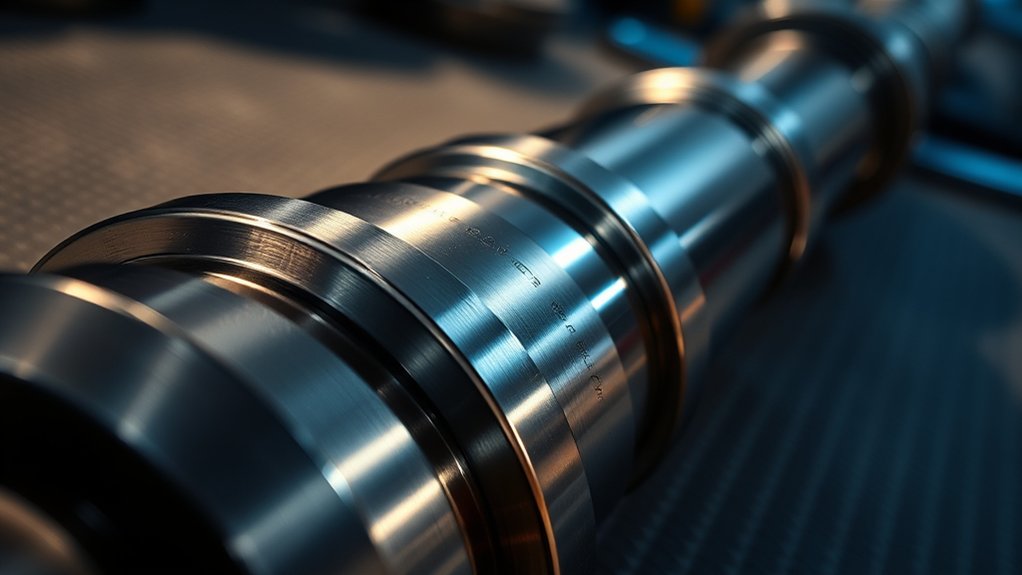
Understanding a car shaft is essential for grasping how your vehicle transmits power from the engine to the wheels. The car shaft acts as a critical mechanical link, converting rotational energy generated by the engine into motion. Without it, power delivery would be inefficient or impossible.
In terms of car maintenance, regularly inspecting the shaft for wear or damage prevents drivetrain failures and ensures optimal performance. Although vehicle electronics primarily manage engine functions and safety systems, they indirectly impact the shaft by controlling torque output and power distribution.
Ignoring shaft condition can lead to vibrations, noise, or drivetrain misalignment, which compromises overall vehicle efficiency. Recognizing the shaft’s function helps you prioritize preventative care, improving longevity and reliability in your vehicle’s drivetrain system.
Different Types of Car Shafts: Driveshaft, Axle, and Propeller
You’ll need to understand how each shaft type functions to grasp their roles in vehicle mechanics. The driveshaft transmits torque from the engine to the differential, while axles connect the wheels and support vehicle weight.
The propeller shaft, often interchangeable with driveshaft, specifically handles power transfer in rear-wheel and four-wheel drive systems.
Driveshaft Function Overview
How does a driveshaft differ from an axle or a propeller shaft in a vehicle’s drivetrain? The driveshaft primarily transmits torque from the transmission to the differential, enabling power delivery to the wheels. Unlike axles, which connect the differential to the wheels and bear vehicle load, the driveshaft focuses on rotational energy transfer over variable lengths.
Propeller shafts, often synonymous with driveshafts in some designs, specifically refer to the shaft transmitting power between the transmission and the rear differential in rear-wheel-drive vehicles.
Materials science plays a crucial role in driveshaft design, balancing strength, weight, and torsional rigidity. Manufacturing methods like precision forging, welding, and machining ensure dimensional accuracy and durability.
Understanding these factors helps you appreciate how driveshafts maintain drivetrain efficiency and withstand dynamic stresses during operation.
Axle Types Explained
While driveshafts focus on transferring rotational energy from the transmission to the differential, axles serve a different function by connecting the differential to the wheels and bearing the vehicle’s load.
You’ll encounter several axle types: live axles, which transmit torque and support weight; dead axles, which only support weight; and stub axles, used for steering. Each type demands precise shaft alignment to prevent uneven wear and maintain drivetrain efficiency.
Proper drivetrain lubrication is critical, especially at constant velocity joints and bearings, to reduce friction and heat. Misalignment or lubrication failure can lead to premature axle damage or drivetrain inefficiency.
Understanding these axle distinctions helps you maintain vehicle stability, optimize power transfer, and extend component lifespan by ensuring critical mechanical interfaces operate within design tolerances.
Propeller Shaft Role
What specific function does the propeller shaft serve within a vehicle’s drivetrain? The propeller shaft transmits torque from the transmission to the differential, enabling power transfer to the wheels.
It compensates for changes in length and angle due to suspension movement, maintaining rotational integrity. Unlike an irrelevant topic or random concept unrelated to drivetrain mechanics, the propeller shaft’s role is critical in rear-wheel and four-wheel drive systems.
It must withstand torsional stress and vibration, ensuring smooth power delivery. Its design often includes universal joints or constant velocity joints to accommodate angular misalignment.
Understanding this shaft’s role clarifies its distinction from axles and driveshafts, emphasizing its function as a pivotal link rather than a peripheral or unrelated component.
How the Driveshaft Transfers Power
You rely on the driveshaft to transfer engine power efficiently to the wheels by converting torque into rotational motion. Each component within the driveshaft plays a critical role in maintaining alignment and handling stress during this process.
Understanding how torque and rotation dynamics interact helps you grasp the driveshaft’s function in power transmission.
Power Transmission Process
How does the driveshaft efficiently transfer power from the engine to the wheels? It achieves this by maintaining precise shaft alignment, which minimizes vibrations and mechanical losses.
As the engine generates torque, the driveshaft rotates, transmitting this rotational energy through its length to the differential. Drivetrain synchronization plays a critical role here; it ensures that the driveshaft’s rotational speed matches the transmission and differential inputs, preventing backlash and wear.
You rely on the driveshaft’s balanced construction to sustain consistent torque flow, even during suspension movements or changes in shaft angle. This synchronization and alignment are essential for smooth power transfer, reducing stress on connected components while maximizing drivetrain efficiency and vehicle performance.
Driveshaft Components Role
Why do each driveshaft component matter in transferring power effectively? The driveshaft consists of the shaft tube, universal joints, and yokes, each essential for precise torque delivery. The shaft tube transmits rotational force between the transmission and differential without flexing or twisting excessively.
Universal joints accommodate angular misalignments created by suspension movement and chassis flex, maintaining smooth power flow. Yokes connect these components securely, ensuring alignment under load.
Proper car maintenance, including regular inspection of universal joints and lubrication, prevents wear that could disrupt power transfer. Additionally, accurate wheel alignment reduces undue stress on the driveshaft components, preventing vibrations and premature failure.
Understanding these parts’ roles helps you maintain drivetrain integrity and ensures efficient, reliable power transfer from engine to wheels.
Torque and Rotation Dynamics
Each driveshaft component works together to manage the forces generated by the engine and deliver them to the wheels efficiently. When you engage the engine, it produces torque, a twisting force that the driveshaft must transmit without loss.
You rely on torque balance within the driveshaft to prevent uneven force distribution, which could cause vibrations or failure. Additionally, the driveshaft’s rotational inertia influences how quickly it accelerates and decelerates, affecting responsiveness and drivetrain smoothness.
Minimizing rotational inertia allows for faster torque transfer and improved handling. You also need to consider the angular velocity of the driveshaft, ensuring it remains within operational limits to avoid fatigue. By precisely managing torque balance and rotational inertia, the driveshaft effectively converts engine power into controlled rotational motion at the wheels.
The Role of the Car’s Axle Shaft
Where does the power from your car’s engine actually meet the wheels? It’s at the axle shaft, which transmits torque directly to the wheels, enabling motion.
You need to understand that the axle shaft endures continuous stress, so engineers perform deformation analysis to ensure it withstands bending and torsional loads without excessive deflection. This analysis helps you predict how the shaft behaves under operational forces.
Additionally, material fatigue is critical; repeated loading cycles can cause microscopic cracks that grow over time, risking failure. By selecting appropriate materials and conducting fatigue tests, you ensure the axle shaft maintains structural integrity throughout its service life.
In short, the axle shaft functions as the crucial link converting engine power into wheel rotation while enduring mechanical stresses reliably.
How the Propeller Shaft Works in Cars
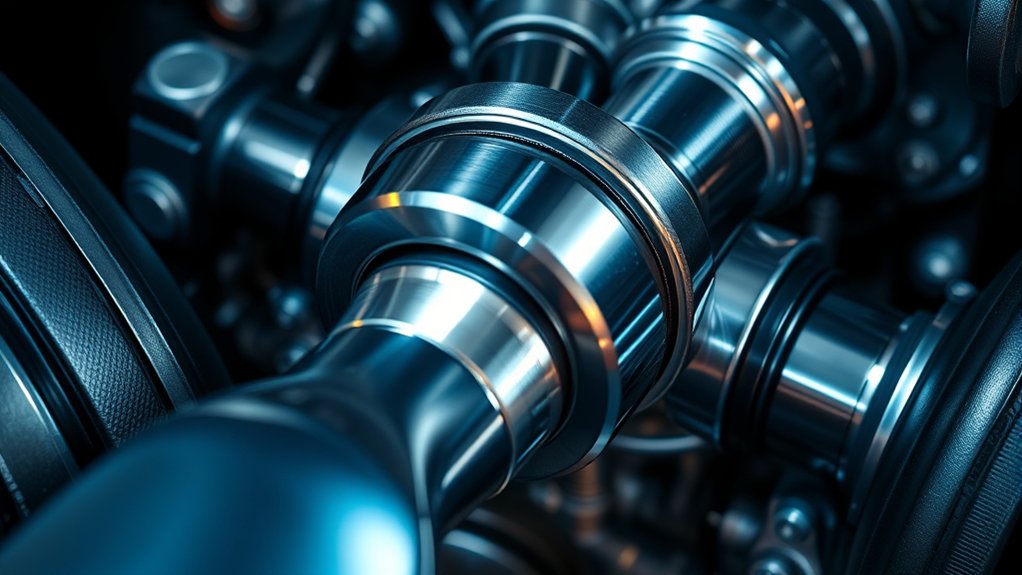
While the axle shaft transmits torque directly to the wheels, the propeller shaft plays a crucial role in delivering that torque from the engine and transmission assembly to the axle shaft itself. You must ensure precise shaft alignment to minimize vibration concerns, which can lead to premature wear or failure.
Adhering to the correct install torque ratings during assembly is vital for maintaining structural integrity under dynamic loads. Additionally, following a strict lubrication schedule for the propeller shaft’s universal joints reduces friction and heat buildup, extending service life.
Understanding these operational factors helps you maintain optimal drivetrain performance and avoid costly repairs. Proper attention to alignment, torque, and lubrication ensures the propeller shaft functions reliably within the car’s power transmission system.
Materials Used for Car Shafts
What materials make car shafts both strong and reliable under demanding conditions? Typically, manufacturers use high-grade alloy steels, such as chromium-molybdenum steel, for their excellent tensile strength and fatigue resistance. These alloys endure torsional stress and torque fluctuations transmitted from the engine, similar to how engine oil reduces friction and wear in moving parts.
Additionally, some shafts incorporate carbon fiber composites to reduce weight without sacrificing durability, enhancing vehicle efficiency. The shaft’s material must also withstand environmental factors that affect components like tire tread, which experiences constant abrasion. Precision heat treatments and surface hardening processes improve resistance to wear and corrosion.
Signs Your Car Shaft Needs Repair
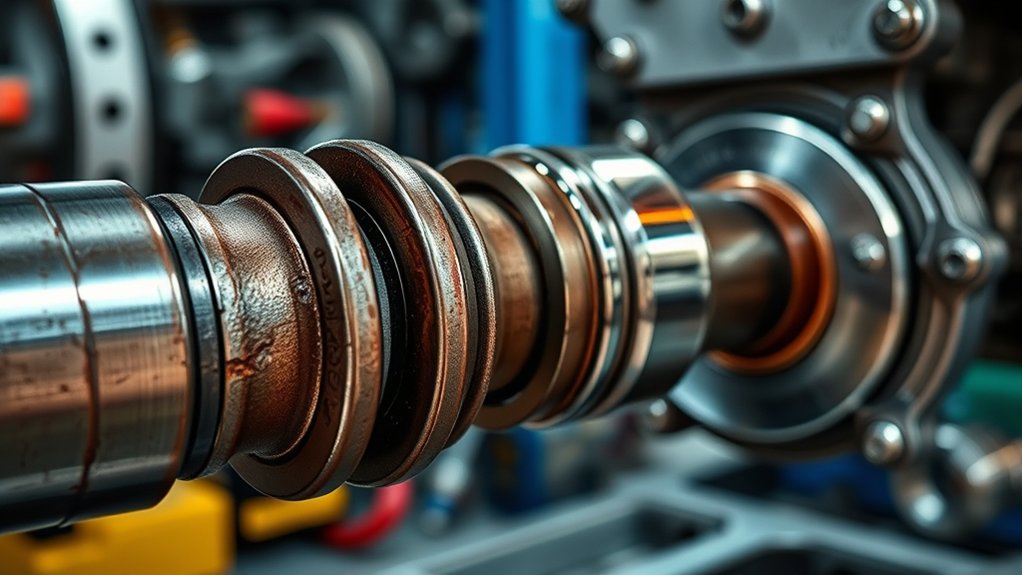
How can you tell when your car shaft needs repair? First, pay attention to unusual vibrations, especially during acceleration or at specific speeds. These often indicate shaft imbalance or worn universal joints.
Watch for unusual vibrations during acceleration or certain speeds—signs your car shaft may need repair.
You might also notice clunking noises when shifting gears or accelerating, signaling joint or bearing failure. Inspect for visible damage like cracks or bends, which compromise structural integrity.
While diagnosing these signs, remember that understanding unrelated topics like math concepts such as torque and rotational dynamics helps clarify stress distribution on the shaft. Avoid ignoring subtle symptoms; early detection prevents costly failures.
Precise evaluation using vibration analysis tools or visual inspection confirms the need for repair, ensuring your car shaft operates safely and reliably.
How Car Shafts Affect Vehicle Performance
Why does your car shaft play a critical role in vehicle performance? It transmits torque from the engine to the wheels, directly influencing acceleration, handling, and overall drivability.
A well-functioning shaft ensures smooth power delivery, reducing vibrations that can compromise car safety by affecting control stability. Additionally, an efficient shaft minimizes mechanical losses, which improves fuel efficiency and lowers the emissions impact of your vehicle.
Conversely, a damaged or imbalanced shaft increases friction and energy waste, leading to higher fuel consumption and pollutant output. It can also cause drivetrain misalignment, risking component failure that jeopardizes safe operation.
Consequently, understanding how your car shaft operates helps you appreciate its integral role in optimizing performance, maintaining car safety, and reducing environmental footprint.
Basic Maintenance Tips to Keep Car Shafts in Good Shape
Maintaining your car shaft directly impacts its ability to deliver power efficiently and safely. Start by ensuring proper car lubrication, focusing on universal joints and splines to minimize friction and wear.
Proper lubrication of universal joints and splines is essential for efficient, safe power delivery in your car shaft.
Regularly check for leaks or degraded grease, as insufficient lubrication leads to excessive heat and premature failure. Conduct diagnostic tinkering by inspecting the shaft for vibrations, unusual noises, or imbalances that indicate alignment issues or damaged components.
Use diagnostic tools to measure runout and check coupling integrity. Tighten all mounting bolts to specified torque values to prevent loosening under dynamic loads. Replace worn or damaged parts promptly to maintain shaft reliability and vehicle safety.
Consistent maintenance prevents costly repairs and ensures optimal drivetrain performance.
Frequently Asked Questions
Can Car Shafts Be Recycled or Repurposed?
Yes, you can explore recycling opportunities for car shafts through metal recovery processes. Repurposing potentials exist by adapting shafts in machinery or custom projects. Both methods reduce waste and optimize material reuse efficiently.
How Do Car Shaft Designs Vary in Electric Vehicles?
Curious how EV drivetrain shafts differ? You’ll find designs emphasize bearing integration for smoother torque transfer and reduced friction.
They’re often lighter, more compact, and optimized for electric motor efficiency compared to traditional shafts.
What Are the Manufacturing Processes for Car Shafts?
You’ll start with material selection, usually high-strength steel or alloys, then proceed through forging, machining, heat treatment, and surface finishing.
These manufacturing processes ensure precise dimensions, durability, and optimal performance under torsional stress.
Are There Aftermarket Upgrades for Car Shafts?
You’ll find aftermarket upgrades surprisingly coincide with improved shaft material choices, like carbon fiber or chromoly steel. These options enhance durability and performance, letting you tailor your car shaft for specific driving demands and stress tolerances.
How Do Extreme Weather Conditions Affect Car Shafts?
Extreme weather accelerates shaft wear by causing thermal expansion and corrosion. You should monitor shafts closely, consider specialized coatings, and explore recycling options or repurposing potential to maintain performance and sustainability in harsh conditions.
Conclusion
You rely on your car shaft every time you drive, much like a blacksmith depends on his anvil—both are foundational. Understanding the distinct roles of driveshafts, axles, and propeller shafts helps you appreciate their impact on vehicle performance.
Regular maintenance and prompt repairs prevent costly failures and guarantee smooth power transfer. Stay proactive, and your car’s shaft will keep delivering efficient, vibration-free operation, safeguarding your vehicle’s longevity and driving experience.
In conclusion, paying attention to your car shaft ensures it continues to function optimally, providing reliable performance and extending the life of your vehicle.