Imagine you’re trying to jump-start your compact car with thin, 10-gauge jumper cables, only to find they overheat quickly and struggle to deliver enough current.
Choosing the correct gauge jumper cables is essential because it directly affects how much electrical current flows safely and efficiently between batteries.
The right gauge depends on several factors, including your vehicle type, battery size, and cable length.
These details can make all the difference when you need power most.
Using the proper gauge ensures a safe and effective jump-start every time.
Key Takeaways
- Use 6- to 8-gauge cables for small cars, balancing power capacity and ease of handling.
- Choose 4- to 6-gauge cables for SUVs and light trucks to support higher amperage needs.
- For large trucks and commercial vehicles, 1- or 2-gauge cables provide necessary heavy-duty current capacity.
- Thicker cables (lower gauge) reduce voltage drop and overheating, especially for longer cable runs.
- Ensure cables have durable construction, copper wiring, proper clamp size, and clear color coding for safety.
What Jumper Cable Gauges Are and Why They Matter
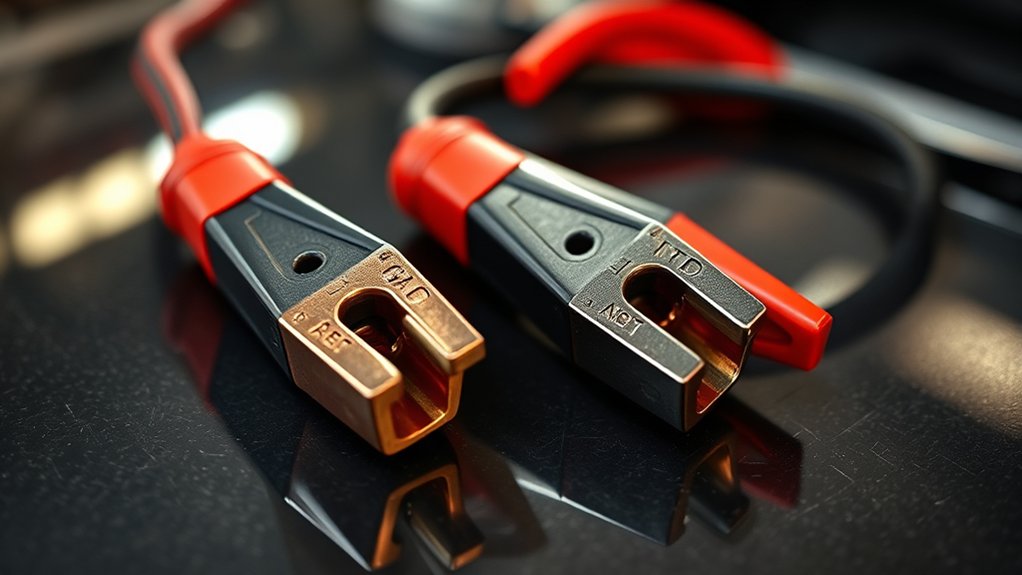
What exactly are jumper cable gauges, and why should you pay attention to them? Jumper cable gauges refer to the thickness of the cable’s wire, measured in American Wire Gauge (AWG). This measurement directly influences the cable’s capacity to carry electrical current safely and efficiently.
Ignoring cable gauge or dismissing it as an irrelevant topic can lead to random speculation about performance, which could cause you to choose inadequate cables. Using the correct gauge ensures your cables handle the electrical demands without overheating or voltage drop.
Understanding this technical detail helps you avoid safety hazards and ensures reliable jump-starting. In sum, jumper cable gauge is a critical specification that impacts both safety and effectiveness, so it’s essential to select the right one based on your vehicle’s requirements.
How Jumper Cable Gauge Affects Electrical Current Flow
How does the gauge of jumper cables influence the flow of electrical current during a jump-start? The gauge number indicates the cable’s thickness: lower numbers mean thicker wires, which reduce resistance and allow higher current flow.
When evaluating materials, copper cables offer superior conductivity compared to aluminum, enhancing current efficiency. Thinner cables (higher gauge) restrict current, potentially causing insufficient power transfer to start the engine.
Additionally, proper color coding, typically red for positive and black for negative, ensures correct polarity connections, preventing electrical damage. Choosing the right gauge means balancing cable flexibility with electrical capacity.
Ultimately, selecting cables with an adequate gauge ensures optimal current flow, minimizing voltage drop and maximizing jump-start effectiveness. This technical understanding helps you pick cables that safely handle your vehicle’s electrical demands.
Why Jumper Cable Length Influences Gauge Choice
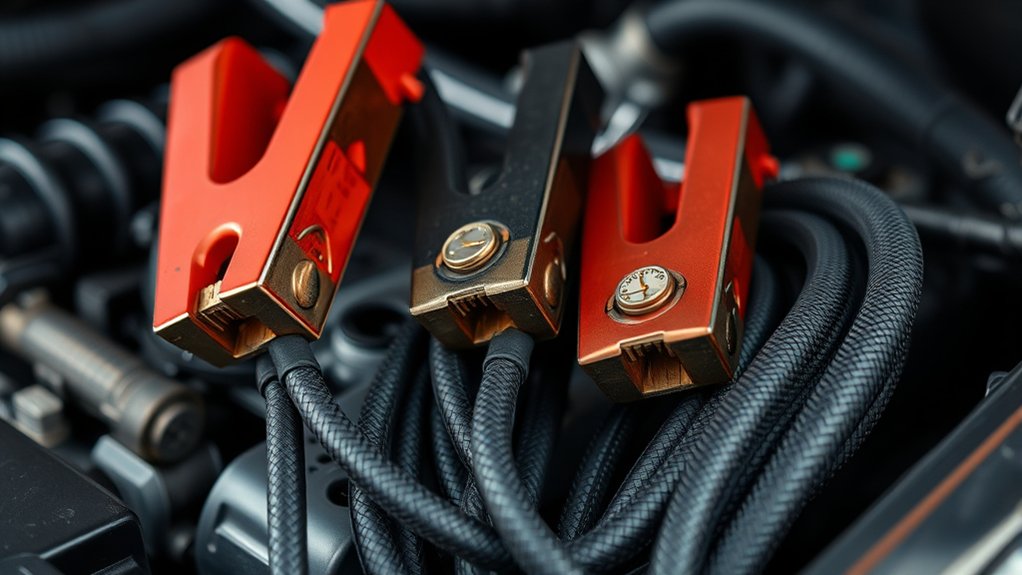
The thickness of jumper cables directly impacts current flow, but their length also plays a significant role in determining the appropriate gauge. When cables are longer, they have higher resistance, which reduces the current reaching the battery.
Jumper cable thickness and length both influence resistance and current flow, affecting the right gauge choice.
To compensate, you need thicker cables, with lower gauge numbers, to ensure efficient power transfer. If you store your jumper cables for long term storage, choosing the right gauge helps avoid degradation from excessive resistance and heat buildup.
Additionally, cables with clear color coding simplify identification, preventing mistakes during connection. When selecting jumper cables, consider both length and gauge together; longer cables demand a lower gauge to maintain proper electrical flow.
This approach guarantees reliable performance and safety during jump-starting tasks.
How Battery Size Impacts Jumper Cable Gauge Selection
When selecting jumper cables, you need to take into account your battery’s capacity because larger batteries require thicker gauge cables to handle higher current loads safely.
Heavy-duty cables, typically lower gauge numbers, provide the necessary conductivity for big batteries in trucks or SUVs. For smaller batteries, light-duty cables with higher gauge numbers usually suffice without risking voltage drop or overheating.
Battery Capacity And Gauge
Why does battery capacity matter when choosing jumper cable gauge? The capacity, measured in ampere-hours (Ah), determines the current your cables must handle safely. Larger batteries supply higher currents, requiring thicker gauge cables to prevent overheating and maintain battery safety.
Using cables with insufficient gauge risks excessive resistance, generating heat that can compromise vehicle insulation and damage electrical components. For smaller batteries, thinner cables may suffice, but always ensure they meet the minimum specifications for your battery’s capacity.
Selecting the appropriate gauge minimizes voltage drop, ensuring efficient power transfer without stressing the battery or vehicle wiring. In short, matching cable gauge to battery capacity safeguards both your battery and vehicle insulation, maintaining optimal performance and preventing potential hazards during jump-start procedures.
Heavy-Duty Vs. Light-Duty
How do you determine whether to use heavy-duty or light-duty jumper cables for your vehicle? The decision primarily depends on your battery size and the amperage it demands.
Heavy-duty cables, with lower gauge numbers (e.g., 4 or 6 gauge), handle larger batteries and higher current loads efficiently. Light-duty cables (10 or 12 gauge) suit smaller batteries with lower amperage.
Avoid making an unnecessary comparison between cable gauge and unrelated topic factors like cable length alone; focus on battery capacity to guide your choice.
| Battery Size | Typical Gauge | Vehicle Type | Current Demand (Amps) | Recommended Cable Type |
|---|---|---|---|---|
| Small | 10-12 | Motorcycles, Cars | 400-600 | Light-Duty |
| Medium | 6-8 | Sedans, SUVs | 600-1000 | Medium-Duty |
| Large | 4 | Trucks, Vans | 1000+ | Heavy-Duty |
| Extra Large | 2 or lower | Commercial Vehicles | 1500+ | Heavy-Duty |
Jumper Cable Gauge Recommendations for Small Cars
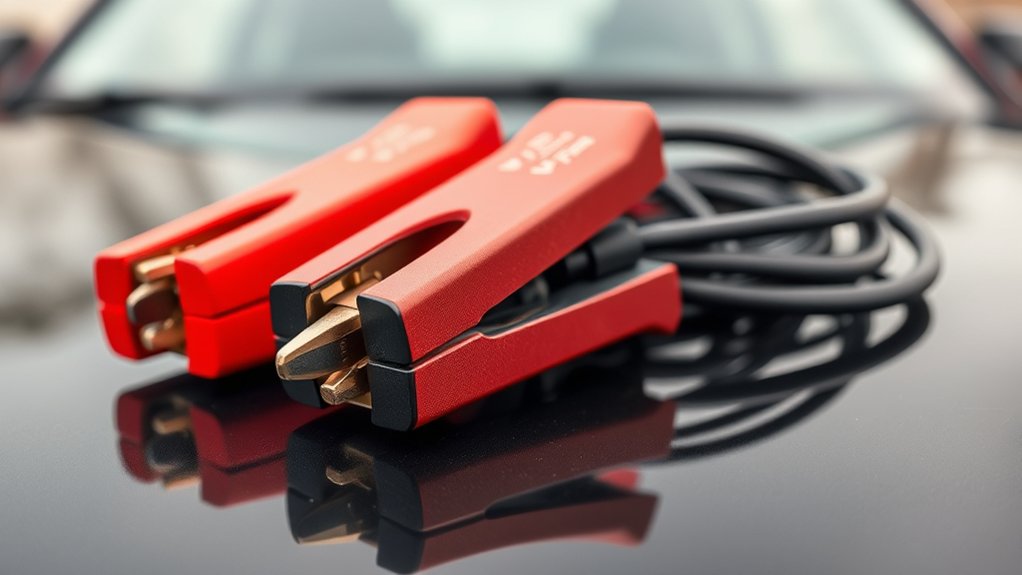
For small cars, 6 to 8-gauge jumper cables provide the optimal balance between current capacity and flexibility. Using thinner cables reduces weight and makes handling easier without compromising performance for lower battery demands.
You’ll still get efficient power transfer while avoiding unnecessary bulk.
Optimal Gauge Size
When selecting jumper cables for small cars, you’ll want to focus on the optimal gauge size that balances current capacity with flexibility and ease of handling. Typically, 6 to 8 gauge cables provide sufficient amperage for most small engines without becoming unwieldy.
It’s important to dispel common gauge myths. Thicker cables don’t always mean better performance if the length is excessive or the cable quality is poor. Also, pay attention to color coding: red typically indicates positive clamps, black for negative, ensuring safe and correct connections.
Choosing the right gauge avoids voltage drops and overheating, maximizing efficiency during jump-starts. In summary, 6-gauge cables are often ideal for small cars, combining power delivery with manageable weight and flexibility.
Benefits of Thinner Cables
Why choose thinner jumper cables for your small car? Thinner cables, typically 8 to 10 gauge, offer several benefits tailored to smaller vehicles. Their reduced diameter makes them lightweight and easier to handle, simplifying storage and deployment.
Despite their size, these cables provide adequate current flow for small engines due to their shorter length and lower amperage requirements. Additionally, thinner cables exhibit reduced resistance over short distances, ensuring efficient power transfer without excessive voltage drop.
This efficiency prevents potential damage to your car’s electrical system and ensures a reliable jump start. While thicker cables are necessary for larger engines, thinner cables strike the right balance between performance and convenience for small cars, making them an optimal choice for everyday use.
Best Jumper Cable Gauges for SUVs and Light Trucks
How do you choose the right jumper cable gauge for SUVs and light trucks? Focus on gauge compatibility and lug terminal sizing to ensure safety and efficiency.
Typically, 4 to 6-gauge cables provide sufficient current for these vehicles, balancing flexibility and power delivery. Thicker cables (lower gauge numbers) handle higher amperage, reducing voltage drop during jump-starts, which is critical for larger batteries.
4 to 6-gauge cables balance flexibility and power, minimizing voltage drop for effective jump-starts in larger vehicle batteries.
However, oversized cables may not fit standard lug terminals on your vehicle’s battery, complicating connections. Verify that the cable’s lug terminal sizing matches your battery posts to maintain secure contact.
Choosing cables with proper gauge compatibility guarantees efficient power transfer without overheating or damage. Ultimately, 4-gauge jumper cables often hit the sweet spot for most SUVs and light trucks, offering optimal performance and reliable lug terminal fitment.
Jumper Cable Gauge Options for Large Trucks and Commercial Vehicles
Moving beyond SUVs and light trucks, large trucks and commercial vehicles demand jumper cables with substantially lower gauge numbers to handle their higher electrical loads. You’ll want cables rated at 2 gauge or even 1 gauge to assure efficient current flow.
Avoid ultra light or novelty cables, as their thin wires and decorative cables won’t sustain the heavy-duty demands. Oversized connectors are essential for secure attachment to large battery terminals in commercial vehicles.
| Gauge | Recommended Vehicle Type | Connector Type |
|---|---|---|
| 1 | Heavy-duty trucks, commercial | Oversized connectors |
| 2 | Large trucks, buses | Oversized connectors |
| 4 | Light trucks, SUVs | Standard connectors |
Choose cables built for durability and high amperage to jump-start big engines reliably.
Safety Tips for Using the Right Gauge Jumper Cables
When selecting jumper cables, you must prioritize safety to prevent electrical hazards and equipment damage. Using the correct gauge ensures adequate current flow, minimizing overheating risks and reducing the chance of insulation melting.
Avoid common safety mistakes like connecting cables in reverse polarity or attaching clamps to moving parts, which can cause sparks or short circuits. Always inspect cables for damage before use; exposed wires increase the risk of short circuits and electrical shock.
Connect the positive (red) clamps first, followed by the negative (black) clamps on a grounded metal surface away from the battery to prevent sparks. Using the right gauge jumper cables designed for your vehicle’s battery specifications will protect both your electrical system and yourself during jump-start procedures.
Where to Buy Reliable Jumper Cables and How to Choose Them
Where can you find jumper cables that combine durability, safety, and the correct specifications for your vehicle? Start by exploring reliable brands known for high-quality copper or copper-clad aluminum wires, thick insulation, and appropriate gauge ratings.
Automotive stores and online marketplaces offer a wide range, so check product reviews and verify compliance with safety standards. When choosing, prioritize cables with sturdy clamps and sufficient length to reach between vehicles easily.
If you’re on a tight budget, look for budget options that still meet essential criteria such as 4 or 6-gauge thickness for standard cars to ensure safe and efficient power transfer. Avoid cables with thin wires or poor clamping mechanisms, as they compromise safety and performance.
Selecting trusted manufacturers ensures longevity and dependable jump starts when you need them most.
Frequently Asked Questions
Can Jumper Cables Damage My Vehicle’s Electrical System?
Yes, using jumper cables with poor electrical system compatibility can damage your vehicle. To protect jumper cables’ longevity, always select the right gauge and ensure proper connection.
This helps avoid voltage spikes harming sensitive components.
How Do I Properly Store Jumper Cables to Extend Their Lifespan?
Think of your jumper cables as a coiled snake resting in its den; you should store them loosely coiled in a dry, cool place. This preserves material durability and guarantees storage longevity by preventing kinks and corrosion.
Are There Any Environmental Factors That Affect Jumper Cable Performance?
Yes, weather impacts jumper cables significantly. Extreme temperature effects, like cold, reduce cable flexibility and conductivity, while heat can degrade insulation.
You should store cables properly to maintain optimal performance despite environmental conditions.
Can I Use Jumper Cables on Hybrid or Electric Vehicles?
Sure, just slap junk cables on your hybrid because hybrid safety totally means ignoring EV charging compatibility!
Seriously, use manufacturer-approved jump starters designed for hybrids or EVs to avoid damage, ensuring safe, precise, and effective power transfers.
How Do I Know if My Jumper Cables Are Worn Out or Unsafe?
To inspect your jumper cables, check for frayed wires, exposed metal, or cracked insulation. Prioritize safety considerations by discarding cables with corrosion or loose clamps to prevent electrical hazards and ensure reliable jump-starts.
Conclusion
Choosing the right gauge jumper cables isn’t just about size—it’s about ensuring safe, efficient current flow based on your vehicle’s battery and cable length. While thicker cables reduce voltage drop, excessive thickness can be unwieldy. Research confirms that matching gauge to amperage needs optimizes performance and prevents overheating.
So, always consider your vehicle type and cable length carefully. Using the appropriate gauge guarantees reliable jump-starts without compromising safety or electrical integrity. In conclusion, selecting the proper gauge jumper cables is essential for safe and effective vehicle jump-starts.