Drive shaft failure might seem like a simple result of wear and tear, but it often stems from a complex combination of design flaws, manufacturing defects, and operational stresses. These factors interact in ways that can compromise the drive shaft’s performance and longevity.
Issues such as improper material selection, misalignment, and corrosion play significant roles in weakening the shaft’s integrity. Understanding these underlying causes is crucial because even minor problems, if overlooked, can lead to costly damage and extended downtime.
Let’s explore the specific reasons behind drive shaft failure and learn how to identify potential problems early to prevent serious consequences.
Key Takeaways
- Drive shaft failure often results from stress concentration, fatigue, and microscopic cracks propagating under cyclic loads.
- Incorrect drive shaft design, such as improper sizing or material, can lead to excessive stress and premature failure.
- Manufacturing defects like cracks or weak welds reduce shaft strength and increase failure risk.
- Imbalance and misalignment cause vibrations that accelerate wear and damage to the drive shaft components.
- Corrosion weakens the shaft material, promoting cracks and structural failure over time.
What Is a Drive Shaft? Why Does It Fail?
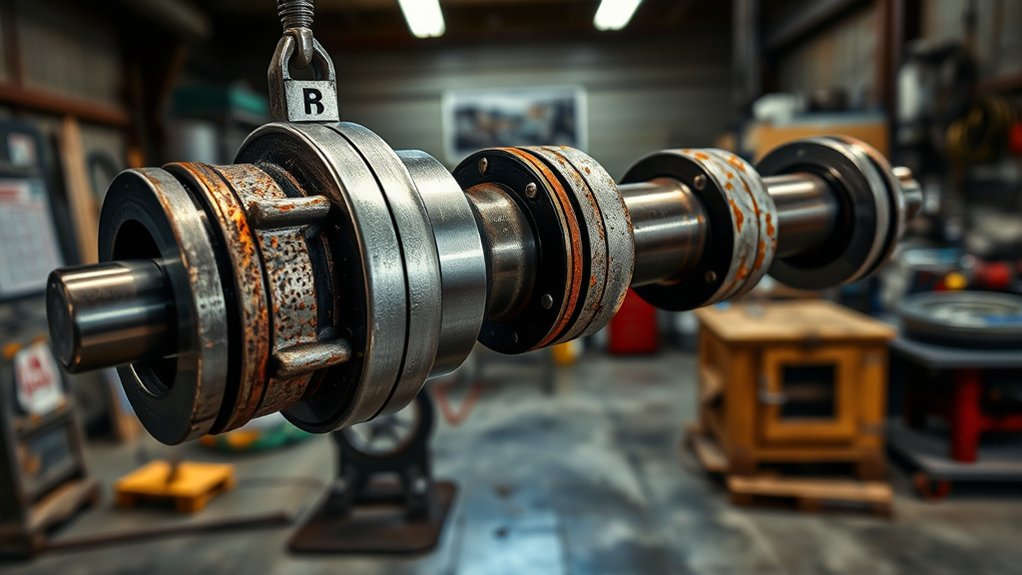
What exactly does a drive shaft do, and why does it fail? Understanding drive shaft basics is essential: it transmits torque from the engine to the wheels, enabling motion. Its design must withstand torsional stress, bending forces, and rotational speeds.
Failure psychology reveals that drive shafts fail not merely from physical damage but from complex interactions of stress concentration, fatigue, and material defects. When you analyze failure, you see that microscopic cracks can propagate under cyclic loads, weakening the shaft until it fractures.
Additionally, imbalanced loads or misalignment induce vibrations, accelerating wear and fatigue. Recognizing these mechanical and material dynamics allows you to predict failure points before catastrophic breakdowns occur, emphasizing the importance of precise engineering and maintenance in drive shaft longevity.
Common Causes of Drive Shaft Failure
Understanding the mechanical and material factors that contribute to drive shaft failure helps identify specific causes that frequently lead to breakdowns. You’ll find that improper drive shaft design, such as incorrect diameter or material selection, often causes excessive stress and premature fatigue.
Manufacturing defects, including poor welding or substandard material quality, also compromise structural integrity. Other common causes include imbalance, misalignment, and corrosion, each accelerating wear or causing catastrophic failure.
| Cause | Description |
|---|---|
| Drive Shaft Design | Incorrect sizing or material leading to stress |
| Manufacturing Defects | Flaws like cracks or weak welds reducing strength |
| Imbalance | Uneven mass distribution causing vibrations |
| Misalignment | Axial or angular misfit increasing stress |
| Corrosion | Material degradation weakening the shaft |
Addressing these factors helps prevent unexpected failures.
How Worn Universal Joints Damage Your Drive Shaft
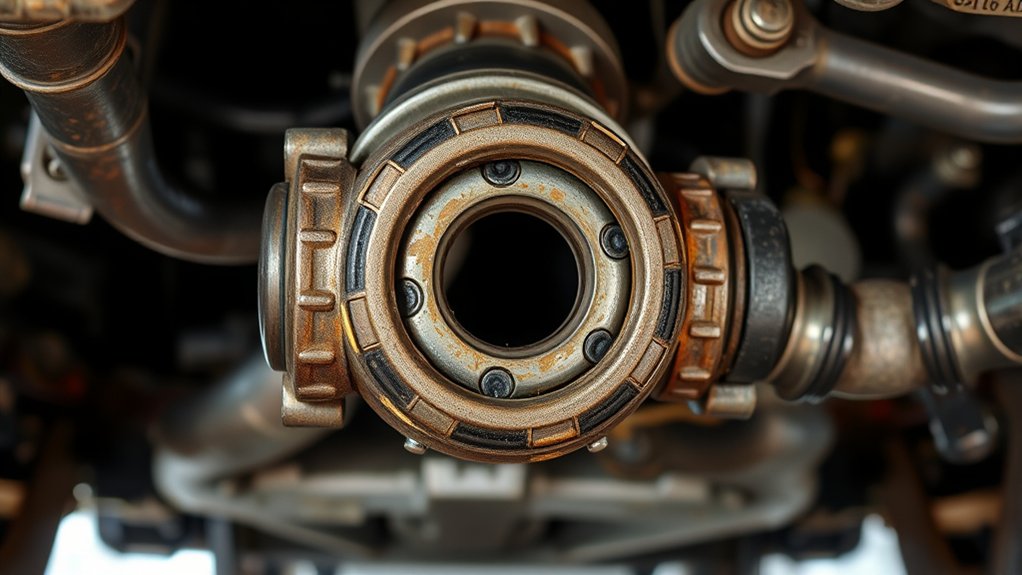
How exactly do worn universal joints inflict damage on your drive shaft? When universal joints degrade, worn bearings inside them lose their ability to maintain proper alignment and smooth rotation. This causes excessive play and vibration, which transfers uneven forces along the drive shaft.
A common consequence is a broken yoke, which results from repeated stress concentrations where the yoke connects to the shaft. The broken yoke compromises the shaft’s structural integrity, leading to failure. Furthermore, worn bearings accelerate metal fatigue by allowing misalignment and increased friction, which generates heat and weakens the drive shaft’s components.
If you don’t address worn universal joints promptly, these damage mechanisms intensify, significantly shortening your drive shaft’s service life and potentially causing catastrophic failure during operation.
How an Imbalanced Drive Shaft Causes Damage
Worn universal joints increase stress and vibration along your drive shaft, but an imbalanced drive shaft introduces another set of damaging forces. When your driveshaft is imbalanced, centrifugal forces fluctuate unevenly during rotation, causing oscillations that amplify stress on bearings, seals, and joints.
This imbalance leads to rapid wear and fatigue, accelerating component failure. The damage caused by imbalance manifests as excessive vibration, increased noise, and premature deterioration of drivetrain parts.
You’ll notice reduced operational efficiency and potential misalignment issues stemming from these forces. Maintaining precise balance is critical; even slight deviations can propagate dynamic loads that your drive shaft and connected components aren’t designed to handle.
Addressing imbalanced driveshaft conditions promptly minimizes costly repairs and ensures drivetrain longevity.
How Corrosion and Rust Weaken Your Drive Shaft
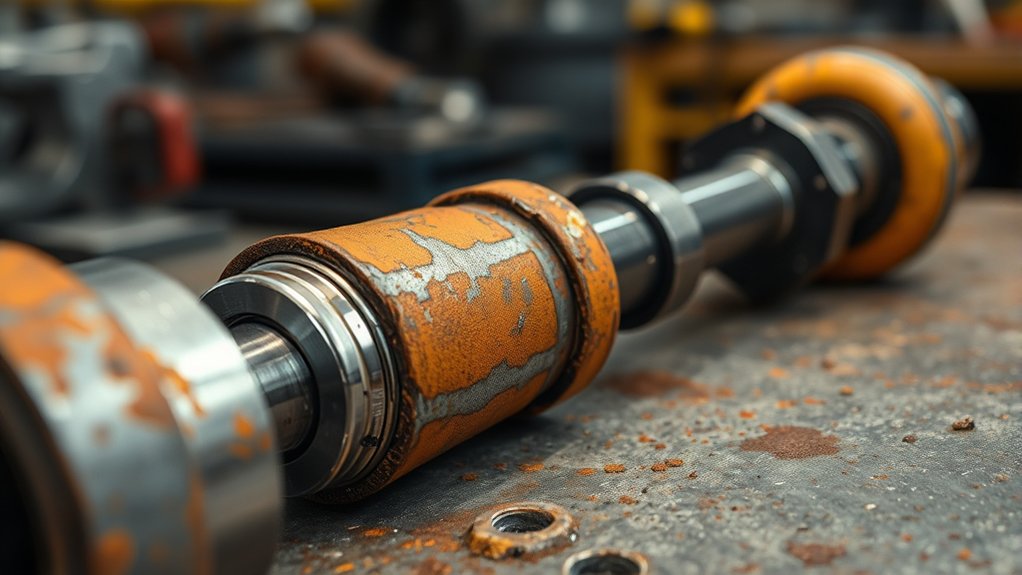
Why does corrosion pose such a significant threat to your drive shaft’s integrity? Rust corrosion gradually degrades the metal surface, creating microscopic pits and cracks. These imperfections act as stress concentrators, accelerating metal fatigue under normal operational loads.
As rust penetrates deeper, it compromises the shaft’s structural uniformity, reducing its ability to withstand torsional forces. You might not notice this damage initially, but over time, the weakened areas can propagate cracks, leading to sudden failure.
Preventing rust corrosion involves regular inspections and protective coatings to inhibit moisture and chemical exposure. By addressing corrosion early, you maintain the drive shaft’s mechanical strength and extend its service life, avoiding costly breakdowns caused by metal fatigue resulting from unchecked rust corrosion.
How Driving Habits and Road Conditions Damage Your Drive Shaft
In what ways do your driving habits and the roads you travel on affect the durability of your drive shaft? Aggressive acceleration, harsh braking, and frequent sharp turns generate excessive torque and stress on the drive shaft components, accelerating wear and fatigue.
Similarly, inconsistent driving speeds lead to irregular rotational forces, increasing the risk of imbalance and premature failure. Road conditions greatly influence drive shaft longevity; rough, uneven surfaces, potholes, and debris cause abrupt shocks and vibrations that strain the universal joints and splines.
Additionally, driving on poorly maintained or off-road terrain exposes the drive shaft to contaminants like dirt and moisture, which exacerbate mechanical wear. By understanding how your driving habits and road conditions impose mechanical loads and environmental challenges, you can better appreciate the factors contributing to drive shaft degradation.
Warning Signs and Prevention Tips for Drive Shaft Problems
You’ll notice common drive shaft symptoms like vibrations, clunking noises, or difficulty turning that signal underlying issues. Regularly inspecting components and lubricating joints can prevent premature wear and failure.
Catching early damage through routine maintenance helps you address problems before they escalate.
Common Drive Shaft Symptoms
How can you identify drive shaft issues before they escalate? Key symptoms include unusual vibrations during acceleration, clunking noises when shifting gears, and difficulty turning. These signs indicate imbalance or worn universal joints, which compromise driveline integrity.
Ignoring such symptoms leads to failure, yet some discussions on forums veer into unrelated topics or off topic debates, distracting from practical diagnosis. You should focus on consistent indicators like uneven movement or visible wear on the shaft and joints.
Early detection relies on recognizing these mechanical cues rather than engaging in off topic debates about unrelated components. By pinpointing symptoms precisely, you can address drive shaft problems promptly, avoiding costly damage and ensuring optimal vehicle performance.
Routine Maintenance Practices
Where should you focus your attention to prevent drive shaft failure effectively? Concentrate on routine maintenance addressing critical aspects of drive shaft design and lubrication maintenance. Neglect here accelerates wear and risks costly breakdowns. Follow these steps:
- Inspect universal joints and splines regularly for signs of fatigue or misalignment, as poor drive shaft design can exacerbate stress concentrations.
- Maintain proper lubrication schedules to ensure smooth operation and reduce friction-induced wear.
- Check for corrosion or physical damage to the shaft body that may compromise structural integrity.
- Confirm that mounting bolts and brackets are securely fastened, preventing unwanted vibrations or shifts.
Early Damage Detection
Maintaining your drive shaft through regular inspections and lubrication minimizes wear, but early detection of damage plays a crucial role in preventing catastrophic failure. You need to watch for vibration, unusual noises, or visible cracks. These are key warning signs indicating imbalance or joint deterioration.
Ignoring symptoms or focusing on an unrelated topic like unrelated engine issues can divert your attention from the root problem. Avoid irrelevant focus on peripheral components; prioritize drive shaft-specific diagnostics such as checking universal joint play and spline condition.
Use precise measurement tools to detect misalignment or corrosion early. By acting promptly on these indicators, you can prevent extensive damage, costly repairs, and unsafe driving conditions. Early intervention based on targeted inspection is your best defense against drive shaft failure.
Frequently Asked Questions
How Much Does It Cost to Replace a Drive Shaft?
You’ll typically pay between $300 and $800 to replace a drive shaft. Costs vary depending on universal joint wear and the need for precise drive shaft lubrication during installation to ensure optimal performance and longevity.
Can a Damaged Drive Shaft Affect Fuel Efficiency?
You might think a damaged drive shaft directly lowers fuel efficiency, but the truth is subtle. While it doesn’t consume more fuel itself, it causes vibration and power loss, indirectly impacting your vehicle’s overall fuel efficiency.
How Long Does a Typical Drive Shaft Last?
You can expect a typical drive shaft to last between 100,000 and 150,000 miles.
Monitor drive shaft wear and failure indicators like vibrations or clunking sounds to address issues before complete failure occurs.
Is It Safe to Drive With a Failing Drive Shaft?
You shouldn’t drive with a failing drive shaft due to drive shaft safety risks like vibration or loss of control. Follow repair guidelines promptly to prevent damage, ensuring your vehicle’s mechanical integrity and your personal safety on the road.
Can I Repair a Drive Shaft Myself or Need a Mechanic?
Fixing a drive shaft yourself is like maneuvering a maze; without thorough drive shaft inspection knowledge, DIY vs professional leans toward pros. Complex alignment and torque specs require precision only a mechanic can reliably provide.
Conclusion
If you ignore drive shaft maintenance, you might as well invite catastrophic failure to your ride’s core—think total breakdown, costly repairs, and unsafe driving conditions. Even minor misalignments or corrosion can snowball into severe damage faster than you expect.
By staying vigilant with inspections, lubrication, and timely replacements, you’ll prevent these hidden threats from turning your drive shaft into a ticking time bomb. Don’t let small issues escalate into mechanical disasters.
Ultimately, understanding what causes drive shaft failure is key to keeping your vehicle running smoothly and safely.