Think of jumper cables as a spark that awakens your car’s battery but doesn’t fully revive it. When considering how long to charge a car battery with jumper cables, you might wonder how long you should keep those cables connected to avoid damage while giving enough charge to start your engine.
Understanding the precise timing and the role of your alternator can prevent frustration and costly repairs. Let’s explore what happens during this critical process and why timing matters more than you might expect.
Key Takeaways
- Keep jumper cables connected for no more than 3 to 5 minutes once the donor vehicle is running to prevent overheating and damage.
- The 3 to 5 minute window allows sufficient current flow to stabilize the dead battery’s voltage for engine starting.
- After the dead vehicle starts, disconnect cables promptly in reverse order to avoid electrical hazards and insulation damage.
- Driving the jump-started vehicle for at least 20 minutes is necessary to allow the alternator to fully recharge the battery.
- A jump-start provides only enough power to start the engine, not a full charge; sustained alternator operation completes charging.
How Long to Safely Keep Jumper Cables Connected
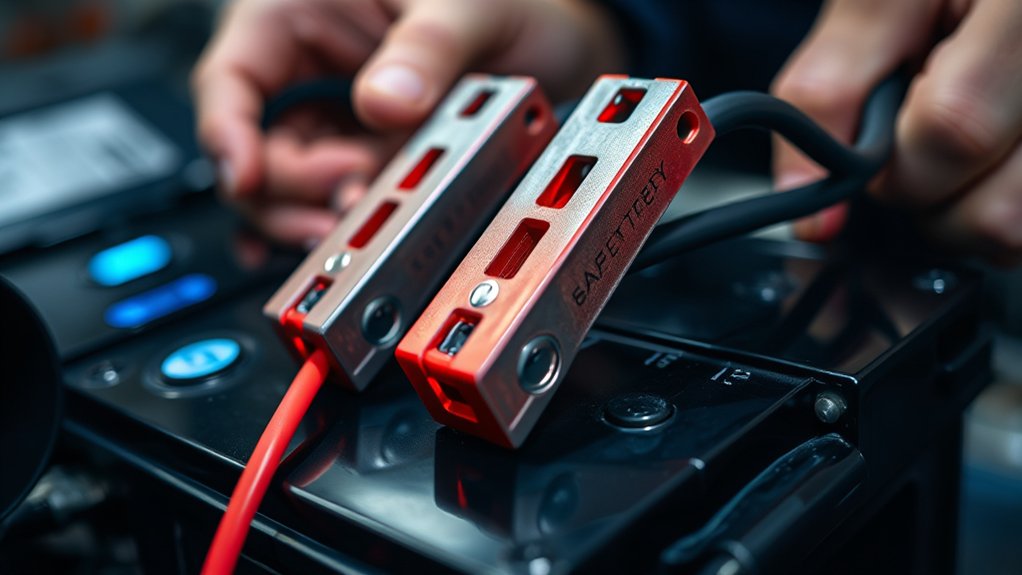
Although jumper cables provide a quick solution to a dead battery, you shouldn’t keep them connected longer than necessary. For charging safety, it’s crucial to adhere to established jump start limits to avoid damaging the electrical systems of either vehicle.
Typically, you should maintain the connection for no longer than 3 to 5 minutes once the donor vehicle is running. This timeframe allows enough current to flow and stabilize the dead battery’s voltage without risking overheating or overcharging.
Keep jumper cables connected for only 3 to 5 minutes to safely stabilize the dead battery’s voltage.
Prolonged connection can lead to excessive heat, cable insulation damage, or battery acid leakage. Once the dead vehicle starts, disconnect the cables promptly in reverse order of connection.
Following these jump start limits ensures you protect both vehicles’ electrical components and maintain optimal charging safety throughout the procedure.
How Jumper Cables Actually Charge Your Battery
When you connect jumper cables between two vehicles, electrical current flows from the donor battery to the dead battery, allowing it to regain enough charge to start the engine. This process is straightforward but often misunderstood, leading to irrelevant paradoxes or unrelated tangents about battery charging. Here’s how it works:
- The donor battery provides a direct current (DC) source through the cables.
- Current flows through the cables, overcoming the dead battery’s internal resistance.
- Electrons move into the dead battery, restoring its charge level.
- Once sufficient charge accumulates, the dead battery can power the starter motor.
This transfer bypasses complex chemical reactions temporarily, enabling immediate engine ignition. Avoid getting sidetracked by myths or unrelated tangents about jumper cable usage; the principle remains simple and electrical.
How Battery Condition Changes Charging Time
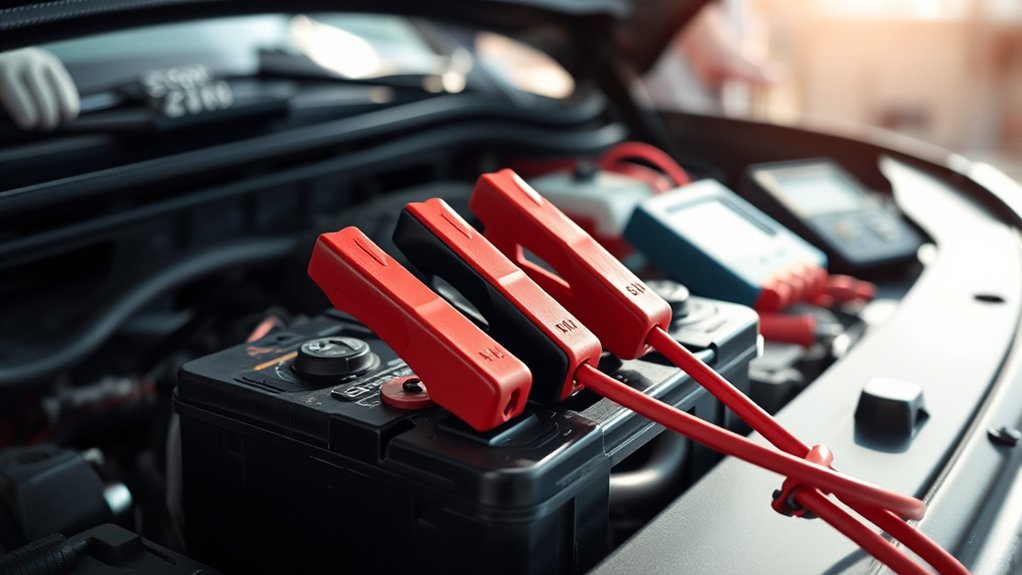
Understanding how jumper cables transfer current to a dead battery sets the foundation for recognizing why the battery’s condition directly impacts charging time. As your battery ages, its internal resistance increases, reducing efficient current flow during cold cranking and extending charging time.
A well-maintained battery charges faster, while an aged or sulfated battery requires more time to accept a charge.
| Battery Condition | Internal Resistance | Impact on Charging Time |
|---|---|---|
| New | Low | Short |
| Moderate Aging | Medium | Moderate |
| Advanced Aging | High | Long |
Knowing this helps you anticipate how long jumper cable charging might take based on your battery’s age and condition.
How Your Car’s Alternator Affects Battery Charging
How does your car’s alternator influence the battery charging process during jumper cable use? The alternator plays a vital role by converting mechanical energy into electrical energy, replenishing the battery’s charge while the engine runs. Understanding its function helps you minimize jump start risks and protect battery life.
Key points to consider:
- The alternator controls voltage output, ensuring the battery charges efficiently without overloading.
- A faulty alternator may fail to recharge the battery fully, prolonging charging time.
- Excessive alternator output can damage battery cells, reducing battery life.
- Proper alternator function stabilizes electrical flow, decreasing jump start risks like voltage spikes.
Why You Should Keep the Engine Running After a Jump-Start
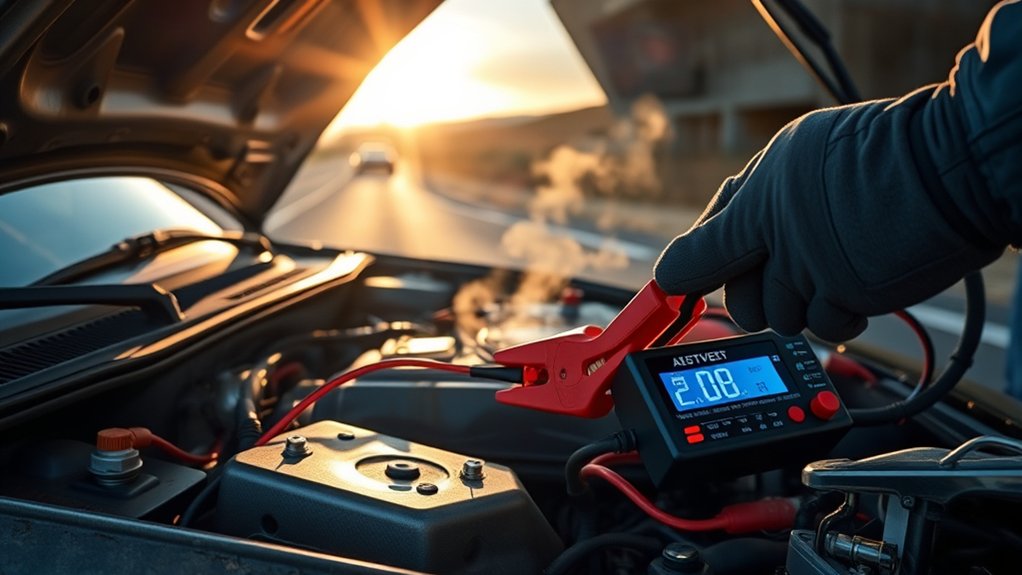
After jump-starting your car, keep the engine running to prevent the battery from draining again. This allows the alternator to recharge the battery efficiently and restore its proper function.
Additionally, maintaining engine operation supports the electrical system’s stability while the battery regains charge.
Prevent Battery Drain
Why should you keep the engine running after jump-starting your car? To prevent battery drain, you need to allow the alternator to recharge the battery properly. Disconnect jumper cables only after the engine is on and stable.
Here’s why keeping the engine running matters:
- Maintains steady voltage to recharge the battery efficiently.
- Prevents the battery from quickly discharging after the jump-start.
- Allows you to gauge how long the battery holds charge under normal load.
- Reduces risk of stalling or electrical system failure right after jump-starting.
For safety tips, always ensure jumper cables are removed in the correct sequence once the engine runs, and avoid turning off the engine immediately. Knowing how long to keep the engine running helps extend battery life and reliability.
Recharge Alternator Function
Where does the energy come from to restore your battery’s charge once the car is jump-started? The answer lies in the alternator function.
After you use jumper cables to provide an immediate boost, your engine’s alternator takes over, generating electrical power to recharge the battery and supply the vehicle’s electrical systems. It’s crucial to keep the engine running post jump-start because the alternator converts mechanical energy from the engine into electrical energy.
This process replenishes the battery’s charge efficiently, preventing it from dying again soon after. If you shut off the engine immediately, the battery won’t receive this vital recharge, risking another dead battery.
Maintain Electrical System
Keeping the engine running after a jump-start not only allows the alternator to recharge the battery but also maintains the vehicle’s electrical system stability. If you turn off the engine too soon, you risk insufficient battery charge and voltage drops that disrupt critical components. Avoid treating this as an unused topic or unrelated concept; it’s vital for system integrity.
Here’s why you should keep the engine running:
- Sustains voltage output to prevent electronic malfunctions.
- Enables the alternator to fully restore battery capacity.
- Prevents sudden power loss that can reset onboard computers.
- Supports proper function of sensors and control modules.
Following these steps ensures your car’s electrical system remains stable and reliable after a jump-start.
How to Tell When Your Battery Is Fully Charged
How can you accurately determine when your car battery is fully charged? First, use a voltmeter to measure the voltage across the battery terminals. A fully charged 12-volt battery typically reads about 12.6 to 12.8 volts.
During charging, monitor the voltage rise; once it stabilizes near this range, the battery is likely fully charged. Next, check the specific gravity with a hydrometer if accessible. This two word discussion ideas1 method provides precise electrolyte condition insights.
Additionally, observe the battery temperature; excessive heat indicates overcharging, signaling you should stop charging. Keep in mind two word discussion ideas2 such as charge time and voltage thresholds to avoid guesswork.
Preventing Battery Damage During Charging
A critical step in charging your car battery involves preventing damage caused by overcharging or improper handling. To ensure charging safety when using jumper cables, follow these precise guidelines:
- Connect jumper cables in the correct order: positive to positive, negative to grounded metal to avoid sparks or short circuits.
- Avoid prolonged charging sessions. Overcharging can cause battery overheating and damage internal plates.
- Use insulated jumper cables to prevent accidental contact with metal surfaces, reducing the risk of electrical shorts.
- Monitor the battery temperature throughout charging. Excessive heat signals a need to stop immediately to prevent irreversible damage.
Maintaining Your Battery After a Jump-Start
What steps should you take immediately after jump-starting your car to ensure the battery remains reliable? First, drive the vehicle for at least 20 minutes to allow the alternator to recharge the battery adequately. Avoid turning off the engine too soon, as this can lead to incomplete charging.
Address common jump start misconceptions: a jump-start doesn’t fully recharge the battery; it merely provides enough power to start the engine. Always observe safety precautions during and after the process to prevent electrical damage or injury.
Regularly inspect battery terminals for corrosion and clean them as needed to maintain optimal conductivity. Finally, consider having the battery tested to confirm its health after a jump-start, ensuring your vehicle’s electrical system remains dependable and preventing future failures.
When Jump-Starting Won’t Work: Replacing Your Battery
Even after following proper jump-start procedures and maintaining your battery, there are times when the battery won’t hold a charge or start the vehicle. This indicates you’ve reached the jump start limits, and you likely have a bad battery that needs replacing.
When your battery won’t hold a charge despite jump-starts, it’s time to consider replacement.
To determine if replacement is necessary, check for these signs:
- Battery fails to hold voltage despite multiple jump starts.
- Corroded or damaged terminals that impair electrical flow.
- Visible swelling or leakage from the battery casing.
- Persistent slow engine crank or no response when turning the key.
If you observe these, replacing the battery is essential. Continuing to rely on jump-starting won’t resolve underlying battery failure and can risk further electrical system damage.
Frequently Asked Questions
Can Jumper Cables Be Used on Electric Vehicles?
You generally shouldn’t use jumper cables on electric vehicles due to electric efficiency concerns and charging safety risks. Instead, follow manufacturer guidelines for proper procedures to protect the battery management system and ensure safe, efficient charging.
What Type of Jumper Cables Are Safest for My Car?
Like a trusted handshake, choose jumper cables with safe grips and pure copper tips for reliable conductivity. Avoid cross border brands with poor reviews—they might compromise safety and performance, risking damage to your car’s electrical system.
Do Cold Weather Conditions Affect Jump-Starting Success?
Yes, cold weather reduces jump start reliability by thickening battery electrolyte and increasing internal resistance. You’ll need a stronger power source and may experience slower engine cranking.
Can Using Jumper Cables Damage My Car’s Electronics?
Using jumper cables improperly can damage your car’s electronics due to voltage spikes. To prevent this, always use quality battery protectors and follow correct connection procedures.
This helps safeguard sensitive electronic components during jump-starting.
How Often Should I Check My Battery Health?
You should check your battery health every three to six months to ensure optimal performance. Regular diagnostics help detect early signs of wear or corrosion, preventing unexpected failures and extending your battery’s lifespan effectively.
Conclusion
While jumper cables give your battery a quick boost, they don’t fully recharge it. You might’ve heard leaving cables connected longer helps, but that risks damage—3 to 5 minutes max is safest.
Instead, keep your engine running and drive at least 20 minutes to let the alternator do the real work. Use a voltmeter to check for 12.6–12.8V, ensuring a full charge.
This method preserves battery life and keeps you reliably on the road. Knowing how long to charge a car battery with jumper cables is key to maintaining your battery’s health.