Transporting an e-bike on your car’s roof rack might seem straightforward, but it demands careful attention to weight limits and proper securing methods.
Putting an e-bike on a roof rack requires verifying your vehicle’s roof capacity and choosing the right rack type to avoid damage or safety risks.
If you overlook these details, you could face serious problems on the road.
Understanding the correct approach can make all the difference in protecting both your bike and your vehicle.
Always ensure the e-bike is securely fastened and balanced to prevent shifting during transit.
Taking these precautions helps ensure a safe and hassle-free journey for both you and your e-bike.
Key Takeaways
- Yes, e-bikes can be transported on roof racks designed to support their weight and frame securely without damaging the battery or frame.
- Use platform or adjustable frame holder racks to stabilize the bike and avoid pressure on battery compartments or fragile areas.
- Always check and adhere to your vehicle’s roof weight limit, including the rack and e-bike combined weight, to ensure safe transport.
- Secure the bike with straps and padding to prevent movement, scratches, and exposure to extreme weather during transit.
- Consider alternate transport options like truck bed carriers or trailers if roof clearance or weight limits pose challenges.
Is It Safe to Transport Your E-Bike on a Roof Rack?
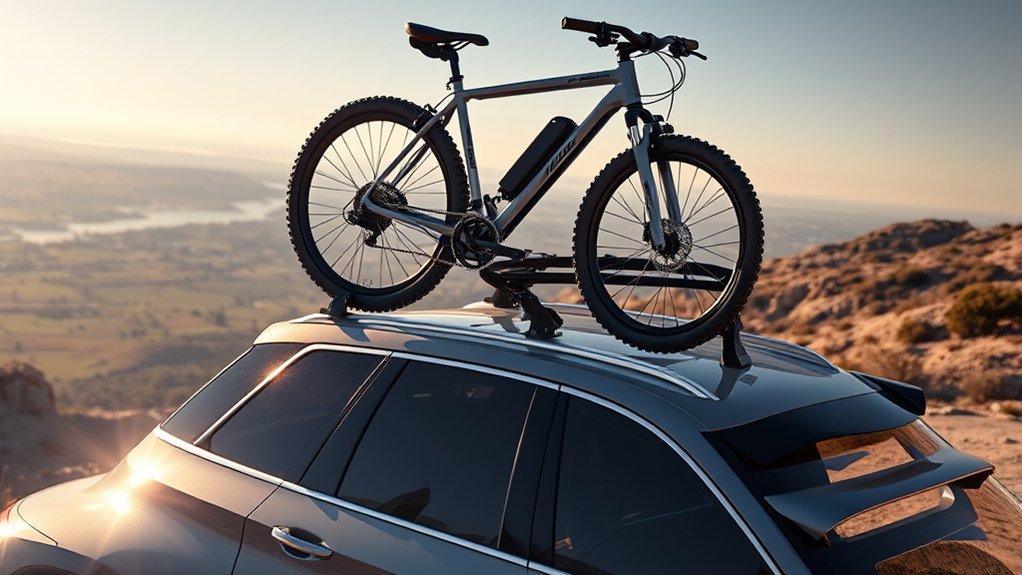
How safe is it to transport your e-bike on a roof rack? You must consider both ethics considerations and legal requirements to ensure safety. Legally, you need to verify that your e-bike is securely fastened to prevent accidents or damage, adhering to local traffic laws regarding load dimensions and visibility.
Ethically, you have a responsibility to other road users to avoid hazards caused by improperly secured loads. Use appropriate mounting hardware designed for e-bikes, regularly check fasteners during transit, and balance the load to prevent shifting.
Neglecting these aspects can result in fines, liability, or injury. By following legal requirements and ethics considerations, you’ll transport your e-bike safely, protecting yourself, your equipment, and everyone on the road.
Checking Your Car’s Roof Weight Limit
You need to review your car’s manual to find the exact roof weight limit specified by the manufacturer. Then, calculate your roof rack’s capacity to ensure it can handle your e-bike’s weight safely.
Finally, assess the combined weight of the rack, bike, and any accessories to avoid exceeding the maximum limit.
Understanding Manufacturer Specifications
Why does knowing your car’s roof weight limit matter when carrying an ebike? Exceeding this limit risks structural damage and unsafe driving conditions. Your vehicle’s manual or manufacturer website specifies this maximum load, including the roof rack and cargo.
When loading your ebike, consider its weight plus accessories. Proper bike maintenance, like monitoring tire pressure, can slightly reduce overall weight and improve stability during transport.
Adhering to these specs ensures you don’t compromise your vehicle’s integrity or handling. Always verify that the combined weight of your ebike and rack stays within the roof’s rated capacity before every trip.
Ignoring these manufacturer specifications can lead to costly repairs or accidents, so keep this vital data front and center when planning your ride.
Calculating Roof Rack Capacity
Determining your car’s roof rack capacity starts with identifying the maximum roof weight limit specified by the manufacturer. This limit includes the weight of the rack itself plus any cycling accessories and cargo. Consult your vehicle’s manual or manufacturer website to find this figure, often listed as “roof load” or “roof weight limit.”
Next, assess the weight of your ebike and any additional cycling accessories you plan to carry. Keep in mind that exceeding this limit can compromise vehicle stability and safety. Also, consider roof clearance to ensure your loaded rack doesn’t interfere with garage entrances or low bridges.
Assessing Combined Weight Limits
How much weight can your car’s roof rack safely handle when combined with your ebike and accessories? Start by consulting your vehicle’s manual for the maximum roof load rating, which includes the rack’s weight and cargo.
Subtract the roof rack’s own weight from this limit to determine your allowable payload. Remember, exceeding this compromises roof rack security and vehicle stability.
Consider your ebike aerodynamics; bulky bikes increase drag, affecting handling and fuel efficiency. Secure your ebike firmly using appropriate mounts designed for its weight and shape to prevent movement.
Distribute additional gear evenly, avoiding concentrated loads that could damage the roof or exceed the dynamic weight limit, especially during acceleration or braking. Always verify combined weights to ensure safe transport without risking structural or mechanical failure.
Best Roof Rack Types for Carrying E-Bikes
You’ll want to choose a roof rack designed to handle the weight and size of your e-bike. Platform roof racks provide solid support, while fork mount racks secure the bike by the front fork for stability.
Adjustable frame holders offer versatility to fit different bike frames and assure a snug fit during transport.
Platform Roof Racks
What makes platform roof racks stand out as the best option for carrying e-bikes? Their flat, sturdy design supports e-bikes by the wheels, avoiding pressure on the frame or battery compartment.
You’ll appreciate that platform racks accommodate varying saddle heights without adjustment, securing the bike firmly for safe transit. This design minimizes battery cycling issues caused by vibration or awkward positioning during transport.
Platform racks also simplify loading and unloading since you roll the bike onto the rack rather than lifting it high. Their compatibility with locking mechanisms enhances security, protecting your e-bike on the go.
If you want a reliable, practical solution that preserves your e-bike’s integrity and battery function, platform roof racks deliver consistent performance and ease of use.
Fork Mount Racks
Although platform racks excel in many areas, fork mount racks offer a distinct advantage by securely clamping the front fork of your e-bike, providing a stable and vibration-resistant hold. This design enhances e bike safety by minimizing frame stress during transit and preventing unwanted movement.
To use a fork mount rack, you’ll need to remove the front wheel, which reduces overall roof clearance and lowers aerodynamic drag. This can be crucial if you have limited space in your garage or low overhangs.
The precise clamping mechanism ensures your e-bike stays firmly in place even over rough roads, protecting both your bike and vehicle. If you prioritize stability and reduced wind resistance, a fork mount rack is an efficient, reliable solution for transporting your e-bike on your roof.
Adjustable Frame Holders
How do adjustable frame holders stand out when carrying e-bikes on your roof rack? These adjustable frameholders provide a versatile and secure solution that accommodates various e-bike frame sizes and shapes. Unlike fixed mounts, they allow you to customize the grip points, ensuring a tight fit without stressing the bike’s battery or wiring.
This adaptability enhances roof stability by minimizing movement during transit, essential for heavier e-bikes. You’ll appreciate how these holders distribute weight evenly, reducing strain on your roof rack system.
Installation is straightforward, and many models include locking mechanisms for added security. If you frequently transport different e-bikes or want a reliable, damage-free carry method, adjustable frameholders are an excellent choice to maintain both your bike’s integrity and roof stability.
Tips for Loading and Securing Your E-Bike
Where should you start when loading and securing your e-bike on a roof rack? First, address concerns about aerodynamics by positioning the bike to minimize wind resistance. Protect battery health concerns by removing the battery or ensuring it’s securely fastened and shielded from direct exposure.
Follow these tips for effective loading and securing:
- Use adjustable frame holders to stabilize the bike’s frame firmly.
- Employ ratchet straps to secure the wheels, preventing movement.
- Place padding between the bike and rack to avoid scratches.
- Double-check all attachments before driving.
- Regularly inspect straps and holders during long trips.
Alternatives to Roof Racks for Transporting E-Bikes
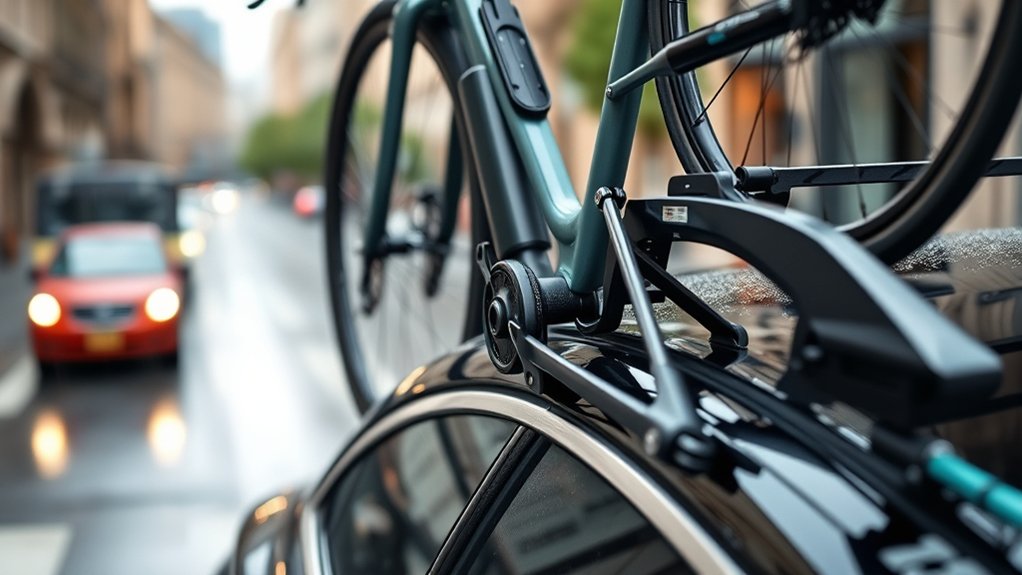
Why consider alternatives to roof racks when transporting your e-bike? Roof racks can be cumbersome, especially with heavier e bike conversion models. Alternative transport options offer easier handling and reduce risk of damage.
Here are practical alternatives:
| Alternative Method | Emotional Benefit |
|---|---|
| Trunk-mounted rack | Peace of mind |
| Truck bed carrier | Confidence |
| Trailer attachment | Freedom |
Trunk-mounted racks are quick to install and protect your e-bike’s motor and battery. Truck bed carriers provide stability and prevent strain on your vehicle’s roof. Trailers offer spacious, secure transport ideal for longer trips or multiple e-bikes.
Each method reduces lifting effort and safeguards your investment, making them smart, practical choices over roof racks.
Common Mistakes to Avoid When Carrying E-Bikes on Your Roof
While alternative methods can simplify e-bike transport, many still prefer roof racks for their convenience and space-saving benefits. However, you must avoid common mistakes to protect your e-bike and vehicle.
Here are key points to keep in mind:
- Don’t neglect securing the bike properly; loose mounts risk damage and accidents.
- Avoid placing the e-bike on the rack with the battery connected to e-bike charging ports to prevent electrical issues.
- Prevent scratches by using frame protectors or padding to safeguard bike frame paintwork.
- Don’t overload the roof rack beyond its weight limit; e-bikes are heavier than regular bikes.
- Avoid exposing the battery to extreme weather during transport, which can reduce lifespan or cause malfunction.
Frequently Asked Questions
How Do Weather Conditions Affect E-Bike Transport on Roof Racks?
You’ll face weather risk like rain or wind affecting mounting stability when transporting your e-bike on a roof rack. Secure it tightly and consider weatherproof covers to protect electrical components and guarantee safe travel in varying conditions.
Can Roof Racks Damage My E-Bike’s Battery or Electronics?
Don’t let your e bike battery suffer a silent storm from roof rack impact. You’ll want padded mounts and secure fastening to shield delicate electronics.
Prevent jolts or vibrations that can degrade performance or cause costly damage over time.
Are There Specific Roof Rack Brands Recommended for E-Bikes?
You’ll find brands like Thule and Yakima offer roof racks with proven ebike compatibility and roof rack safety features. They include secure mounts and weight capacities suited for e-bikes, ensuring stability and protecting your bike’s electronics.
How Does Roof Rack Transport Impact Fuel Efficiency?
Carrying an e-bike on your roof rack is like adding a sail to a boat. Roof rack compatibility and weather impact considerations increase drag, reducing fuel efficiency.
Expect higher consumption, especially in windy or rainy conditions affecting aerodynamics.
What Insurance Covers Damage During E-Bike Roof Transport?
Your insurance coverage for e-bike roof transport depends on your policy and risk assessment. Verify if your auto or homeowner’s insurance includes transit damage.
Consider specialty e-bike insurance to ensure comprehensive protection during transport.
Conclusion
Transporting your e-bike on a roof rack is like balancing on a tightrope—precision and awareness keep you steady. By respecting your vehicle’s weight limits, choosing the right rack, and securing your bike properly, you ensure safety without compromise.
Treat your e-bike as a valued cargo, avoiding common pitfalls to protect both your bike and car. When done right, your journey will be smooth, efficient, and worry-free, just like a well-calibrated machine.
In conclusion, you can put an e-bike on a roof rack safely by following these guidelines, making sure your ride stays secure throughout the trip.