Checking your power steering fluid is a straightforward but essential task to maintain smooth steering and prevent costly repairs. Power steering fluid helps your vehicle’s steering system operate efficiently, so regular checks are important.
You’ll need to locate the reservoir, clean its cap area, and assess both the fluid level and color with the engine off. Knowing the correct fluid type and how to top it up properly is crucial.
But what steps ensure you avoid contamination and overfilling? Following proper procedures will keep your power steering system in good condition and extend its lifespan.
Key Takeaways
- Locate the power steering fluid reservoir under the hood, near the engine or firewall, and identify the cap labeled with a steering wheel icon.
- Ensure the engine is cool, then clean the cap area and remove the cap with an attached dipstick or check reservoir markings.
- Wipe the dipstick clean, reinsert it fully, then remove it again to check the fluid level against the marked indicators.
- Inspect fluid color: clear or amber is healthy; dark, cloudy, or gritty fluid indicates contamination or degradation.
- After checking, securely replace the cap and, if needed, top up with manufacturer-recommended fluid without overfilling.
What Is Power Steering Fluid and Why You Need It
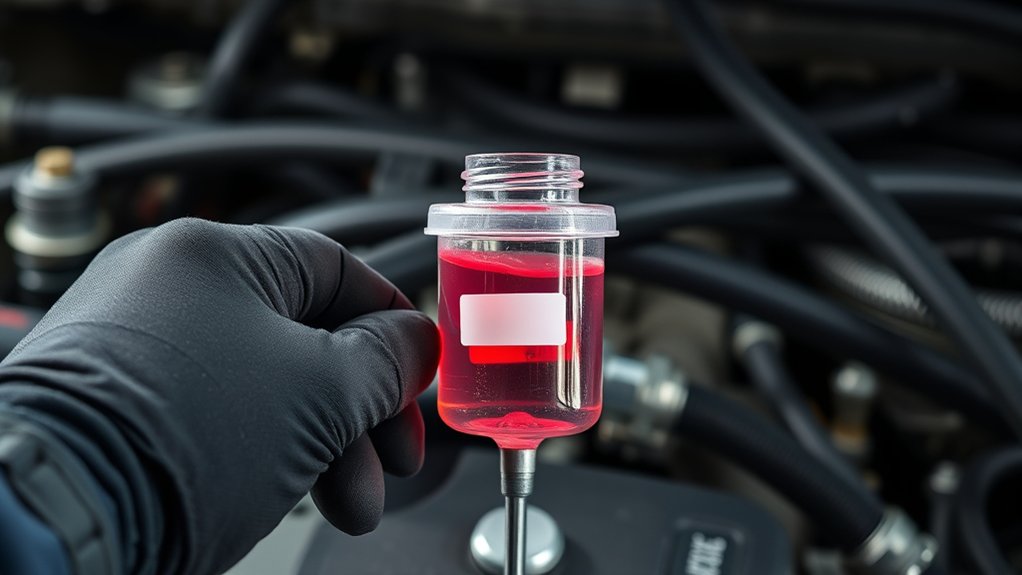
What exactly is power steering fluid, and why does your vehicle rely on it? Power steering fluid is a specialized hydraulic fluid that transmits force within your vehicle’s power steering system, allowing you to steer with ease.
In a non technical overview, it functions as a lubricant and hydraulic medium, reducing friction and enabling smooth movement of steering components. Historically, power steering systems evolved from purely mechanical linkages to hydraulic systems in the mid-20th century, making steering less physically demanding.
Without adequate fluid, steering becomes stiff and unresponsive, risking safety. Your vehicle depends on this fluid to maintain consistent pressure and lubrication, ensuring precise steering control.
Checking and maintaining proper fluid levels prevents wear and protects your steering system from damage.
How to Find the Power Steering Fluid Reservoir
To check your power steering fluid, you first need to locate the reservoir under the hood, usually near the engine or firewall. Look for a small, round cap labeled with a steering wheel icon or marked “Power Steering.”
Identifying this cap correctly ensures you access the right fluid container for inspection.
Locating The Reservoir
Locating the power steering fluid reservoir is essential for maintaining your vehicle’s steering system. To find it, avoid distractions caused by unrelated topics or irrelevant concepts that don’t pertain to the engine layout. Focus strictly on the engine bay area, where the reservoir is typically positioned.
Here’s how to locate it efficiently:
Check near the engine’s front or side, close to the power steering pump.
Look for a small, translucent container with a cap labeled “Power Steering.”
Consult your vehicle’s manual for exact reservoir placement.
Identify hoses connected to the reservoir leading to the steering pump.
Identifying Fluid Cap
After finding the power steering fluid reservoir, the next step is to identify the fluid cap correctly. The reservoir cap is typically marked with a steering wheel icon or labeled “Power Steering.” It’s usually made of plastic and located on top of the reservoir tank.
When identifying fluid, avoid confusing the power steering reservoir cap with other caps like brake fluid or coolant. The reservoir cap may have a dipstick attached underneath for checking fluid levels, so handle it carefully.
Before opening the cap, ensure the engine is cool to prevent injury. Proper identification of the reservoir cap is crucial for an accurate fluid check and to avoid contamination. Always consult your vehicle’s manual if you’re uncertain about the reservoir cap’s appearance or location.
When to Check Power Steering Fluid
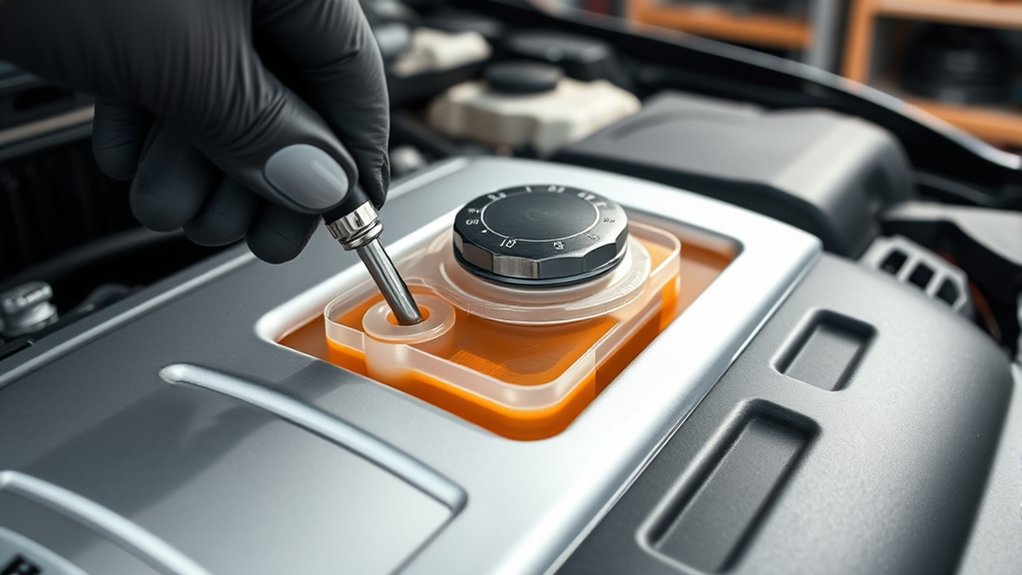
When should you check your power steering fluid? Regular checks are essential, but avoid irrelevant topic distractions or off topic ideas that don’t impact fluid condition. Focus on critical times to inspect:
- Before long trips to avoid unexpected steering issues
- When you notice difficulty steering or unusual noises
- If the steering wheel feels stiff or less responsive
- During routine maintenance, approximately every 30,000 miles or as recommended
Checking under these conditions helps catch leaks or degradation early, ensuring optimal steering performance. Don’t wait for symptoms to appear; proactive checks prevent costly repairs.
Stay precise with timing, avoiding unnecessary or irrelevant topic considerations that don’t affect fluid status. This focused approach maintains your power steering system’s reliability and safety efficiently.
Tools and Materials Needed to Check Fluid
To accurately check your power steering fluid, you’ll need a few specific tools and materials. Using the right items ensures you avoid irreversible damage to your steering system and detect issues like steering noise early.
| Tool/Material | Purpose | Notes |
|---|---|---|
| Clean Rag | Wipe dipstick and surroundings | Prevents contamination |
| Power Steering Fluid | Top up if levels are low | Match your vehicle’s fluid type |
| Flashlight | Illuminate reservoir area | Helps see fluid color & level |
| Gloves | Protect hands | Avoid skin irritation |
| Funnel | Pour fluid without spills | Maintains cleanliness |
Having these ready lets you check fluid precisely, reducing the risk of damage and ensuring smooth steering performance.
How to Check Power Steering Fluid Step-by-Step
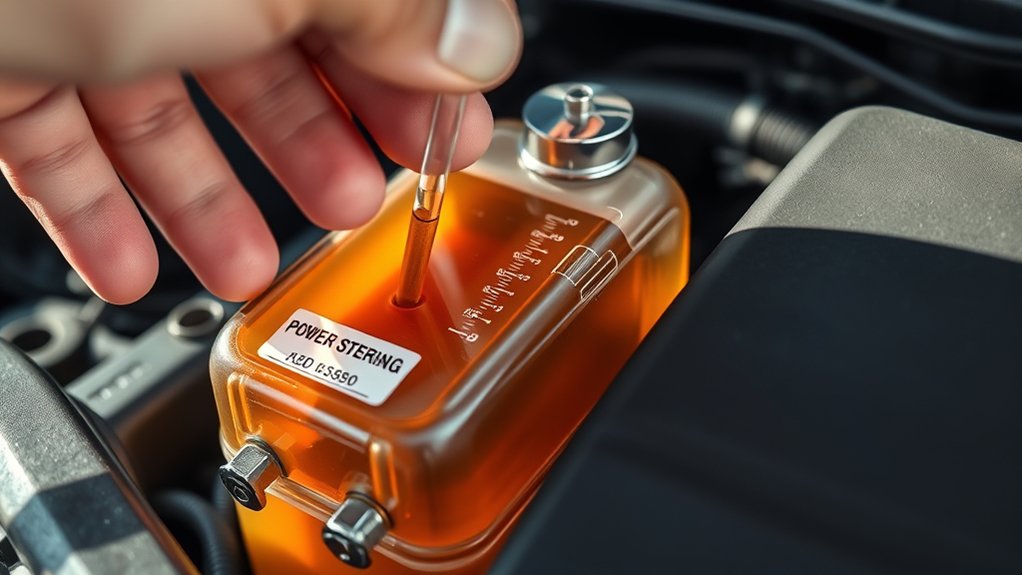
How exactly do you check your power steering fluid without causing errors or contamination? Follow this precise procedure to avoid any irrelevant topic or random discussion that might confuse you. First, locate the power steering reservoir under the hood.
Then, ensure the engine is cool to prevent inaccurate readings. Next, remove the dipstick or cap and wipe it clean. After reinserting it fully, pull it out again to check the fluid level.
Key steps to remember:
- Park on level ground for an accurate reading
- Use a clean cloth to avoid contamination
- Avoid mixing this task with irrelevant topic discussions
- Follow manufacturer guidelines for fluid type and level
This method keeps the process clear, focused, and contamination-free.
How to Tell If Your Power Steering Fluid Is Healthy or Contaminated
Why should you monitor the condition of your power steering fluid regularly? Because contaminated fluid impairs steering performance and can cause system damage. Avoiding an irrelevant topic or random tangent, focus on fluid appearance and odor as key indicators.
Use the table below to identify fluid condition precisely:
| Fluid Characteristic | Interpretation |
|---|---|
| Clear, amber color | Healthy, functioning well |
| Dark brown/black | Contaminated, needs change |
| Burnt smell | Overheated, degraded fluid |
If your power steering fluid looks cloudy or has debris, it’s contaminated. Also, a burnt odor signals fluid breakdown. Regular checks help you avoid costly repairs by addressing contamination early. Stay focused on these signs rather than irrelevant topics or random tangents to maintain system health effectively.
What to Do If Your Power Steering Fluid Is Low
If your power steering fluid is low, first check for leaks around hoses, pumps, and the reservoir. Top off the fluid with the manufacturer-recommended type to restore proper levels.
Then, schedule a professional inspection to identify and fix any underlying issues.
Identify Fluid Leak Sources
Regularly inspecting your vehicle for power steering fluid leaks helps you maintain prime steering performance and avoid costly repairs. When fluid levels drop, pinpointing the leak source is critical. Don’t confuse this with unrelated topic concerns like engine oil leaks or random practice of guessing without evidence.
Focus on these common leak sources:
- Power steering pump seals
- High-pressure hoses and connections
- Steering gear rack or box
- Fluid reservoir cracks or loose caps
Use a clean cloth to wipe suspected areas, then observe for fresh fluid after running the engine briefly. Leaks often appear as reddish or amber fluid spots. Identifying the exact leak source ensures targeted repairs, preventing further fluid loss and steering issues.
Avoid assumptions; systematic inspection is essential for effective maintenance.
Top Off With Fluid
After locating and addressing any leaks, you’ll want to ensure your power steering fluid stays within the recommended level. Begin by cleaning the reservoir cap and surrounding area to prevent contamination.
Remove the cap and slowly add the correct type of power steering fluid, as specified in your vehicle’s manual. Avoid overfilling; check the fluid level using the dipstick or reservoir markings frequently during topping off.
Be mindful that discussing unrelated maintenance tasks or an irrelevant topic here would be off topic discussion, detracting from the precision needed. Focus strictly on the fluid level to maintain proper steering function.
Once topped off, securely replace the cap. Regularly monitoring fluid levels helps prevent damage and ensures smooth steering operation without veering into unnecessary or irrelevant topic areas.
Schedule Professional Inspection
Wondering what steps to take when your power steering fluid consistently runs low? It’s crucial to schedule a professional inspection to identify leaks or system faults. Ignoring the issue or engaging in unrelated topics and random discussion won’t solve the problem.
A technician will perform a thorough diagnosis, including:
- Checking hoses and seals for leaks
- Inspecting the power steering pump function
- Examining the fluid reservoir and condition
- Testing steering system pressure
These steps ensure accurate identification of the root cause and prevent further damage. DIY fixes might mask symptoms but won’t address underlying failures.
Prompt professional evaluation protects your steering system’s integrity and safety, saving you from costly repairs down the line. Don’t delay. Schedule an inspection as soon as low fluid persists despite topping off.
How to Top Up Power Steering Fluid Safely
How do you top up power steering fluid without risking damage or contamination? First, locate the reservoir and clean its cap area to prevent dirt entry. Use only the manufacturer-recommended fluid; mixing types can cause system failure.
Slowly add fluid, monitoring the level with the dipstick or reservoir markings. Avoid overfilling. Never ignore warnings by diverging into irrelevant tangents or unrelated topics like unrelated maintenance tasks; focus solely on this procedure.
After topping up, securely replace the cap to maintain system integrity. Finally, start the engine and turn the steering wheel fully left and right to circulate the fluid and check the level again. This precise, contamination-free approach ensures your power steering system remains reliable and damage-free.
Common Signs of Power Steering Fluid Problems
When should you be concerned about your power steering fluid? Recognizing early signs is essential to prevent irreversible damage to your steering system. Monitor the fluid’s color grading regularly; healthy fluid is typically clear or amber. Dark, murky, or gritty fluid indicates contamination or breakdown.
Be alert for these common symptoms:
- Difficulty steering or increased effort when turning the wheel
- Unusual whining or squealing noises from the steering pump
- Visible leaks or low fluid levels on the reservoir
- Vibration or jerking movements during steering
Ignoring these signs risks severe mechanical failure. Promptly identifying fluid issues ensures your power steering system operates smoothly and avoids costly repairs.
When to See a Mechanic for Power Steering Fluid Issues
At what point should you bring your vehicle to a mechanic for power steering fluid issues? If you notice persistent difficulty in steering, unusual noises, or visible fluid leaks, it’s time to seek professional help.
Mechanics specialize in diagnosing transmission leaks that can sometimes be mistaken for power steering fluid problems. Proper identification is critical, especially since finding gear oil in the fluid can indicate contamination or cross-leakage.
Attempting to fix these issues without expertise risks further damage. A qualified technician will perform a thorough inspection, including pressure tests and fluid analysis, to determine the exact source of the leak and recommend appropriate repairs.
Don’t delay. Early intervention prevents costly repairs and ensures your steering system functions safely and effectively.
Frequently Asked Questions
Can I Use Any Type of Fluid for Power Steering?
You can’t use any fluid for power steering; using the wrong type risks damage. Though it’s an offbeat question, don’t confuse it with unrelated topics like brake fluid. Always use the manufacturer’s recommended type.
How Often Should Power Steering Fluid Be Completely Replaced?
You should replace power steering fluid every 2 to 3 years, depending on your vehicle’s subtopic relevance and maintenance timing guidelines. Regular replacement guarantees ideal system performance and prevents contamination or wear-related damage.
What Causes Power Steering Fluid to Leak?
Leak causes include worn seals, damaged hoses, and loose connections. Using incompatible fluid can degrade components, increasing leak risk.
You should always guarantee fluid compatibility to maintain system integrity and prevent leaks in your power steering system.
Is Power Steering Fluid Toxic or Harmful to the Environment?
Yes, power steering fluid poses toxic exposure risks if mishandled and can harm the environment through soil and water contamination.
You should properly dispose of it to minimize its environmental impact and avoid health hazards.
Can Power Steering Fluid Affect Other Car Systems?
Yes, power steering fluid can affect other car systems if fluid compatibility isn’t maintained. Using incorrect fluid may cause seal deterioration, leaks, or damage to the steering pump and hoses, compromising overall vehicle performance and safety.
Conclusion
Checking your power steering fluid is essential to keep your steering smooth and avoid costly repairs down the road. By regularly inspecting the fluid level and condition, you nip potential problems in the bud before they escalate.
Remember, a well-maintained system guarantees safer driving and prolongs your vehicle’s lifespan. Don’t wait for warning signs—stay proactive.
Your car will thank you by steering clear of trouble when you consistently check power steering fluid.