Checking your power steering fluid is an essential part of vehicle maintenance, much like tuning an instrument—small adjustments can prevent bigger problems. You’ll want to start with the engine cool and the car on level ground to get an accurate reading.
Knowing exactly where to find the reservoir and how to interpret the fluid’s condition can save you from costly repairs. But there’s more to this simple task than just checking the level.
Key Takeaways
- Locate the translucent power steering fluid reservoir under the hood near the engine bay’s rear or side.
- Ensure the engine is cool and vehicle is on level ground before checking fluid level.
- Remove the cap labeled with a steering wheel or fluid symbol and wipe the dipstick clean.
- Reinsert the dipstick fully, then withdraw it to check the fluid level between MIN and MAX marks.
- Inspect fluid color and smell; amber or pink is healthy, while dark or burnt odors indicate issues.
Where to Find the Power Steering Fluid Reservoir
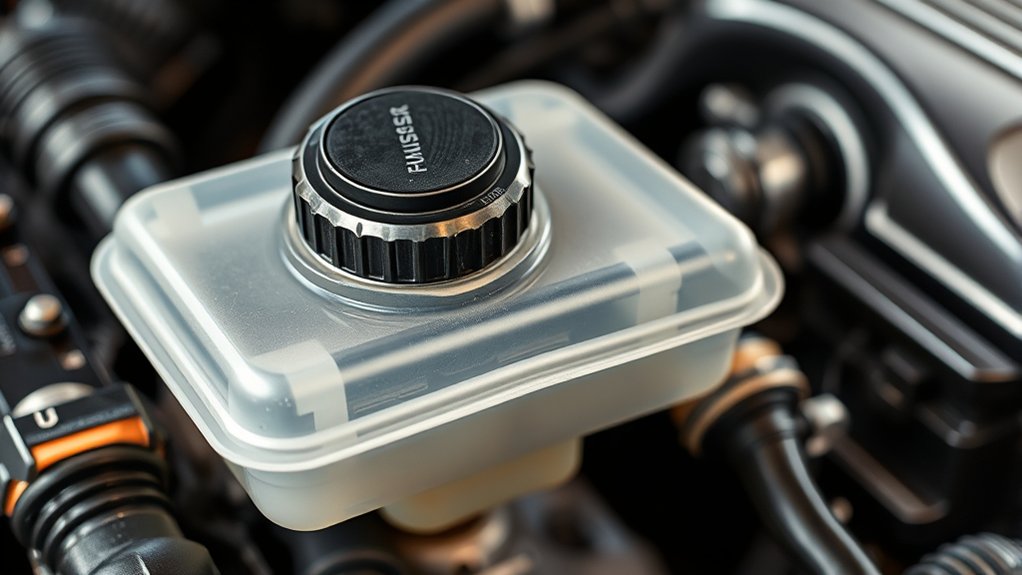
Where exactly is the power steering fluid reservoir located? You’ll find it under the hood, typically near the engine bay’s rear or side. It’s a small, translucent container marked by a steering wheel or fluid symbol.
Avoid distractions from unrelated topics or irrelevant hacks that suggest odd locations like inside the glove box or trunk. These are inaccurate and could mislead you. The reservoir usually has a screw-on or snap-on cap labeled “Power Steering Fluid.”
In some models, it’s combined with the brake fluid reservoir, but typically, it’s separate and clearly visible. Use your vehicle’s manual for exact placement if uncertain. Identifying the reservoir correctly is crucial before you proceed with any fluid inspection or maintenance.
Checking the Power Steering Fluid Level
To check the power steering fluid level, start by ensuring the engine is cool and the vehicle is on a level surface. Locate the power steering fluid reservoir, typically marked with a cap labeled “Power Steering.”
Begin by cooling the engine and parking on level ground, then find the power steering fluid reservoir cap.
Remove the cap and wipe the dipstick clean to get an accurate reading. Reinsert the dipstick fully, then withdraw it again to check the fluid level against the marked indicators.
Keep these two word ideas in mind:
- Fluid level: Ensure it’s between the “MIN” and “MAX” marks.
- Dipstick reading: Use to determine if fluid top-up is necessary.
- Reservoir inspection: Look for signs of contamination or debris.
Accurate fluid level maintenance prevents steering issues and supports system longevity. Perform this check regularly as part of routine vehicle care.
What Your Power Steering Fluid’s Color and Smell Mean
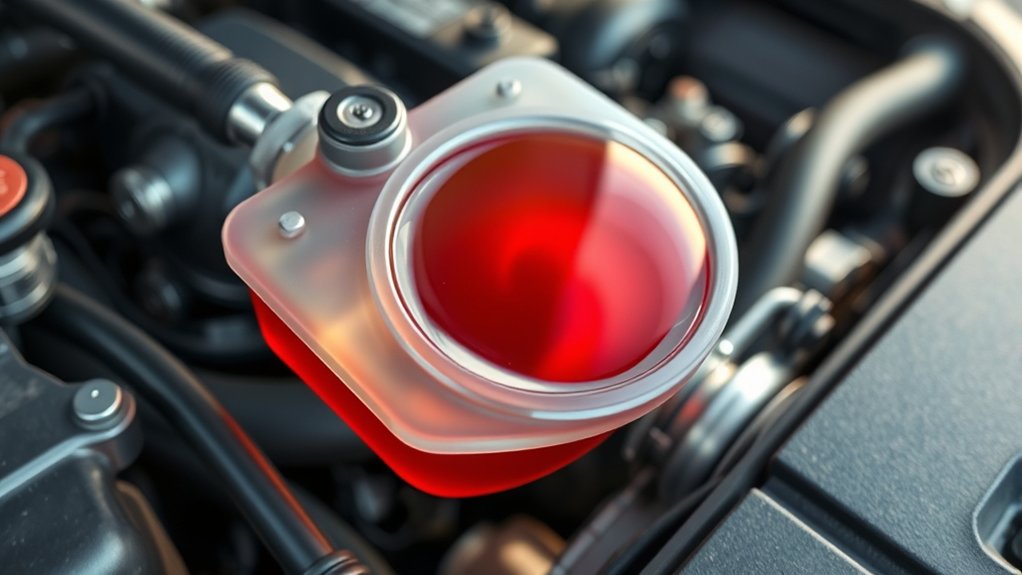
A clear understanding of your power steering fluid’s color and smell can help you identify potential issues early. Typically, healthy fluid appears translucent amber or pink; these color clues indicate proper function. If the fluid darkens to brown or black, it suggests contamination or oxidation, signaling the need for replacement.
Avoid using fluid with a cloudy appearance, as it may contain debris.
Odor meanings are equally important. Fresh fluid has a mild, almost neutral scent. A burnt smell indicates overheating or friction within the system, requiring immediate attention.
If you detect a sour or rancid odor, it may point to chemical breakdown or contamination. Regularly inspecting these color clues and odor meanings ensures your power steering system operates efficiently and prevents costly repairs.
Signs Your Power Steering Fluid Is Low or Contaminated
Monitor your steering responsiveness and listen for unusual noises to detect low or contaminated power steering fluid. Misconceptions often lead drivers to ignore subtle signs, increasing wear and risking system failure.
Stay alert to steering changes and noises to catch low or contaminated power steering fluid early.
You should watch for these indicators:
- Increased steering effort: Difficulty turning the wheel suggests fluid depletion or contamination affecting hydraulic pressure.
- Whining or groaning noises: These sounds during steering indicate fluid inadequacy or air ingress caused by leaks or degradation.
- Fluid discoloration or debris: Dark, cloudy fluid signals contamination, reducing lubrication efficiency and potentially damaging components.
Understanding these maintenance misconceptions helps you address power steering issues early. By identifying these signs, you prevent costly repairs and maintain optimal steering performance.
Adding or Replacing Power Steering Fluid Safely
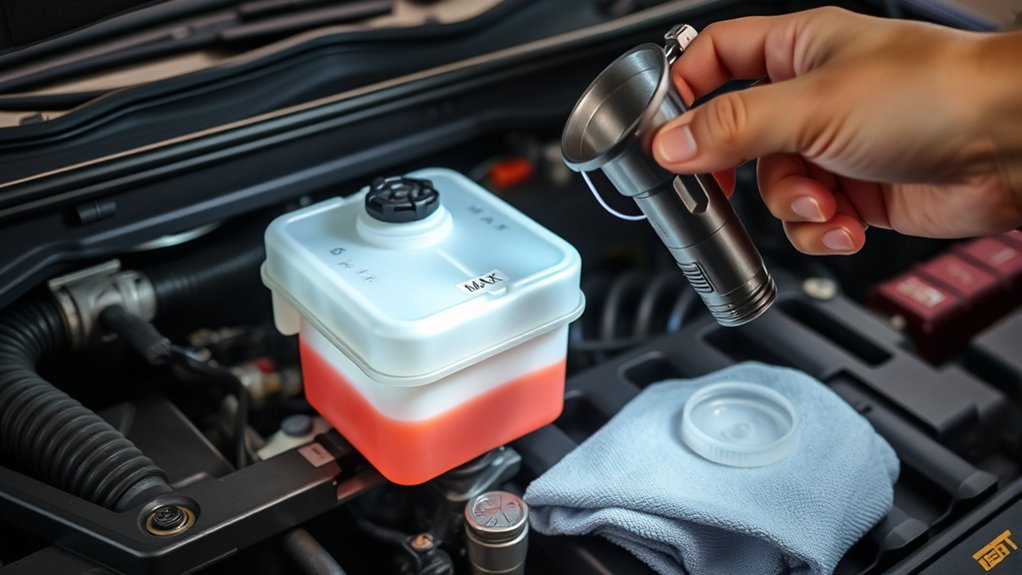
How do you safely add or replace power steering fluid without causing damage? First, consult your vehicle’s manual to select the correct fluid type, ensuring subtopic relevance. Use a clean funnel to avoid contamination. When replacing fluid, drain the old fluid completely before refilling to prevent mixing.
This subtopic’s discussion ideas include checking for leaks and monitoring fluid levels after filling.
| Step | Instruction |
|---|---|
| 1. Identify fluid type | Refer to manufacturer’s manual |
| 2. Prepare tools | Clean funnel, gloves |
| 3. Drain old fluid | Use a turkey baster or pump |
| 4. Add new fluid | Pour slowly, avoid overfilling |
| 5. Check for leaks | Inspect hoses and reservoir |
Following these steps ensures safe handling and maintains steering system integrity.
Frequently Asked Questions
How Often Should I Change My Power Steering Fluid?
You should perform power steering fluid changes every 50,000 miles or as specified by your vehicle’s manufacturer.
Regularly checking fluid condition helps you determine if more frequent changes are necessary to maintain pinnacle system performance.
Can I Use Any Type of Power Steering Fluid?
Using any fluid is like fitting the wrong key in a lock; it won’t work. Always use power steering fluid with proper compatibility.
Check fluid specifications, engine compatibility, system seals, and reference guidelines for safe, effective performance.
What Causes Power Steering Fluid Leaks?
Leak causes often include worn seals, cracked hoses, or loose connections. You should inspect these components regularly as part of fluid maintenance to prevent leaks and ensure your power steering system operates smoothly and safely.
Is Power Steering Fluid Harmful to the Environment?
Yes, power steering fluid has a significant environmental impact. You should avoid improper disposal by using designated recycling centers or hazardous waste facilities.
Follow local regulations to minimize contamination and protect ecosystems effectively.
Can Low Power Steering Fluid Damage My Steering System?
Yes, low power steering fluid compromises low pressure integrity, causing increased steering wear. You should maintain proper fluid levels to prevent damage, ensuring smooth operation and extending your steering system’s lifespan.
Check fluid regularly.
Conclusion
Checking your power steering fluid regularly keeps your steering smooth and responsive. Remember, “a stitch in time saves nine”—catching low or contaminated fluid early prevents costly repairs. Always check the level on a cool engine, inspect the fluid’s color and smell, and top up with the recommended type if needed.
Following these steps guarantees your power steering system stays reliable and safe. This maintenance gives you confidence behind the wheel every time you drive. Make checking your power steering fluid a regular part of your vehicle care routine.