Imagine trying to secure a canoe to a roof rack on a wind-blown rooftop—it’s like walking a tightrope without a safety net. To keep your canoe stable during transit, you’ll need the right roof rack, proper positioning, and heavy-duty straps applied with care.
The process demands attention to detail and practical steps to prevent damage or accidents. Let’s explore how to make sure your canoe stays firmly in place from start to finish.
Key Takeaways
Center the canoe upside down on the roof rack with the keel aligned along the rack’s center for balanced weight distribution.
Use wide, heavy-duty cam buckle or ratchet straps with padding to secure the canoe over its strongest points evenly.
Attach bow and stern lines to strong points on the vehicle or rack to prevent forward and backward movement.
Place padding between the canoe hull and rack to cushion impact and prevent scratches during transport.
Periodically check and adjust strap tension during trips to maintain stability and prevent canoe movement.
Choose the Right Roof Rack for Your Canoe
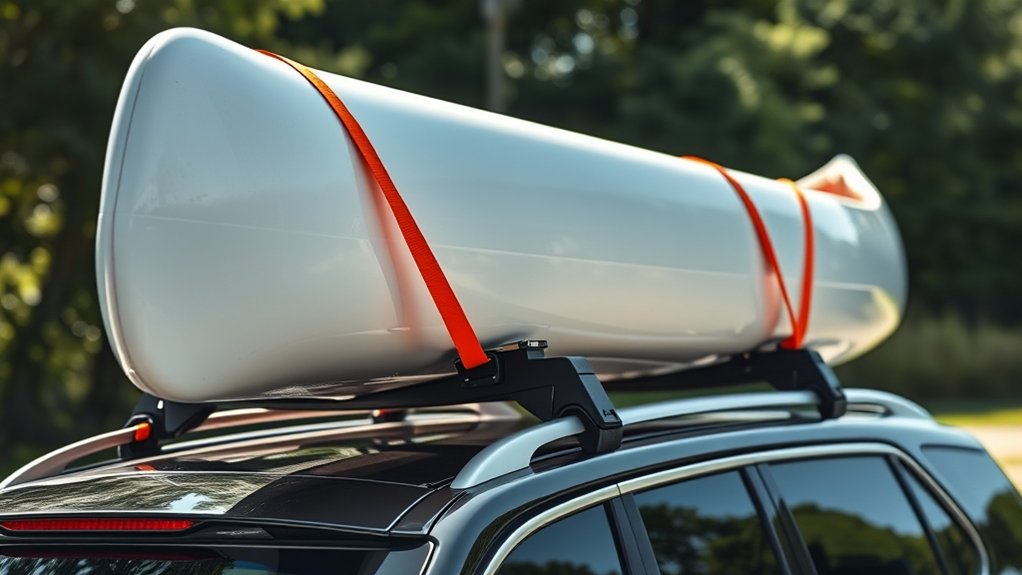
How do you know which roof rack is best suited for your canoe? Start by considering rack compatibility with your vehicle’s make and model. Not all racks fit every roof type, so check if your car has crossbars or needs a specific mounting system.
For effective canoe storage, choose a rack with padded supports or cradles designed to prevent hull damage. The rack should allow secure attachment points aligned with your canoe’s length and shape.
Look for adjustable features to accommodate different canoe sizes, ensuring a snug fit that minimizes movement during transit. Prioritize racks made from durable materials resistant to weather and corrosion.
Prepare Your Canoe Before Loading
Before loading your canoe, thoroughly inspect it for any cracks or damage that could worsen during transport. Make sure to remove all loose items inside to prevent shifting and potential damage.
Taking these steps ensures a safer and more secure trip on the road.
Inspect Canoe Condition
Why should you inspect your canoe thoroughly before loading it onto the roof rack? Inspecting hull integrity and evaluating damage ensures safe transport and prevents worsening any existing issues.
Start by checking the entire hull for cracks, holes, or deep scratches. Look over the seams and joints for signs of separation or wear.
Examine the gunwales and thwarts for any structural weaknesses. Don’t forget to assess the canoe’s interior for water damage or mold.
Here’s a quick checklist to guide you:
- Inspect hull for cracks or punctures
- Evaluate damage to seams and joints
- Check gunwales and thwarts for stability
- Look for water damage inside the canoe
- Confirm no loose or broken fittings
Remove Loose Items
Where should you start when preparing your canoe for transport? Begin by removing all loose items from inside and on top of the canoe. These could include paddles, life jackets, fishing gear, or any other equipment.
Loose items can shift during transit, creating unsecured cargo that may damage your canoe or fall off the roof rack, posing safety risks. Make sure to inspect the interior thoroughly and store these items securely inside your vehicle or in a properly fastened storage container.
This step not only protects your gear but also prevents distractions while driving. By removing loose items, you ensure a safer, more stable load and minimize the chance of damage or accidents when securing your canoe to the roof rack.
Position Your Canoe on the Roof Rack
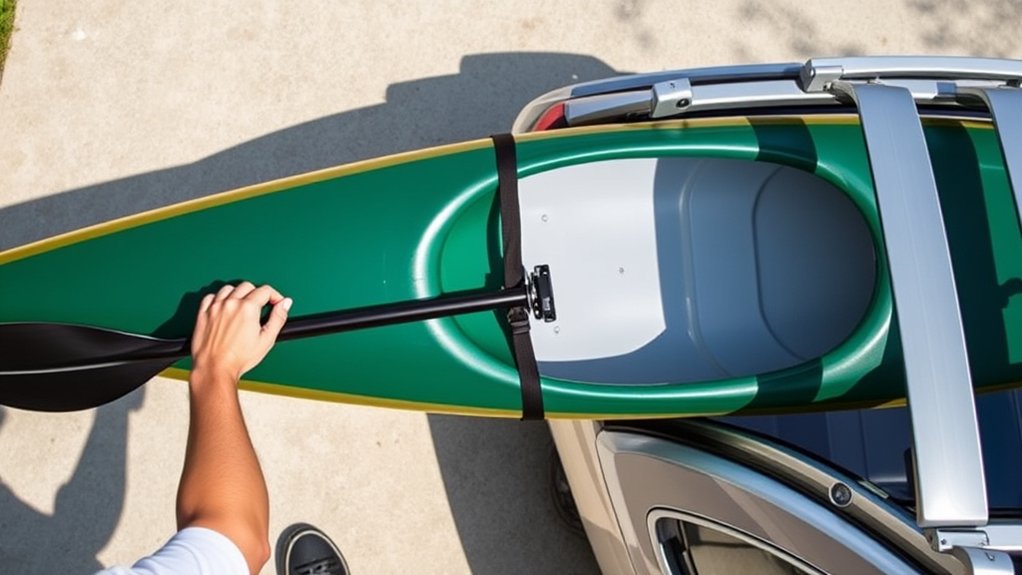
Start by centering your canoe evenly on the roof rack to balance the weight and prevent shifting while driving. Make sure the canoe aligns parallel with the roof bars for ideal stability.
Double-check that the hull sits flush against the pads to avoid any rocking or damage during transit.
Centering the Canoe Properly
How exactly do you position your canoe to guarantee balanced support and secure transport? Centering properly on your roof rack is crucial. Start by placing the canoe upside down with its keel aligned along the center of the roof rack. This ensures even weight distribution and prevents shifting during transit.
To center your canoe properly, follow these steps:
- Measure the distance from each side of the canoe to the roof rack bars.
- Adjust the canoe until both sides have equal spacing.
- Check the canoe’s midpoint matches the midpoint of your roof rack.
- Ensure the canoe sits evenly without tilting to one side.
- Confirm the roof rack alignment supports the canoe’s weight evenly.
Aligning With Roof Bars
A well-aligned canoe on your roof rack bars is essential for safe transport and preventing damage. Start by checking your roof bar compatibility; ensure the bars are spaced correctly to support your canoe’s length and weight evenly.
Position your canoe so its keel runs parallel to the bars, maintaining straight canoe alignment. This prevents unnecessary stress and shifting during travel. Center the canoe over the bars, confirming it’s balanced side-to-side.
If your roof bars have padding or cradles, adjust the canoe so it rests firmly without rocking. Avoid placing the canoe too far forward or backward; this can affect vehicle handling. Take time to inspect the alignment before securing straps.
Proper canoe alignment with compatible roof bars guarantees a secure, safe trip every time.
Choose and Use the Right Straps to Secure Your Canoe
Selecting the right straps is essential for keeping your canoe firmly in place during transit. For safe canoe transport, choose straps that provide strong, adjustable hold without damaging the canoe’s surface.
Look for materials like nylon or polyester webbing. They’re durable and resist stretching. Avoid thin rope or bungee cords, which can loosen or cause damage. When using straps, maintain proper strap tension to prevent movement without over-tightening, which could deform the canoe.
Keep these tips in mind:
- Use at least two wide, heavy-duty cam buckle or ratchet straps
- Ensure straps have padding or use protective sleeves
- Position straps over the canoe’s strongest points
- Tighten straps evenly on both sides for balanced tension
- Check strap tension periodically during your trip to maintain security
This approach ensures your canoe stays stable and damage-free on the roof rack.
Secure Bow and Stern Lines to the Roof Rack
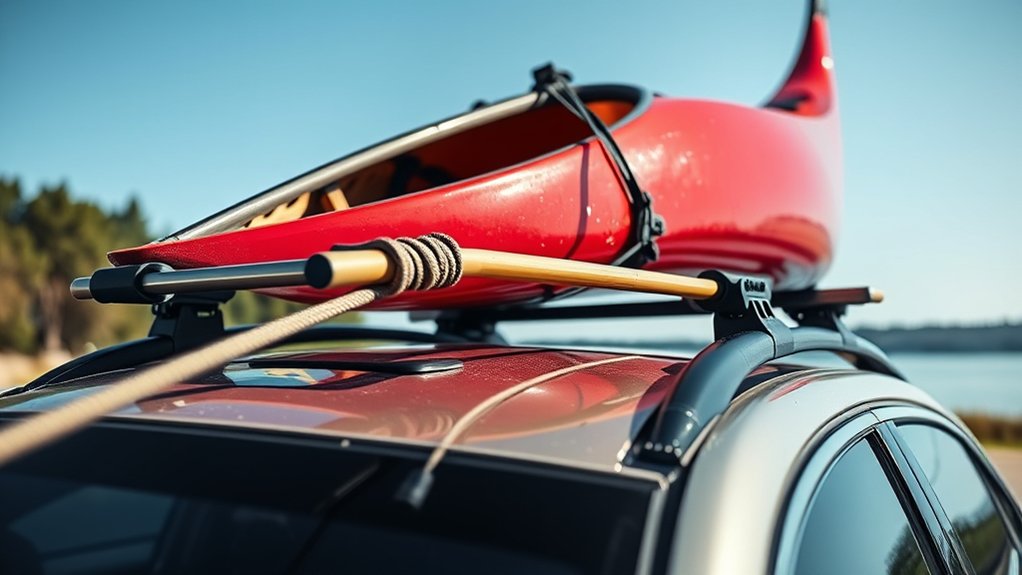
Start by attaching the bow line securely to a strong point on the roof rack, like a crossbar or a dedicated anchor. When securing the stern line, make sure it’s tight and fastened to prevent any backward movement during transit.
Double-check both lines for snugness to keep your canoe stable and safe on the road.
Bow Line Attachment Methods
How do you ensure your canoe stays firmly in place during transit? Proper bow line attachment is key to canoe safety and a reliable roof rack setup. Start by securing the bow line to a strong point on the canoe’s bow, then attach it to the front of the roof rack or vehicle frame. Use knots that won’t slip or loosen, like a bowline knot or a taut-line hitch.
Here’s how to attach the bow line effectively:
- Choose a sturdy bow attachment point on your canoe
- Use a secure knot such as bowline or taut-line hitch
- Connect the line to a fixed, strong point on the roof rack or vehicle
- Keep the line taut but avoid overtightening to prevent damage
- Check tension regularly during stops to maintain canoe safety
Stern Line Securing Tips
Just as securing the bow line firmly keeps the front of your canoe stable, properly attaching the stern line is equally important to prevent shifting or lifting at the rear during transit. Begin by running the stern line tightly from the canoe’s stern to the rear of your roof rack.
Use a secure knot like a bowline or trucker’s hitch to maintain tension. Make sure both bow line and stern line are balanced to avoid tilting. Check for any slack before driving.
| Tip | Description |
|---|---|
| Use strong knots | Bowline or trucker’s hitch for security |
| Tighten evenly | Balance tension on bow line and stern line |
| Route lines properly | Avoid rubbing against rack or vehicle |
| Double-check tension | Prevents canoe movement during transit |
Protect Your Canoe and Vehicle From Scratches
Where should you place padding to prevent scratches on both your canoe and vehicle? Focus on contact points where the canoe meets the roof rack. Proper padding not only protects your canoe’s finish but also preserves your vehicle’s paint, supporting long-term canoe maintenance and rack compatibility.
Use these tips for effective scratch prevention:
- Place foam blocks or pool noodles on rack bars.
- Wrap straps with soft cloth or foam sleeves.
- Add a protective blanket or towel between canoe hull and rack.
- Check that padding stays securely in place before driving.
- Inspect padding regularly for wear and replace as needed.
This approach cushions impact and friction, ensuring both your canoe and vehicle stay scratch-free during transport.
Check and Adjust Strap Tension for Stability
Why is strap tension so critical when securing your canoe to a roof rack? Proper tension keeps your canoe stable and prevents shifting during travel.
Proper strap tension is essential to keep your canoe stable and prevent movement during transport.
After tightening the straps, check if the canoe moves by pushing and pulling it gently. If you notice any movement, tighten the straps further. Avoid overtightening, which can damage the canoe or the rack.
Remember, this isn’t an unrelated topic or off topic discussion; it’s a vital step to ensure safety and protect your gear. Periodically recheck strap tension during longer trips, as vibrations and wind can loosen them.
Use a consistent method to tighten straps evenly on both sides, maintaining balance. This careful adjustment ensures your canoe stays securely in place until you’re ready to unload.
Drive Safely With Your Canoe on the Roof Rack
A careful driving approach helps ensure your canoe stays secure and undamaged while on the roof rack. Once your canoe is fastened with roof rack gaiters and proper straps, adapt your driving to protect your investment and maintain safe canoe storage.
- Drive at moderate speeds, especially on highways, to reduce wind stress on the canoe.
- Avoid sudden acceleration, braking, or sharp turns that could shift the canoe.
- Use lane positions that minimize exposure to crosswinds and passing vehicles.
- Watch for low clearances like bridges or parking garages, considering the added height.
- Periodically listen for unusual noises that may signal a loose strap or shifted canoe.
Following these steps helps keep your canoe stable and your journey safe.
Inspect Your Canoe and Straps After Driving
Because road vibrations and wind pressure can loosen straps or shift your canoe, you should inspect both immediately after driving. Perform a thorough post-drive inspection to ensure safety and prevent damage. Check the straps for any signs of strap wear, such as fraying or weakened areas, and confirm the canoe is still securely positioned. Pay special attention to buckle tightness and knot integrity.
| What to Inspect | What to Look For |
|---|---|
| Straps | Fraying, cuts, buckle tightness |
| Canoe Position | Shifts, scratches, dents |
| Attachment Points | Secure fittings, no looseness |
| Overall Security | No unusual movement or noise |
Regular inspections keep your canoe and gear safe for every trip.
Troubleshoot Common Canoe Roof Rack Problems
How can you quickly identify and resolve common issues with your canoe roof rack? Start by checking the basics to maintain canoe storage and rack safety. Inspect your straps for wear or slack; loose straps can shift the canoe during transit.
Examine the rack’s mounting points to ensure they’re secure and free of rust or damage. Listen for rattling noises when driving, which often signal loose attachments. Finally, confirm your canoe is properly centered to distribute weight evenly.
Here’s a quick troubleshooting checklist:
- Tighten all straps and buckles firmly.
- Replace worn or frayed straps immediately.
- Secure mounting points and tighten bolts.
- Adjust the canoe’s position for balanced weight.
- Use padding to prevent abrasion on both canoe and rack.
Following these steps keeps your canoe safe on the road.
Frequently Asked Questions
Can I Use a Kayak Roof Rack for My Canoe?
You can use a kayak roof rack for your canoe if it offers proper canoe compatibility and secure roof rack fitment. Ensure the rack supports your canoe’s size and shape, then use appropriate straps to prevent shifting during travel.
How Do I Store My Canoe When Not Using the Roof Rack?
Like Noah stowing his ark, you should explore stowing options such as wall mounts or ceiling hoists for indoor storage. These keep your canoe safe, dry, and ready for your next adventure while maximizing space efficiently.
What Is the Best Time of Year to Transport a Canoe?
The best travel timing for transporting your canoe is during mild weather seasons like spring or fall. Seasonal considerations help avoid extreme heat or cold that can damage your canoe or make travel unsafe.
Are There Any Legal Restrictions for Canoe Transport on Vehicles?
About 30% of vehicle-related fines involve improper load securement. You’ll need to follow legal restrictions for vehicle compliance, like ensuring your canoe doesn’t extend beyond allowed limits.
Use proper tie-downs to avoid penalties.
How Do I Clean My Canoe After a Trip?
You should rinse your canoe with fresh water immediately after use, then scrub off dirt using a soft brush.
Follow your cleaning routine by drying it thoroughly with towels and air-drying in a shaded area to prevent damage.
Conclusion
Securing your canoe to the roof rack is like tying down a trusted steed before a journey—done right, it rides steady through every bump and breeze. By choosing the right rack, positioning your canoe carefully, and tightening straps with care, you ensure a safe, smooth trip.
Remember to check those lines like a captain scanning the horizon—steady tension keeps your adventure afloat. With these steps, your canoe will stay snug, ready to glide into your next great escape.
Properly securing a canoe to a roof rack is key to a worry-free and enjoyable outing.