When you strap your surfboard to a roof rack, every detail matters—from choosing the right rack to securing the board correctly. Properly strapping your surfboard to a roof rack ensures your gear stays safe during transport and prevents damage. You need to ensure your gear is clean and dry, position the board properly, and use quality straps with proper padding to avoid damage.
Getting these steps right improves safety and protects your board on the road. But what are the exact techniques and common pitfalls you should be aware of? Understanding these can make your trips smoother and keep your surfboard in great shape.
Key Takeaways
- Position the surfboard centered on the rack with the nose facing forward and balanced weight distribution.
- Use high-quality cam buckle or ratchet straps to secure the board firmly without over-tightening.
- Loop straps over the surfboard and thread through anchor points on the rack, placing one near the nose and one near the tail.
- Use padded straps or add foam sleeves to prevent pressure dents and abrasion on the board.
- Place straps flat and perpendicular to airflow, avoid twisting, and regularly check tension during stops.
Picking the Best Roof Rack for Your Surfboard
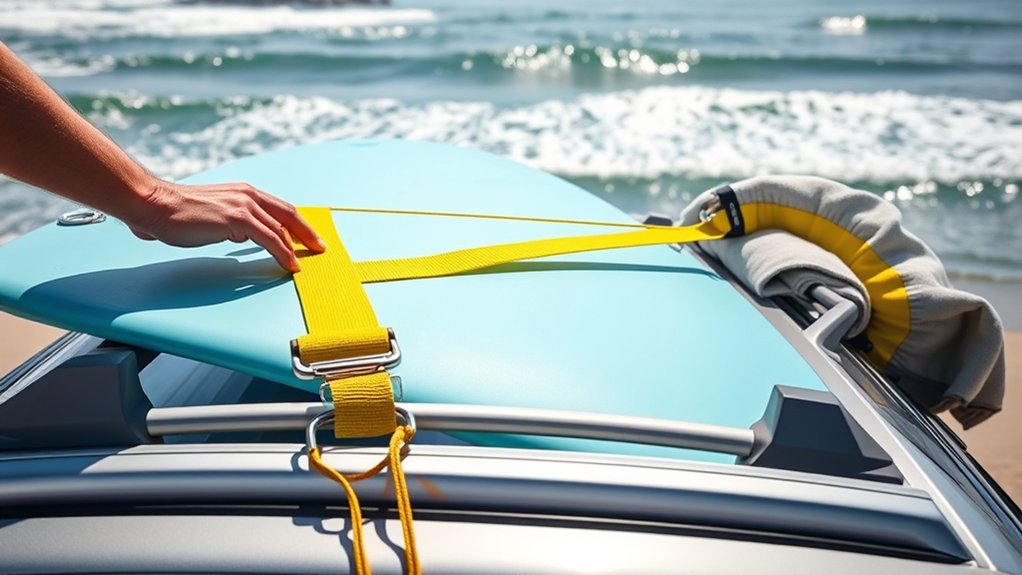
Choosing the right roof rack for your surfboard is essential to guarantee secure transport and protect your board from damage. When picking a roof rack, prioritize systems with side loading capabilities to simplify placing and removing your surfboard. This feature reduces strain and risk of dropping the board during handling.
Verify crossbars compatibility to ensure the rack fits firmly on your vehicle’s existing setup. Look for racks designed to accommodate the width and shape of surfboards, typically featuring padded supports or cradles to prevent abrasion.
A low-profile design helps minimize wind resistance and noise while driving. By selecting a roof rack with reliable side loading and crossbars compatibility, you’ll achieve a stable, safe carry system that protects your surfboard on every trip.
Preparing Your Surfboard and Roof Rack for Strapping
Before strapping your surfboard to the roof rack, ensure both the board and rack are clean and dry to prevent slipping. Inspect your roof rack for proper rack alignment; misaligned racks compromise stability and increase the risk of damage.
Position the surfboard on the rack so it’s balanced evenly, with the nose facing forward. Apply board padding at contact points between the surfboard and rack to protect the board’s surface and reduce vibration during transit. Use high-density foam or neoprene padding designed specifically for surfboards.
Ensure the padding covers the rack bars fully, creating a secure cushion. Confirm that the board sits flush without excessive rocking. Proper preparation minimizes movement and safeguards your surfboard, setting the foundation for effective strapping and safe transport.
Securing Your Surfboard: Step-by-Step Guide
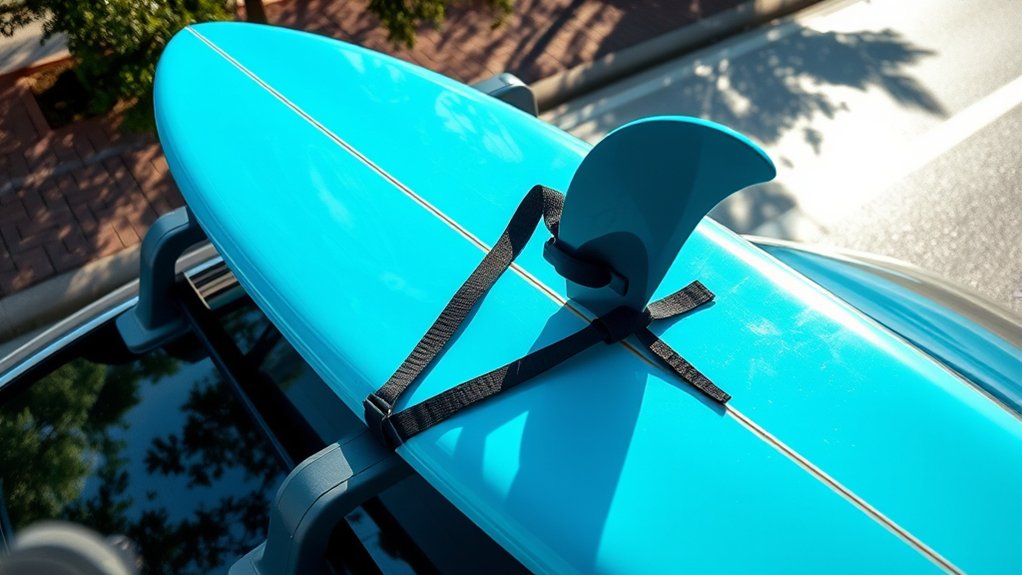
Several types of straps work well for securing your surfboard, but using high-quality cam buckle or ratchet straps ensures a tight and reliable hold. Begin by placing your surfboard centered on the roof rack with the nose facing forward to minimize aerodynamic drag.
Loop the first strap over the board, threading it through the rack’s anchor points. Tighten it firmly, ensuring the strap is snug but not overly constricting to avoid damage. Repeat the process with the second strap positioned near the tail.
As you tighten, listen for any unusual intoning wind sounds during a test drive. This signals potential looseness or improper placement. Adjust straps accordingly to eliminate movement. Properly secured, your surfboard resists shifting and reduces wind noise, maintaining safety and efficiency throughout your trip.
How to Use Straps Safely and Protect Your Surfboard
Handle your straps with care to prevent damage to both the surfboard and your vehicle. Always use padded straps or add foam sleeves to avoid pressure dents on the board’s surface.
Ensure the straps lie flat and avoid twisting them, as twists can weaken tension and cause slippage. For safe handling, tighten straps just enough to secure the board firmly without over-compressing, which can deform the foam core.
Position the straps to minimize wind resistance. Place them perpendicular to airflow to reduce drag and prevent loosening while driving. Regularly check the straps during stops to maintain consistent tension.
Common Mistakes to Avoid When Strapping Your Surfboard

Proper strap use plays a key role in protecting your surfboard, but even small errors can compromise safety and cause damage. Avoid common mistakes like over-tightening straps, which stress the board, or leaving straps too loose, risking board movement.
Incorrect strap placement can also lead to pressure points and damage.
| Mistake | Impact | Solution |
|---|---|---|
| Excessive strap tension | Deforms or cracks board | Tighten just enough to secure |
| Uneven strap placement | Creates pressure points | Position straps evenly |
| Loose straps | Board shifts or falls off | Ensure firm, stable tension |
Mastering strap tension and placement ensures your surfboard stays secure and undamaged during transport.
Frequently Asked Questions
Can I Strap Multiple Surfboards on One Roof Rack?
Yes, you can strap multiple surfboards on one roof rack, but ensure even spacing and secure tie-downs. For a two word discussion, consider roof rack alternatives like soft racks or foam blocks for added protection and stability.
What Is the Best Time of Day to Transport a Surfboard?
The best timing to transport your surfboard is early morning or late afternoon when wind conditions are calm. This reduces drag and potential damage while driving, ensuring safer, more stable transport for your board on the roof rack.
How Do I Prevent Roof Rack Damage to My Car?
You’ll prevent roof rack damage by using padded straps or foam surfboard storage sleeves, minimizing wind resistance and vibration.
Regularly check straps for tightness, and avoid over-tightening, which can scratch your car’s paint or dent the rack itself.
Are There Specific Straps Recommended for Saltwater Exposure?
Imagine Jake, a frequent surfer near the coast, using marine-grade nylon straps with stainless steel buckles. You’ll want these since they resist saltwater corrosion and UV exposure, ensuring durability and secure surfboard transport under harsh seaside conditions.
Can I Use a Roof Rack for Other Sports Gear Besides Surfboards?
You can use surfboard racks for other sports gear if your roof rack compatibility supports various attachments. Just assure secure strapping and weight limits are respected to avoid damage or instability during transport.
Conclusion
Strapping your surfboard securely starts with selecting sturdy racks and prepping your board properly. Prioritize protective padding and precise placement to prevent pressure points and promote safe, stable transport. Stay sharp by tightening straps steadily without stressing your gear.
Skip sloppy setups that could cause scratches or slips. By following these focused, foolproof fixes, you’ll safeguard your surfboard smoothly and simply. Making every surf session start with stress-free, secure, and smart strapping of your surfboard to roof rack.