When selecting jumper cables, choosing the right gauge is essential because it directly impacts the cable’s ability to carry current safely and efficiently. The gauge of jumper cables determines their thickness, which affects performance. Thicker cables reduce voltage drop and handle higher amperage, making them crucial for larger engines or longer cable runs.
But how do you determine the right gauge for your specific vehicle and conditions? Understanding the relationship between gauge size, engine type, and environmental factors will guide you to the best choice. This knowledge ensures you select jumper cables that perform reliably when you need them most.
Key Takeaways
- Lower gauge numbers (4–6 gauge) are best for larger engines and heavier vehicles due to higher current capacity.
- For small to mid-sized cars with engines under 4 liters, 10–12 gauge cables are sufficient and easier to handle.
- Thicker cables reduce voltage drop and overheating risks, ensuring efficient and safe power transfer during jump-starts.
- Longer cable runs and cold weather conditions require thicker gauge cables to maintain performance and prevent resistance losses.
- Proper insulation and secure clamp design complement gauge choice to prevent shorts, sparks, and electrical hazards.
Why Cable Gauge Makes a Big Difference
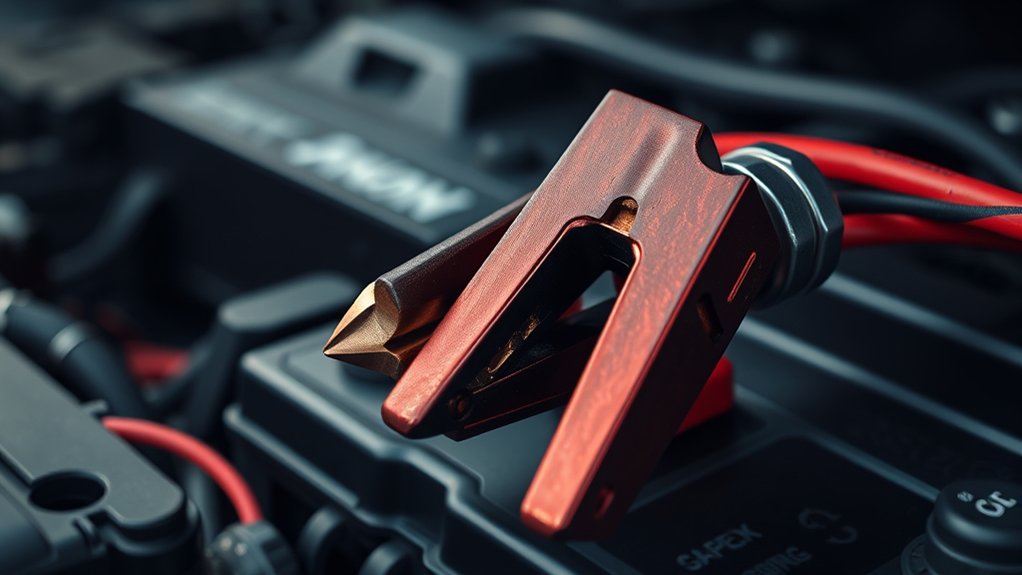
Although you might not realize it, the gauge of jumper cables directly affects how efficiently electrical current flows between batteries. When selecting cables, you need to ensure gauge compatibility with your vehicle’s electrical system to maximize performance and safety.
The gauge of jumper cables is key to efficient, safe electrical current flow between batteries.
Using cables with an incompatible gauge can cause voltage drops or overheating. Besides electrical efficiency, insulation durability plays a crucial role in maintaining safe operation under high current loads.
High-quality insulation resists heat and abrasion, which prevents short circuits and cable damage during repeated use. When you pick cables, focus on gauge compatibility and robust insulation durability to ensure reliable, effective power transfer and long-lasting service.
This attention to detail helps avoid operational failures and protects both batteries during jump-starts.
How Gauge Numbers Relate to Thickness and Capacity
You should know that a lower gauge number means a thicker cable, which can carry more current. Thickness directly affects the cable’s capacity to transfer power efficiently without overheating.
Understanding this relationship helps you pick the right jumper cables for your vehicle’s needs.
Gauge Number Meaning
How does the gauge number of jumper cables affect their performance? The gauge meaning refers to a standardized measurement of wire diameter. In jumper cables, a lower gauge number indicates a thicker wire, which directly influences the cable’s thickness capacity.
Thicker cables have lower electrical resistance, allowing more current to flow efficiently between batteries. Conversely, higher gauge numbers mean thinner wires with less capacity to carry current. Understanding gauge numbers helps you select cables suited for your vehicle’s electrical demands.
For example, a 4-gauge cable is thicker and handles higher current than a 10-gauge cable, making it ideal for larger engines. By focusing on gauge meaning, you ensure your jumper cables provide adequate thickness capacity to deliver power safely and effectively.
Thickness Versus Capacity
Why does the gauge number so critically impact a jumper cable’s thickness and capacity? Understanding gauge vs insulation is key to ensuring optimal performance and safety practices. The gauge number inversely relates to wire thickness: the lower the gauge, the thicker the wire, which affects current capacity.
Here’s why it matters:
- Thicker cables (lower gauge) carry higher current with less resistance.
- Thinner cables (higher gauge) heat up faster and reduce efficiency.
- Proper insulation thickness complements the gauge to prevent overheating and short circuits.
- Using the right gauge ensures safety by minimizing voltage drop and fire hazards.
Choosing the correct gauge balances thickness with capacity, helping you jump-start your vehicle safely and reliably.
Best Jumper Cable Gauge for Different Vehicle Sizes
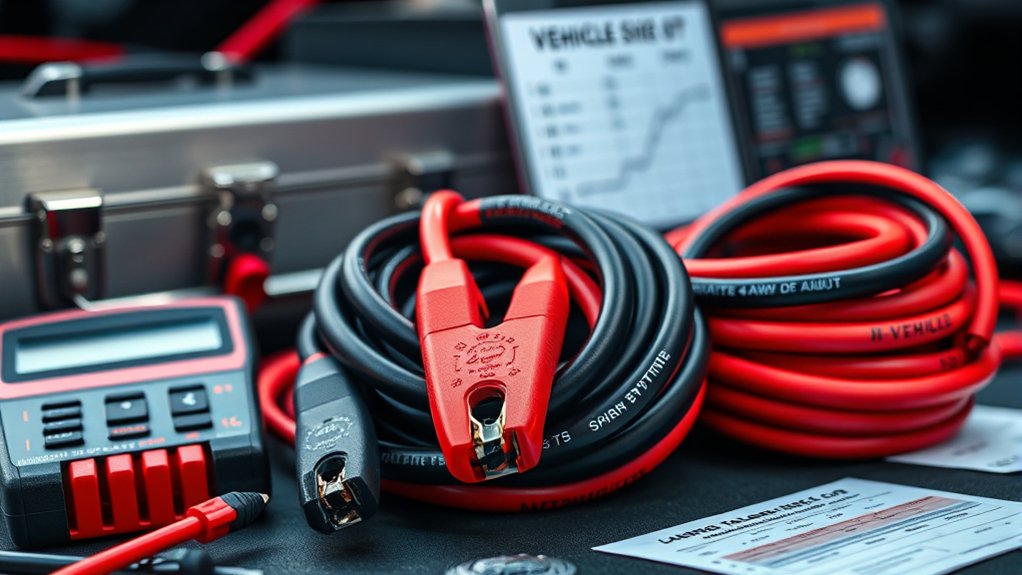
Which jumper cable gauge suits your vehicle depends primarily on the size and type of the engine. For small to mid-sized cars with engines under 4 liters, 10 to 12-gauge cables provide sufficient current flow for effective jump-starts. They’re lightweight, making them convenient for regular car maintenance and ideal for road trip preparedness.
If you drive a larger vehicle, such as trucks, SUVs, or vans, with engines exceeding 4 liters, you need thicker cables, typically 4 to 6 gauge, to handle higher amperage and minimize voltage drop during the jump-start. This ensures reliable performance in demanding conditions.
Choosing the right gauge not only optimizes electrical conductivity but also extends cable lifespan, enhancing overall safety and efficiency during emergency starts.
When Thinner Gauge Jumper Cables Work
While thicker jumper cables suit larger engines, thinner gauge cables still have their place in specific scenarios. You should consider thinner cables when:
Thicker cables fit big engines, but thinner gauges work well in select situations needing lighter, efficient power transfer.
- Compact vehicles: Small engines draw less current, making thinner cables sufficient.
- Short distances: For quick jumps, voltage drop is minimal, so thinner gauge works.
- Lightweight portability: Thinner cables are easier to store and handle, ideal for emergency kits.
- Battery condition: When the donor battery is strong and fully charged, thinner cables can transfer enough current efficiently.
This two word discussion ideas help focus your choice on practical use cases. Remember, two word discussion ideas like “current capacity” and “voltage drop” are critical in understanding why thinner cables can be effective despite their limitations. Use this knowledge to match cable gauge precisely to your jumper cable needs.
Choosing Gauge for Cold Weather and Long Cables
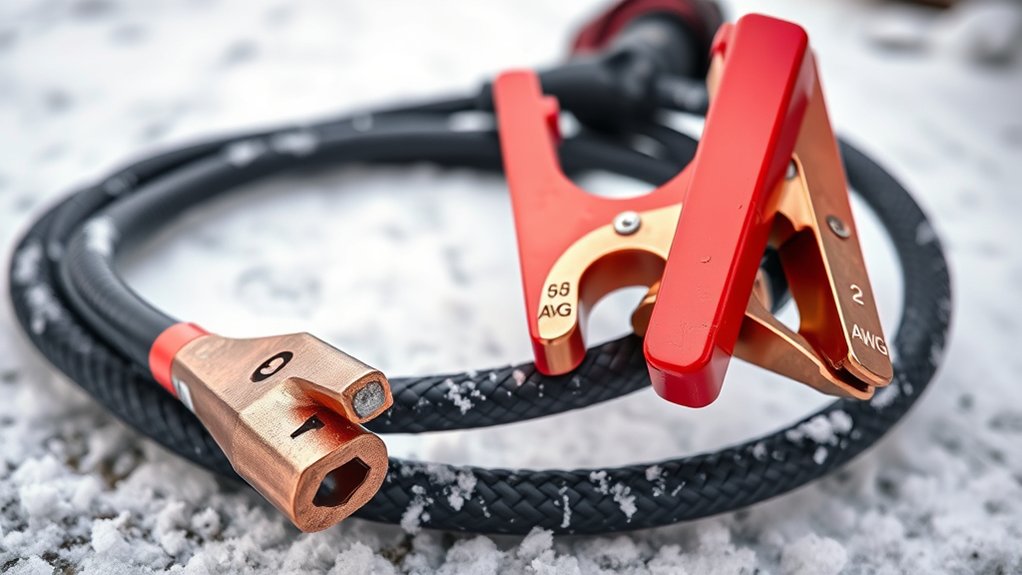
When operating in cold weather or using long jumper cables, you’ll want a thicker gauge to reduce resistance and maintain current flow. Thicker cables minimize voltage drop, ensuring efficient power transfer under these challenging conditions.
Choosing the right gauge helps your jumper cables perform reliably when you need them most.
Thick Gauge Benefits
How do thick gauge jumper cables improve performance in cold weather and over long distances? Thick gauge cables offer a higher capacity for current flow, minimizing power loss. Here’s why they’re essential:
- Higher Capacity: Thick gauge cables handle increased amperage, critical in cold weather when batteries require more power.
- Reduced Coverage Limits: They maintain consistent current over longer distances, overcoming coverage limits common with thinner cables.
- Improved Insulation Quality: Thick cables typically feature superior insulation, resisting cold-induced brittleness and ensuring durability.
- Enhanced Safety: The combination of thickness and insulation reduces overheating risks under heavy load.
Using thick gauge jumper cables ensures reliable starts regardless of temperature or cable length, optimizing your jump-start efficiency without compromising safety or performance.
Voltage Drop Considerations
Thick gauge jumper cables provide significant advantages, but selecting the right gauge also involves addressing voltage drop, especially in cold weather and with longer cable runs. Voltage drop occurs when electrical resistance in the cable reduces current flow, which can be critical when starting vehicles in low temperatures.
Thin wiring increases resistance, exacerbating voltage drop and reducing the power delivered to the battery. In cold weather, where batteries struggle, minimizing voltage drop is essential.
Longer cables further increase resistance, so using a thicker gauge compensates for this added length. By choosing lower gauge (thicker) cables, you guarantee sufficient current reaches the battery despite environmental challenges and cable length.
This approach prevents performance loss and ensures reliable jump-starting under demanding conditions.
Tips for Buying Quality Jumper Cables Based on Gauge
Why does the gauge of jumper cables matter so much? It directly impacts current flow and safety. When buying, you need to consider both the cable gauge and insulation quality to ensure efficient and safe use.
The gauge of jumper cables affects current flow and safety, making gauge and insulation quality essential for reliable use.
Here are four tips for selecting quality jumper cables based on gauge:
- Choose a lower gauge number (e.g., 4 or 6) for thicker cables that minimize voltage drop during high current flow.
- Inspect the gauge insulation carefully; it should be durable and heat-resistant to prevent damage under load.
- Verify the cable length. Longer cables require thicker gauge to maintain performance.
- Follow safety precautions: ensure proper clamp design and secure connections to avoid sparks or shorts.
Frequently Asked Questions
How Do Jumper Cables Connect to a Vehicle’s Battery Safely?
You connect jumper cables safely by attaching the positive clamp to the positive battery terminal first, then the negative clamp to an unpainted metal ground on the vehicle. Avoiding unrelated topics or irrelevant considerations during the process is important.
Can Jumper Cables Damage a Vehicle’s Electrical System?
Nearly 40% of electrical system failures link to bad wiring or corrosion buildup. If you use jumper cables improperly on these, you risk damaging your vehicle’s system by causing shorts or voltage spikes.
How Long Can Jumper Cables Remain Connected During a Jump Start?
You should keep jumper cables connected only until the dead vehicle starts, usually under five minutes.
Leaving them longer is an irrelevant topic and a safety myth, potentially risking electrical damage or sparks.
What Are the Best Practices for Storing Jumper Cables?
Want to keep your cables safe from corrosion? Store them in insulated storage containers after cleaning. Proper storage preserves battery basics and reduces alternator stress by ensuring cables remain dry, untangled, and ready for efficient, reliable use.
Are There Any Safety Risks When Using Jumper Cables Improperly?
Yes, improper jumper cable use risks sparks, battery damage, or injury. You should follow safety training guidelines precisely and secure cables to prevent theft, ensuring safe, effective operation without hazards or loss.
Conclusion
Choosing the right jumper cable gauge is vital—did you know cables thicker than 6 gauge can reduce voltage drop by up to 30% on larger engines? For your vehicle, matching cable thickness to engine size and cable length guarantees efficient current flow and safety.
Thinner cables might suffice for small cars, but for trucks or cold weather, thicker 4–6 gauge cables prevent overheating and power loss. Always prioritize quality clamps and insulation to protect your investment and vehicle.
In conclusion, selecting the best gauge for jumper cables ensures reliable performance and safety when jump-starting your vehicle.