You might not realize that the driving shaft plays a critical role in converting your engine’s power into the rotational motion that moves your vehicle.
The driving shaft is not just a simple rod; it must handle complex forces like angular misalignment and length changes caused by suspension movement.
Understanding how this component works and the different types available can reveal why it’s essential for smooth and reliable vehicle performance.
Key Takeaways
- A driving shaft transmits torque from the engine or motor to the wheels or other machinery parts.
- It is a crucial mechanical component for delivering power in vehicles and machines.
- Driving shafts endure constant rotational forces, causing wear and fatigue over time.
- Universal joints or constant velocity joints enable the shaft to handle misalignments smoothly.
- Regular vibration diagnosis helps detect issues like imbalance or misalignment early to prevent failure.
What Is a Driving Shaft and Why Does It Matter?
 driving shaft transmits torque monitor wear”>
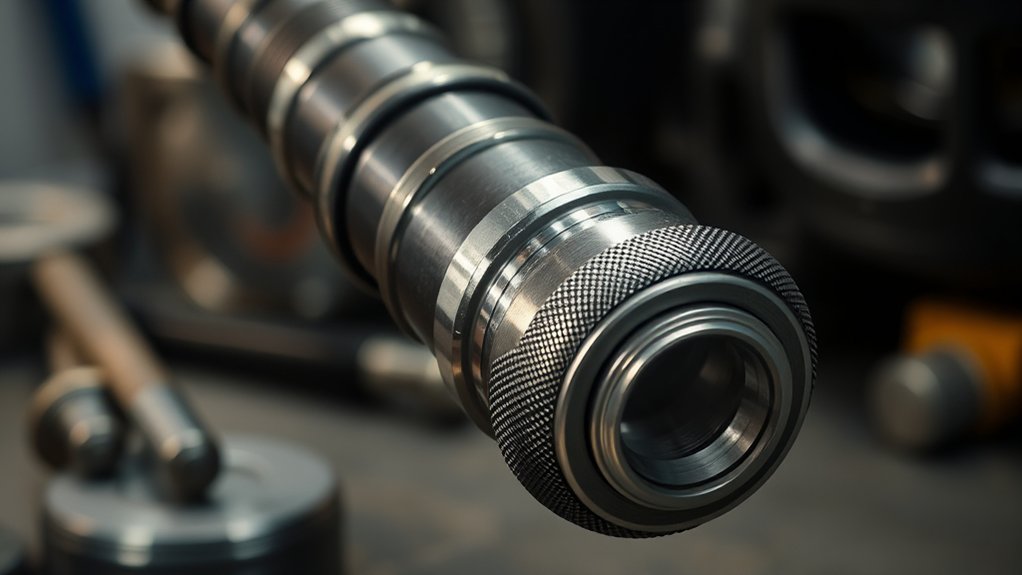
What exactly is a driving shaft, and why should you care about its function? A driving shaft is a critical mechanical component that transmits torque from the engine or motor to the wheels or other machinery parts.
Understanding its role is essential because its failure can disrupt power delivery, causing significant operational downtime. You need to monitor the driving shaft lifespan carefully, as wear and fatigue accumulate over time due to constant rotational forces.
Implementing regular vibration diagnosis helps you detect early signs of imbalance or misalignment, which are primary causes of premature shaft failure. By analyzing vibration patterns, you can identify issues before they escalate, optimizing maintenance intervals and ensuring reliable performance.
In essence, the driving shaft’s integrity directly impacts your system’s efficiency and safety.
Types of Driving Shafts You Should Know
Which type of driving shaft best suits your application depends on factors like torque requirements, alignment, and operating conditions. You’ll encounter different types, each optimized through specific driveshaft materials and universal joint design.
- Solid Shaft: Made from high-strength steel, it offers excellent torque capacity but limited flexibility.
- Tubular Shaft: Uses lightweight alloys or composites, balancing strength and weight for improved efficiency.
- Slip Shaft: Incorporates telescoping sections to accommodate length changes due to suspension movement.
- Cardan Shaft: Features universal joints allowing angular misalignment and smooth torque transmission.
Understanding these types helps you select the optimal shaft based on mechanical demands and environmental constraints, ensuring reliable performance and longevity.
How Driving Shafts Transmit Power in Vehicles
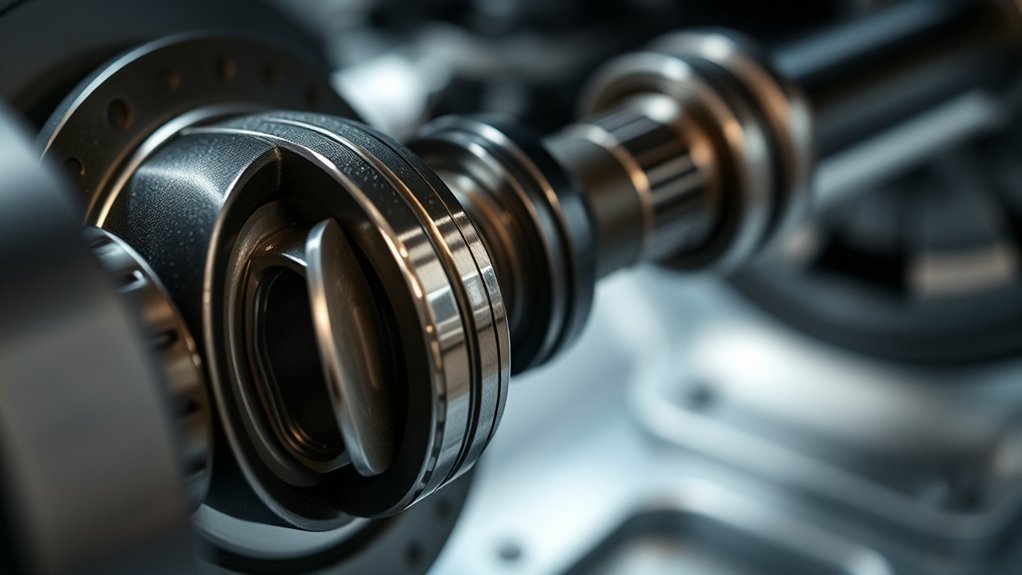
How exactly do driving shafts transfer power within a vehicle’s drivetrain? Understanding driving shaft fundamentals clarifies this process. The driving shaft acts as a mechanical link, transmitting rotational force from the engine or transmission to the wheels.
It operates on power transmission principles, converting torque generated by the engine into rotational motion at the wheels, enabling vehicle movement. The shaft must accommodate angular misalignments and length variations while maintaining torque delivery efficiency.
Universal joints or constant velocity joints connect the shaft to other drivetrain components, ensuring smooth power flow despite suspension or steering dynamics. By precisely balancing torsional strength and flexibility, the driving shaft effectively channels engine output, optimizing vehicle performance and drivability according to power transmission requirements.
Common Driving Shaft Problems and How to Spot Them
Since driving shafts are responsible for transmitting torque efficiently while handling angular and length variations, any impairment in their function can substantially affect vehicle performance. You need to identify issues early by understanding common symptoms.
- Imbalanced Shaft: Causes vibration; you’ll notice unusual shaking at certain speeds.
- Worn Universal Joints: Lead to clunking noises. Noise diagnostics help pinpoint this.
- Bent Shaft: Results in uneven rotation and vibration, causing discomfort during acceleration.
- Loose or Damaged Bearings: Create grinding sounds and increase shaft play, detectable via noise diagnostics.
Spotting these problems early prevents further damage and costly repairs. Focus on vibration causes and noise diagnostics to assess the shaft’s condition accurately and maintain drivetrain integrity.
How to Maintain and Inspect Your Driving Shaft
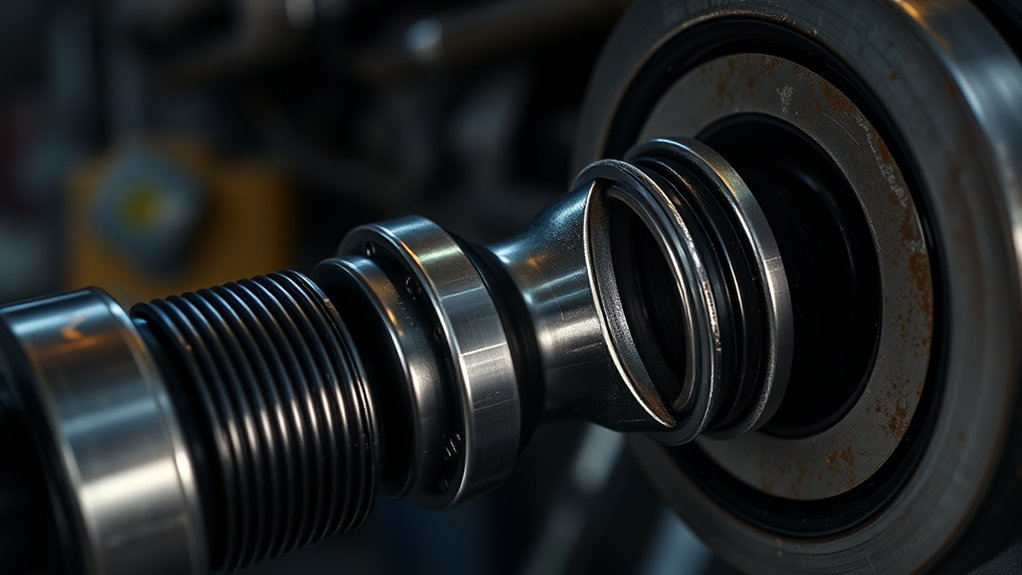
Regularly inspecting and maintaining your driving shaft ensures ideal torque transmission and prevents costly failures. Begin with maintenance basics: keep the shaft clean and lubricated, focusing on universal joints and splines. Use manufacturer-recommended grease to reduce wear.
Consistent inspection and lubrication of your driving shaft are essential for smooth torque transfer and avoiding expensive repairs.
For inspection techniques, visually check for cracks, corrosion, or dents along the shaft. Rotate it slowly to detect any unusual vibrations or noise, indicating imbalance or joint deterioration.
Measure shaft alignment and balance using dial indicators or vibration analysis tools, as misalignment leads to premature failure. Examine seals and boots for tears or leaks, which can allow contaminants to degrade components.
Document findings systematically and address issues promptly. By applying these targeted maintenance basics and inspection techniques, you’ll extend your driving shaft’s operational life and maintain optimal vehicle performance.
When to Replace a Driving Shaft
Thorough maintenance and inspection help you identify early signs of wear, but there comes a point when repairs no longer suffice and replacement is necessary. Knowing when to proceed with driving shaft replacement is critical for vehicle safety and performance.
Consider these key indicators:
- Persistent vibration during acceleration, signaling imbalance or joint failure.
- Unusual noise diagnostics revealing clicking or clunking sounds while turning.
- Visible damage such as cracks, bends, or worn CV joints on close inspection.
- Excessive play or looseness detected during manual shaft manipulation.
If you observe these symptoms despite routine maintenance, you should replace the driving shaft promptly. Ignoring them risks drivetrain damage and compromised handling, making timely driving shaft replacement essential.
Frequently Asked Questions
Can Driving Shafts Be Recycled or Repurposed?
Yes, you can recycle driving shafts by extracting metals through specialized recycling options.
For repurposing ideas, consider converting them into structural components or industrial art, maximizing material reuse while minimizing waste in your projects.
Are Driving Shafts Used in Motorcycles or Only Cars?
Like veins in machinery, driving shafts appear in both motorcycles and cars, transmitting torque between electric motors and wheels.
You’ll find vehicle driveshafts crafted from diverse shaft materials, chosen precisely for durability and performance requirements.
How Do Driving Shafts Differ in Electric Vehicles?
You’ll find driving shafts in electric vehicles more integrated with the drivetrain, reducing complexity. Don’t buy into maintenance myths; their design demands less upkeep due to fewer moving parts and improved torque distribution technology.
What Materials Are Driving Shafts Typically Made From?
You’ll find driving shafts typically made from high-strength steel or aluminum alloys, chosen for optimal material properties like tensile strength and fatigue resistance.
Advanced manufacturing methods, such as forging and precision machining, ensure durability and performance.
Can Driving Shaft Issues Affect Fuel Efficiency?
Yes, driving shaft issues can reduce your drivetrain efficiency, causing extra energy loss and lower fuel economy.
Addressing these problems also improves noise reduction, ensuring smoother operation and preventing further mechanical wear that harms performance.
Conclusion
Think of your driving shaft as the unsung hero, quietly channeling power like a skilled conductor guiding an orchestra. Without its precise balance of strength and flexibility, your vehicle’s performance falters.
By understanding its types, common issues, and maintenance needs, you guarantee smooth torque transmission and avoid costly failures. Keep a sharp eye on its condition—because when this essential link falters, everything connected to it feels the impact.
Proper care of your driving shaft ensures your vehicle runs efficiently and reliably. Recognizing its importance helps you maintain optimal performance and prevent unexpected breakdowns related to the driving shaft.