You might think a driver shaft is just a simple connector between the clubhead and grip, but it actually plays a critical role in your swing’s efficiency.
The driver shaft’s material, flex, and torque directly influence how energy transfers to the ball, affecting speed, accuracy, and trajectory.
Understanding these technical aspects can help you optimize performance. However, the details behind choosing the right shaft go deeper than most realize.
Key Takeaways
- A driver shaft is the long, tapered component connecting the clubhead to the grip in a golf driver.
- It plays a crucial role in determining swing speed, accuracy, and ball trajectory.
- Key shaft features include torque, kick point, and flex, influencing performance and feel.
- Shafts are made from materials like graphite and steel, affecting weight, stiffness, and responsiveness.
- Manufacturing techniques, including layering, impact energy transfer from the shaft to the ball.
What Is a Driver Shaft and How It Affects Your Game
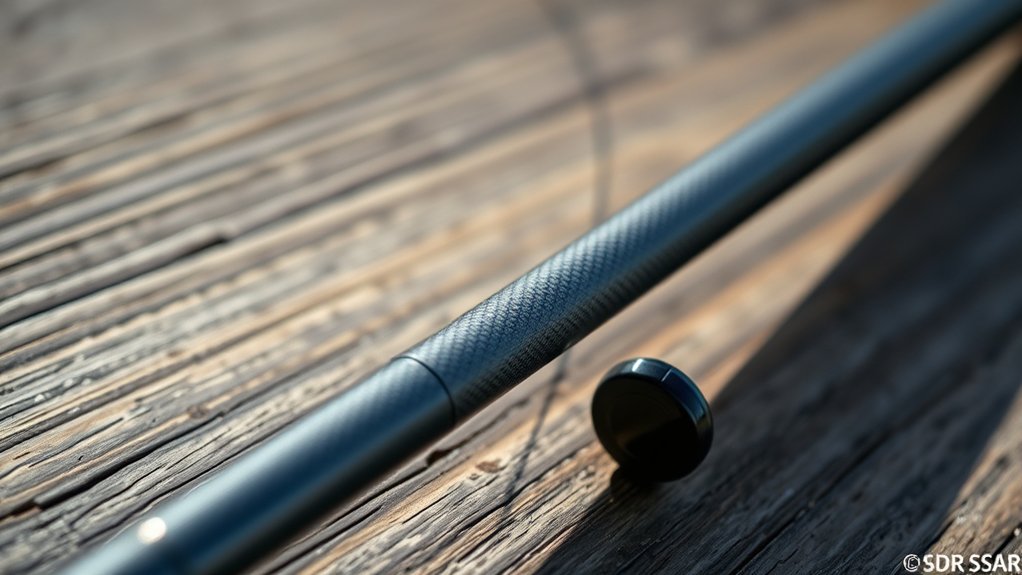
Although often overlooked, the driver shaft plays a critical role in your golf performance by directly influencing swing speed, accuracy, and ball trajectory. Understanding driver shaft terminology, such as torque, kick point, and flex, helps you grasp how these factors affect your swing mechanics.
Shaft manufacturing processes, including material selection like graphite or steel and layering techniques, determine the shaft’s weight, stiffness, and responsiveness. These characteristics influence how energy transfers from your swing to the ball, impacting distance and control.
Why Driver Shaft Flex Matters for Your Swing
Why does driver shaft flex play such an essential role in your swing performance? It directly influences the energy transfer, timing, and control during your swing. Selecting the right flex ensures you have a playable shaft that matches your swing speed and tempo, enhancing consistency and accuracy.
Driver shaft flex is crucial for energy transfer, timing, and control, boosting swing consistency and accuracy.
Proper flex also contributes to weight optimization, allowing you to maintain clubhead speed without sacrificing feel.
Consider these critical aspects:
- Flex affects the shaft’s bend profile, impacting launch angle and spin rate.
- Mismatched flex can cause timing issues, leading to off-center strikes.
- A playable shaft improves energy efficiency throughout the swing.
- Flex influences shaft stability, affecting shot dispersion.
- Weight optimization integrates with flex to balance control and power.
Understanding flex nuances lets you optimize your swing dynamics precisely.
How Driver Shaft Length and Weight Influence Distance and Control

How do driver shaft length and weight affect your distance and control on the course? A longer driver shaft generally increases swing speed, potentially adding distance, but may reduce your distance control due to less stability. Conversely, a heavier shaft can improve control by dampening unwanted hand and wrist movement but might reduce swing speed and thus distance.
Finding the right balance optimizes both aspects.
| Shaft Length (inches) | Effect on Distance | Effect on Control |
|---|---|---|
| 43 | Maximum potential distance | Reduced control |
| 42.5 | Slightly less distance | Moderate control |
| 42 | Balanced distance | Improved control |
| 41.5 | Reduced distance | Enhanced control |
| 41 | Minimum distance | Maximum control |
Adjust your driver shaft specs to match your swing dynamics and course demands.
Choosing the Right Driver Shaft Material for Your Play Style
Where should you start when selecting a driver shaft material? Focus on how each material’s properties align with your play style and performance goals. Consider the impact on flexibility, weight, and durability.
Keep drum sizing in mind, as it affects shaft fit and performance consistency. Also, evaluate the shaft warranty for assurance against defects and long-term use.
Key factors to analyze:
- Material stiffness and torque characteristics
- Weight distribution and its effect on swing dynamics
- Compatibility with your preferred clubhead and grip
- Resistance to wear and environmental factors
- Manufacturer’s drum sizing precision and warranty coverage
How to Match Driver Shafts to Your Swing Speed
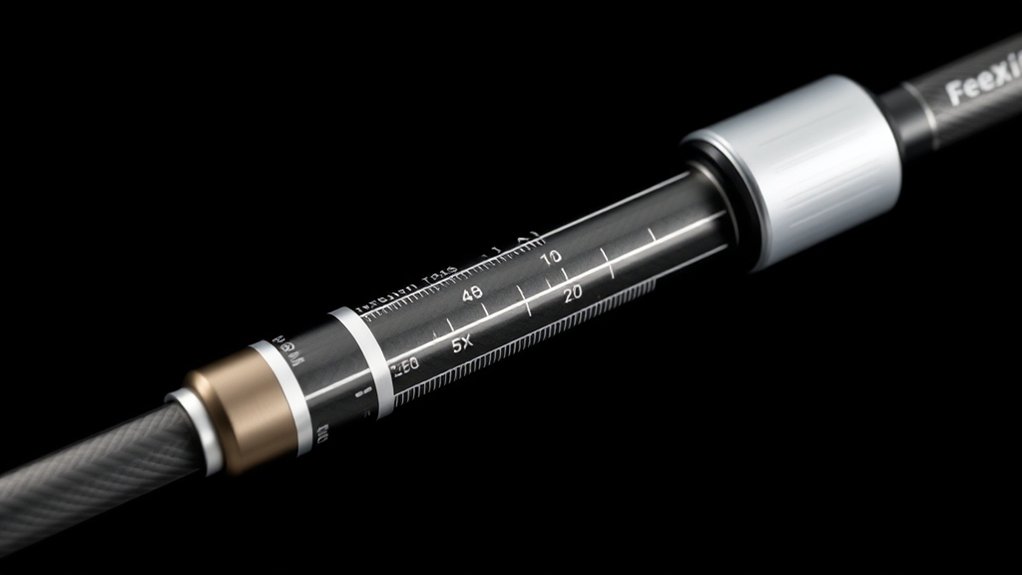
To match your driver shaft effectively, start by measuring your swing speed accurately using a launch monitor or radar device. Your ideal shaft flex depends directly on this measurement, as it influences control and ball trajectory.
Choosing a shaft with the correct flex ensures you maximize distance and accuracy.
Optimal Shaft Flex
Why does shaft flex matter when selecting a driver shaft? Shaft flex directly influences your shot’s accuracy, distance, and trajectory. Understanding driver shaft terminology and manufacturing processes helps you match flex to your swing speed precisely.
Optimal shaft flex ensures energy transfers efficiently from your swing to the ball without excessive lag or stiffness.
Consider these critical factors:
- Swing speed compatibility with shaft stiffness
- Timing of shaft kickback during the swing
- Shaft material and its flex characteristics from manufacturing
- Impact on ball spin and launch angle
- Personal feel and consistency in shot dispersion
Swing Speed Measurement
How do you determine the ideal driver shaft for your swing? Start by accurately measuring your swing speed using a launch monitor or radar device. This data helps you select a shaft with the appropriate flex and torque characteristics.
Pay close attention to your change timing, the interval between your transition from backswing to downswing, as it impacts shaft loading. If your timing is abrupt, a stiffer shaft may provide better control; a smoother timing might benefit from a more flexible shaft.
Additionally, assess your grip pressure, as excessive tension can reduce clubhead speed and distort swing speed readings. Matching the driver shaft to your measured swing speed, while factoring in change timing and grip pressure, ensures optimized energy transfer and improved shot consistency.
How to Tell When You Need a New Driver Shaft
When should you consider replacing your driver shaft? You need to evaluate its performance objectively, avoiding irrelevant topic distractions or two word discussion ideas that don’t address actual shaft condition. Key indicators include:
- Noticeable loss of distance or accuracy
- Increased shaft flex or visible damage
- Changes in swing speed not explained by technique
- Unusual vibrations during impact
- Wear or corrosion compromising structural integrity
Analyzing these factors precisely helps you determine if your shaft no longer meets performance standards. Ignoring these symptoms can degrade your game, so rely on data-driven assessment rather than anecdotal or unrelated criteria. By focusing on measurable signs, you ensure timely replacement and maintain optimal club function without veering into irrelevant topic territory or superficial two word discussion ideas.
Tips for Upgrading Your Driver Shaft to Improve Performance
Where do you start to upgrade your driver shaft for better performance? Begin by analyzing your driving technique, as shaft flexibility and torque must complement your swing speed and tempo. Selecting a shaft with an appropriate flex ensures efficient energy transfer, improving consistency.
Next, consider the shaft’s weight: lighter shafts can increase swing speed, while heavier ones offer more control. Adjusting the shaft’s kick point influences ball flight. Higher kick points lower trajectory, while lower ones promote a higher launch.
Use launch monitor data to measure changes in spin rate and launch angle after each adjustment. Finally, test multiple shaft options under realistic conditions to identify the configuration that optimizes your ball flight and maximizes distance without sacrificing accuracy.
Frequently Asked Questions
Can Driver Shafts Be Customized for Left-Handed Golfers?
Yes, you can get left handed customization for driver shafts, adjusting shaft flexibility to suit your swing speed and style. This ensures optimum performance, control, and feel tailored specifically to your left-handed swing dynamics.
How Does Temperature Affect Driver Shaft Performance?
Imagine a metal bridge expanding on a hot day. Driver shafts show temperature sensitivity too.
As material expansion occurs, your shaft’s flex and torque subtly shift, affecting shot consistency. You’ll notice performance varies with temperature changes.
Are There Driver Shafts Designed Specifically for Beginners?
Yes, you’ll find beginner friendly shafts designed with more flexible, forgiving materials to enhance control. Many also offer left handed customization, ensuring precise fit and performance tailored specifically to your swing and playing style.
What Maintenance Is Required for a Driver Shaft?
Regularly reviewing recommended maintenance schedules preserves performance and prolongs lifespan. You should inspect for cracks, clean carefully, and store securely.
Always adhere to product warranties to avoid voiding coverage and ensure optimal shaft stability.
Can Driver Shafts Be Repaired if Damaged?
Yes, you can explore repair options like re-shafting or epoxy fixes, especially for customization targeting right handed golfers. These methods restore performance but require precise technical evaluation to ensure optimal balance and flex characteristics.
Conclusion
You might think the driver shaft is just a simple tube, but ignoring its impact could be your biggest swing mistake. Its subtle flex, length, and material tweak your energy transfer more than you realize.
So, while you obsess over grips and clubheads, remember: mastering your shaft’s nuances can unseal precision and distance you didn’t think possible.
Ironically, the driver shaft you overlook could be the secret to transforming your entire game.