You might think flushing your power steering fluid is complicated or unnecessary, but it’s essential for maintaining smooth steering and preventing costly damage. Flushing power steering fluid regularly helps keep your system clean and functioning properly.
By following a clear, step-by-step process, you can do this safely and effectively without specialized tools. Understanding the right technique ensures you avoid common pitfalls and keep your system running reliably.
Let’s explore what you need to know before you start.
Key Takeaways
- Warm the engine to operating temperature to ensure optimal fluid flow during the flush.
- Remove the reservoir cap and extract old fluid using a turkey baster or fluid extractor.
- Disconnect the return line and route it into a catch container to drain old fluid while adding fresh fluid.
- Slowly refill with manufacturer-recommended fluid while turning the steering wheel lock to lock to purge old fluid.
- Reconnect the return line once clear fluid flows, then check for leaks and proper steering response.
How Do You Know It’s Time to Flush Your Power Steering Fluid?
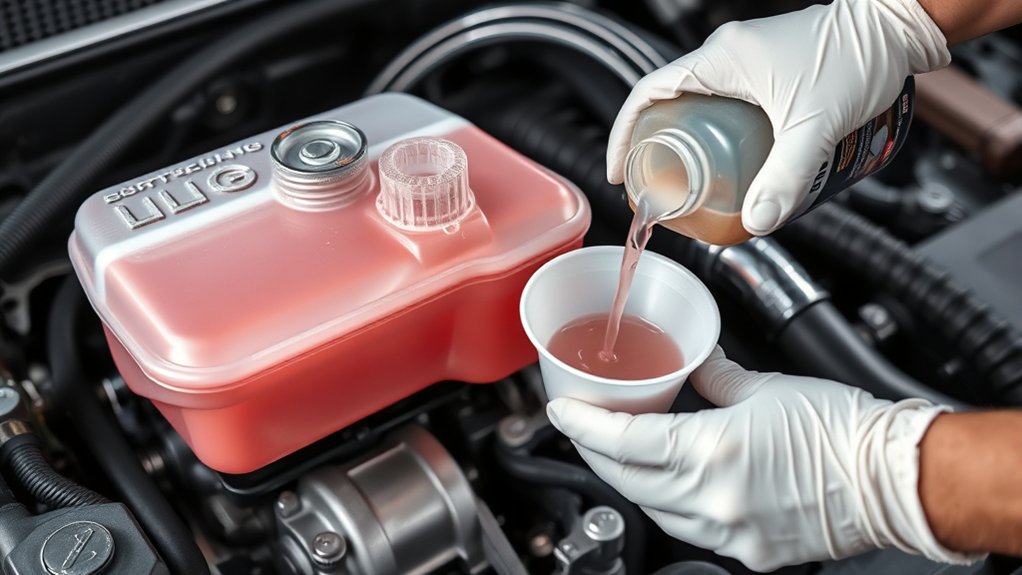
Although power steering fluid doesn’t require frequent changes, you’ll know it’s time to flush when you notice symptoms like difficulty steering, strange noises, or dark, contaminated fluid.
To accurately determine when to replace fluid, inspect the fluid color regularly. Healthy power steering fluid is typically clear or slightly amber; if you see a dark brown or black hue, it indicates oxidation and contamination. Additionally, check for a burnt odor or particles in the fluid, which signal degradation.
Pay attention to increased steering effort or whining noises from the pump, as these often correlate with degraded fluid performance. By routinely inspecting fluid color and noting any changes in steering feel, you can precisely identify when to replace fluid, ensuring optimal system function and preventing premature wear.
Gather Tools and Materials for Flushing Power Steering Fluid
Before you begin flushing your power steering fluid, gather five essential tools and materials to ensure a smooth process. Proper gathering tools will streamline the job and prevent complications.
Gather essential tools before flushing power steering fluid to ensure a smooth, efficient, and trouble-free process.
Start by selecting fluids compatible with your vehicle’s specifications; using the correct power steering fluid is critical for system performance and longevity.
Prepare these key items:
- Power steering fluid (manufacturer recommended)
- Turkey baster or fluid extractor
- Wrenches (appropriate sizes for your vehicle)
- Catch container for old fluid
Having these tools ready will help you work efficiently and avoid contamination. Selecting fluids carefully ensures your power steering system operates without damage.
With your tools and materials organized, you’ll be set to proceed confidently with the fluid flush.
Flush Your Power Steering Fluid: A Step-by-Step Guide
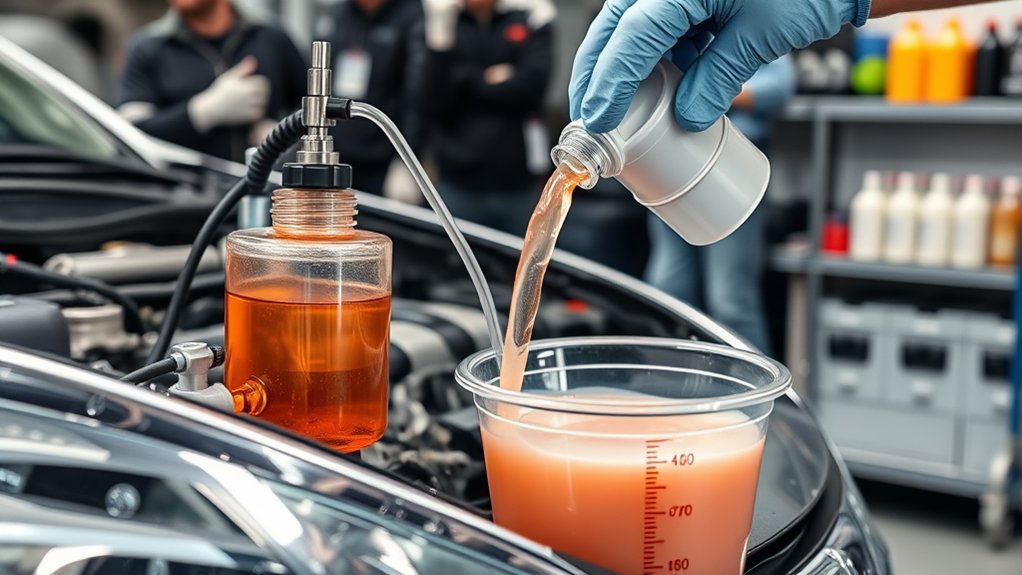
How do you effectively flush your power steering fluid without causing damage? Start by warming the engine to operating temperature for optimal fluid flow.
Locate the power steering reservoir and remove the cap. Using a turkey baster or siphon pump, extract as much old fluid as possible.
Next, disconnect the return line at the reservoir and route it into a catch container. Slowly fill the reservoir with fresh power steering fluid while turning the steering wheel from lock to lock multiple times to purge old fluid from the system.
Refill the reservoir as needed, maintaining proper fluid level. Once clear fluid flows into the catch container, reconnect the return line.
Finally, check for leaks and test steering responsiveness. Adhering to proper cleaning techniques and maintenance timing ensures system longevity and performance.
Avoid Common Power Steering Fluid Flushing Mistakes
Why do many power steering fluid flushes fail to deliver lasting results? The primary cause is common avoidance mistakes that compromise the flush’s effectiveness. To get it right, you need a maintenance mindset and strict adherence to proper procedures.
Avoid these pitfalls:
- Using incorrect fluid type, which damages seals and components
- Skipping system bleeding, causing air pockets and erratic steering
- Neglecting to clean or replace the reservoir and hoses, leading to contamination
- Rushing the flush without fully draining old fluid, reducing flush quality
Extend Your Power Steering System’s Life With Regular Flushes
Although power steering systems are designed for durability, regular fluid flushes are essential to prevent premature wear and maintain optimal performance. By scheduling consistent maintenance, you reduce the risk of contamination buildup and fluid degradation, which can cause system inefficiency and component damage. A two-word discussion idea here is “system longevity.”
Flushing removes particulates and old fluid, preserving seals and preventing corrosion. Another two-word discussion idea is “fluid integrity,” critical for maintaining proper hydraulic pressure. Neglecting flush intervals accelerates wear on the pump and rack, leading to costly repairs.
You can extend your power steering system’s life by adhering to manufacturer-recommended flush intervals and using the appropriate fluid type. This proactive approach ensures smooth steering response and optimal system functionality over time.
Frequently Asked Questions
What Type of Power Steering Fluid Is Best for My Vehicle?
You should use the power steering fluid specified in your vehicle’s owner manual. Don’t trust a wrong mechanic suggesting fluid from an unrelated vehicle, as incorrect fluid risks damaging your system and voiding warranties.
Can I Flush Power Steering Fluid Myself Without Professional Help?
Yes, you can perform DIY maintenance to flush power steering fluid yourself. Use a turkey baster to remove old fluid, a wrench for drain plugs, and a funnel for refilling.
Follow your vehicle’s manual closely for tool recommendations.
How Often Should I Check My Power Steering Fluid Level?
Steer stability starts with a swift stability assessment; check your power steering fluid level monthly. Maintain meticulous monitoring to assure engine compatibility and prevent performance problems.
This safeguards smooth steering and system strength throughout your vehicle’s lifecycle.
What Are the Signs of a Power Steering Fluid Leak?
You’ll notice whining noises, stiff steering, or fluid puddles under your car, signs of a power steering fluid leak.
Think of it like lemonade physics: fluid escapes, disrupting smooth flow, much like ocean poetry’s seamless rhythm breaking.
Is It Necessary to Flush Power Steering Fluid When Replacing the Pump?
Skipping a flush when replacing the pump is like ignoring a clogged filter, an irrelevant topic to overlook. You should flush power steering fluid to prevent contamination and ensure optimal system performance, avoiding unrelated discussion about unnecessary steps.
Conclusion
Flushing your power steering fluid is like giving your steering system a fresh heartbeat—clearing out old, worn fluid to restore smooth control and prevent damage.
By following precise steps and using the right fluid, you guarantee your steering remains responsive and reliable, just as a well-tuned instrument plays flawless notes.
Regular flushes aren’t just maintenance; they’re a commitment to your vehicle’s longevity and your safety on every turn. Properly flushing power steering fluid ensures your steering performs at its best for years to come.