If you’re planning to strap your kayak to a roof rack, it’s essential to secure it properly to avoid damage and guarantee safety. Using the right straps, padding, and a clear method to fasten everything tightly without twisting or slipping is key. Getting this right can save you from roadside headaches and protect your gear.
Let’s start by preparing your kayak and roof rack correctly. Once everything is ready, we’ll move on to the best strapping techniques to ensure a safe and secure transport.
Key Takeaways
- Clean and dry both kayak and roof rack, ensuring rack padding is intact to protect the kayak hull during transport.
- Use durable, weather-resistant straps at least 1 inch wide, avoiding elastic straps that can loosen over time.
- Position the kayak evenly on the rack, aligning straps with the kayak size and roof rack attachment points for secure fastening.
- Place straps over the kayak with the color side up, tighten evenly on both sides, and firmly fasten buckles without slack.
- Regularly check and tighten straps during travel, inspecting for wear, twists, or loosening to maintain stability.
How to Prep Your Kayak and Roof Rack for Strapping
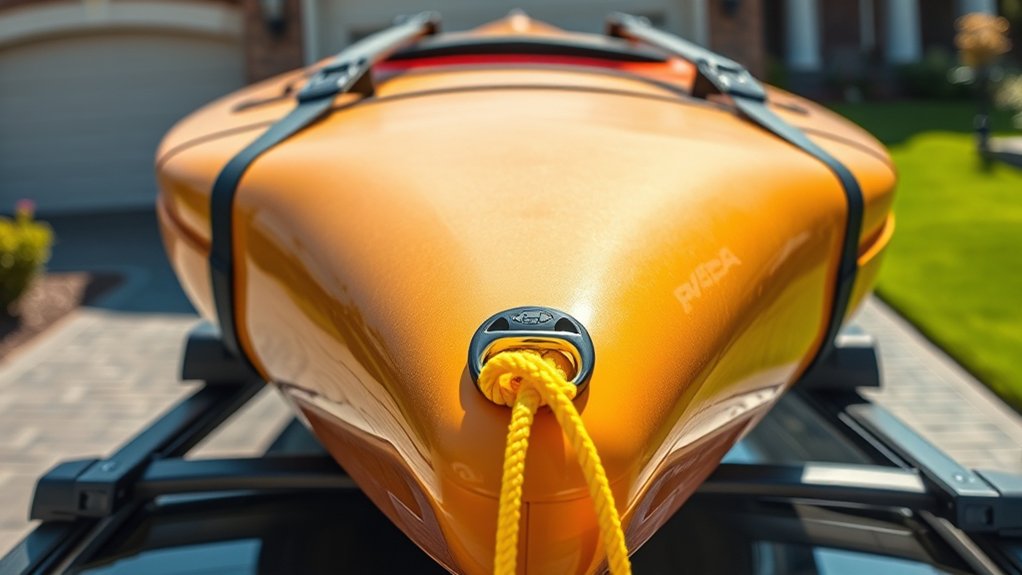
Before you start strapping your kayak to the roof rack, make sure both the kayak and rack are clean and dry. Dirt or moisture can cause straps to slip or damage surfaces.
Inspect your roof rack for compatibility with your kayak’s shape and size; some racks suit sit-on-top kayaks better, while others support sit-inside models. Check the kayak interior for loose items that could shift during transport, and secure or remove them to avoid damage.
Position the kayak properly on the rack, ensuring it sits evenly to distribute weight. Confirm that the rack padding is intact and in place to protect your kayak’s hull from scratches. Proper prep minimizes risk and ensures a stable, secure fit before you begin strapping.
Choosing the Right Straps to Secure Your Kayak
How do you choose the right straps to keep your kayak secure during transport? Start by considering kayak sizing. Longer or wider kayaks need stronger, longer straps to wrap securely around both the kayak and roof rack.
Choose straps based on kayak size—longer, wider kayaks require stronger, longer straps for secure transport.
Next, focus on strap material. Opt for durable, weather-resistant materials like polyester or nylon, which resist stretching and UV damage. Avoid cheap, elastic straps that can loosen over time.
Look for straps with padded buckles or quick-release cam buckles for easy tightening and protection against scratching your kayak. Make sure the straps are wide enough, at least 1 inch, to distribute pressure evenly and prevent damage to your kayak’s hull.
Selecting straps that match your kayak’s size and are made from reliable materials ensures a safe, stable transport every time.
How to Strap Your Kayak Safely, Step by Step
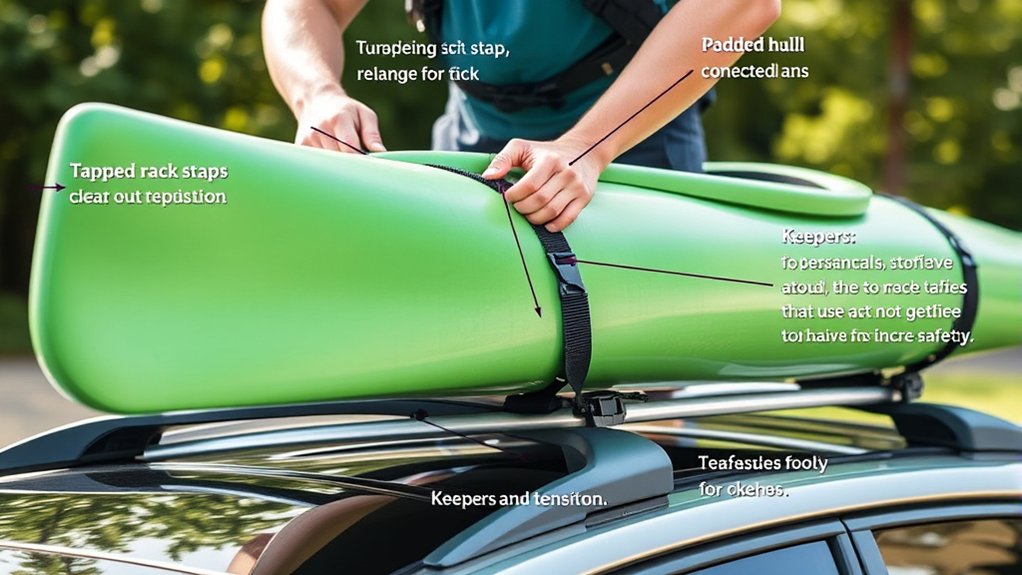
Once your kayak is positioned on the roof rack, you’ll want to secure it tightly using the straps you’ve chosen. Start by placing the straps over the kayak color side facing up, ensuring maximum visibility. Use the recommended roof rack brand’s attachment points to loop the straps securely.
Tighten the straps evenly on both sides, avoiding twists or slack that could cause shifting. Next, fasten the buckle firmly, pulling excess strap through the locking mechanism. Double-check that the kayak sits centered and stable on the roof rack brand’s bars.
Finally, tie off any loose strap ends to prevent flapping during transit. By following these steps, you’ll safely secure your kayak, reducing movement and protecting your gear throughout your journey.
Tips to Prevent Kayak Damage When Driving With a Roof Rack
Securing your kayak properly on the roof rack is just the first step to protecting it during your drive. To prevent damage, be mindful of staircase wind. Sudden gusts can create pressure and strain on your kayak and straps. Drive at moderate speeds to minimize this effect.
Avoid sharp turns and sudden stops, which can increase stress on the kayak’s hull. Also, ensure your vehicle’s tire balance is optimal. Uneven tires can cause vibrations that may loosen straps or harm your kayak during long trips.
Use padding between the kayak and rack to reduce friction and absorb shocks. Finally, park in shaded areas to prevent UV damage when stopped. These practical steps help maintain your kayak’s integrity throughout your journey.
How to Check and Adjust Your Kayak Straps on the Road
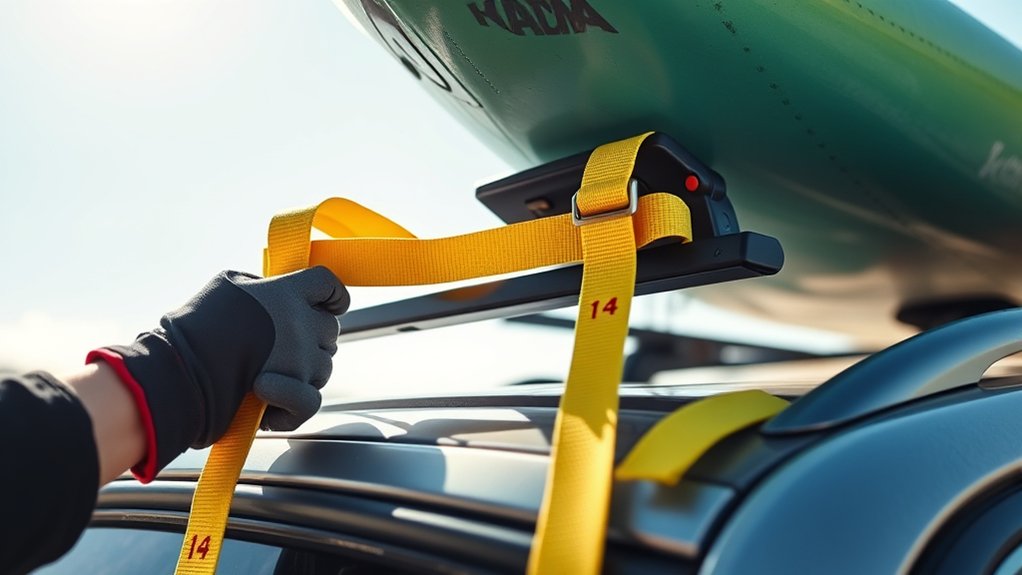
Why is it important to regularly check your kayak straps during a trip? Straps can loosen due to road vibrations, wind, or shifting loads. Failing to adjust them risks your kayak slipping or damage.
Use a simple checklist to avoid common mistakes like ignoring strap tension, worn webbing, or improper knotting. When you stop, pull each strap tight and inspect for frays or twists.
If you notice slack, tighten it immediately to maintain secure contact with the roof rack. Performing this roadside maintenance ensures safety for you and other drivers. Don’t skip this step just because the load feels stable at first.
Regular checks prevent accidents and costly repairs. Keep a small tool kit and spare straps handy for quick fixes on the road.
Frequently Asked Questions
Can I Strap Multiple Kayaks on One Roof Rack?
Yes, you can strap multiple kayaks on one roof rack. Focus on two-word discussion ideas like “weight distribution” and “secure fastening” to ensure safe kayak storage.
Always use proper straps and padding for stability during transport.
What Is the Best Time of Day to Load My Kayak?
The best time for loading your kayak is early morning or late afternoon when temperatures are cooler. This reduces heat-related discomfort and helps you handle gear safely and efficiently, ensuring a smoother loading experience overall.
Are There Legal Restrictions for Kayak Roof Racks?
Yes, you’ll need to follow legal restrictions and roof rack guidelines, including weight limits and flat roof compatibility.
Check local laws to ensure your kayak’s secure transport, preventing fines and ensuring safety on the road.
How Do Weather Conditions Affect Kayak Strapping?
Weather impact can loosen or tighten strap tension, so you’ll need to check and adjust straps regularly. Rain, wind, and temperature changes affect material elasticity, making secure, frequent inspections essential for safe kayak transport.
Can I Use Bungee Cords Instead of Straps?
You can’t put all your eggs in one basket. Bungee cords aren’t ideal for kayak strapping. They stretch and can loosen, making them unsafe.
Use strong, non-elastic straps instead to keep your kayak secure during transport.
Conclusion
You might think strapping your kayak is a hassle, but once you prep your gear right and choose strong straps, it’s surprisingly straightforward. Coincidentally, the same care you take to secure your kayak also keeps your peace of mind intact.
Remember to check those straps regularly—just like you’d check your phone before a trip. With these simple steps, you’ll hit the road confident that your kayak’s safe and ready for adventure.
By following these tips on how to strap your kayak to a roof rack, you’ll ensure a secure and worry-free journey every time.