It’s no coincidence that your swing speed and tempo play a critical role when you pick a driver shaft. Choosing the right driver shaft can significantly impact your shot consistency and distance by matching your swing characteristics with the appropriate flex and weight.
You’ll want to balance shaft length, torque, and grip to optimize control without sacrificing power. But understanding how to test these factors effectively is where most golfers hit a wall—so let’s break down what you need to know.
Key Takeaways
- Match shaft flex to your swing speed and tempo for optimal control and distance, using stiffer flex for faster swings and more flexible shafts for slower swings.
- Choose shaft weight based on swing speed: heavier shafts improve control for faster swings, while lighter shafts help slower swings increase swing speed.
- Select shaft length to balance distance and accuracy, avoiding excessive torque that can reduce precision and cause inconsistent shots.
- Opt for a round grip with appropriate size and texture to enhance hand alignment, comfort, and consistent ball striking during the swing.
- Test shaft torque and flexibility under real swing conditions to ensure compatibility with your swing tempo and reduce unwanted twisting.
Choosing the Right Driver Shaft: Key Factors to Consider
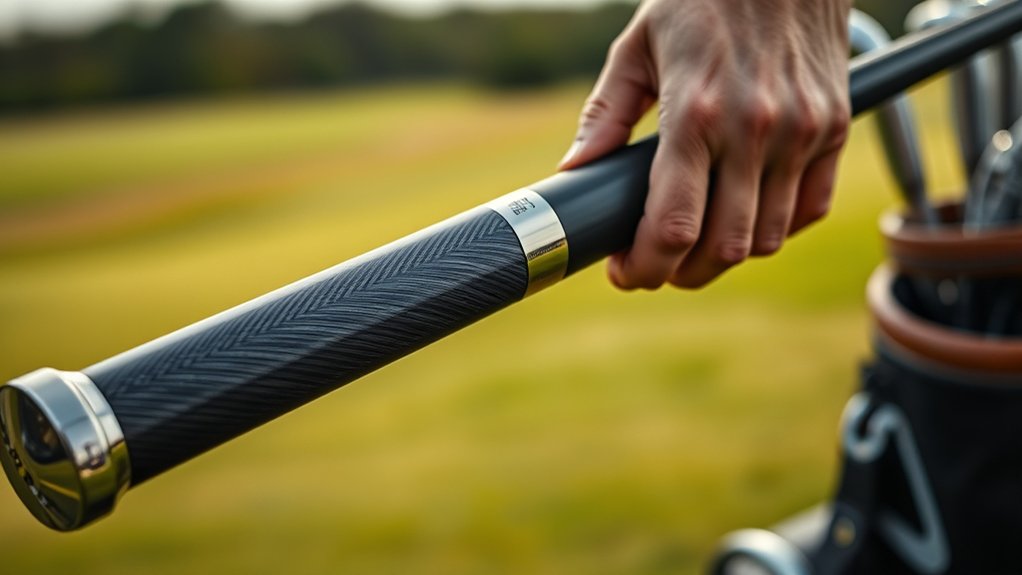
When selecting a driver shaft, what key factors should you prioritize to optimize your performance? First, consider the shaft’s compatibility with your driver’s head weight; this balance directly affects swing tempo and shot accuracy. A heavier head weight requires a shaft that can handle the load without compromising control or causing fatigue.
Next, focus on the grip, opting for a round grip to improve your hand alignment and ensure consistent contact during the swing. The grip’s texture and size also influence your feel and comfort, which are crucial for precise ball striking.
Additionally, shaft material and torque ratings play vital roles, but they should complement, not conflict with, the head weight and grip choice. Prioritizing these factors ensures a driver shaft tailored to your swing mechanics and performance goals.
How to Choose the Right Driver Shaft Flex for Your Swing
How do you determine the ideal driver shaft flex for your swing? Start by analyzing your swing speed and tempo; faster swings typically benefit from stiffer flexes, while slower swings require more flexible shafts.
Be mindful that an incorrect grip or inconsistent stance can skew your swing data, leading to poor shaft selection. Ensure your grip pressure is even and your stance consistency is maintained during testing to get accurate feedback.
A shaft that’s too stiff will reduce distance and increase dispersion, while one that’s too flexible can cause hooks or slices due to timing issues. Use launch monitor data or professional fitting sessions to match your flex precisely to your swing dynamics.
This targeted approach optimizes energy transfer and shot accuracy.
How Driver Shaft Weight Influences Distance and Control
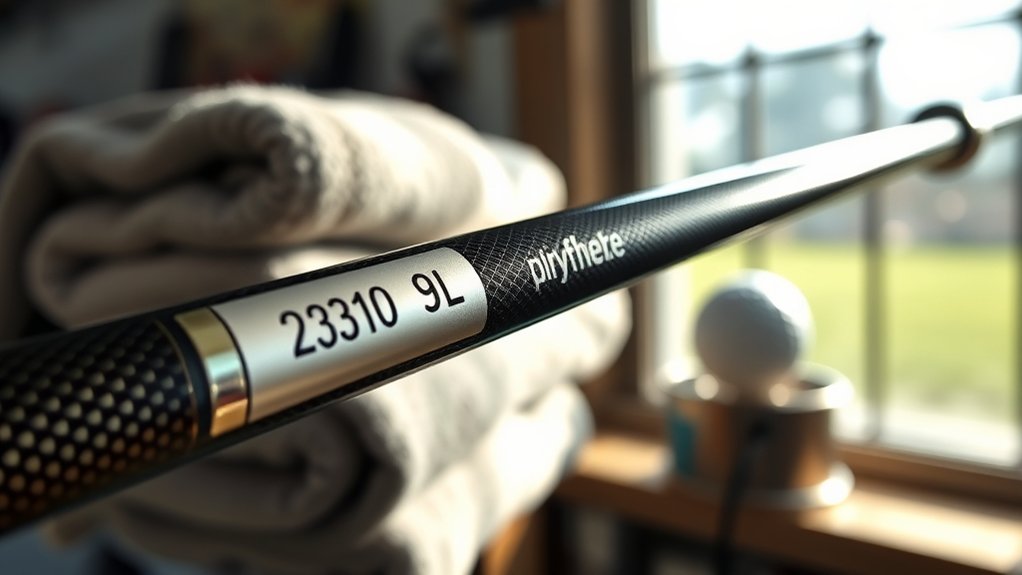
You’ll notice that shaft weight directly affects your swing speed and overall control. Heavier shafts tend to provide greater stability, enhancing accuracy, while lighter shafts allow for increased swing speed and potentially more distance.
Understanding this balance helps you choose a shaft that matches your performance goals.
Shaft Weight and Swing Speed
Why does shaft weight matter so much in your driver’s performance? Because it directly affects your swing speed and, consequently, the energy transferred to the ball. Choosing the right shaft weight lets you optimize your distance and consistency.
Here’s how shaft weight interacts with swing speed:
- Lighter shafts increase your swing speed, allowing for greater clubhead velocity and potential distance gains.
- Heavier shafts typically reduce swing speed but can improve swing stability (discussed later).
- Your ideal shaft weight depends on your natural swing speed; faster swings benefit from slightly heavier shafts to maintain control.
- Conversely, slower swing speeds often gain more distance by using lighter shafts that enable faster acceleration.
Balancing shaft weight with your swing speed ensures you maximize driver performance efficiently.
Heavier Shafts Enhance Control
Where does control come into play when choosing a driver shaft? Heavier shafts provide significant control benefits by increasing stability during your swing. The added mass reduces shaft oscillation at impact, helping you maintain a consistent clubface angle and improving shot accuracy.
When you use heavier shafts, you also experience a more solid feel, which enhances feedback and allows you to better sense your swing mechanics. This precision is essential for players seeking tighter shot dispersion and predictable ball flight.
While heavier shafts may slightly reduce swing speed, the trade-off is improved control, especially in challenging conditions. Understanding these control benefits helps you make an informed decision, ensuring your driver shaft complements your swing style and optimizes performance on the course.
Lighter Shafts Boost Distance
How does shaft weight affect the distance you can achieve with your driver? Lighter shafts reduce the overall mass, enabling faster swing speeds, which directly translates to greater ball speed and longer carries. When considering two word discussion ideas like “shaft weight,” it’s crucial to understand the trade-offs between distance and control.
Here are four key points to consider:
- Swing Speed Increase: Lighter shafts allow you to accelerate more easily, boosting your clubhead speed.
- Energy Transfer Efficiency: Reduced weight improves the transfer of energy to the ball, enhancing distance.
- Fatigue Reduction: Less weight decreases arm fatigue, helping maintain consistent performance during rounds.
- Control Considerations: While lighter shafts improve distance, they may reduce stability, requiring precise tempo.
Balancing shaft weight is essential for optimizing your driver’s performance.
Picking the Right Driver Shaft Length for Better Accuracy
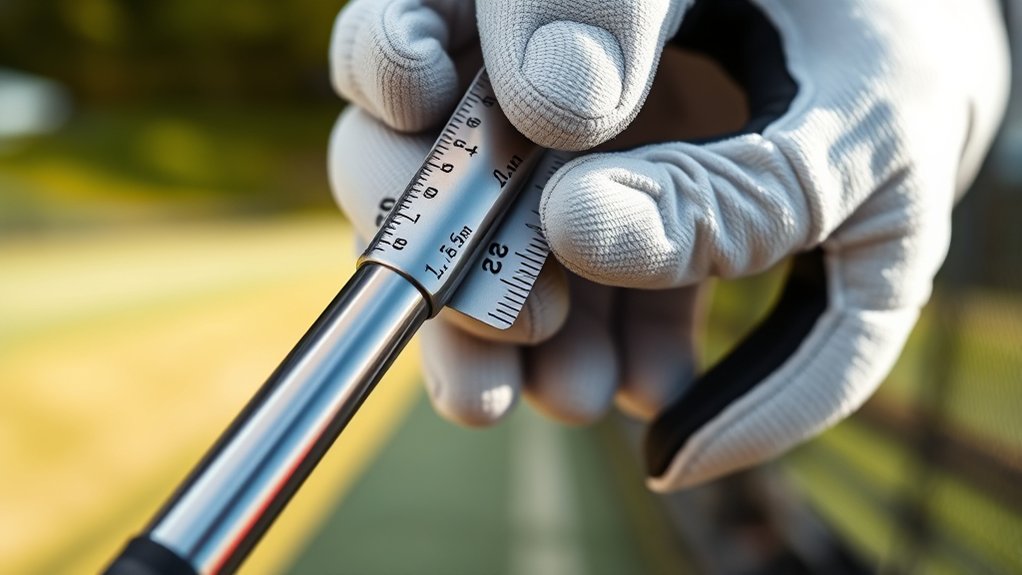
When selecting the ideal driver shaft length, you’ll want to balance reach with control to enhance your accuracy. Longer shafts can increase distance but often sacrifice precision due to higher torque and less manageable swing dynamics.
Through torque testing, you can determine how shaft length affects the twisting forces during your swing, which directly impacts shot dispersion. Additionally, tempo matching is crucial; your natural swing rhythm interacts differently with varying shaft lengths, influencing your ability to square the clubface consistently.
Opt for a length that complements your tempo and minimizes excessive torque, enabling tighter shot groups. Ultimately, precise measurement and fitting based on these technical factors will help you choose a driver shaft length that optimizes accuracy without compromising performance.
How Driver Shaft Material Affects Feel and Performance
Adjusting shaft length influences torque and tempo, but the material composition of the driver shaft also plays a significant role in your overall feel and performance. Choosing between graphite, steel, or composite materials affects weight distribution, vibration dampening, and flex characteristics.
Shaft material, alongside length, crucially shapes your feel, performance, and swing dynamics.
Consider these factors:
- Material aesthetics Different materials offer distinct visual textures and finishes that may influence your confidence.
- Weight and stiffness Lighter graphite shafts promote faster swing speeds, while steel provides stability and control.
- Vibration feedback Composite materials often reduce harsh vibrations, improving comfort on impact.
- Branding perception Premium brands might use proprietary materials that enhance performance and influence your shaft choice.
Understanding these elements ensures you select a shaft that complements your swing and maximizes efficiency.
How Launch Angle and Spin Rate Affect Driver Shaft Performance
You need to optimize your launch angle to maximize carry distance and overall ball flight efficiency. Controlling spin rate is equally important, as too much spin can reduce roll and increase dispersion.
Selecting the right driver shaft stiffness and torque helps you fine-tune these variables for consistent performance.
Optimizing Launch Angle
How does launch angle influence the overall performance of your driver shaft? Launch angle directly impacts ball trajectory and distance, making launch optimization a key factor in shaft selection.
Fine-tuning this angle helps you maximize carry and roll by aligning shaft characteristics with your swing mechanics.
Consider these factors for optimizing launch angle:
- Shaft flex affects how the clubhead releases, altering the launch angle.
- Shaft weight influences swing speed and, consequently, ball flight.
- Kick point location dictates the trajectory, with higher kick points producing lower launch.
- Shaft torque controls feel and face stability, indirectly affecting launch consistency.
Managing Spin Rate
Why does spin rate matter as much as launch angle when selecting your driver shaft? Spin rate directly influences ball trajectory and distance, and it’s affected by your shaft stiffness. A shaft that’s too flexible can increase spin, reducing roll and distance. Conversely, a stiffer shaft can lower spin, optimizing roll and control.
| Launch Angle | Spin Rate (RPM) |
|---|---|
| Low | High |
| Medium | Medium |
| High | Low |
| Low | Low |
| Medium | High |
Understanding the interplay between launch angle and spin rate helps you pick a shaft with the right stiffness to manage spin effectively, improving both accuracy and total yardage.
Matching Driver Shafts to Your Swing Speed and Tempo
When selecting a driver shaft, what role do your swing speed and tempo play? They’re critical for maximizing performance. Your shaft must complement these factors to maximize energy transfer and control. Here’s how:
- Evaluate swing speed: Higher speeds need stiffer shafts; lower speeds benefit from more flexible ones.
- Analyze tempo: Smooth tempos suit softer flex shafts, while aggressive tempos require stiffer options to prevent timing issues.
- Understand shaft labeling: Labels often denote flex (e.g., R, S) but vary by manufacturer, so confirm with actual performance data.
- Consider grip sizing: Proper grip size ensures comfort and control, indirectly influencing your tempo and swing consistency.
Matching shaft characteristics precisely to your swing speed and tempo ensures optimal launch conditions and shot accuracy.
How to Test Driver Shafts Before You Buy
Before you commit to a driver shaft, you need to assess its flexibility and torque characteristics to ensure they complement your swing. Testing the shaft with your actual swing speed helps reveal how it performs under real conditions.
This hands-on evaluation is crucial for matching the shaft’s response to your tempo and power.
Flexibility And Torque
How do you determine if a driver shaft’s flexibility and torque match your swing? These two factors directly influence shot accuracy and distance consistency. To assess them effectively, consider these steps:
- Analyze your swing tempo. Faster tempos generally require stiffer shafts to prevent excessive flex.
- Measure grip pressure. Firmer grips can reduce shaft torque, affecting feel and control.
- Perform a bend test by applying consistent force to the shaft tip to observe deflection and torque response.
- Use a torque analyzer tool to quantify the shaft’s resistance to twisting under load, matching it to your swing’s rotational forces.
Matching shaft flexibility and torque to your swing tempo and grip pressure ensures optimal energy transfer and shot precision.
Swing Speed Testing
Matching the shaft’s flexibility and torque to your swing sets the foundation for optimal performance, but accurately gauging your swing speed is equally important. Swing speed testing helps you determine the ideal driver shaft length and flex for your swing, ensuring maximum energy transfer and control.
Use a launch monitor or swing speed radar to measure your clubhead speed consistently.
| Swing Speed (mph) | Recommended Shaft Flex |
|---|---|
| 70-85 | Senior or Regular Flex |
| 85-95 | Regular Flex |
| 95-105 | Stiff Flex |
| 105+ | Extra Stiff Flex |
Adjust driver shaft length based on your swing speed and comfort, as longer shafts might increase distance but reduce control.
Avoid These Common Driver Shaft Mistakes
Why do so many golfers struggle with selecting the right driver shaft? Often, it’s because they fall victim to common mistakes that obscure optimal performance. To avoid these pitfalls, focus on these four key areas:
- Ignoring Swing Speed Data: Don’t rely solely on marketing jargon or social proof; use precise swing speed measurements to guide shaft flex and weight.
- Overlooking Shaft Torque: Torque affects feel and accuracy. Selecting the wrong torque can cause inconsistent shots.
- Neglecting Shaft Length: Too long or short shafts can disrupt your swing plane and timing.
- Disregarding Shaft Material: Graphite or composite shafts influence vibration and energy transfer differently; choose based on your swing characteristics.
When and How to Upgrade Your Driver Shaft for Better Results
When should you consider upgrading your driver shaft to enhance your game? If you’re struggling with consistency, missing your ideal launch conditions, or seeking better control through finding forgiveness, it’s time to reassess your shaft. Upgrading also helps refine your visual alignment and optimize shot dispersion.
| Condition | Upgrade Focus | Expected Benefit |
|---|---|---|
| Inconsistent ball flight | Flex and torque | Enhanced control |
| Low ball speed | Lightweight materials | Increased swing speed |
| Poor visual alignment | Shaft color/design | Improved setup confidence |
| Lack of forgiveness | Shaft stiffness | More forgiveness on mishits |
| Swing changes | Custom fitting | Tailored performance |
A precise fitting ensures your shaft complements your swing dynamics, unlocking better results.
Frequently Asked Questions
How Do Temperature Changes Affect Driver Shaft Performance?
You’ll notice temperature effects cause material expansion in your driver shaft, altering its stiffness and flex. Warmer conditions soften the shaft slightly, while colder temps increase rigidity.
These changes impact your swing speed and shot accuracy markedly.
Can Driver Shafts Be Customized for Left-Handed Golfers?
Absolutely, left-handed customization for driver shafts is as essential as oxygen for peak performance. You’ll benefit from precise shaft length adjustments and tailored flex profiles, ensuring your swing mechanics and tempo perfectly align with your left-handed style.
What Maintenance Is Required to Keep a Driver Shaft in Good Condition?
You should regularly clean the shaft with a soft cloth and mild soap, avoid excessive torque, and inspect for cracks or damage. These maintenance tips enhance shaft longevity by preventing corrosion and structural weakening over time.
Are There Specific Driver Shafts for Different Golf Ball Types?
Yes, you can optimize performance by matching driver shafts to specific driver ball types. Shaft customization adjusts flex, weight, and torque, enhancing ball flight and control tailored precisely to the golf ball’s characteristics you use.
How Does Shaft Torque Impact Shot Accuracy and Feel?
Imagine steering a boat. Shaft torque controls your shot’s stability and feel. Higher torque reduces impact dispersion but varies with temperature effects.
For left-handed customization, regular maintenance optimizes ball-specific shafts’ precision and consistency.
Conclusion
Choosing the right driver shaft isn’t just a tweak—it’s like unlocking a secret golf superpower. Get the flex, weight, and length spot-on, and your swing transforms from inconsistent to laser-focused precision.
Ignore these details, and you might as well be swinging a broomstick. Test thoroughly, trust your tempo, and upgrade wisely.
With the perfect shaft, you’re not just hitting shots—you’re commanding the course with technical mastery and confidence every single swing. Choosing the right driver shaft is key to unlocking your best game.