You rely on the input shaft seal to maintain the integrity of your gearbox by preventing oil leaks where the shaft meets the housing. This essential component isn’t just a simple barrier—it guarantees proper lubrication, minimizes wear, and blocks contaminants from entering critical areas.
Understanding how the input shaft seal functions and what materials it’s made from can reveal why its condition directly impacts your machinery’s performance and longevity. Keeping this seal in good shape is crucial for avoiding costly repairs and downtime.
Key Takeaways
- An input shaft seal prevents oil leaks by sealing the interface between the input shaft and gearbox housing. It maintains proper lubrication levels to ensure smooth gearbox operation and component longevity.
- The seal blocks contaminants like dirt and debris from entering the gearbox.
- Made from materials like nitrile rubber or silicone, it allows shaft rotation while preserving seal integrity.
- Proper installation and maintenance of the seal prevent premature wear and gearbox failure.
What Is an Input Shaft Seal and Why It Matters
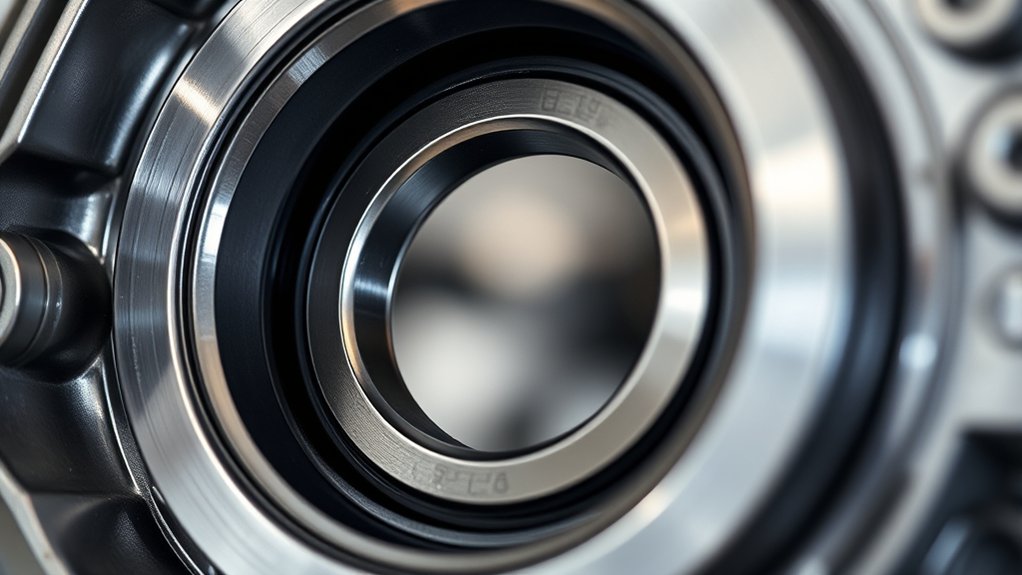
What exactly does an input shaft seal do, and why should you care? This component prevents fluid leakage where the input shaft enters a mechanical system, maintaining proper lubrication and protecting internal parts.
Without an effective seal, insufficient lubrication can occur, leading to accelerated wear and potential failure. You must understand that misalignment issues exacerbate the problem by stressing the seal unevenly, increasing the risk of damage and leaks.
If you ignore the seal’s condition, contaminants may enter, compromising system integrity. Therefore, the input shaft seal plays a critical role in ensuring reliable operation by preserving lubrication and compensating for alignment tolerances.
Paying attention to its function helps you avoid costly repairs and maintain optimal mechanical performance.
How an Input Shaft Seal Works in Mechanical Systems
You rely on the input shaft seal to maintain a tight barrier that prevents fluid leakage while allowing the shaft to rotate smoothly. These seals typically use materials like nitrile rubber or silicone to withstand temperature and chemical exposure.
Understanding how the seal’s design and material properties work together is key to ensuring system reliability.
Seal Functionality Overview
How does an input shaft seal maintain the integrity of mechanical systems? It prevents lubricant leakage while blocking contaminants from entering, ensuring optimal fuel efficiency and vibration damping. The seal’s tight interface with the rotating shaft preserves lubrication, reducing friction and wear.
| Function | Benefit | Impact on System |
|---|---|---|
| Lubricant Retention | Maintains lubrication | Enhances fuel efficiency |
| Contaminant Block | Protects internal parts | Prevents premature wear |
| Vibration Damping | Absorbs minor shocks | Reduces noise, wear |
| Shaft Alignment | Ensures proper fit | Improves mechanical life |
| Pressure Control | Balances internal pressure | Prevents seal blowout |
Common Seal Materials
Ensuring the input shaft seal performs its role effectively depends heavily on the materials used in its construction. Typically, elastomers like nitrile rubber (NBR) and fluorocarbon (FKM) are favored for their resistance to heat, oils, and wear, which is critical near slip rings where contamination can disrupt electrical signals.
You’ll also find seals incorporating PTFE for low friction and chemical resistance, supporting stable bearing preload by minimizing torque fluctuations. Metal-reinforced seals offer rigidity, maintaining consistent contact pressure despite shaft misalignment or vibration.
Selecting the right material hinges on operating temperature, chemical exposure, and mechanical stress factors. By understanding these material properties, you can optimize seal durability and maintain system integrity, preventing premature failures that could compromise bearing preload and slip ring performance.
Preventing Fluid Leakage
Why is preventing fluid leakage essential in mechanical systems? Leakage compromises lubrication, causes contamination, and leads to premature component failure. The input shaft seal plays a critical role by maintaining a tight barrier around the rotating shaft. You must ensure correct installation, paying close attention to torque specs to avoid deforming the seal.
Shims maintenance is equally vital. They help achieve precise axial positioning, preventing excess pressure on the seal lip.
| Factor | Effect on Leakage | Recommended Action |
|---|---|---|
| Seal Material | Resistance to wear | Select compatible type |
| Torque Specs | Prevents seal distortion | Use calibrated tools |
| Shims | Maintain seal alignment | Adjust thickness carefully |
| Surface Finish | Reduces abrasion | Machine to specification |
| Maintenance | Detects early failure | Schedule regular checks |
Proper attention to these factors ensures fluid retention and system longevity.
How Input Shaft Seals Differ From Other Transmission Seals
What sets input shaft seals apart from other transmission seals is their unique role in handling both rotational motion and pressure fluctuations at the transmission’s entry point. You’ll notice these seals must accommodate dynamic axial and radial movements while maintaining a tight barrier against fluid leakage.
Unlike other transmission seals that often deal with static or less complex conditions, input shaft seals require precision engineering in material sourcing to ensure durability under constant friction and heat. Additionally, you must consider stricter seal standards, as these seals operate in a high-stress environment where failure can lead to contamination and transmission damage.
Understanding these distinctions helps you appreciate why input shaft seals demand specialized design and testing protocols compared to other seals within the transmission system.
What Input Shaft Seals Are Made Of
Although input shaft seals operate under demanding conditions, manufacturers carefully select materials that balance durability, flexibility, and resistance to heat and chemicals. When you analyze materials comparison, you see that seal design must account for temperature effects and contact with transmission fluids.
Common materials include nitrile rubber, fluorocarbon (Viton), and silicone, each offering distinct performance characteristics.
| Material | Temperature Range (°C) | Chemical Resistance |
|---|---|---|
| Nitrile Rubber | -40 to 120 | Good against oils and fuels |
| Fluorocarbon | -20 to 200 | Excellent for high temperatures |
| Silicone | -60 to 180 | Superior flexibility, moderate |
Selecting the right material ensures optimal sealing of the input shaft, maintaining transmission integrity under various operating stresses.
Signs Your Input Shaft Seal Is Failing
Understanding the materials used in input shaft seals helps clarify how different conditions can impact their performance over time. When an input shaft seal begins failing, you’ll often notice fluid leaks around the seal area, indicating compromised sealing integrity.
Contaminants like dirt or metal particles can accelerate wear, causing premature seal failure. You might also experience unusual noises originating from the transmission or differential housing, signaling internal lubrication loss due to seal degradation.
Additionally, inconsistent lubrication levels or visible oil residue on the input shaft or adjacent components are clear signs of seal failure. Monitoring these symptoms closely allows you to address issues before further damage occurs, ensuring the input shaft maintains proper function and preventing costly repairs related to seal failure.
Inspecting and Replacing an Input Shaft Seal
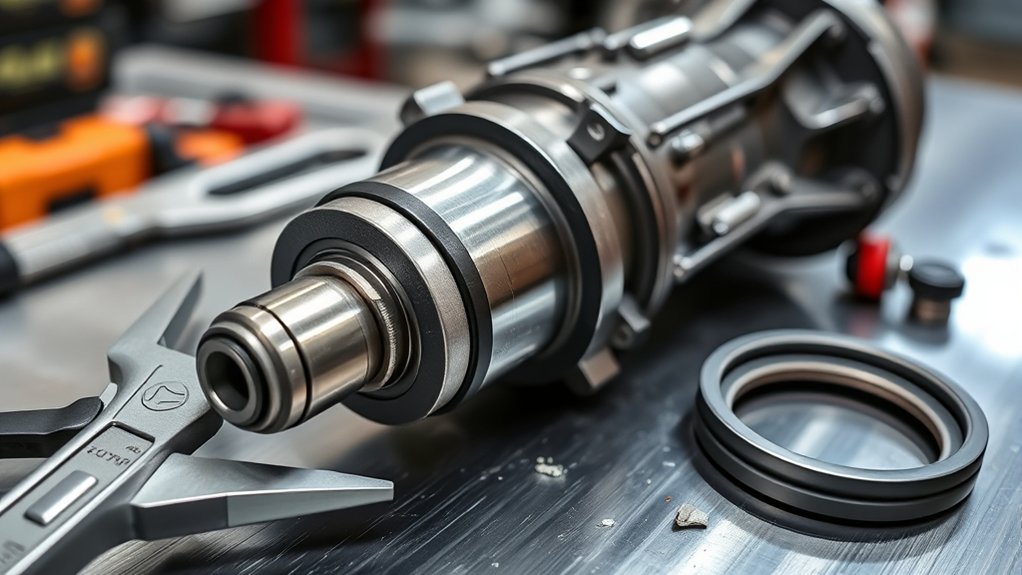
How can you accurately assess the condition of an input shaft seal and determine when replacement is necessary? Begin by inspecting the seal for visible signs of wear, cracks, or leaks, which often indicate insufficient lubrication.
Next, check for shaft misalignment, as this can accelerate seal degradation. Use a dial indicator to measure shaft runout and confirm alignment within manufacturer specifications.
If contamination or damage is evident, prepare to replace the seal. When replacing, clean the shaft thoroughly, apply a thin layer of lubricant on the new seal’s lip, and install it evenly to prevent distortion.
Ensure the seal seating surface is free of burrs to avoid premature failure. Proper inspection and replacement minimize leakage risks and maintain system integrity.
How Input Shaft Seals Prevent Gearbox Damage
You rely on the input shaft seal to maintain a tight barrier that prevents oil from leaking out of the gearbox. By preserving proper lubrication levels, the seal guarantees your gearbox components operate smoothly and resist wear.
Understanding this functionality is key to preventing damage caused by oil loss and contamination.
Seal Functionality Explained
Why does the input shaft seal play a critical role in gearbox longevity? It acts as the first line of defense, ensuring contaminants stay out and lubricants stay in. Without a properly functioning seal, the gearbox risks premature wear and failure.
You need to understand its core functions:
- Prevents ingress of dirt and debris, which can accelerate gear and bearing wear.
- Retains lubricants to maintain optimal friction levels and reduce heat buildup.
- Aborbs minor shaft misalignments, preserving seal integrity under operational stress.
Addressing installation challenges is vital. Improper seating can cause leaks or early degradation. Following maintenance tips, such as regular inspection and timely replacement, ensures the seal performs reliably.
Preventing Oil Leakage
Where does oil leakage typically originate in a gearbox, and how does the input shaft seal counteract this issue? Oil leakage most commonly begins at the interface between the input shaft and gearbox housing, where movement creates gaps. The input shaft seal forms a tight barrier at this critical junction, preventing lubricant from escaping while allowing shaft rotation.
By maintaining a proper lubrication protocol, you ensure consistent oil film thickness, reducing wear and heat generation. The seal also plays a vital role in contamination control by blocking dirt and debris from entering the gearbox.
This dual function preserves internal components and prevents premature failure. In essence, the input shaft seal safeguards your gearbox by maintaining optimal lubrication and preventing external contaminants, ultimately minimizing oil leakage and extending service life.
Tips to Extend the Life of Your Input Shaft Seal
Although input shaft seals are designed to withstand harsh operating conditions, their lifespan can considerably decrease without proper care. To extend the life of your input shaft seal, you need to focus on precision during installation and ongoing maintenance.
First, apply proven techniques for seal installation, ensuring alignment and avoiding damage to the sealing lip. Second, follow lubrication best practices by using the correct lubricant type and maintaining proper levels to reduce friction and wear.
Third, routinely inspect the seal for signs of wear, contamination, or deformation to catch issues early. By adhering to these three key actions, you’ll optimize seal performance and prevent premature failure, ultimately safeguarding your machinery’s efficiency and reducing downtime.
Frequently Asked Questions
Can Input Shaft Seals Be Used in Electric Vehicles?
Yes, you can use input shaft seals in electric vehicles to maintain seal longevity by preventing lubricant leaks and contamination.
You’ll need seals designed for EV-specific torque and thermal conditions to ensure optimal performance and durability.
What Tools Are Needed for Input Shaft Seal Replacement?
You’ll need a specialized tools list including a seal puller, socket set, and torque wrench to ensure precision.
Don’t forget to perform a thorough seal inspection for wear or damage before installing the new input shaft seal.
How Much Does an Input Shaft Seal Typically Cost?
You’ll typically pay $10 to $50 for an input shaft seal, depending on seal compatibility and vehicle specifics. Avoid unrelated topics to focus on quality and fit, ensuring optimal performance and longevity during replacement.
Are Input Shaft Seals Compatible With All Gearbox Brands?
Compatibility questions often arise like tangled threads in a loom; you won’t find input shaft seals universally fitting all gearbox brands.
You must analyze seal materials and gearbox specs carefully to ensure precise compatibility and optimal performance.
Can a Damaged Input Shaft Seal Affect Fuel Efficiency?
Yes, a damaged input shaft seal can reduce fuel efficiency by causing fluid leaks that increase friction. This also affects aesthetics due to visible leaks and may void your warranty, requiring prompt technical inspection and repair.
Conclusion
You’ve seen how essential the input shaft seal is in maintaining gearbox integrity by preventing leaks and contamination. Like a knight guarding a castle gate, it’s your first line of defense against mechanical failure. By understanding its function, materials, and signs of wear, you can act promptly to inspect and replace it.
Keep your seal in prime condition, and you’ll guarantee peak performance and longevity in your mechanical systems. Remember, the input shaft seal plays a crucial role in protecting your gearbox and ensuring smooth operation. Regular maintenance of the input shaft seal is key to avoiding costly repairs and downtime.