If you want to know where is the cam shaft located, it depends on the type of engine you have. In a typical overhead cam engine, you’ll find the camshaft positioned directly above the cylinder head. This placement enables quicker valve response.
In contrast, pushrod engines house the camshaft within the engine block. These engines use lifters and pushrods to operate the valves. Understanding these distinct placements is essential because it directly impacts maintenance access, timing adjustments, and overall engine performance.
And that’s just the start of what you need to know about camshaft location and its effects on your engine.
Key Takeaways
- The camshaft is located either above the cylinder head (overhead camshaft) or inside the engine block (in-block camshaft).
- Overhead camshafts (OHC) sit directly above the valves for faster valve response and improved engine breathing.
- In-block camshafts use pushrods to actuate valves and are positioned within the engine block.
- Single overhead camshaft (SOHC) engines have one camshaft controlling all valves, while DOHC engines have separate intake and exhaust camshafts.
- Access to the camshaft requires removing the valve cover and timing chain or belt cover.
What a Camshaft Is and Why It Affects Performance
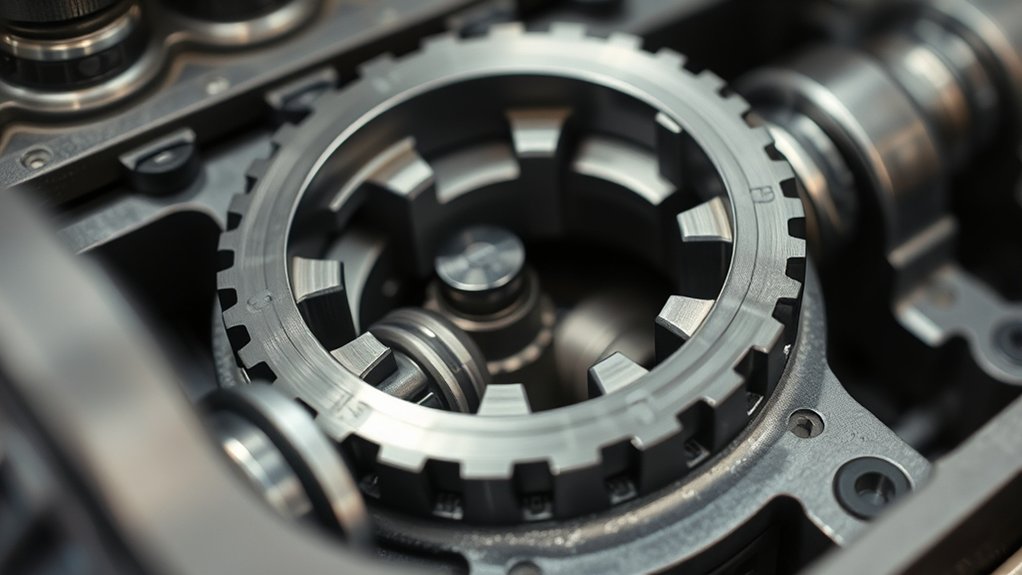
How does the camshaft influence your engine’s performance? The camshaft is a rotating shaft with precisely shaped lobes that actuate the engine’s valves. Its design directly impacts airflow and combustion efficiency, which translates to power and fuel economy.
When considering camshaft materials, you’ll find options like cast iron and billet steel, each affecting durability and heat resistance differently. Don’t fall for common performance myths suggesting that any camshaft upgrade guarantees massive horsepower gains; actual improvements depend on matching the cam profile to your engine’s needs.
Understanding the camshaft’s role clarifies why material choice and lobe geometry matter. In essence, the camshaft is a critical component that demands careful selection to optimize engine output without compromising reliability.
How the Camshaft Controls Valve Timing
The camshaft’s lobes don’t just open and close valves; they precisely control valve timing to optimize engine cycles. You rely on the camshaft to synchronize valve opening and closing with piston movement, ensuring efficient air-fuel intake and exhaust gas expulsion.
The cam timing belts play a critical role here, maintaining exact alignment between the crankshaft and camshaft, preventing timing errors that could compromise engine performance. Additionally, effective camshaft lubrication is essential; it reduces friction between lobes and valve lifters, preserving timing accuracy and preventing premature wear.
Camshaft Location in Different Engine Types
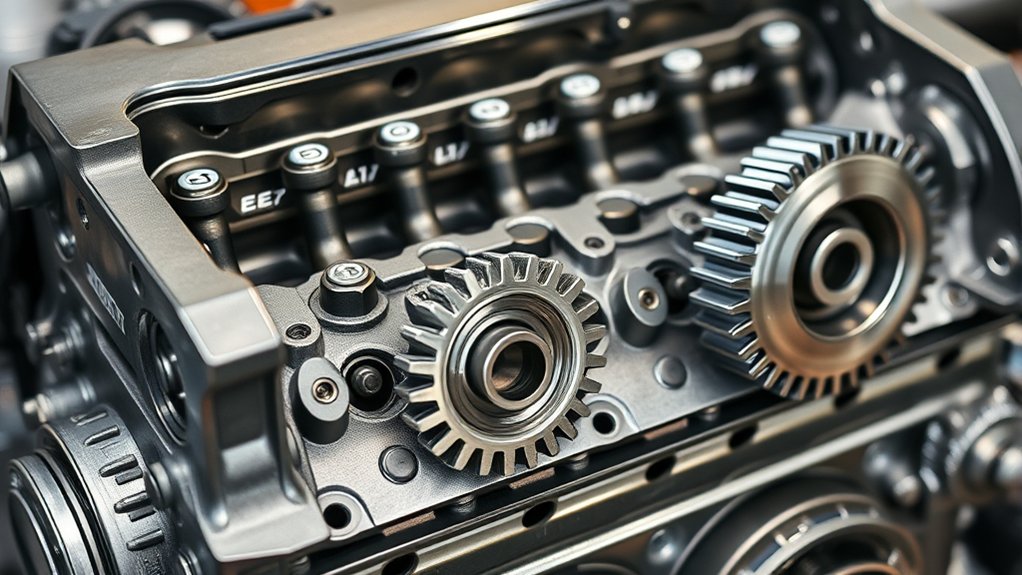
You’ll find camshafts positioned differently depending on the engine design. In overhead camshaft engines, the camshaft sits above the cylinder head, directly actuating the valves.
In contrast, engines with camshafts in the block use pushrods to transfer motion to the valves, affecting timing and mechanical complexity.
Overhead Camshaft Placement
Where exactly does an overhead camshaft sit within various engine designs? You’ll find it positioned directly above the cylinder head, integrated into the valve train assembly. This placement optimizes valve timing by reducing the complexity and slack associated with pushrod systems.
When you inspect the camshaft color, it often varies due to coatings designed to reduce friction and wear, critical for sustaining the precise “camshaft music,” the rhythmic sound produced by cam lobes actuating valves.
In single overhead camshaft (SOHC) engines, the camshaft controls both intake and exhaust valves from one position. In dual overhead camshaft (DOHC) configurations, separate camshafts independently manage intake and exhaust valves, enhancing performance and efficiency.
This overhead placement ensures faster valve response and improved engine breathing, key to modern high-revving engines.
Camshaft In Block
How does a camshaft positioned within the engine block differ from overhead configurations in terms of mechanical operation and design? When the camshaft resides in the block, it directly actuates lifters and pushrods to operate valves, contrasting with overhead camshafts that act directly on valve stems or rocker arms.
This camshaft anatomy impacts valve timing precision and engine efficiency. You’ll find in-block camshafts mainly in pushrod engines, which have fewer moving parts but can limit high-RPM performance.
Aftermarket camshafts for block-mounted designs often focus on optimizing lift and duration to improve torque and drivability rather than high-end power. Understanding these mechanical distinctions helps you select the right camshaft setup for your engine’s performance goals and maintenance preferences.
How Overhead and Inline Camshafts Differ
Why does the placement of a camshaft matter in engine design? It directly affects valve timing efficiency and engine performance. Overhead camshafts (OHC) sit atop the cylinder head, reducing the number of moving parts between the camshaft and valves. This design allows for higher RPM and more precise valve control.
Inline camshafts, or camshafts in block engines, reside within the engine block, using pushrods to actuate valves, which can limit speed but simplify construction.
Though it may seem unrelated, the concept of “camshaft jewelry” and “camshaft fashion” metaphorically reflects how engineers “decorate” engines with camshaft placement choices, influencing style and function. Understanding these distinctions helps you appreciate how camshaft positioning balances complexity, performance, and design priorities.
Signs Your Camshaft Might Be Failing
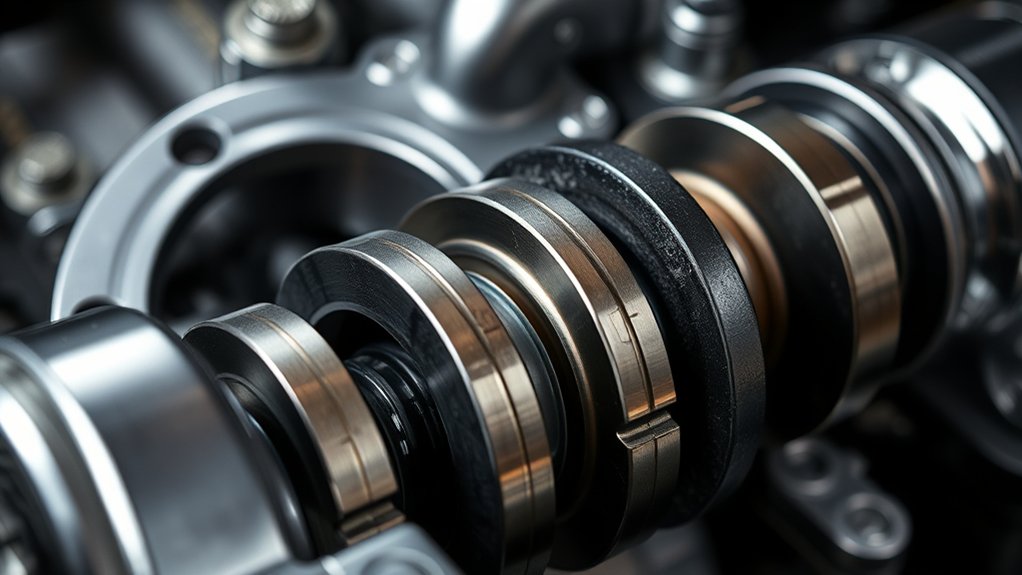
Understanding camshaft placement clarifies its role in engine performance, but recognizing when the camshaft itself is failing is equally important. You might notice uneven engine idling, reduced acceleration, or unusual ticking noises. These symptoms often indicate camshaft wear or damage.
A failing camshaft can cause improper valve timing, leading to misfires or increased emissions. Additionally, metal shavings in your engine oil suggest mechanical degradation linked to camshaft components. Addressing these signs promptly prevents further engine damage.
While you focus on this, remember that another topic, unrelated to camshafts, mechanical maintenance like checking your timing belt condition also affects camshaft function. Ignoring these interconnected issues risks costly repairs.
Therefore, diagnosing camshaft issues early ensures optimal engine performance and longevity.
Finding and Accessing Your Vehicle’s Camshaft
You’ll find the camshaft positioned within the engine block or cylinder head, depending on your engine’s design. To access it, you need to remove specific components like the valve cover or timing chain cover, which requires careful handling to avoid damage.
Understanding the exact location and access points is vital for effective inspection or maintenance.
Camshaft Location Overview
Where exactly is the camshaft located within your vehicle’s engine? Typically, it resides either in the engine block (in pushrod engines) or the cylinder head (in overhead cam engines). Its precise positioning is critical, as it controls valve timing and movement through its lobes, which must be supported by suitable camshaft material to withstand friction and heat.
Proper lubrication gaps around the camshaft ensure minimal wear and efficient operation.
Key location considerations include:
- Engine design type: pushrod vs. overhead cam influences camshaft placement.
- Camshaft material: affects durability and heat resistance in its mounting position.
- Lubrication gaps: essential clearances to maintain smooth rotation and reduce friction.
Understanding these factors helps you accurately identify and evaluate your camshaft’s location.
Accessing Camshaft Components
How do you gain access to your vehicle’s camshaft components for inspection or maintenance? First, ensure you follow proper camshaft etiquette. Disconnect the battery and allow the engine to cool completely.
Locate the camshaft by removing the valve cover, which typically requires detaching bolts and clearing any obstructing components like ignition coils or spark plug wires. Precision is key; use appropriate tools to avoid damaging seals or gaskets.
Pay close attention to maintenance timing. Perform inspections as recommended in your vehicle’s service manual to prevent premature wear.
Accessing the camshaft demands a systematic approach, balancing thoroughness with care. By adhering to these steps, you can efficiently reach and assess camshaft components, ensuring optimal engine performance and longevity without unnecessary complications.
Why You Need Regular Camshaft Maintenance
Regular camshaft maintenance plays a critical role in ensuring the efficient operation and longevity of your engine. Neglecting this can lead to premature wear, poor engine performance, and costly repairs.
You need to focus on key tasks like monitoring camshaft lubrication and timely timing belt replacement. Proper lubrication reduces friction between cam lobes and followers, preventing metal fatigue. Meanwhile, replacing the timing belt on schedule ensures synchronized valve operation, avoiding mechanical interference.
Key maintenance actions include:
- Inspecting camshaft lubrication pathways for blockages or leaks
- Replacing the timing belt according to manufacturer intervals
- Checking camshaft bearings and lobes for wear or damage
What Happens If the Camshaft Fails
Failing to maintain the camshaft properly can lead to severe engine issues that affect performance and reliability. When the camshaft fails, cam timing becomes erratic or completely disrupted, causing valves to open and close at incorrect intervals.
This misalignment reduces engine efficiency, compromises combustion, and can lead to engine misfires or stalling. As a result, your fuel economy will deteriorate substantially due to inefficient fuel-air mixture management.
Additionally, a failed camshaft can cause mechanical damage to valve components, leading to costly repairs or engine replacement. You’ll notice reduced power output and increased emissions, highlighting the critical role of camshaft integrity.
Prompt diagnosis and repair are essential to restore precise cam timing and maintain optimal engine function and fuel economy.
Frequently Asked Questions
Can a Camshaft Be Repaired or Only Replaced?
You can sometimes repair a camshaft if damage is minimal, but often replacement is necessary.
You can diagnose camshaft failure through inspections and measurements, determining repairability based on wear, cracks, or deformation severity.
How Does Camshaft Material Affect Engine Durability?
You’ll find camshaft metallurgy essential because advanced alloys improve wear resistance and fatigue life. Durability testing ensures these materials withstand engine stress, directly enhancing your engine’s longevity and performance by minimizing failure risks under demanding conditions.
What Tools Are Needed to Install a Camshaft?
You’ll need a torque wrench, camshaft alignment tool, dial indicator, and timing light to install the camshaft accurately. These ensure precise camshaft alignment and correct ignition timing, critical for optimal engine performance and durability.
Are Camshaft Upgrades Worth the Cost?
Sure, camshaft upgrades are a “guaranteed money pit,” right? But separating fact vs fiction shows they’re cost-benefitary if you seek precise power gains and durability.
You’ll want to analyze your engine’s needs before investing.
Can a Faulty Camshaft Cause Poor Fuel Economy?
Yes, a faulty camshaft can cause poor fuel economy by disrupting valve timing and combustion efficiency. Avoid wrong topic pairs or unrelated ideas to maintain precise diagnosis and effective engine performance analysis.
Conclusion
Understanding where your camshaft sits and how it operates is essential for maintaining engine performance. Like the conductor of an orchestra, the camshaft precisely times valve movements to guarantee smooth combustion. Whether overhead or in-block, its location impacts access and maintenance.
Neglecting camshaft care can lead to serious engine issues, so regularly inspect and lubricate it to keep your engine running efficiently. Proper knowledge of where the camshaft is located helps ensure you provide the right attention and avoid costly repairs down the line.