You might think a flex shaft can solve every intricate crafting challenge instantly, but its true value lies in precise torque transmission through flexible motion. A flex shaft uses a tightly wound cable to transfer rotary power from a motor to a handheld tip, allowing you to work in tight or awkward spaces with control and accuracy.
This tool is especially useful for detailed work where precision matters. Understanding how it functions will reveal why it’s indispensable for such tasks.
Key Takeaways
- A flex shaft is a flexible cable that transmits rotary motion by bending around obstacles while maintaining torque.
- It consists of a tightly wound wire coil core that efficiently transfers rotary motion from a motor to a tool.
- The motor unit powers the rotation, while the handpiece allows ergonomic handling and holds interchangeable bits.
- Flex shafts are commonly used in crafting and jewelry for detailed engraving, precise drilling, and polishing.
- Regular lubrication and inspection maintain performance, prevent overheating, and extend the flex shaft’s lifespan.
What Is a Flex Shaft and How Does It Work?
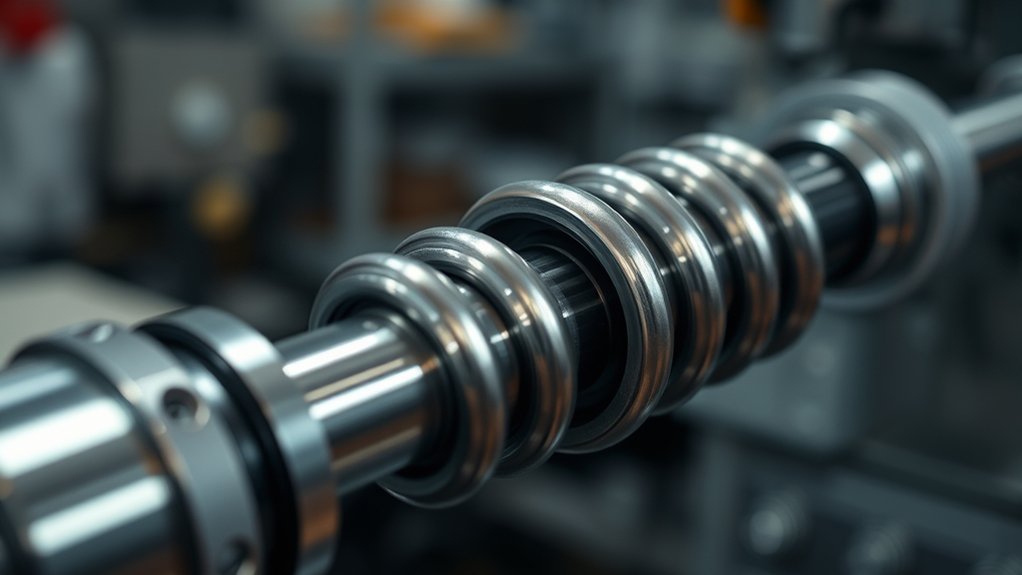
How does a flex shaft operate to transmit rotary motion efficiently? You rely on its flexible core, typically a tightly wound wire coil, which transmits torque while bending around obstacles.
Dimensioning metrics like shaft diameter, coil pitch, and length directly influence its torque capacity and flexibility. When selecting or designing a flex shaft, you must analyze these parameters precisely to ensure optimal performance without excessive wear.
Proper care routines play a crucial role in maintaining efficiency; you need to regularly lubricate the core and inspect for kinks or corrosion to prevent performance degradation.
Main Parts of a Flex Shaft
What components make up a flex shaft and how do they contribute to its function? A flex shaft consists primarily of the motor unit, flexible shaft cable, handpiece, and various attachments. The motor unit powers the rotation, transferring torque through the flexible shaft cable, which allows precise control over speed and movement.
The handpiece, designed for ergonomic handling, holds interchangeable bits, ensuring accessory compatibility with a wide range of crafting tools. This modular design lets you adapt the flex shaft for tasks requiring different tool heads, enhancing versatility.
Each part is engineered for durability and smooth operation, minimizing vibration and maximizing efficiency. By understanding these components, you can optimize your setup for specific applications, ensuring your flex shaft performs reliably and integrates seamlessly with your crafting tools.
Common Uses of a Flex Shaft in Crafting and Jewelry
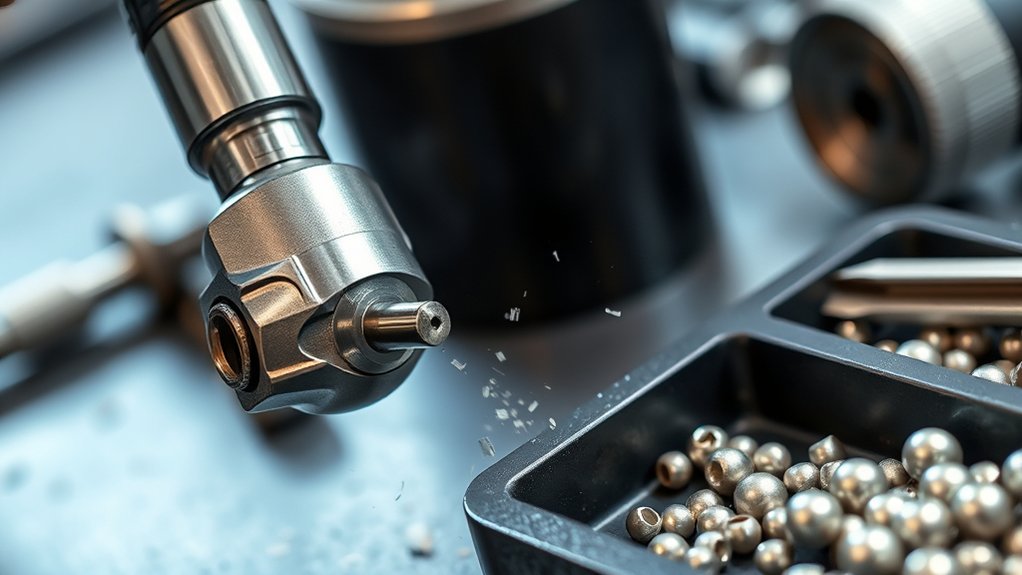
You’ll find a flex shaft essential for executing detailed engraving with fine control and accuracy. It allows precise drilling in small or delicate areas, which is vital for intricate jewelry work.
Additionally, you can use it to polish and finish surfaces, ensuring a smooth and professional result.
Detailed Engraving Techniques
Why choose a flex shaft for detailed engraving? The tool’s flexibility and variable speed control allow you to execute intricate tooling patterns with high accuracy. You can manipulate the handpiece effortlessly, reaching tight curves and complex shapes that rigid tools can’t handle.
The consistent torque ensures clean cuts in various materials, crucial for achieving uniform engraving textures. Additionally, the interchangeable bits give you versatility to switch between fine lines, stippling, or crosshatching quickly.
This precision enhances both aesthetic quality and structural integrity in your work. By using a flex shaft, you gain superior control over depth and pressure, reducing material damage and improving repeatability. Overall, it’s an essential tool for professionals seeking refined, detailed engraving results.
Precision Drilling Applications
How does a flex shaft elevate precision drilling in crafting and jewelry? By delivering controlled, high-speed rotary motion, it allows you to drill minute holes with exceptional accuracy. This precision is critical when preparing metal components for precision welding, ensuring alignment and fit without damaging delicate surfaces.
The flexible shaft’s maneuverability enables you to access tight or awkward angles during metal shaping, improving efficiency and reducing errors. Its variable speed control lets you adjust drilling intensity to suit different materials, from soft precious metals to harder alloys.
As a result, the flex shaft becomes indispensable for detailed fabrication tasks, where exact hole placement influences the structural integrity and aesthetic quality of your work. Incorporating this tool enhances your ability to produce finely crafted pieces with consistently reliable results.
Polishing And Finishing
Beyond precision drilling, a flex shaft considerably enhances polishing and finishing tasks in crafting and jewelry. You’ll find its flexible, high-speed rotation ideal for executing intricate polishing techniques on small or delicate surfaces.
By attaching various abrasive tips or polishing wheels, you can precisely control material removal, surface smoothing, and shine enhancement. This tool supports diverse finishing strategies, such as buffing tight crevices or uniformly refining curved contours, which are challenging with rigid tools.
Its ergonomic design reduces fatigue, allowing longer, more consistent application of polishing techniques. Moreover, the variable speed control lets you adjust torque and RPM to accommodate different metals and finishes, ensuring optimal surface quality.
Utilizing a flex shaft effectively streamlines polishing and finishing, ultimately elevating the craftsmanship and durability of your jewelry pieces.
How to Choose the Right Flex Shaft for Your Project
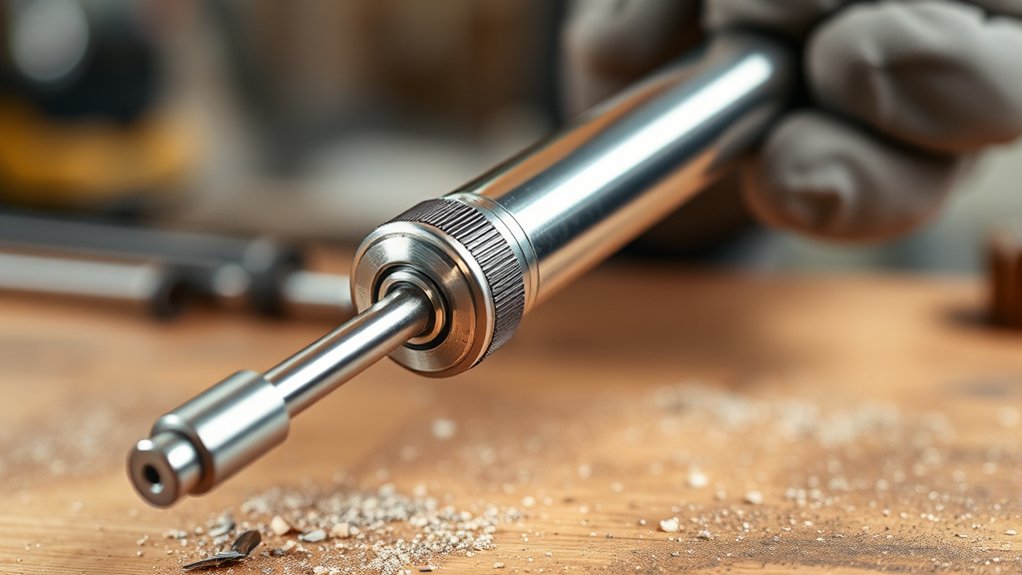
What factors determine the best flex shaft for your specific application? Start by analyzing your project planning and generate ideas focused on torque requirements, flexibility, and shaft length. Matching these parameters ensures optimal performance.
Consider the following criteria to guide your selection:
| Factor | Importance | Impact |
|---|---|---|
| Torque Capacity | Determines power transmission | Avoids shaft failure under load |
| Flexibility | Affects maneuverability | Enables access to tight spaces |
| Shaft Length | Influences reach and control | Prevents overextension or slack |
How to Use a Flex Shaft Safely and Effectively
Selecting the right flex shaft based on torque, flexibility, and length lays the foundation for safe and effective operation. To ensure craft safety, always secure your workpiece firmly and wear appropriate personal protective equipment like goggles and gloves.
Maintain a controlled grip that optimizes tool ergonomics, reducing hand fatigue and enhancing precision. Operate the flex shaft at recommended speeds, avoiding excessive pressure that could cause tool slippage or damage.
Keep the flex shaft aligned with the work surface to minimize stress and prevent binding. Regularly inspect the flexible shaft for kinks or wear before use, as compromised components can jeopardize safety and performance.
Maintaining and Troubleshooting Your Flex Shaft
You’ll need to clean your flex shaft regularly to prevent debris buildup that impairs performance. Watch for common issues like unusual vibrations or loss of power, which often signal internal wear or lubrication failure.
Applying the correct lubricant at recommended intervals guarantees smooth operation and extends the tool’s lifespan.
Regular Cleaning Techniques
Regular cleaning guarantees your flex shaft operates smoothly and extends its lifespan. Begin by disconnecting the shaft from its power source to ensure safety. Use a soft brush or compressed air to remove dust and debris from the outer casing and ventilation slots.
Apply a light lubricant specifically designed for flex shafts to the inner core, preventing friction and wear. Avoid over-lubrication, which can attract contaminants.
Incorporate engagement strategies such as routine inspections and maintenance checklists to stay proactive. Address audience questions like “How often should I clean my flex shaft?” by recommending cleaning after every 10 hours of use or when performance drops.
These targeted cleaning techniques maintain operational efficiency and reduce downtime without delving into troubleshooting common operational issues.
Common Operational Issues
Why does your flex shaft sometimes underperform or stop working altogether? Addressing common operational issues is essential for effective flex shaft maintenance. Here are four frequent problems you might encounter:
1. Excessive Vibration
Often caused by worn or misaligned inner cables; inspect and replace damaged components promptly.
2. Loss of Torque
Results from cable fatigue or improper tension; regularly check cable integrity and adjust tension accordingly.
3. Overheating
Usually due to friction from inadequate cleaning or lubrication (covered in the next subtopic). Avoid neglecting routine maintenance.
4. Unusual Noise
Indicates potential internal damage or debris; conduct thorough cleaning and component inspection.
Ignoring these issues can degrade performance and shorten your tool’s lifespan. Proactive troubleshooting and maintenance ensure your flex shaft operates reliably and efficiently.
Lubrication Best Practices
Addressing overheating and friction issues requires a disciplined approach to lubrication. You need to establish an optimal lubrication frequency based on your flex shaft’s usage intensity and environmental conditions.
Over-lubrication can attract contaminants, while under-lubrication accelerates wear, so balance is key. Select lubricant types specifically designed for flexible shafts, typically synthetic oils or light greases with high thermal stability and low viscosity.
Avoid general-purpose oils that can degrade the shaft’s inner components. Regularly inspect and reapply lubricant at manufacturer-recommended intervals, adjusting frequency if operating conditions are harsher than average.
Implementing this regimen will minimize heat buildup and mechanical resistance, enhancing performance and lifespan. If you detect unusual noise or stiffness, reevaluate your lubrication strategy immediately to prevent irreversible damage.
Frequently Asked Questions
Can a Flex Shaft Be Used Underwater?
You shouldn’t use a flex shaft for underwater use since it’s not designed for moisture exposure. Instead, rely on specialized tools for underwater automotive repairs to avoid corrosion and mechanical failure, ensuring safety and efficiency.
Are Flex Shafts Compatible With 3D Printing Tools?
Yes, flex shaft compatibility with 3D printing tools depends on torque and speed requirements. You’ll need to ensure the flex shaft matches your tool’s specifications to maintain precision and avoid damaging delicate components during operation.
What Is the History Behind the Invention of Flex Shafts?
Imagine early inventors twisting metal wires to reach tight spots; the history origins of flex shafts date to the late 19th century. Your understanding of flex shaft invention timeline reveals steady innovation for precision and flexibility in tools.
Can a Flex Shaft Be Used for Automotive Repairs?
Yes, you can use a flex shaft for automotive repairs due to its reliability in tight spaces. Just remember maintenance tips like regular lubrication and inspecting for wear to guarantee consistent performance and avoid tool failure during critical tasks.
How Noisy Is a Flex Shaft During Operation?
When Jake used a flex shaft underwater, he noticed its noisy operation was considerably muffled.
You’ll find that in dry conditions, flex shafts produce moderate noise, but underwater usage reduces sound due to water’s dampening effect.
Conclusion
Now that you’ve explored the flex shaft’s nuances, you’re equipped to handle your projects with finesse. This adaptable tool isn’t just a machine—it’s your discreet partner in precision, quietly delivering control and versatility.
By choosing wisely, using it thoughtfully, and maintaining it well, you’ll minimize surprises and maximize performance.
Embrace the subtle power of the flex shaft, and watch your craftsmanship transform with effortless efficiency and refined accuracy. The flex shaft truly elevates your work to the next level.