You rely on your vehicle’s drive shaft to transfer power efficiently from the engine to the wheels. Understanding the drive shaft’s role requires more than just knowing it spins. This component must handle torque, angular movement, and variable speeds without compromising balance or safety.
Grasping how the drive shaft functions and the types available will help you recognize potential issues before they escalate. This knowledge ensures your drivetrain stays reliable under all conditions.
Key Takeaways
- The drive shaft transmits torque from the engine to the wheels, enabling vehicle movement.
- It connects the transmission to the differential, accommodating chassis and suspension motion.
- Universal joints in the drive shaft maintain flexibility while transferring rotational power.
- Shaft materials include steel, aluminum, and carbon fiber, balancing strength, weight, and durability.
- Regular inspections prevent vibrations, wear, and potential drivetrain failures affecting vehicle safety.
What a Drive Shaft Is and Why It Matters
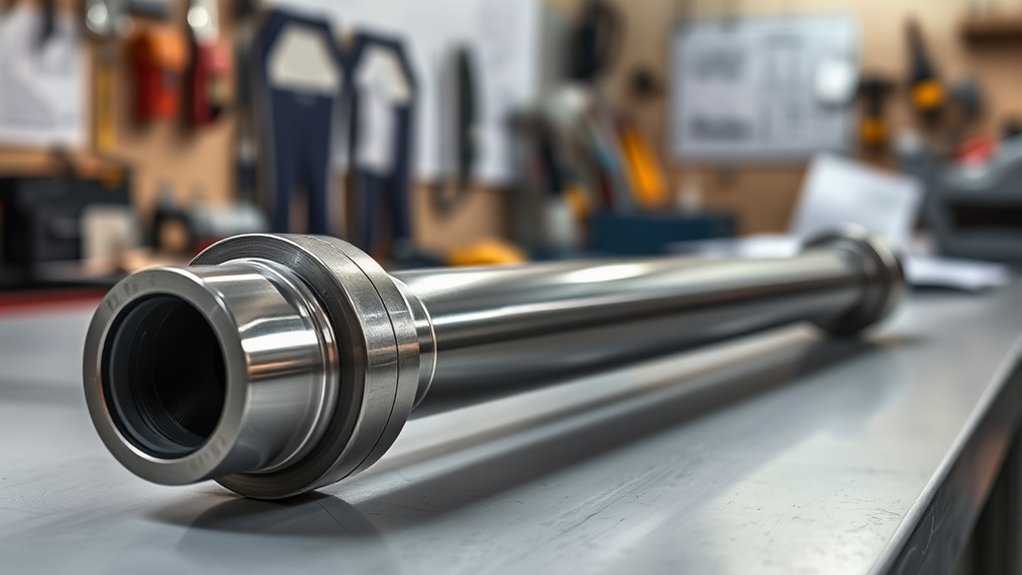
What exactly does a drive shaft do, and why should you care? The drive shaft is a critical component that transmits torque from the engine to the wheels, enabling vehicle movement. Without it, power generated by the engine wouldn’t reach the wheels efficiently, compromising performance.
You need to understand that a malfunctioning drive shaft can cause severe vibrations or even failure, directly impacting vehicle safety. A compromised drive shaft risks sudden loss of power delivery, which can lead to dangerous driving conditions or accidents.
Ensuring the drive shaft remains in optimal condition is essential for maintaining control and stability. Regular inspections and timely maintenance safeguard not only the drivetrain but also your safety on the road by preventing unexpected mechanical failures.
How a Drive Shaft Transfers Power
How exactly does a drive shaft transfer power from the engine to the wheels? It efficiently transmits torque through rotational motion, linking the transmission output to the differential input. As it spins, the drive shaft overcomes angular displacement and distance between components while maintaining drivetrain aesthetics and accommodating exhaust routing constraints.
A drive shaft transmits torque, bridging transmission and differential while managing angular displacement and vehicle design constraints.
Key factors in this power transfer include:
- Torque transmission: Converts engine power into rotational force.
- Angular flexibility: Adapts to suspension and chassis movement.
- Material strength: Resists torsional stress without deformation.
- Integration: Fits within the vehicle’s undercarriage, balancing drivetrain aesthetics and exhaust routing.
Essential Components Inside a Drive Shaft
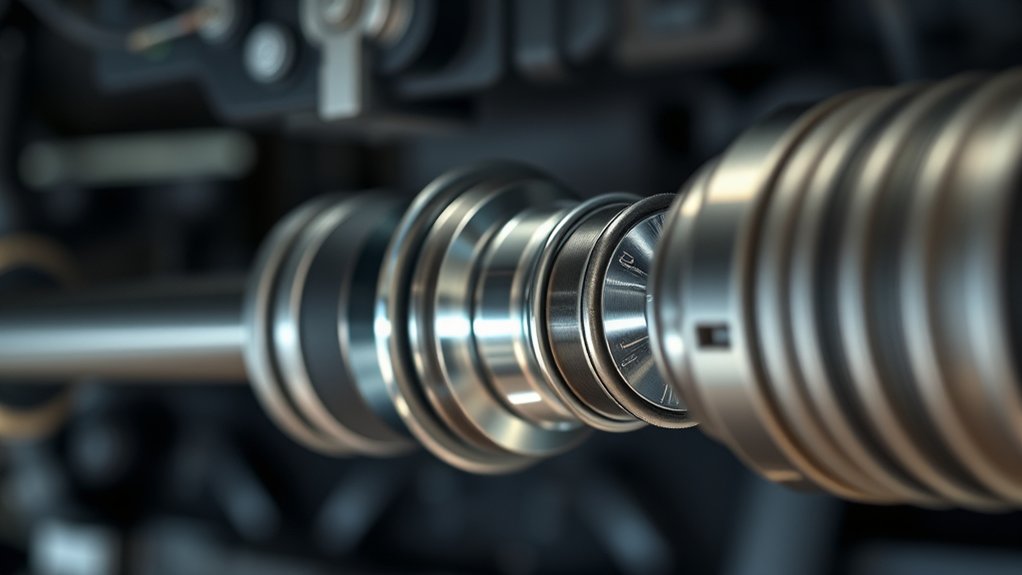
You need to understand how universal joints maintain flexibility while transmitting torque within the drive shaft. The material and design of the shaft tubing directly affect strength and weight.
Additionally, precise balancing and alignment are crucial to prevent vibrations and ensure efficient power transfer.
Universal Joints Functionality
Although often overlooked, universal joints play a critical role in maintaining the drive shaft’s ability to transmit torque efficiently while accommodating angular misalignment between the connected components. You rely on universal joints to handle varying shaft angles without binding or excessive wear. Their design allows rotational power to pass smoothly, even when the shafts aren’t perfectly aligned.
To ensure optimal performance, pay close attention to:
- Proper lubrication schedules to reduce friction and prevent premature failure
- Precision in joint assembly for balanced torque transmission
- Material hardness to withstand cyclic stresses
- Inspection intervals to detect wear or damage early
Shaft Tubing Materials
Universal joints ensure smooth torque transmission despite misalignment, but the drive shaft’s core strength and durability rely heavily on the shaft tubing materials. When selecting shaft tubing, you must consider material properties such as tensile strength, fatigue resistance, and weight.
Common materials include steel alloys, aluminum, and carbon fiber composites. Steel offers superior strength and durability but adds weight, affecting vehicle efficiency. Aluminum reduces weight but may compromise fatigue life under high stress.
Carbon fiber composites provide excellent strength-to-weight ratios and corrosion resistance but come at a higher cost. The choice of shaft tubing material directly impacts performance, longevity, and vibration characteristics. Understanding these material properties allows you to optimize the drive shaft for specific applications, balancing strength, durability, and weight requirements precisely.
Balancing and Alignment
How does a drive shaft maintain smooth rotational motion despite the high-speed forces it encounters? The key lies in precise balancing and alignment, crucial for minimizing vibrations and preventing premature wear. You’ll notice these processes follow strict design patterns, ensuring mechanical harmony without compromising performance for the sake of art.
To achieve optimal balancing and alignment, you must focus on:
- Dynamic balancing to counteract mass distribution irregularities
- Precise shaft alignment with connected components
- Use of vibration dampers tuned for operational speeds
- Continuous monitoring during manufacturing and maintenance
Types of Drive Shafts You Should Know
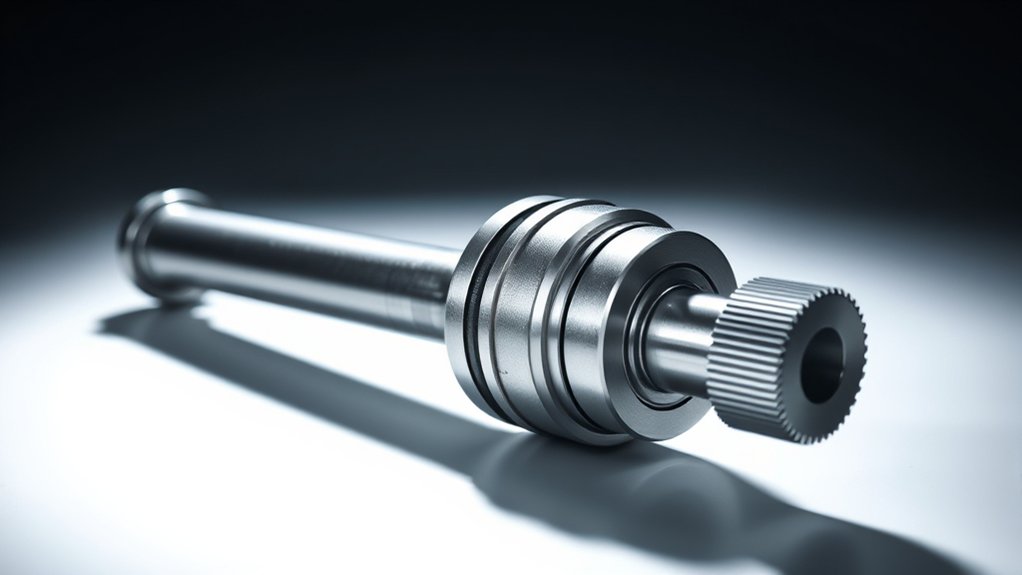
What types of drive shafts are essential for your vehicle’s performance and durability? You’ll primarily encounter solid, tubular, and CV (constant velocity) drive shafts.
Solid shafts provide strength but add weight, impacting efficiency. Tubular shafts, made from lightweight steel or aluminum, balance strength and reduced rotational mass, crucial for drive shaft fundamentals.
Solid shafts offer strength with added weight, while tubular shafts balance durability and lightweight efficiency.
CV shafts, common in front-wheel-drive vehicles, accommodate complex steering angles while maintaining torque transfer. Understanding these types helps you assess wear and maintenance needs accurately.
When working on or inspecting these components, always prioritize repair shop safety to prevent injury from rotating parts or unexpected shaft movement. Knowing the distinct characteristics of each drive shaft type allows you to optimize your vehicle’s drivetrain performance and longevity effectively.
How Can You Tell If Your Drive Shaft Needs Repair?
You’ll notice specific symptoms if your drive shaft requires repair, such as vibrations, clunking noises, or difficulty turning. To confirm these issues, conduct a thorough diagnostic inspection, including visual checks for damage and evaluating joint play.
Understanding these signs helps you address problems before they escalate.
Common Drive Shaft Symptoms
When does your vehicle’s performance signal a failing drive shaft? Recognizing common drive shaft symptoms early can save extensive repairs and maintain drivetrain aesthetics, which directly influence your vehicle’s branding advantages. You’ll want to watch for these precise indicators:
- Vibrations during acceleration: Uneven rotation often points to imbalanced or worn drive shaft components.
- Clunking or knocking noises: These sounds typically emerge from failing universal joints or loose connections.
- Difficulty turning: Binding or resistance when steering may indicate compromised drive shaft flexibility.
- Visible damage or grease leaks: Cracks, dents, or leaking grease on the drive shaft suggest urgent repairs.
Monitoring these symptoms lets you address drive shaft issues promptly, preserving optimal function and your vehicle’s performance image.
Diagnostic Inspection Methods
Recognizing symptoms such as vibrations, noises, or steering difficulties is only the first step in addressing drive shaft issues. To accurately determine if your drive shaft needs repair, you should perform a thorough diagnostic inspection.
Start by visually examining the drive shaft for signs of wear, cracks, or damaged universal joints. Next, conduct diagnostic testing using specialized equipment such as vibration analyzers to quantify imbalance or misalignment.
Inspect the drive shaft’s splines and center bearing for excessive play or corrosion. Additionally, rotating the drive shaft manually can reveal binding or rough spots.
Combining these diagnostic inspection methods helps isolate the root cause of symptoms, ensuring precise identification of defects. By relying on systematic diagnostic testing, you can avoid unnecessary repairs and maintain optimal drive shaft performance.
What Happens If Your Drive Shaft Fails?
How does a failed drive shaft impact your vehicle’s performance and safety? When the drive shaft breaks down, it directly compromises power transmission from the engine to the wheels, causing severe drivability issues.
While it might seem like an unrelated topic or a random tangent, ignoring drive shaft failure leads to critical consequences:
- Sudden loss of vehicle propulsion, risking control on the road
- Vibrations and noise indicating imbalanced or damaged components
- Increased wear on transmission and differential due to irregular torque transfer
- Potential damage to surrounding parts, escalating repair costs
Understanding these effects helps you recognize the urgency of addressing drive shaft issues immediately. Failure to do so jeopardizes not only your vehicle’s functionality but also your safety and that of others.
Drive Shaft Maintenance Tips to Avoid Breakdowns
Ignoring the signs of drive shaft failure can lead to costly repairs and safety hazards, but regular maintenance can substantially reduce these risks. You should debunk common drive shaft myths, such as “they’re maintenance-free,” by adhering to strict maintenance routines.
Monitor universal joints, inspect boots for tears, and lubricate fittings regularly to prevent wear.
| Inspection Area | Maintenance Task | Frequency |
|---|---|---|
| Universal Joints | Grease fittings | Every 5,000 miles |
| Drive Shaft Boots | Visual tear inspection | Monthly |
| Fasteners | Torque check | Every oil change |
| Balance Weights | Visual and vibration check | Annually |
| Shaft Alignment | Professional assessment | Every 20,000 miles |
Following these steps keeps your drive shaft reliable and avoids unexpected breakdowns.
How to Choose the Right Drive Shaft for Your Vehicle
When selecting a drive shaft for your vehicle, what key factors should you evaluate to ensure best performance and durability? First, assess the material quality. Steel or aluminum alloys offer distinct strength to weight ratios.
Next, consider the shaft’s dimensions to match your vehicle’s torque and RPM requirements precisely. Don’t overlook drive shaft aesthetics if your vehicle’s appearance matters. Sleek finishes can enhance visual appeal.
Lastly, factor in branding considerations. Reputable manufacturers often guarantee higher reliability and better warranty support.
- Material strength and weight balance
- Compatibility with vehicle specifications
- Drive shaft aesthetics for visual integration
- Manufacturer reputation and branding considerations
Frequently Asked Questions
Can a Drive Shaft Affect Fuel Efficiency?
Yes, a well-maintained drive shaft improves drive efficiency by minimizing energy loss and noise reduction, which in turn enhances fuel efficiency.
Neglecting it can cause vibrations and inefficiencies, reducing your vehicle’s overall performance and economy.
How Long Does a Typical Drive Shaft Last?
You can expect drive shaft durability to last between 75,000 and 100,000 miles, but adhering to a strict maintenance schedule, including regular inspections and lubrication, significantly extends its operational lifespan and ensures optimal performance.
Are There Aftermarket Upgrades for Drive Shafts?
Yes, you’ll find aftermarket upgrades offering enhanced performance gains through lightweight materials and reinforced construction. Guarantee aftermarket compatibility with your vehicle’s specifications to optimize durability and efficiency without compromising balance or driveline integrity.
Can a Damaged Drive Shaft Cause Vibrations?
Yes, a damaged drive shaft can cause vibration symptoms. When you perform drive shaft diagnostics, you’ll notice imbalances or worn components triggering these vibrations.
These vibrations affect vehicle stability and require immediate technical inspection for accurate diagnosis and repair.
Is Drive Shaft Repair Covered by Insurance?
Insurance coverage for drive shaft repair depends on your policy and the cause of the damage. You can’t always count on it covering repair costs, especially if wear or neglect caused the issue.
Always check your specific policy details.
Conclusion
You rely on your drive shaft like the backbone of your vehicle’s power flow, smoothly channeling torque from engine to wheels. Imagine it as a perfectly balanced spinning rod that absorbs movement and speed changes without faltering.
Neglecting its care risks vibrations, wear, and failure—jeopardizing your drive and safety. Stay vigilant with maintenance, inspections, and choosing the right type to keep your drivetrain performing with precision and reliability every mile.
In conclusion, proper attention to your drive shaft is essential for ensuring your vehicle runs smoothly and safely on the road.