To check your power steering fluid, you’ll first need to identify the correct reservoir under the hood. The power steering fluid reservoir is usually a small, translucent container with a labeled cap or a steering wheel symbol. It is often located near the power steering pump or along the edges of the engine bay.
Knowing exactly where to look and how to interpret fluid levels is crucial for maintaining your steering system’s performance. Regularly checking the power steering fluid can help prevent costly repairs and ensure smooth steering operation.
Key Takeaways
- Locate the power steering fluid reservoir near the engine, often a small translucent container with a cap labeled “Power Steering” or a steering wheel icon.
- Check near the engine bay’s front or driver’s side, close to the power steering pump or mounted on the firewall.
- Avoid confusing the reservoir with coolant or windshield washer fluid by looking for specific labels and translucent design.
- Refer to the vehicle manual for the exact location based on make and model to ensure correct identification.
- The reservoir is usually accessible without tools, allowing you to check fluid level through the translucent walls or by using the dipstick under the cap.
Find Your Power Steering Fluid Reservoir

Where exactly is your power steering fluid reservoir located? Typically, it’s a small, cylindrical container found near the engine, often labeled or marked with a steering wheel icon. For finding fluid, you’ll want to consult your vehicle’s manual for the exact reservoir location, as placement varies by make and model.
The reservoir is usually translucent, allowing you to check fluid levels without opening it. It’s important to identify the correct reservoir to avoid confusion with other fluid containers like coolant or brake fluid.
Once you’ve pinpointed the reservoir location, you can proceed to inspect the fluid level and condition efficiently. Accurate identification ensures you’re maintaining the correct system, preventing steering issues and potential damage.
Locate Common Reservoir Spots In Your Car
After identifying your power steering fluid reservoir, you’ll want to familiarize yourself with the common locations where manufacturers typically place these containers. Most reservoirs sit near the engine bay’s front, adjacent to the power steering pump, often mounted on or close to the firewall.
Some vehicles position the reservoir toward the driver’s side for easier access during maintenance. When designing dashboard indicators, manufacturers consider reservoir placement to optimize sensor connections and ensure audit trail clarity in fluid level monitoring.
Knowing these standard spots helps you locate the reservoir quickly without confusion. Keep in mind that despite variations, the reservoir is usually translucent with a secure cap labeled for power steering fluid, simplifying identification and inspection during routine checks or fluid top-offs.
How To Spot Your Power Steering Fluid Reservoir
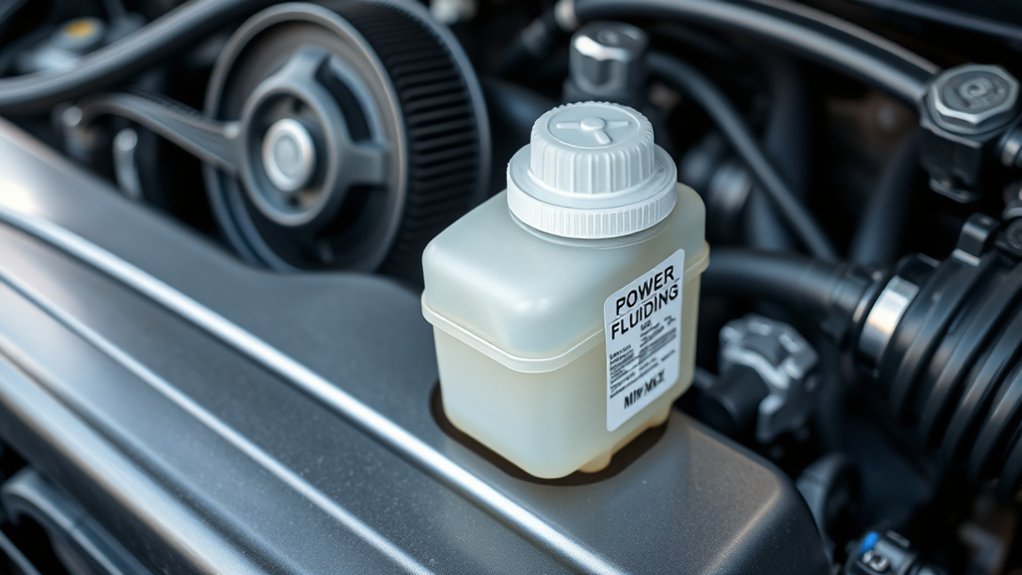
How can you quickly identify your power steering fluid reservoir amidst the engine components? Start by locating a small, usually translucent container with a cap labeled “Power Steering” or a steering wheel icon. It’s often found near the engine’s front or side, attached to the power steering pump or steering rack.
Avoid focusing on irrelevant topics like windshield washer fluid or unrelated concepts such as coolant reservoirs, which can confuse your search.
| Feature | Location Hint | Identification Tip |
|---|---|---|
| Translucent container | Near power steering pump | Check fluid color through sides |
| Labeled cap | Steering-related icon | Look for “Power Steering” text |
| Size | Small, compact | Smaller than coolant reservoir |
| Proximity | Close to belts/pulleys | Adjacent to engine front side |
Check Your Power Steering Fluid Level Correctly
Why should you check your power steering fluid level correctly? Accurate measurement is crucial for effective car maintenance and fluid diagnostics. Begin by parking your vehicle on a level surface and turning off the engine.
Locate the power steering fluid reservoir, then clean the dipstick or cap to avoid contamination. Insert the dipstick fully, remove it, and observe the fluid level against the marked indicators, usually labeled “Full” and “Add.” Ensure the fluid is within the recommended range; levels too low or high can impair steering performance.
Check the fluid’s color and consistency; it should be clear or amber, not dark or gritty. Performing this precise procedure regularly helps you maintain optimal steering efficiency and prevents costly repairs.
Recognize When Fluid Needs Refilling Or Changing
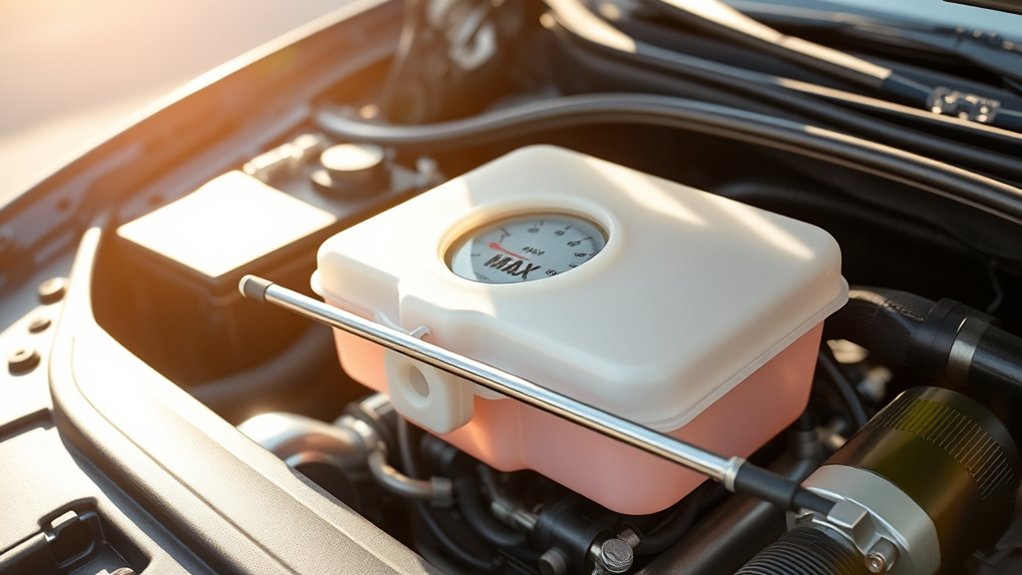
When should you refill or change your power steering fluid? You should top off the fluid when the level drops below the minimum mark, as low fluid compromises driving safety by impairing steering response.
Refill power steering fluid when levels fall below minimum to maintain safe, responsive steering control.
Change the fluid if it appears dark, cloudy, or contains debris, signaling degraded fluid chemistry that reduces lubrication efficiency and can damage the pump. Regularly inspect fluid color and consistency during maintenance.
Contaminated or oxidized fluid loses its hydraulic properties, increasing steering effort and risking system failure. Follow your vehicle’s service schedule or manufacturer recommendations for fluid replacement intervals.
Maintaining proper fluid chemistry ensures optimal system performance and contributes directly to safe, reliable steering control under various driving conditions.
Can’t Find Your Power Steering Reservoir? Here’s What To Do
Use this table to narrow your search:
| Vehicle Type | Reservoir Location |
|---|---|
| Front-engine cars | Near the engine bay’s front or side |
| Hybrid vehicles | May have a separate compartment or integrated system |
| Older models | Usually near the power steering pump |
Avoid confusing other fluid reservoirs with the power steering one to prevent errors.
Maintain Proper Power Steering Fluid Levels
How do you guarantee your power steering system operates smoothly and safely? Maintaining proper power steering fluid levels is essential. Low fluid can cause increased steering effort, reduce fuel efficiency, and generate abnormal engine noise due to additional strain.
To keep your system in optimal condition, remember to:
- Check fluid levels regularly, especially before long trips.
- Use the manufacturer-recommended fluid type to prevent damage.
- Inspect for leaks around the reservoir and hoses.
Consistent monitoring ensures the hydraulic system functions effectively, preventing wear and costly repairs. Proper fluid levels support smooth steering response, preserve fuel economy, and minimize engine noise caused by excessive load.
Know When To See A Mechanic For Power Steering Issues
You should watch for warning signs like difficulty steering, unusual noises, or fluid leaks. If you notice these symptoms, don’t delay in getting professional help.
Timely mechanic intervention can prevent further damage and ensure safe vehicle operation.
Warning Signs To Watch
When should you consider taking your vehicle to a mechanic for power steering issues? Ignoring warning signs not only compromises neighborhood safety but also increases environmental impact due to potential fluid leaks. Watch for these critical indicators:
- Difficulty steering: Increased effort or stiffness when turning the wheel signals low power steering fluid or failing components.
- Unusual noises: Whining or groaning sounds during steering suggest pump strain or fluid issues.
- Fluid leaks: Visible puddles or drops of reddish or amber fluid under your vehicle indicate a leak that can harm the environment.
Addressing these symptoms promptly helps maintain control, prevents further damage, and reduces ecological harm. If you notice any of these, schedule a professional inspection to ensure your power steering system operates safely and efficiently.
When To Get Help
Although minor power steering issues might seem manageable, recognizing when to seek professional help is essential to prevent further damage and guarantee safe vehicle operation. If you notice persistent whining noises, difficulty steering, or fluid leaks despite checking and topping off the fluid, it’s time to consult a mechanic.
Avoid delaying repairs, as these symptoms often indicate failing power steering pumps or damaged hoses. When discussing power steering concerns, steer clear of unrelated topics that could distract from diagnosing the root cause. Focus your discussion ideas on fluid condition, pressure tests, and potential component wear.
A qualified technician can perform a thorough inspection, accurately identify issues, and recommend precise repairs, ensuring your steering system works reliably and safely. Don’t hesitate to get expert assistance when in doubt.
Frequently Asked Questions
What Type of Power Steering Fluid Is Best for My Car?
You should use the power steering fluid specified in your owner’s manual to guarantee fluid compatibility. Using the recommended type maintains system performance and prevents damage.
Avoid mixing fluids, as incompatibility can cause leaks or steering issues.
Can I Use Automatic Transmission Fluid as Power Steering Fluid?
You shouldn’t use automatic transmission fluid as power steering fluid; it’s the wrong choice and can cause damage.
Mixing fluids leads to performance issues, so avoid hoods mixing them during an oil change or service.
How Often Should Power Steering Fluid Be Replaced?
You should replace power steering fluid every 50,000 miles or about every two years. Avoid irrelevant discussion or topic pairing with unrelated fluids to maintain system efficiency and prevent premature wear or damage.
What Are the Symptoms of a Power Steering Fluid Leak?
You’ll notice whining noises, stiff steering, or fluid puddles under your vehicle, indicating a power steering fluid leak. Limited compatibility with certain detection methods means you should use specialized leak detection tools for accurate diagnosis.
Is Power Steering Fluid Safe to Handle Without Gloves?
You might want to contemplate glove safety, as power steering fluid isn’t exactly a spa treatment for your skin. Handling it barehanded risks irritation, and spills demand prompt containment to prevent stains and environmental harm.
Conclusion
Now that you know exactly where to find and how to check your power steering fluid, you’re basically a steering system expert! Don’t let a low or dirty fluid turn your smooth ride into a wrestling match with the wheel.
Keep that reservoir topped up and clean like a pro, and your car will handle like it’s on rails. Miss a check, and you might as well be steering with a brick—so stay sharp and maintain those levels!
Regularly checking your power steering fluid is key to ensuring your vehicle’s steering remains smooth and responsive. Always make time to inspect and keep your power steering fluid in good condition.