Just like a clock needs oil to keep ticking smoothly, your power steering system relies on power steering fluid to function properly. If you notice unusual noises or your steering feels heavier than usual, it’s a clear sign to inspect the fluid level.
Understanding these early indicators can prevent more serious issues down the line. Let’s explore how to accurately assess whether your power steering fluid needs attention.
Key Takeaways
- Check the fluid reservoir under the hood; fluid below the minimum mark indicates you need to add power steering fluid.
- A whining, groaning, or squealing noise when turning signals low power steering fluid or pump strain.
- Steering feels stiffer or less responsive, requiring more effort to turn, which suggests low fluid levels.
- Inspect the fluid color; dark, contaminated, or milky fluid indicates a need for a flush or replacement.
- Regularly check the fluid level during maintenance to prevent damage and maintain smooth steering performance.
What Are the Signs of Low Power Steering Fluid?
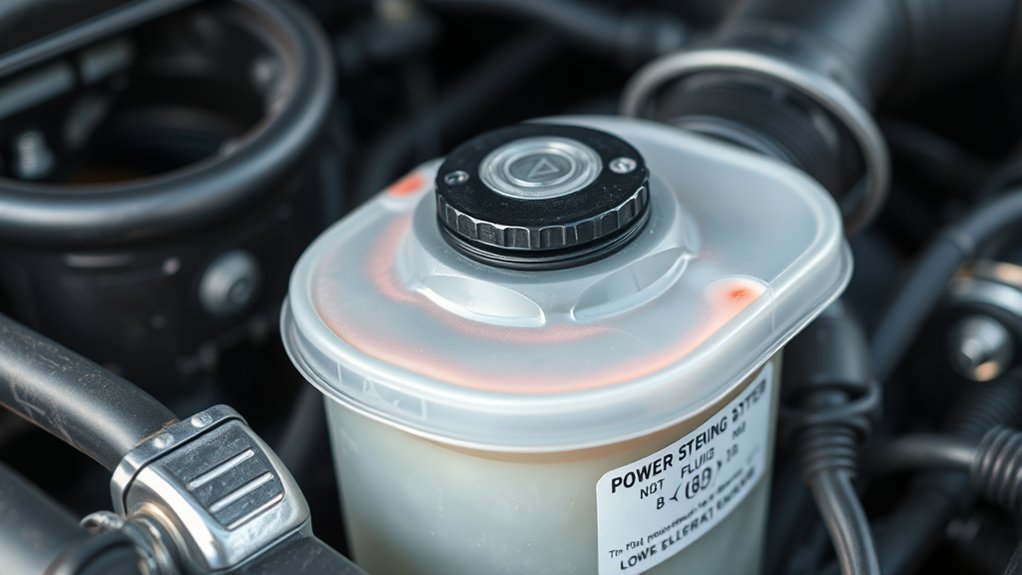
How can you tell if your power steering fluid is running low? First, check the fluid reservoir under the hood; low fluid levels typically appear below the minimum mark.
You might also notice a whining or groaning noise when turning the steering wheel, indicating the pump struggles due to insufficient lubrication. Additionally, steering may feel stiffer or less responsive, though avoid assuming this without confirming fluid levels.
Be cautious of power steering scams. Some might try to charge you for unnecessary fluid replacement without verifying the actual low fluid condition. Always perform a visual inspection and, if uncertain, request a fluid level check to avoid falling victim to these scams.
Recognizing these signs accurately helps you maintain your vehicle’s steering system efficiently and cost-effectively.
How Does Low Power Steering Fluid Affect Steering?
When your power steering fluid is low, you’ll notice increased resistance in the steering wheel, making it harder to turn. You might also hear unusual noises like whining or groaning during steering maneuvers.
These symptoms directly impact your control over the vehicle, reducing driving safety and precision.
Steering Wheel Resistance
Steering wheel resistance increases noticeably as power steering fluid levels drop, making it harder for you to turn the wheel smoothly. When fluid is low, the hydraulic pressure that assists steering decreases, forcing you to apply more effort.
This resistance can amplify drivetrain vibrations, as the increased load on the steering system transfers more stress to connected components. Additionally, while power steering fluid levels don’t directly impact battery health, a struggling power steering pump may draw extra electrical power, subtly affecting battery load.
Monitoring both fluid levels and battery health ensures your vehicle operates efficiently. If you experience increased steering effort combined with drivetrain vibrations, check the power steering fluid immediately to prevent further mechanical strain and maintain optimal steering performance.
Noises During Turning
Increased resistance while turning often comes with audible clues that indicate low power steering fluid levels. You might notice whining, groaning, or squealing noises when you turn the steering wheel, especially at low speeds.
These sounds result from insufficient lubrication and increased friction within the power steering pump and associated components. Accurate noise diagnosis helps you pinpoint fluid level issues before they cause damage.
If you ignore these symptoms, the system may suffer from increased wear or failure. Regular fluid maintenance, including checking and topping off the power steering fluid, prevents these noises and ensures smooth steering operation.
Impact on Vehicle Control
How does low power steering fluid affect your vehicle’s control? When fluid levels drop, the hydraulic pressure in the power steering system decreases, which directly influences handling. You’ll notice that steering becomes stiffer and requires more effort, especially at low speeds or when making sharp turns.
This reduced hydraulic assistance diminishes steering feedback, making it harder to feel road conditions and vehicle response accurately. Consequently, your ability to maneuver precisely decreases, increasing the risk of oversteering or understeering.
Low fluid can also cause erratic steering behavior, compromising vehicle stability and control during critical maneuvers. Maintaining proper power steering fluid levels ensures consistent hydraulic pressure, preserving optimal handling and reliable steering feedback for safer, more responsive driving.
How to Check Your Power Steering Fluid Level
When should you check your power steering fluid level? You should inspect it regularly, especially if you notice difficulty steering or hear whining noises.
Begin by locating the power steering fluid reservoir, typically marked and near the engine. With the engine off and cool, remove the dipstick attached to the reservoir cap. Wipe it clean, reinsert fully, then remove again to check the fluid level against the marked indicators. The fluid should be between the minimum and maximum marks.
While checking fluid level, inspect the reservoir and surrounding areas for signs of leaks, such as wetness or dripping fluid. Identifying leaks early can prevent steering system damage.
If the fluid appears dark or contaminated, consider a fluid flush to maintain optimal steering performance.
Common Causes of Power Steering Fluid Leaks
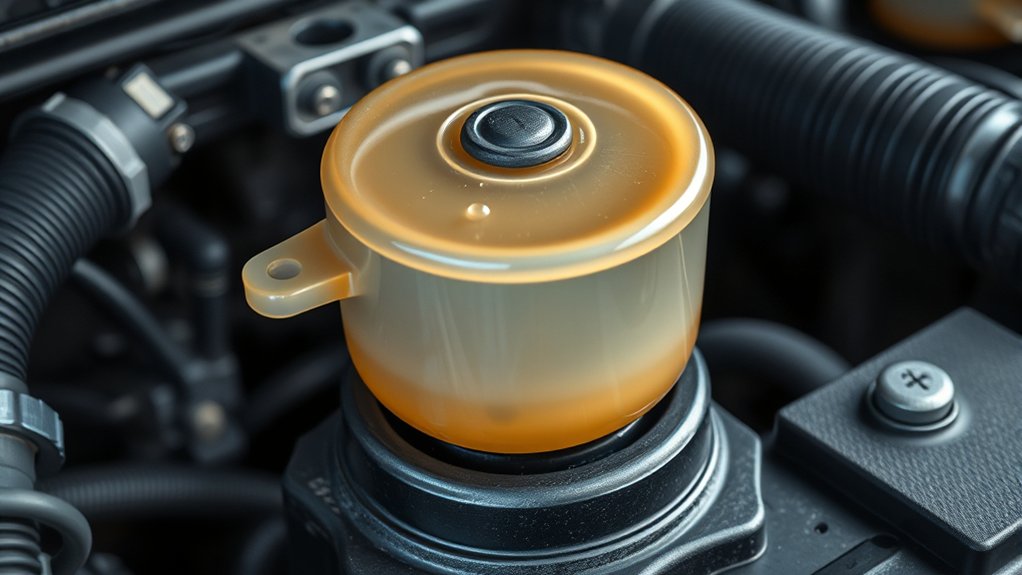
Why does your power steering fluid leak? Common causes include worn or damaged seals, cracked hoses, and loose connections within the power steering system. Over time, seals in the pump and steering rack degrade due to heat and pressure, allowing fluid to escape.
Hoses can develop cracks or splits from exposure to engine heat and vibration, resulting in fluid leaks. Additionally, fittings and clamps may loosen, causing fluid to seep out. Another frequent source is a faulty power steering pump, where internal wear leads to leakage.
Detecting these issues early is crucial to prevent steering difficulties and further damage. Regular inspection of seals, hoses, and connections helps you identify and address common causes of fluid leaks promptly, maintaining optimal power steering performance.
How to Spot Contaminated Power Steering Fluid
You can spot contaminated power steering fluid by monitoring its color and smell. If the fluid turns dark brown or black instead of its usual clear or amber hue, it’s likely degraded.
Also, an unusual burnt or sour odor indicates contamination that can impair your steering system’s performance.
Fluid Color Changes
Although power steering fluid typically starts clear or amber, its color can change markedly as contamination occurs. You should closely monitor these color changes because they indicate potential issues like oxidation, dirt ingress, or coolant leaks.
Dark brown or black fluid signals degradation, while a milky appearance often points to water contamination. To precisely identify contamination sources, you can use dye testing, which highlights leaks or mixed fluids under UV light.
This method provides a reliable way to detect subtle changes that are not visible to the naked eye. Regular inspection of fluid color combined with dye testing helps you maintain optimal power steering function and prevents premature component wear. Ignoring these signs risks steering inefficiency and expensive repairs.
Unusual Fluid Smell
Changes in power steering fluid color often accompany alterations in its odor, which can serve as an additional indicator of contamination. When you detect an unusual fluid smell, often described as burnt, sour, or rancid, it signals degradation or contamination within the system.
Your smell perceptions provide a critical diagnostic clue, as fresh power steering fluid typically has a mild, slightly oily scent. If the odor shifts dramatically, it suggests oxidation, overheating, or the presence of foreign substances such as dirt or coolant.
Monitoring these smell changes helps you identify when the fluid no longer performs optimally, preventing possible damage to steering components. Always use your sense of smell alongside color and texture assessments to spot contaminated power steering fluid early and maintain system integrity.
When Should You Flush and Replace Power Steering Fluid?
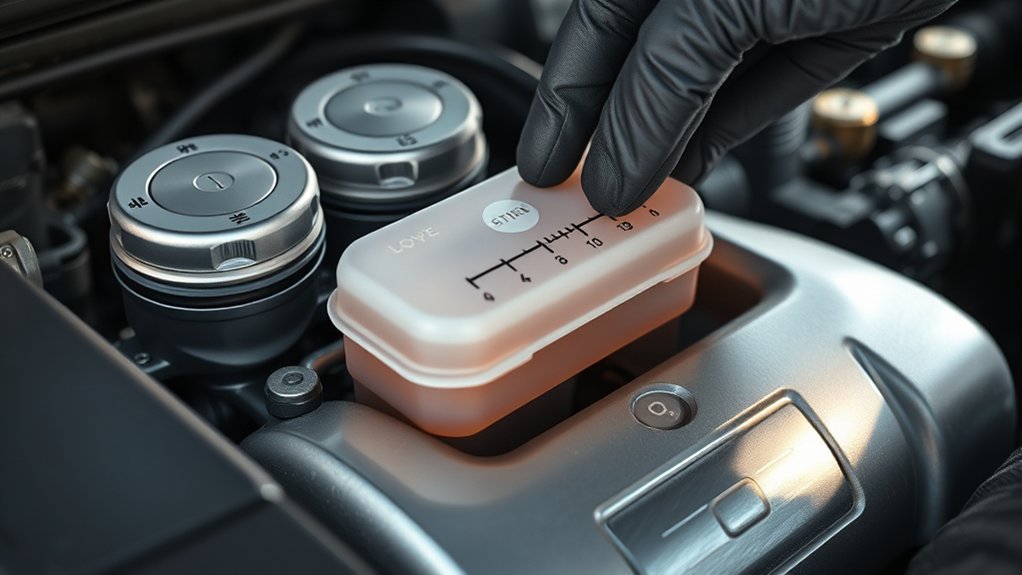
How often should you flush and replace power steering fluid to maintain ensure system performance? Generally, it’s recommended to follow your vehicle’s maintenance schedule, which typically suggests flushing the fluid every 50,000 to 100,000 miles or every 2 to 3 years. However, if you notice symptoms like difficulty steering or contaminated fluid, replace it sooner.
Regular flushing removes contaminants and prevents wear on the pump and steering components. When flushing, proper fluid disposal is essential. Never pour old fluid down drains or on the ground. Instead, take it to a recycling center or an automotive shop that accepts hazardous waste.
Adhering to these guidelines helps maintain system reliability and extends the lifespan of your power steering components.
How to Maintain Healthy Power Steering Fluid Levels
Keeping your power steering fluid at the correct level is key to consistent steering performance and system longevity. To maintain healthy fluid levels, check the reservoir regularly as part of your vehicle’s maintenance schedules, ideally every oil change or monthly if you drive frequently.
Use the recommended fluid type specified in your owner’s manual to avoid contamination and component wear. If fluid levels drop, inspect for leaks immediately to prevent system damage.
Top off the fluid cautiously, avoiding overfill, which can lead to foaming and reduced hydraulic efficiency. Adhering to these steps ensures future reliability of your steering system, minimizing costly repairs and maintaining smooth, responsive steering under all driving conditions.
Frequently Asked Questions
What Type of Power Steering Fluid Is Best for My Car?
You should choose the type of fluid specified in your car’s manual, considering viscosity for optimal performance. Using the recommended fluid ensures proper lubrication, prevents wear, and maintains your power steering system’s efficiency and longevity.
Can I Use Automatic Transmission Fluid Instead of Power Steering Fluid?
When it comes to power steering, you can’t just mix and match. Can I use automatic transmission fluid instead of power steering fluid? It’s not recommended since alternative fluids differ in additives, viscosity, and compatibility, risking damage.
How Often Should I Service My Power Steering System Professionally?
You should follow the manufacturer’s recommended service interval, typically every 50,000 miles, and get a professional inspection to check for leaks, fluid quality, and system function.
This ensures optimal power steering performance and longevity.
What Tools Do I Need to Top off Power Steering Fluid?
You’ll need a clean funnel, a rag, and the correct power steering fluid.
Though unrelated, you should also schedule an oil change and tire rotation during maintenance. Precision ensures smooth steering and overall vehicle health.
Is Power Steering Fluid Toxic or Harmful to the Environment?
Yes, power steering fluid contains toxic components that can harm the environment. You should handle it carefully, avoid spills, and dispose of it properly to minimize its environmental impact.
Proper disposal helps prevent soil or water contamination.
Conclusion
If you ignore that subtle groan when you turn the wheel, you might soon face steering that feels like a struggle. Checking your power steering fluid isn’t just maintenance—it’s a critical step to avoid costly repairs.
Keep an eye on fluid levels, watch for leaks, and recognize contamination early. Act before stiffness takes over your drive, because once your steering fails, the consequences can be sudden and serious.
Don’t wait—stay ahead of the problem by knowing how to tell if you need power steering fluid.