When aligning your engine to the propeller shaft, you’ll need to approach the task with precision and care. Proper alignment prevents excessive wear and ensures efficient power transfer. This process requires careful measurement of angular and parallel misalignment using specialized tools.
Before making adjustments, you must secure the boat and verify that all components are in good condition. Understanding the exact process and tools involved will help you avoid common pitfalls. Following these steps will help you achieve the alignment your vessel demands.
Key Takeaways
- Secure the boat and remove any obstructing mounts to access the engine and propeller shaft for alignment.
- Clean coupling surfaces and inspect for wear or damage before starting measurements.
- Use calibrated dial indicators or laser tools to measure angular and parallel misalignment at multiple shaft positions.
- Adjust engine position with shims or screws based on measurement data, then re-measure to ensure alignment within manufacturer tolerances.
- Perform alignment checks at operating temperature to account for thermal expansion and ensure accurate, reliable results.
Why Proper Engine-to-Propeller Shaft Alignment Matters
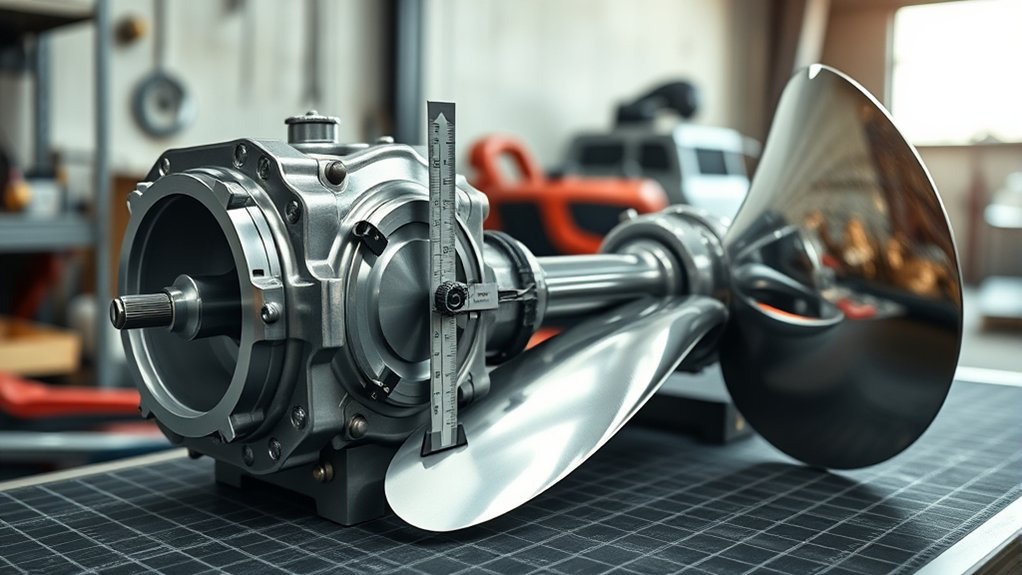
Why does aligning the engine precisely with the propeller shaft matter? When you grasp engine basics, you know that misalignment creates undue stress on components. This stress leads to vibration, accelerated wear, and potential failure of couplings, bearings, and seals.
You must maintain perfect alignment to ensure smooth power transfer from the engine to the propeller shaft. Doing so preserves propeller health by preventing uneven loads that cause blade damage or shaft misalignment downstream.
Ignoring alignment issues reduces operational efficiency and increases maintenance costs. Proper alignment minimizes mechanical losses and extends the lifespan of drivetrain components.
Ultimately, you guarantee reliable propulsion and avoid costly repairs by prioritizing exact engine-to-propeller shaft alignment, adhering strictly to technical tolerances defined in manufacturer specifications.
Step-by-Step Engine to Propeller Shaft Alignment
First, gather and prepare the necessary alignment tools to guarantee accurate measurements.
Next, measure the shaft misalignment carefully, noting both angular and parallel deviations.
Finally, adjust the engine position methodically to achieve precise alignment with the propeller shaft.
Preparing Alignment Tools
How do you ensure accurate alignment between the engine and propeller shaft? Start by preparing your alignment tools meticulously. First, verify that all tools are clean and free from damage.
Perform tool calibration using certified standards to maintain measurement accuracy. This step is crucial to avoid errors during alignment.
Next, conduct practice drills with your tools on a sample setup or mock assembly. These drills help you familiarize yourself with tool handling and measurement procedures, reducing the risk of mistakes during actual alignment.
Confirm that dial indicators, laser alignment devices, and feeler gauges are properly zeroed and securely mounted. By systematically preparing and calibrating your tools, you set a solid foundation for precise alignment, minimizing downtime and ensuring optimal propulsion efficiency.
Measuring Shaft Misalignment
When measuring shaft misalignment, you’ll need to take precise readings at multiple points along the coupling interface between the engine and propeller shaft. Begin by securing dial indicators or laser alignment tools on the coupling faces.
Rotate the shaft slowly, recording readings at 0°, 90°, 180°, and 270° positions. These measurements reveal angular and parallel misalignment. Document the data carefully to identify offset or angular discrepancies.
Accurate measurement is crucial for effective engine installation and to minimize vibration issues. Misalignment directly correlates with increased vibration levels, which can be detected through vibration analysis.
This step ensures you gather reliable data before proceeding. Avoid making adjustments now; focus solely on gathering precise alignment data to inform subsequent engine position corrections and optimize operational performance.
Adjusting Engine Position
To begin adjusting the engine position now? After measuring shaft misalignment, you need to correct the engine mounting to attain precise alignment. Start by loosening the engine mounts carefully to permit controlled movement.
Use shims or adjustment screws to modify the engine’s position horizontally and vertically, referencing your misalignment readings. Make small, incremental changes and re-measure after each adjustment to guarantee accuracy.
Properly aligned engine mounting is critical for vibration reduction, preventing premature wear and mechanical failure. Secure the mounts firmly once alignment is within specifications to maintain stability.
Essential Tools for Alignment
You’ll need specific alignment tools to ensure precise positioning between the engine and propeller shaft. Start by selecting accurate measuring instruments like dial indicators or laser alignment systems.
Don’t forget essential safety gear to protect yourself during the process. Proper preparation with these tools sets the foundation for a successful alignment.
Alignment Tool Types
A variety of alignment tools play a whether role in ensuring precise engine-to-propeller shaft alignment. Understanding engine fundamentals and propeller dynamics helps you select the right tool for accurate adjustments. Dial indicators, for example, measure shaft runout and angular misalignment with high precision, critical for maintaining smooth power transmission.
Laser alignment tools provide real-time, digital feedback on shaft position, minimizing human error and speeding the process. Straightedges and feeler gauges serve as basic tools to check for gaps and initial positioning before fine-tuning. Each tool type addresses specific alignment aspects, enabling you to systematically correct shaft offset and angular deviations.
Using the appropriate alignment tools ensures the engine and propeller shaft operate harmoniously, reducing vibration and wear while optimizing performance based on core mechanical principles.
Measuring Instruments Needed
Which measuring instruments do you need to guarantee precise alignment between the engine and propeller shaft? Accurate engine alignment requires specialized tools for effective propulsion diagnostics. Here’s a list of essential instruments:
- Dial Indicator – Measures shaft runout and axial displacement with high precision.
- Laser Alignment System – Provides real-time, accurate shaft and engine alignment data.
- Feeler Gauge – Checks gap clearance between coupling faces.
- Straight Edge and Thickness Gauge – Assesses flatness and parallelism of mating surfaces.
Using these instruments methodically allows you to detect misalignment issues early, ensuring optimal propulsion system performance. Proper engine alignment minimizes vibration, wear, and operational inefficiency. Integrating these tools into your diagnostic routine enhances accuracy and reduces downtime during maintenance.
Safety Gear Essentials
After gathering the necessary measuring instruments to guarantee accurate engine-to-propeller shaft alignment, you must also prioritize personal protection and workplace safety. Adhering to strict safety protocols is crucial during engine maintenance to prevent injury.
Equip yourself with essential safety gear: safety goggles to protect your eyes from debris, gloves with appropriate grip for handling tools, and steel-toed boots to shield your feet from heavy components. Wear a hard hat if working in confined or overhead spaces.
Use hearing protection when operating noisy equipment nearby. Ensure your clothing fits snugly to avoid entanglement with moving parts. Keep a fire extinguisher accessible, as sparks may occur during alignment adjustments.
Following these safety measures systematically minimizes risk and ensures a secure environment while you perform precise engine-to-propeller shaft alignment tasks.
Preparing Your Boat for Alignment
How do you guarantee your boat is properly prepared before aligning the engine to the propeller shaft? Proper preparation ensures accurate alignment, crucial for engine maintenance and efficient propulsion theory application. Follow these steps:
- Secure the boat on a stable surface or in dry dock to prevent movement.
- Remove any engine mounts or couplings obstructing access to the shaft.
- Inspect the engine and shaft for wear, corrosion, or damage; address issues before alignment.
- Clean the coupling surfaces thoroughly to ensure precise contact during alignment.
Measuring Alignment Accuracy
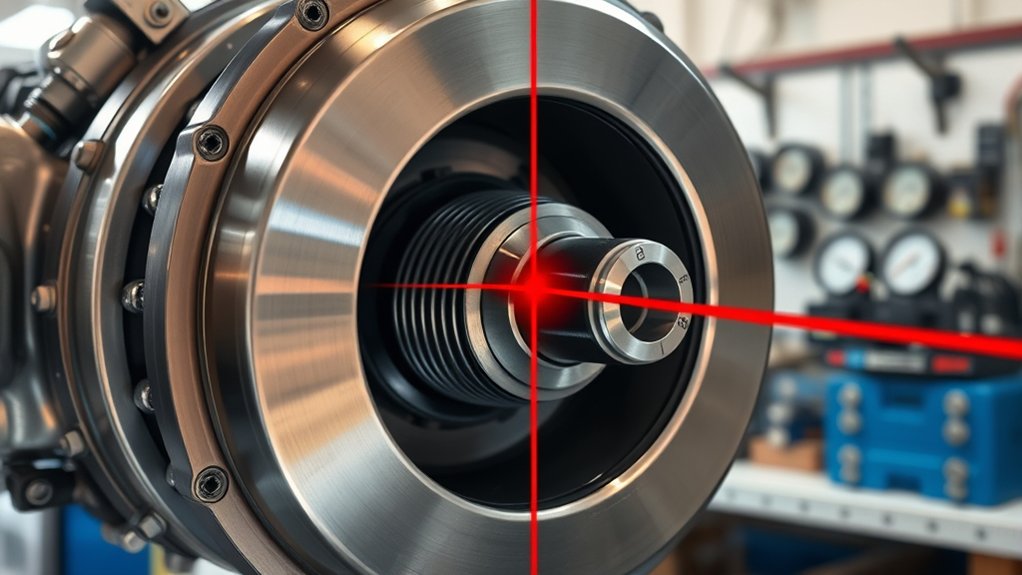
Once your boat and engine are properly prepared, you can begin measuring the alignment accuracy between the engine and the propeller shaft. Use a dial indicator or laser alignment tool to check for angular and parallel misalignment at multiple points around the coupling.
Begin alignment checks by using a dial indicator or laser tool on the engine and propeller shaft coupling.
Record the readings precisely, ensuring the engine and shaft are at operating temperature to account for thermal expansion. Pay close attention to any deviations, as misalignment can cause excessive engine vibration and negatively impact propeller balance.
Measure both vertical and horizontal planes systematically, then compare the results to manufacturer specifications. Accurate measurement ensures smooth power transmission and reduces wear.
After collecting data, you can make informed adjustments to minimize vibration and maintain optimal propeller balance, improving overall propulsion efficiency and engine longevity.
Common Mistakes and Maintenance Tips
Why do many alignment efforts fall short of optimal results? Often, it’s due to overlooking critical details in engine maintenance and propulsion systems. To ensure precise alignment, avoid these common mistakes:
- Neglecting to clean mating surfaces before measurements, which skews results.
- Failing to stabilize the engine and propeller shaft during alignment, causing shifts.
- Using worn or improperly calibrated measuring tools, reducing accuracy.
- Ignoring thermal expansion effects during operation, leading to misalignment under load.
For effective propulsion system maintenance, regularly inspect coupling bolts and monitor alignment after engine run-ups. Incorporate alignment checks into your routine engine maintenance schedule to prevent vibration issues and premature wear.
Frequently Asked Questions
How Often Should Engine-To-Propeller Shaft Alignment Be Checked?
You should check engine-to-propeller shaft alignment during every major engine maintenance and after any vibration analysis indicates unusual movement. This guarantees precise alignment, preventing wear and maintaining optimal performance in your vessel’s propulsion system.
Can Misalignment Cause Engine Overheating?
Yes, misalignment causes overheating by increasing friction and load on the engine. You’ll face serious maintenance implications if ignored, including premature wear and potential failure.
What Are the Symptoms of a Misaligned Propeller Shaft?
You’ll notice vibration symptoms like excessive shaking, noise, and heat buildup during misalignment diagnostics. These signs indicate uneven load distribution on the propeller shaft, causing premature wear and reduced engine efficiency.
Address misalignment promptly.
Is Professional Help Necessary for Alignment?
You don’t always need professional help if you’re skilled with precise measurements and tools; however, manual alignment demands accuracy. Consulting experts ensures optimal performance and prevents costly damage from misalignment errors.
Does Engine Alignment Affect Fuel Efficiency?
Yes, engine alignment directly affects engine efficiency. Misalignment causes vibration issues, increasing friction and wear, which reduces fuel efficiency.
You’ll improve performance and save fuel by maintaining precise alignment between the engine and propeller shaft.
Conclusion
Properly aligning your engine to the propeller shaft reduces wear and improves efficiency—misalignment as small as 0.1 mm can increase vibration by up to 30%. By carefully measuring at multiple angles and using precise tools, you can identify even the smallest discrepancies.
Make incremental adjustments to ensure smooth power transfer and extend the life of your components. Always document your results and recheck after each adjustment to maintain accuracy.
Following these methodical steps helps prevent costly repairs and keeps your vessel operating at peak performance. Proper engine to propeller shaft alignment is essential for optimal performance and longevity.