Did you know that failing to change your power steering fluid can reduce system efficiency by up to 30%?
Changing power steering fluid is essential to maintain optimal steering performance and extend the life of your steering system.
First, you’ll need to locate the reservoir, drain the old fluid correctly, and refill with the right type.
Properly bleeding the system is crucial to avoid air pockets and ensure smooth operation.
Understanding each step will help you avoid common mistakes and keep your steering responsive and reliable.
Regular maintenance of your power steering fluid can make a significant difference in your driving experience.
Key Takeaways
- Locate the power steering fluid reservoir under the hood, usually near the engine on the driver’s side. Identify the correct cap labeled “Power Steering” or “PSF.”
- Use a fluid pump or turkey baster to remove old fluid into a drain pan. Then loosen the reservoir cap for air flow during draining.
- Refill the reservoir with manufacturer-recommended fluid using a funnel. Start the engine and turn the steering wheel lock to lock to bleed air.
- Check for leaks, top off fluid as needed, and ensure smooth steering operation. Securely replace the reservoir cap.
- Dispose of used fluid properly at designated collection sites to protect the environment and comply with regulations.
How Do You Know When to Change Power Steering Fluid?
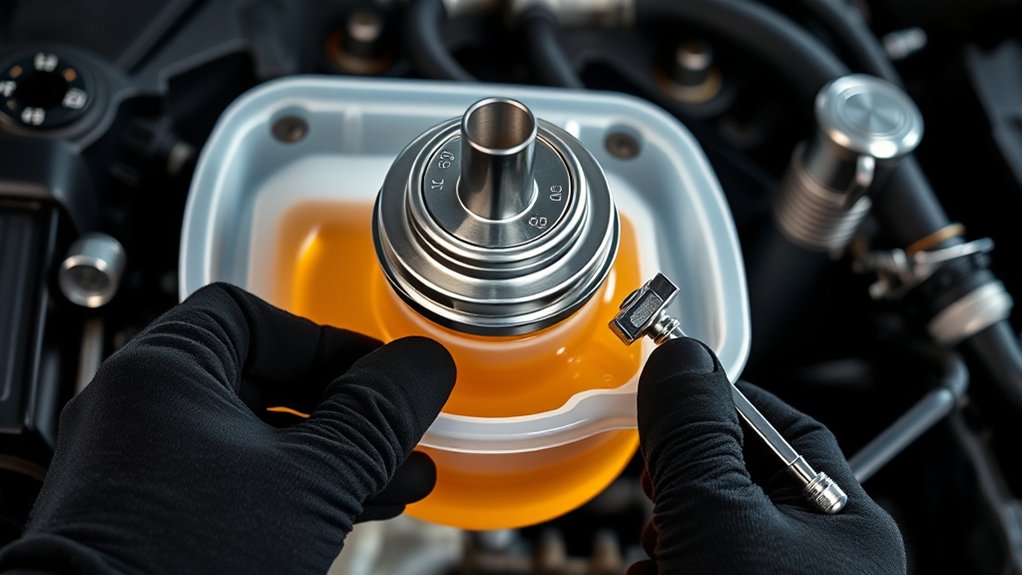
How can you tell when it’s time to change your power steering fluid? First, check the fluid’s color through the reservoir or dipstick; fresh fluid is typically clear or light amber. If the fluid appears dark brown or black, it’s degraded and needs replacement.
Next, monitor steering performance. Difficulty turning or unusual noises may indicate contamination or low fluid levels. Don’t confuse these symptoms with an unrelated topic like vehicle color, which has no bearing on fluid condition.
Additionally, consult your vehicle’s maintenance schedule, as recommended intervals vary by model. Regular inspection prevents premature wear. Relying on visual and performance indicators ensures timely fluid changes, maintaining optimal steering function and preventing costly component damage.
Tools Needed to Change Power Steering Fluid
You’ll need a few essential tools to complete the power steering fluid change efficiently, including a fluid pump or turkey baster, a wrench set, and a drain pan.
Don’t forget safety equipment like gloves and safety glasses to protect yourself from spills and splashes. Preparing these items beforehand guarantees a smooth, safe procedure.
Essential Tools Overview
Which tools do you need to efficiently change your power steering fluid? Start with a wrench set to loosen the drain plug and remove the reservoir cap. Use a turkey baster or fluid extractor pump to remove old fluid precisely without spilling.
Have a funnel ready to add new fluid cleanly. Prepare a catch pan to collect drained fluid and avoid contamination. A clean rag will help wipe any spills promptly.
Avoid distractions like unrelated topic or miscellaneous chatter that can lead to errors during the process. Each tool plays a critical role: wrenches provide access, extractors ensure fluid removal, funnels prevent spills, and catch pans maintain workspace cleanliness.
Gathering these essential tools beforehand streamlines your procedure, making the fluid change faster and more effective.
Safety Equipment Required
Personal protective equipment (PPE) is essential when changing power steering fluid to prevent exposure to harmful chemicals and avoid injury. You’ll need proper safety equipment, including chemical-resistant gloves to protect your skin from fluid contact and safety goggles to shield your eyes from splashes.
Wearing long sleeves and closed-toe shoes adds an extra layer of personal protection. Additionally, use a face mask if you’re working in a poorly ventilated area to avoid inhaling fumes.
Ensure you have a clean workspace with absorbent mats or rags ready to contain spills. By adhering strictly to these safety equipment requirements, you minimize risks and maintain a safe working environment while performing the fluid change procedure efficiently and securely.
Where to Find the Power Steering Fluid Reservoir
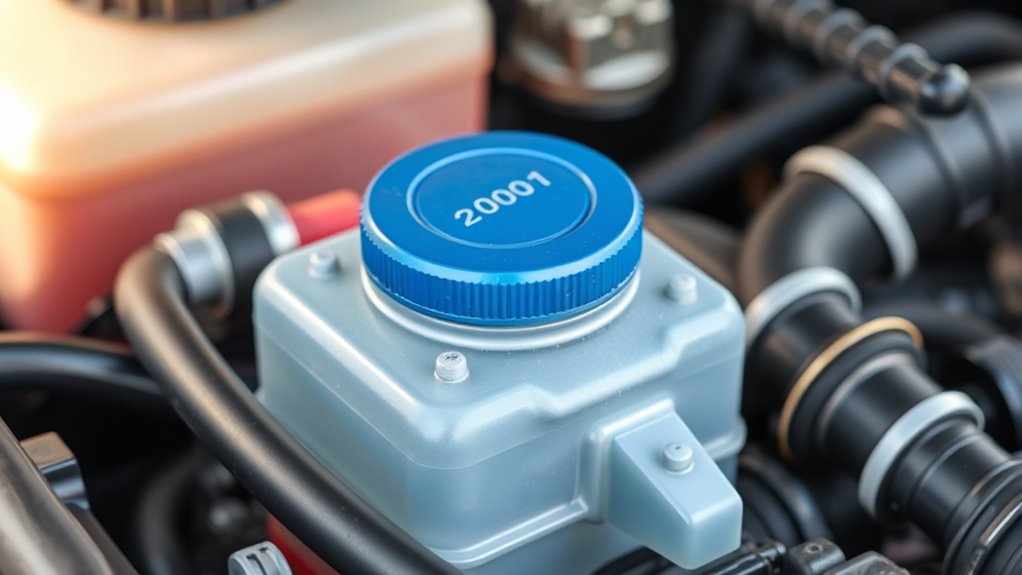
Open your vehicle’s hood and locate the power steering fluid reservoir, usually positioned near the engine on the driver’s side. The reservoir is typically a small, translucent container with a screw-on cap labeled “Power Steering.”
Identifying this reservoir accurately is essential before proceeding with fluid replacement.
Location Under Hood
Locating the power steering fluid reservoir under the hood is essential before beginning any maintenance. Open your car’s hood and secure it with the prop rod. Typically, the reservoir is mounted on or near the power steering pump, often on the driver’s side.
It’s a translucent plastic container with a cap labeled “power steering.” Since vehicle designs vary, consult your owner’s manual for exact locations, especially if you’re working on a hybrid or electric vehicle where components might differ due to renewable energy integration.
Identifying the reservoir quickly streamlines your car maintenance process and prevents contamination. Avoid confusing it with other fluid containers like brake fluid or coolant.
Identifying The Reservoir
The power steering fluid reservoir is typically a small, translucent container marked clearly with a cap labeled “power steering” or an abbreviation like “PSF.” You’ll find it mounted near the power steering pump or along the engine bay’s driver side, but exact placement varies by vehicle make and model.
Locate it by inspecting near other key components like spark plugs and engine oil reservoirs, which are usually more prominent.
| Component | Location Hint | Identification Tip |
|---|---|---|
| Power Steering | Near pump, driver side | Cap labeled “PSF” |
| Spark Plugs | Cylinder head area | Wire leads attached |
| Engine Oil | Near engine block | Yellow/black cap, oil symbol |
Confirm the reservoir by checking for fluid level markings on the container’s side.
How to Drain Old Power Steering Fluid
Typically, you’ll start by positioning a drain pan beneath the power steering reservoir or the fluid lines to catch the old fluid. Next, locate the reservoir cap and remove it to allow air flow during draining.
Detach the return line or open the drain plug if available; this facilitates efficient fluid flow out of the system. Use a turkey baster or fluid pump to extract fluid from the reservoir if no drain plug exists.
Allow the fluid to completely drain to prevent contamination that can hinder noise reduction and fuel efficiency. Dispose of the old fluid properly, as it contains hazardous substances.
Draining thoroughly ensures the new fluid performs optimally, reducing system noise and improving overall fuel efficiency by minimizing hydraulic resistance.
How to Refill and Bleed Power Steering Fluid
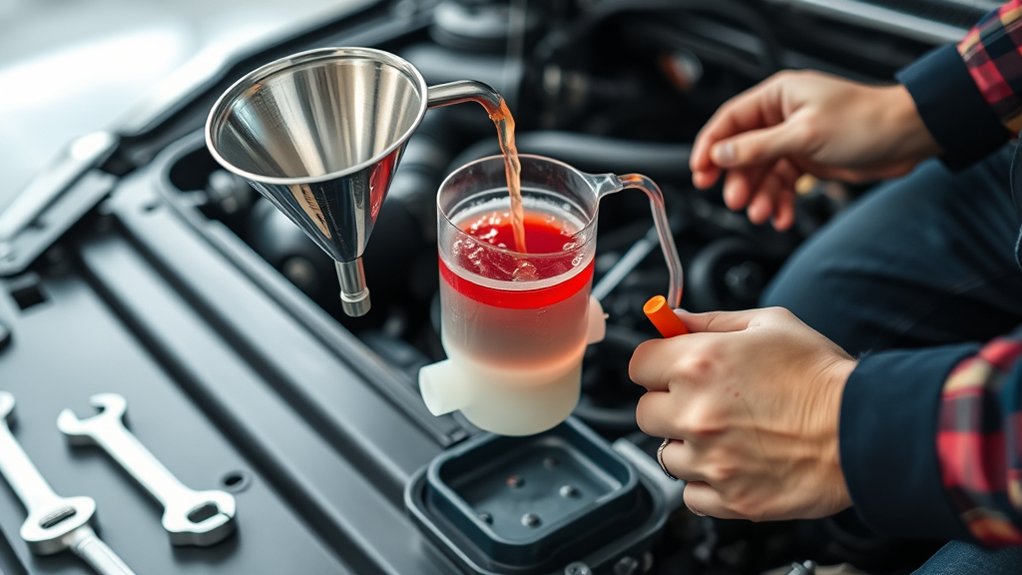
How exactly do you refill and bleed power steering fluid to guarantee the system operates smoothly? First, pour the manufacturer-recommended power steering fluid into the reservoir up to the specified fill line. Avoid considering any unrelated topic or off topic idea during this step to prevent contamination or errors.
Next, start the engine and turn the steering wheel from lock to lock several times slowly to expel trapped air. Keep an eye on the fluid level, topping off as needed to maintain the correct amount.
Finally, inspect for leaks and ensure the steering feels smooth without noise or resistance. This precise procedure ensures air bubbles are removed, maintaining optimal hydraulic pressure and preventing steering issues related to improper bleeding.
Problems to Watch for After Changing Power Steering Fluid
What signs should you monitor after changing your power steering fluid to ensure everything functions correctly? First, observe any unusual road noise, such as whining or groaning, which could indicate air trapped in the system or insufficient fluid levels.
Next, pay close attention to the steering response during typical traffic pattern maneuvers; stiffness or delayed turning may signal improper bleeding or fluid contamination. Check for leaks around the reservoir, hoses, and pump connections immediately after the change, as loose fittings can cause fluid loss.
Finally, notice any vibrations or jerking in the steering wheel, which might suggest residual debris affecting the flow. Address these issues promptly to maintain optimal power steering performance and prevent further mechanical damage.
How to Dispose of Used Power Steering Fluid Safely
Where should you take your used power steering fluid to ensure safe disposal? First, avoid pouring it down drains, on soil, or into water sources, as improper disposal can cause significant environmental impact.
Instead, collect the fluid in a sealed, labeled container. Check your local regulations to identify authorized disposal options, such as automotive service centers, hazardous waste collection sites, or recycling facilities that accept automotive fluids.
Many municipalities offer designated drop-off programs for hazardous materials. When you transport the fluid, secure the container to prevent leaks. Proper disposal minimizes contamination risks to soil and water, protecting ecosystems and public health.
Following these precise steps ensures you comply with environmental regulations and responsibly manage used power steering fluid.
How Often to Change Power Steering Fluid
Proper disposal of used power steering fluid helps maintain system health by encouraging regular fluid changes. You should change the power steering fluid every 50,000 miles or as specified in your vehicle’s maintenance checklist.
However, if you notice symptoms like whining noises, difficulty steering, or fluid discoloration, perform a fluid change sooner. Use recommended techniques such as flushing the system or draining and refilling to ensure complete removal of contaminants.
Regular inspection of fluid condition during routine maintenance helps determine the optimal change interval. Incorporate fluid checks and changes into your maintenance checklist to prevent premature wear of steering components.
Consistent adherence to these procedures ensures smooth operation and extends the lifespan of your power steering system.
Frequently Asked Questions
Can I Use Any Type of Power Steering Fluid?
You shouldn’t use just any power steering fluid because different viscosity levels and label differences matter. Always check your vehicle’s manual to select the correct fluid, ensuring compatibility and preventing damage to your steering system.
What Are the Signs of Power Steering Fluid Leaks?
Signs of leaks appear like a fading sunset. Dark red or brown fluid stains show up under your vehicle. You’ll notice decreased steering responsiveness, whining noises, and a low fluid level when you check the fluid color in the reservoir.
Is It Safe to Drive With Low Power Steering Fluid?
It’s not safe driving with low power steering fluid because it strains the system, causing steering difficulty and potential damage.
Ensure proper maintenance by regularly checking and topping off fluid to maintain optimal steering performance and safety.
Can Power Steering Fluid Affect Steering Noise?
You’ll notice noise comparison reveals that thicker fluid viscosity often reduces steering noise, while degraded or low fluid increases it.
To diagnose, precisely check fluid condition and viscosity, then replace it to restore quiet, smooth steering operation.
How Does Power Steering Fluid Differ From Automatic Transmission Fluid?
Power steering fluid differs from automatic transmission fluid in viscosity, additives, and pressure tolerance. Power steering vs transmission fluid shows distinct chemical formulations; don’t confuse them.
Avoid pivoting to unrelated topics to maintain technical precision.
Conclusion
Now that you know when to change power steering fluid, gather the right tools and locate the reservoir. Next, drain the old fluid carefully and refill with precision.
Bleed the system thoroughly to remove any air, watch for leaks, and dispose of used fluid responsibly.
By following these steps regularly, you’ll maintain smooth steering, prevent costly damage, and ensure safe driving. Stay diligent, stay safe, and keep your power steering system performing at its best every time with proper power steering fluid maintenance.