To accurately check your power steering fluid level, you’ll need to locate the power steering fluid reservoir under the hood and guarantee the engine is cool before proceeding. Cleaning the cap area and using the proper indicators on the dipstick are essential steps to avoid contamination and get an accurate reading.
Understanding these details helps prevent steering issues and potential damage—but first, you need to identify the right reservoir and tools to use.
Key Takeaways
- Locate the power steering fluid reservoir under the hood, usually near the pump and marked with a steering wheel icon.
- Ensure the engine is cool or slightly warm, then clean the reservoir cap area before opening it by twisting counterclockwise.
- Use a dipstick or check reservoir markings labeled Full/Max and Add/Min to accurately read the fluid level.
- Inspect fluid color and texture; clear or slightly tinted is normal, while dark, gritty, or milky fluid indicates contamination.
- Add manufacturer-recommended fluid if low, using a funnel, and recheck levels regularly to prevent steering issues and system damage.
Why You Should Check Power Steering Fluid
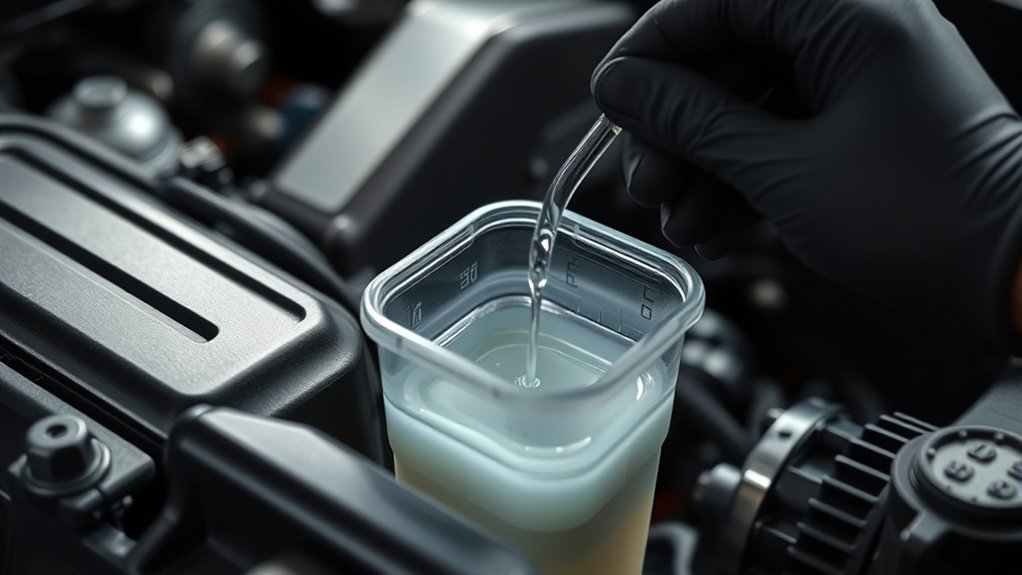
Why is it important to check your power steering fluid regularly? Because maintaining the correct fluid level ensures optimal steering performance and prevents system damage. Ignoring this task can lead to increased steering effort, noise, or even pump failure.
Avoid treating power steering fluid like an irrelevant topic or engaging in random discussion about it; this fluid directly affects your vehicle’s safety and handling. By checking fluid levels routinely, you can identify leaks or contamination early, preventing costly repairs.
Use the manufacturer’s recommended fluid type and inspect the reservoir when the engine is cold or warm, depending on the vehicle. Regular checks keep your steering smooth and responsive, ensuring your driving experience remains safe and comfortable at all times.
When to Check Your Power Steering Fluid?
When should you check your power steering fluid to maintain peak performance? Regular monitoring is essential, but some situations demand immediate attention. Remember, discussing unrelated maintenance tasks is an irrelevant topic and not applicable here.
Check your power steering fluid:
- Before long trips to ensure your system is properly lubricated.
- When you hear whining or groaning noises while steering.
- If the steering feels stiff or unresponsive.
- After any visible leaks under the vehicle.
How to Find and Open the Power Steering Reservoir
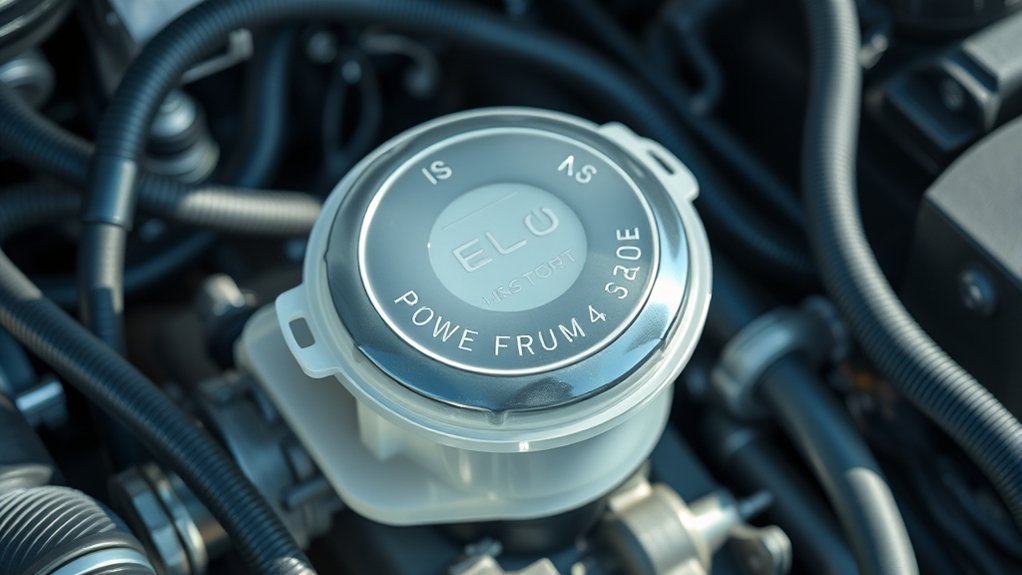
Start by locating the power steering reservoir under the hood, usually a small, round container labeled or marked with a steering wheel icon. Once found, clean the cap area to prevent contamination, then twist the cap counterclockwise to open it.
Make sure the engine is cool before opening to avoid injury from hot fluid or steam.
Locating The Reservoir
Where exactly do you find the power steering fluid reservoir under the hood? Locating it is crucial before checking fluid levels. Unlike topic ideas unrelated to power steering fluid checks, this step demands precision. Follow these instructions:
- Open the hood and secure it properly.
- Look for a small, translucent reservoir marked with a steering wheel icon or labeled “Power Steering.”
- The reservoir typically sits near the engine, often on the driver’s side, connected to the power steering pump via hoses.
- Consult your vehicle’s owner manual if identification proves difficult; it provides exact reservoir location details.
Opening The Cap
How do you locate and open the power steering fluid reservoir cap safely? First, identify the reservoir, usually a translucent plastic container near the engine, labeled or marked with a steering wheel symbol. Avoid confusing this with unrelated topics like the coolant or brake fluid reservoirs.
Before opening, ensure the engine is cool to prevent injury. Clean the cap and surrounding area to stop debris from entering. Grip the cap firmly and twist it counterclockwise, applying steady pressure. Don’t force it, as some caps use a locking mechanism.
If the cap resists, double-check for clips or levers; this isn’t a random idea but a necessary step. Once open, set the cap aside carefully to avoid contamination. Now, you’re ready to check or add fluid accurately.
Tools Needed to Check Power Steering Fluid
Which tools do you need to accurately check your power steering fluid level? Avoid the irrelevant topic of guessing or relying on a random idea. Instead, use precise instruments to ensure accuracy and safety.
Here are the essential tools:
- Clean Rag or Paper Towels to wipe the dipstick or cap clean before measuring.
- Flashlight for better visibility, especially if the reservoir is in a dark engine bay area.
- Gloves to protect your hands from fluid and grime.
- Owner’s Manual to locate the reservoir and understand manufacturer-specific instructions.
Having these tools ready streamlines the process and prevents contamination or misreading, ensuring you perform a technically sound check every time.
How to Read Power Steering Fluid Level
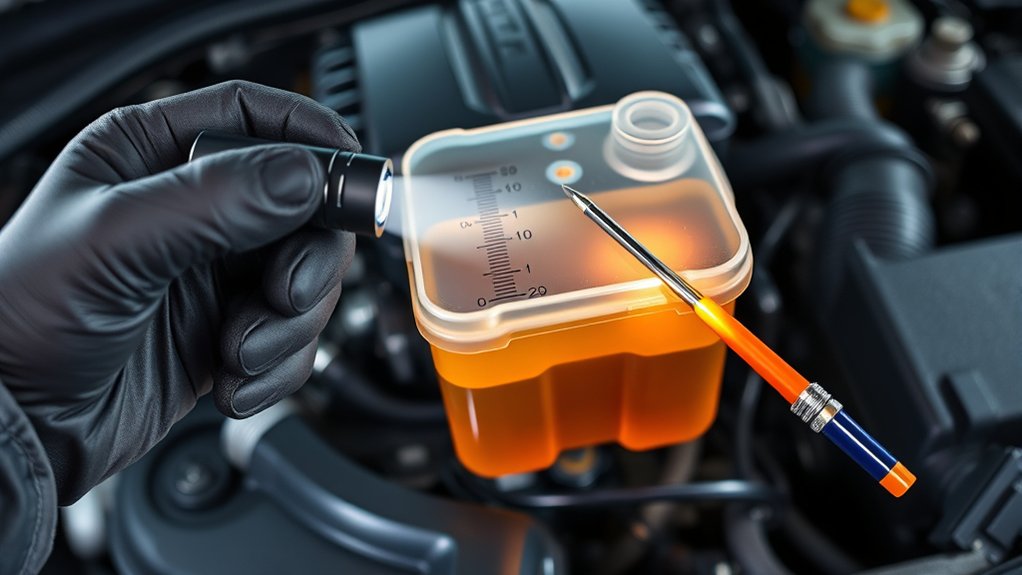
You’ll start by locating the fluid level marks on the dipstick or reservoir, which usually indicate “Full” and “Add” lines. Check the fluid level against these marks to ensure it’s within the recommended range.
Also, inspect the fluid’s consistency. Healthy power steering fluid should be clear and smooth, not cloudy or gritty.
Identifying Fluid Level Marks
When checking your power steering fluid, start by locating the reservoir and examining the fluid level marks clearly etched or molded on its side or dipstick. These marks guide you in maintaining proper fluid levels, essential for avoiding issues like identifying noise from the steering system. Here’s how to interpret them precisely:
- Full/Max Line – Indicates the maximum safe fluid level when the engine is cold.
- Add/Min Line – Shows the minimum fluid level to prevent pump damage.
- Hot/Cold Indicators – Some reservoirs have separate marks for fluid level when the engine is hot or cold, reflecting fluid expansion.
- Cross-Referencing Fluid Compatibility – Always match your fluid type with manufacturer recommendations, as incompatible fluids can alter readings and cause damage.
Accurate reading helps prevent steering problems and promotes system longevity.
Checking Fluid Consistency
After identifying the correct fluid level marks on your power steering reservoir, the next step is to examine the fluid’s consistency. Remove the dipstick or cap and observe the fluid closely. Healthy power steering fluid is typically clear or slightly tinted, with a smooth, oily texture.
If the fluid appears dark, gritty, or milky, it indicates contamination or deterioration, requiring immediate replacement. Avoid confusing this with irrelevant topics like unrelated engine fluids, which can lead to a discontinued discussion on proper maintenance.
Checking consistency helps you detect leaks or internal component wear early. Always use a clean, lint-free cloth to wipe the dipstick before reinserting. Accurate consistency assessment ensures your power steering system operates smoothly and prolongs its lifespan.
What to Do If Your Power Steering Fluid Is Low
How should you respond if your power steering fluid is low? Addressing this promptly is essential to avoid steering issues. Follow these steps precisely:
- Locate the power steering reservoir and clean the cap area to prevent contamination.
- Use a funnel to add the appropriate amount of fluid slowly, making sure you don’t overfill.
- After filling, start the engine and turn the steering wheel from lock to lock to circulate the fluid evenly.
- Recheck the fluid level and inspect for leaks, as persistent low fluid may indicate a hose or seal issue.
Think of this like creative writing or gardening tips. Attention to detail and routine maintenance make all the difference. Regular checks guarantee your steering system operates smoothly without unexpected failures.
How to Choose the Right Power Steering Fluid
Maintaining the correct power steering fluid level is only part of the process; selecting the right type of fluid guarantees your system functions properly and avoids damage. Use the manufacturer’s recommended fluid to protect your drivetrain aesthetics and prevent interference with dashboard electronics.
| Fluid Type | Application |
|---|---|
| Mineral-based | Older vehicles |
| Synthetic | Modern vehicles |
| Dexron/Mercon | Automatic transmission compatible |
| Specialty fluids | High-performance or specific models |
Check your owner’s manual to identify the compatible fluid type. Using the wrong fluid can cause leaks, noise, or electrical issues. Proper fluid maintains optimal hydraulic pressure, ensuring smooth steering and protecting sensitive electronic components in your dashboard.
How Often to Check and Change Power Steering Fluid
You should check your power steering fluid level at least once a month to ensure optimal performance. Most manufacturers recommend changing the fluid every 50,000 to 75,000 miles, but always consult your vehicle’s manual for exact intervals.
Regular maintenance prevents damage and keeps your steering responsive.
Recommended Checking Frequency
Regularly checking your power steering fluid guarantees optimal system performance and prevents potential damage. Ignoring this essential maintenance can lead to costly repairs, so don’t treat it as an irrelevant topic or skipped item.
Follow these guidelines for recommended checking frequency:
- Inspect fluid levels every 3,000 to 5,000 miles or during routine oil changes to identify early leaks or contamination.
- Check fluid condition monthly, observing color and consistency for signs of degradation.
- After heavy steering use or long trips, verify levels to ensure no unexpected loss.
- Increase frequency if you notice steering stiffness, noise, or fluid discoloration.
Adhering to this schedule ensures your power steering system remains reliable, minimizing failure risks without overlapping with fluid replacement intervals.
Fluid Replacement Intervals
How often should you change your power steering fluid to keep the system functioning smoothly? Typically, manufacturers recommend replacing the fluid every 50,000 to 75,000 miles or every 2 to 3 years, whichever comes first.
However, consult your vehicle’s manual for specific intervals, as conditions like frequent towing or extreme temperatures may require more frequent changes. Don’t get sidetracked by unrelated topics or irrelevant discussions about fluid additives or aftermarket products; focus strictly on manufacturer guidelines and fluid condition.
Regularly check the fluid level and quality. Look for discoloration or debris indicating contamination. Timely replacement prevents pump wear and steering issues, ensuring optimal performance.
Following these precise intervals maintains system integrity and avoids costly repairs caused by degraded power steering fluid.
Signs Your Power Steering Fluid Is Low or Contaminated
What symptoms indicate that your power steering fluid is low or contaminated? Identifying these signs early helps avoid irreversible tests or costly repairs unrelated budgeting might overlook. Here are four key indicators:
- Steering Difficulty: You’ll notice increased effort needed to turn the wheel, especially at low speeds.
- Noisy Steering: Whining or groaning sounds when you turn suggest air or contaminants in the fluid.
- Fluid Discoloration: Check the reservoir; dark or cloudy fluid signals contamination.
- Fluid Leaks: Puddles or drips under your vehicle near the steering system point to fluid loss.
Addressing these symptoms promptly ensures you maintain proper steering function and avoid expensive, preventable damage.
Tips to Maintain Smooth Power Steering Performance
Why should you prioritize maintaining your power steering system? Proper maintenance ensures smooth steering, reduces wear, and prevents costly repairs.
Prioritizing power steering maintenance ensures smooth handling, minimizes wear, and avoids expensive repairs.
First, always check the fluid level when the engine warmth is optimal, typically after running for a few minutes but before overheating. Use the dipstick or reservoir markings for accurate measurement. Avoid opening the reservoir cap when the engine is hot to prevent burns.
Next, inspect the power steering fluid for contamination or discoloration; replace it if it appears dark or gritty. Maintain a careful battery to ensure consistent voltage, as electrical fluctuations can affect power steering pumps in some systems.
Finally, schedule regular inspections of hoses and belts for leaks or cracks. These steps will keep your steering responsive and extend system life.
Frequently Asked Questions
Can Power Steering Fluid Leak Cause Engine Damage?
A power steering fluid leak won’t directly cause engine damage, so unrelated topic discussions are irrelevant here. However, low fluid can strain the steering pump, potentially leading to costly repairs, which indirectly affects overall vehicle operation.
Is It Safe to Drive With No Power Steering Fluid?
Driving with no power steering fluid reduces steering control by up to 75%, drastically compromising driving safety. You shouldn’t do it.
Prioritize fluid maintenance to guarantee responsive steering and avoid hazardous situations on the road.
How Do I Dispose of Old Power Steering Fluid Properly?
You should pour old power steering fluid into clean, sealed storage containers. Then, take them to a hazardous waste disposal facility or automotive shop that accepts used fluids.
Avoid pouring it down drains or on the ground.
What Are the Differences Between Synthetic and Conventional Power Steering Fluids?
Think of synthetic fluid as a high-performance athlete, offering synthetic advantages like better temperature stability and longer life. Conventional fluids have drawbacks, including quicker breakdown and less protection under extreme conditions.
Choose based on your vehicle’s needs.
Can Contaminated Power Steering Fluid Damage the Power Steering Pump?
Yes, contaminated fluid can damage your power steering pump by causing increased friction and wear. You’ll want to flush and replace the fluid regularly to minimize damage potential and ensure smooth, reliable pump operation.
Conclusion
Now that you know how to check your power steering fluid, keeping your system smooth is as essential as winding a pocket watch in the old days. Regularly inspect the fluid level when the engine is cool, use the right fluid, and watch for leaks or contamination.
Staying proactive prevents costly repairs and ensures precise steering control. Make this quick check part of your routine maintenance to keep your vehicle running safely and efficiently. Remember, regularly checking the power steering fluid level is key to maintaining optimal performance and longevity of your steering system.