Picture feeling a subtle but persistent vibration through your seat as you accelerate—this could be a sign that your drive shaft is bad. This sensation, along with unusual clunking noises or changes in steering response, can signal that your drive shaft is wearing down.
Ignoring these signs could lead to more serious drivetrain issues. Understanding what to look for and how to check your drive shaft can help you address problems before they escalate.
Key Takeaways
- Notice vibrations that worsen with speed or changes in rotation, indicating possible drive shaft imbalance or worn universal joints.
- Listen for clunking, clicking, or rhythmic knocking noises during acceleration or turning, signaling drive shaft or U-joint issues.
- Observe difficulty turning the vehicle or steering wheel vibrations, which may result from drive shaft damage or misalignment.
- Inspect the drive shaft for visible cracks, dents, grease leaks near U-joints, or excessive play that suggest wear or damage.
- Seek prompt professional evaluation if any symptoms appear to prevent further damage and ensure vehicle safety.
What Is a Drive Shaft and Why It Matters
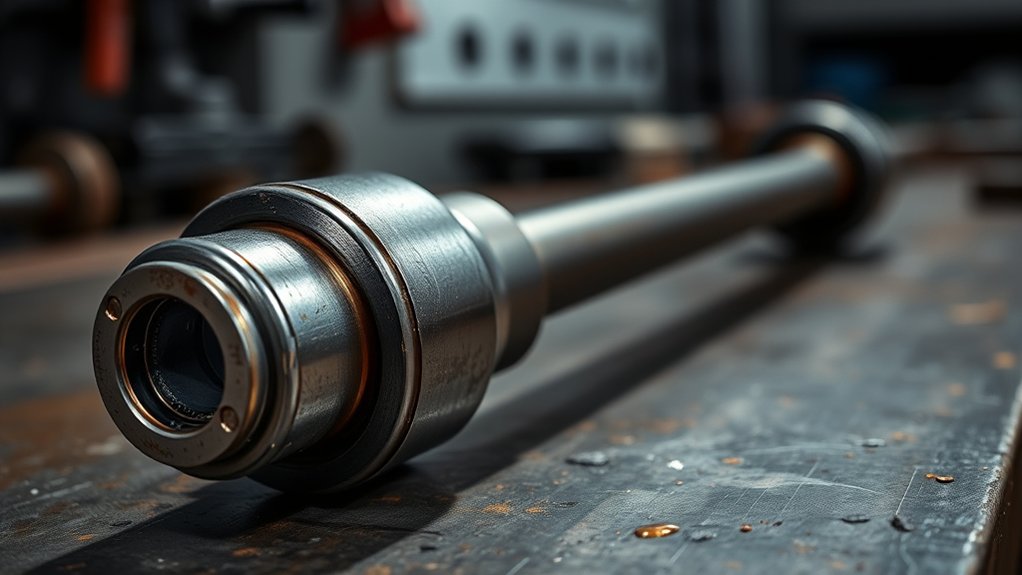
What exactly does a drive shaft do in your vehicle? It transfers torque from the engine and transmission to the wheels, enabling movement. The drive shaft connects critical components, ensuring power flows smoothly and efficiently.
The drive shaft transfers torque from engine to wheels, ensuring smooth and efficient power flow.
Without a properly functioning drive shaft, your vehicle won’t move reliably, which directly impacts vehicle safety. If the drive shaft fails while driving, you could lose control, leading to accidents.
You need to understand that maintaining the drive shaft’s integrity is essential for safe vehicle operation. It must withstand rotational forces and vibrations under various conditions.
Regular inspections and maintenance help preserve its function, preventing breakdowns and ensuring your vehicle remains safe on the road. Recognizing the drive shaft’s role highlights its importance in your vehicle’s overall performance and safety.
Common Signs Your Drive Shaft Is Failing
How can you tell if your drive shaft is starting to fail? Key signs include vibrations that intensify with speed, uneven acceleration, and difficulty turning. You might notice grease leakage near the universal joints or visible cracks and dents on the shaft itself.
These symptoms point directly to mechanical issues rather than an unrelated topic like engine or transmission faults. Avoid getting caught up in off topic discussions that don’t focus on drive shaft integrity.
Pay close attention to changes in vehicle handling, as these are practical indicators of drive shaft wear or damage. Addressing these signs early prevents further drivetrain failure and costly repairs.
Recognizing these common symptoms helps you maintain optimal vehicle performance and safety.
Noises That Signal Drive Shaft Problems
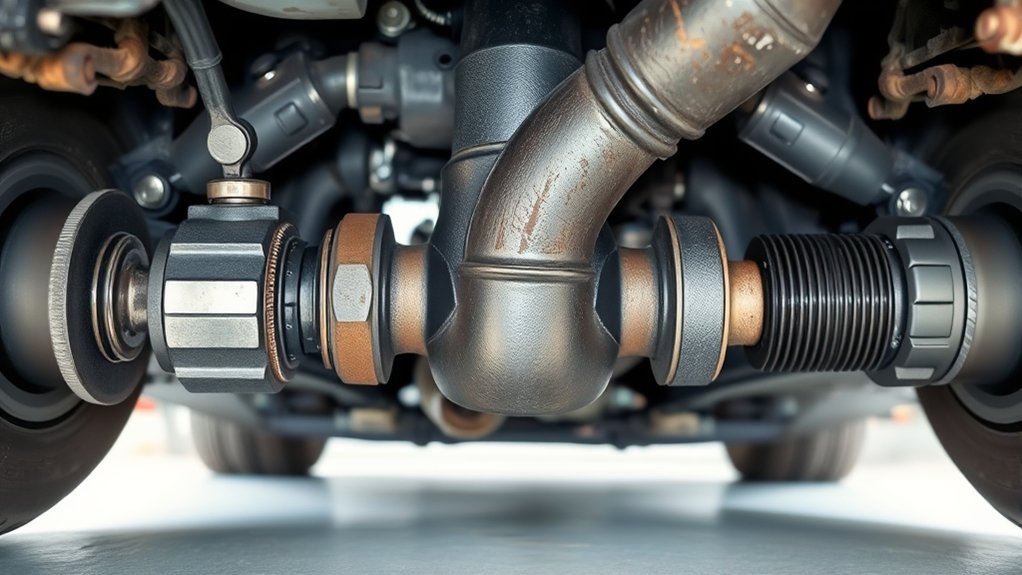
In addition to physical symptoms like vibrations and grease leaks, certain noises can also indicate drive shaft problems. You might hear clunking or clicking sounds when accelerating or turning, signaling worn universal joints or damaged CV joints.
A rhythmic knocking noise that changes with vehicle speed often points to an imbalanced or bent drive shaft. Unlike audio distortions from your sound system or issues unrelated to battery health, these noises originate mechanically and require immediate attention.
Ignoring them risks further drivetrain damage. To accurately diagnose, isolate engine and electrical noises by turning off the sound system and ensuring battery health is stable, then focus on mechanical sounds during a test drive.
Promptly addressing these auditory cues helps maintain vehicle safety and performance.
How Vibrations Indicate Drive Shaft Issues
Why do vibrations often signal drive shaft problems? Because the drive shaft relies on precise shaft balance to rotate smoothly, any imbalance creates vibration causes that are quickly felt through the vehicle. Even a slight warp, bent section, or worn universal joint can disrupt this balance, generating noticeable vibrations.
When you experience consistent or increasing vibrations, especially during acceleration or at specific speeds, it often points to a compromised drive shaft. These vibrations differ from typical engine or tire-related shakes because they intensify with rotational speed changes.
Addressing vibration causes early prevents further damage to the drivetrain and avoids costly repairs. To confirm, mechanics check shaft balance and inspect for physical damage or joint wear, ensuring the drive shaft operates within design tolerances for smooth, vibration-free performance.
Steering Symptoms of a Bad Drive Shaft
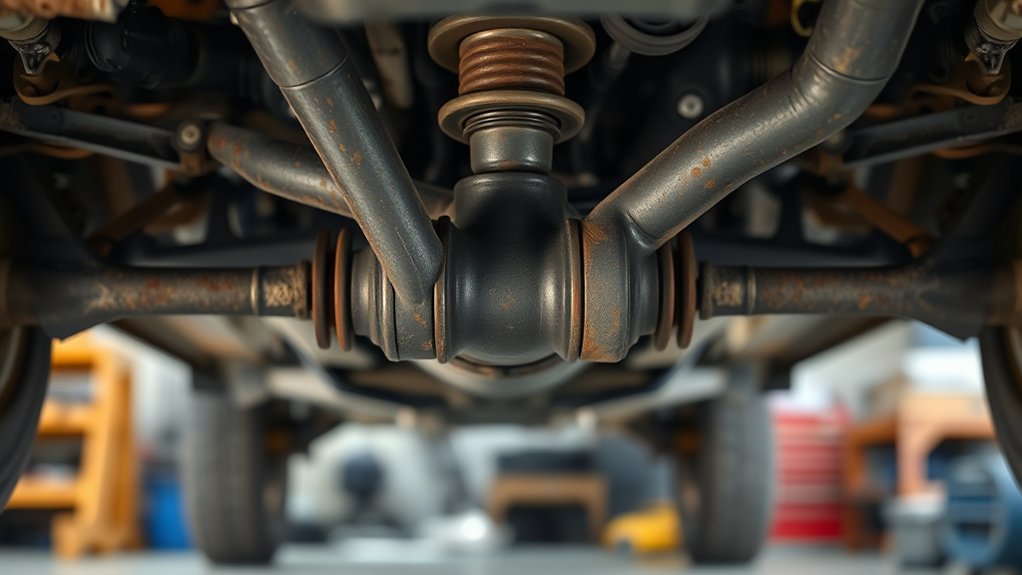
If your drive shaft is failing, you might notice vibrations in the steering wheel, especially at higher speeds. You could also experience difficulty turning the wheel smoothly, which signals potential issues with the shaft’s joints or balance.
Addressing these symptoms early can prevent further damage to your vehicle’s steering system.
Steering Wheel Vibrations
How can you tell if your drive shaft is causing your steering wheel to vibrate? First, eliminate common issues like tire balance and drive alignment, as these often cause similar symptoms.
If your tires are properly balanced and your drive alignment is correct, persistent vibrations at certain speeds likely point to a failing drive shaft. Worn or damaged universal joints or imbalanced shafts can create uneven rotational forces, transmitting vibrations directly to the steering wheel.
These vibrations usually intensify with acceleration and may coincide with clunking noises. To diagnose, visually inspect the drive shaft for dents or wear, and check the universal joints for excessive play.
Addressing these issues promptly prevents further drivetrain damage and ensures safe, smooth steering performance.
Difficulty Turning Wheel
When you notice increased resistance or stiffness while turning the steering wheel, it could signal a failing drive shaft. This symptom often arises from drive shaft misalignment, which disrupts the smooth transfer of torque and impedes steering responsiveness.
Additionally, universal joint wear can cause binding or stiffness, making it harder to turn the wheel effortlessly. Both conditions compromise the drive shaft’s ability to accommodate angular movement and rotational forces, directly affecting steering performance.
If you experience difficulty turning, inspect the universal joints for excessive play or corrosion, and check for misalignment in the drive shaft assembly. Addressing these issues promptly prevents further drivetrain damage and restores proper steering function, ensuring safe and reliable vehicle operation.
How to Inspect Your Drive Shaft for Damage
Where should you start to inspect your drive shaft for damage? Begin with a thorough drive shaft inspection focusing on visible wear and structural integrity.
Start your drive shaft inspection by thoroughly checking for visible wear and structural damage.
Follow these steps for an effective drive shaft damage assessment:
- Visually examine the shaft for dents, cracks, or corrosion.
- Check the universal joints (U-joints) for excessive play or rust.
- Inspect the center bearing and support brackets for looseness or wear.
- Rotate the shaft by hand to detect any unusual stiffness or binding.
Risks of Driving With a Bad Drive Shaft
Why risk further damage or a sudden breakdown by ignoring a faulty drive shaft? Driving with a bad drive shaft increases the chance of dangerous driving conditions and costly repairs. Recognizing these risks helps you prioritize maintenance planning effectively.
| Risk | Impact |
|---|---|
| Complete drive shaft failure | Vehicle immobilization, safety hazard |
| Vibration and noise | Reduced driving comfort, component wear |
| Damage to transmission | Expensive repairs, system failure |
| Loss of control | Increased accident risk |
| Increased fuel consumption | Higher operating costs |
Ignoring symptoms can result in sudden failure, jeopardizing your safety and causing expensive damage. Proper maintenance planning reduces dangerous driving scenarios and extends your vehicle’s lifespan. Address issues promptly to maintain control and avoid costly consequences.
When to Visit a Mechanic for Drive Shaft Repairs
How can you tell if it’s time to take your vehicle to a mechanic for drive shaft repairs? Proper mechanic visit timing hinges on clear symptoms and effective drive shaft diagnostics. Consider these critical indicators:
- Persistent vibrations during acceleration or at specific speeds.
- Audible clunking or clicking noises when shifting or turning.
- Visible damage or excessive play in the drive shaft or U-joints.
- Difficulty controlling the vehicle or unusual handling behavior.
If you encounter any of these issues, schedule a mechanic visit promptly. Early drive shaft diagnostics prevent further damage and ensure vehicle reliability. Don’t delay repairs, as ignoring these signs compromises drivetrain function and overall safety.
Trust professional evaluation to confirm the drive shaft’s condition and recommend necessary maintenance or replacement.
How Replacing a Drive Shaft Improves Vehicle Safety
Recognizing the signs that your drive shaft needs repair leads directly to the next critical step: replacing the faulty component. Doing so ensures optimal drive shaft benefits by restoring proper torque transmission and vehicle stability.
This replacement results in significant safety improvements, preventing sudden failures that could cause loss of control or accidents.
| Drive Shaft Benefits | Safety Improvements |
|---|---|
| Restored power delivery | Enhanced vehicle control |
| Reduced vibrations | Prevents drivetrain failure |
| Improved fuel efficiency | Avoids unexpected breakdowns |
| Extended component lifespan | Minimizes risk of accidents |
Frequently Asked Questions
Can a Bad Drive Shaft Affect Fuel Efficiency?
Yes, a bad drive shaft can cause bad vibration, which forces your engine to work harder, reducing fuel economy.
You’ll notice decreased efficiency and uneven power delivery, signaling the need for inspection and possible repair or replacement.
What Materials Are Drive Shafts Typically Made From?
Drive shaft materials typically include steel, aluminum, and carbon fiber. You’ll want to contemplate safety, as steel offers strength, aluminum reduces weight, and carbon fiber provides high performance but demands careful handling to avoid failure.
How Long Does a Drive Shaft Usually Last?
Think of your drive shaft like a marathon runner. It usually lasts 100,000 to 150,000 miles.
Your drive shaft longevity depends on use and maintenance, so follow recommended replacement intervals to avoid unexpected failure and costly repairs.
Are Drive Shaft Repairs Covered by Warranty?
You’ll find drive shaft warranty and repair coverage vary by manufacturer and vehicle. Check your warranty terms carefully; typically, defects are covered, but wear and tear usually aren’t. Always verify specifics to avoid unexpected costs.
Can Weather Conditions Cause Drive Shaft Damage?
Think of your drive shaft as a ship’s mast; weather effects like rain and snow accelerate corrosion wear, weakening its integrity. You should inspect regularly to catch damage early, preventing costly failures caused by harsh environmental conditions.
Conclusion
If you notice vibrations, unusual noises, or steering issues, don’t dismiss them—they often indicate drive shaft problems. While some believe minor symptoms can be ignored, even slight wear can escalate quickly, risking complete failure. Regular inspections and timely repairs aren’t just preventive—they ensure your vehicle’s safety and performance.
Trust precise diagnostics over assumptions, and address drive shaft concerns promptly to avoid costly damage. Maintaining your vehicle’s drive shaft in good condition is essential for safe and smooth operation on the road.