Measuring your outboard motor shaft length is more than just a quick tape measure job—it’s the critical link between your boat’s performance and safety.
You’ll need to start with the boat on a level surface and the motor turned off. Then measure precisely from the top of the transom to the bottom of the anti-ventilation plate, not the propeller.
Getting this wrong can cause serious issues, so understanding the correct method is essential before you proceed further.
Key Takeaways
- Measure vertically from the top of the motor’s mounting bracket to the bottom of the cavitation plate, not including the propeller.
- Ensure the motor is positioned as it would be in the water, resting stably on the transom during measurement.
- Use a rigid measuring tape and a level or straight edge to maintain vertical alignment and accurate readings.
- Record the shaft length clearly, double-checking measurements before ordering or adjustments.
- Avoid common errors like confusing shaft length with transom height or measuring to the propeller instead of the cavitation plate.
Why Shaft Length Matters for Your Outboard Motor

Why does the shaft length of your outboard motor matter? It directly impacts your boat’s performance and safety. If the shaft is too short, the propeller won’t sit deep enough in the water, causing cavitation and inefficient propulsion.
Too long, and the motor may drag in shallow water or hit underwater obstacles. Avoid treating shaft length as an irrelevant topic; it’s critical for optimal motor function. You’ll find stray measurement tips online, but they often lead to confusion without proper context.
Precise measurement ensures the motor aligns perfectly with your boat’s transom height, maintaining stability and preventing damage. Understanding why shaft length matters helps you avoid costly errors and guarantees your outboard motor operates at peak efficiency.
How to Identify Your Boat’s Transom Height
To identify your boat’s transom height, you’ll need a tape measure and a level surface. Measure from the top of the transom down to the bottom of the hull where the motor mounts. This precise measurement guarantees you select the correct shaft length for optimal motor performance.
Measuring Transom Height
How do you accurately determine your boat’s transom height? Start by measuring the vertical distance from the top edge of the transom, the flat surface at the stern where the outboard mounts, down to the bottom of the hull where it meets the waterline.
Ensure your boat is on a level surface and at rest to avoid inaccuracies caused by weight distribution or movement. This measurement is critical for selecting the correct outboard shaft length, which impacts vessel stability and efficient anchor deployment.
An improper shaft length can disrupt balance and hinder maneuverability. Record this measurement precisely; it serves as the baseline for matching your motor’s shaft to your boat, ensuring optimal performance and safety during operation.
Tools Needed
Accurate measurement of your boat’s transom height requires specific tools designed to guarantee precision and ease of use. Selecting the right equipment not only improves measurement accuracy but also enhances your efficiency during boat maintenance. Prioritize tools with good ergonomics to reduce fatigue and increase control.
Essential tools include:
- Measuring Tape: A rigid, corrosion-resistant tape with clear markings for exact height readings.
- Straight Edge or Ruler: To establish a level reference point across the transom.
- Level: A bubble or digital level ensures horizontal alignment for precise height measurement.
- Marker or Pencil: For marking measurement points without damaging the boat’s surface.
Using these tools correctly guarantees an accurate transom height, which is vital for selecting the proper outboard motor shaft length.
Essential Tools for Measuring Shaft Length
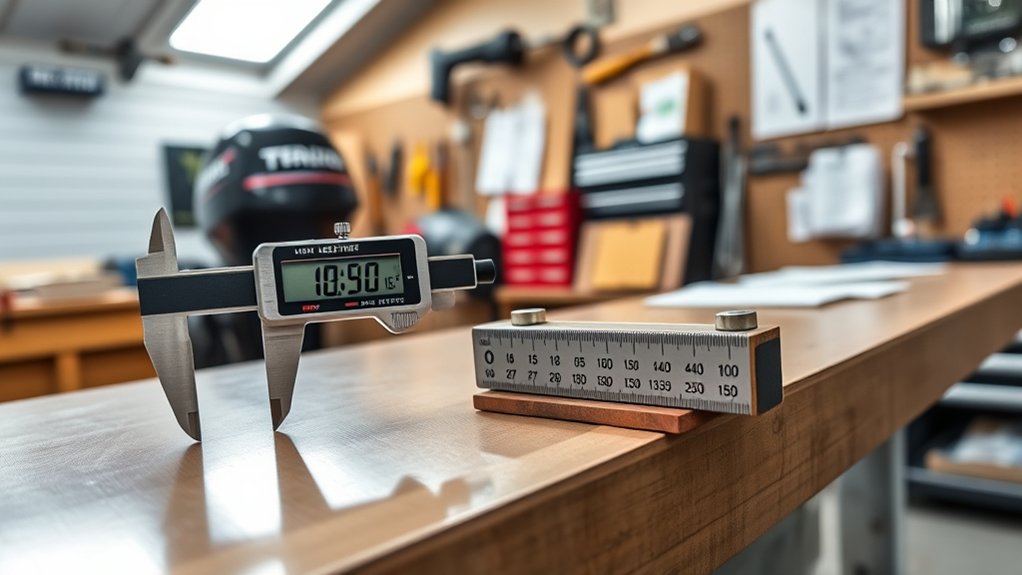
Although measuring an outboard motor shaft length may seem straightforward, having the right tools guarantees precision and efficiency. You’ll need a sturdy tape measure or a rigid ruler to obtain an accurate length from the transom clamp to the propeller shaft end.
Measuring your outboard motor shaft demands the right tools for precise and efficient results.
Digital calipers can help with finer measurements, especially when assessing the diameter relevant to outboard ergonomics. A straight edge or level ensures your measurements remain true, preventing errors caused by misalignment.
Additionally, keep a notepad or digital device handy to record exact figures, facilitating propeller maintenance and replacement decisions. Using these essential tools will streamline your process, enhancing accuracy and supporting the motor’s optimal performance.
Avoid makeshift instruments; precision tools protect your investment and uphold safety standards during maintenance.
How to Measure Your Outboard Motor Shaft
With the proper tools in hand, you can now measure your outboard motor shaft length accurately. Avoid any irrelevant topic or off topic discussion, focusing strictly on the measurement process.
First, position the motor on the transom as it would sit in the water. Then, measure from the top of the mounting bracket to the bottom of the cavitation plate (not the propeller). Precision is key; misreading here leads to errors later.
Remember:
- Use a tape measure or ruler calibrated in millimeters or inches
- Ensure the motor is vertical and stable during measurement
- Measure twice to confirm accuracy
- Record the measurement clearly for reference
Staying on point ensures you get the exact shaft length needed without confusion or distractions.
What Happens If Your Shaft Length Is Too Short or Too Long?
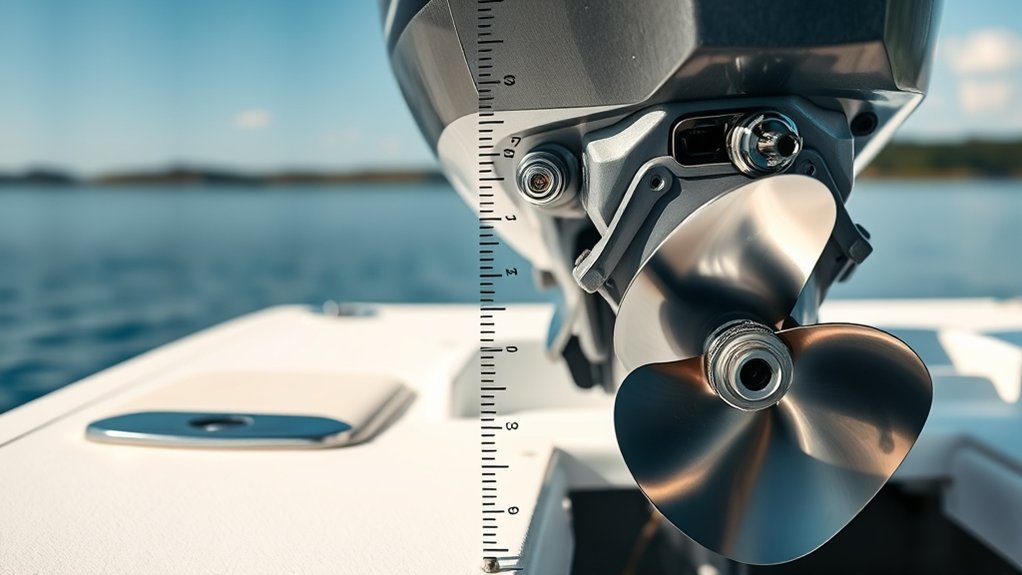
How does having the wrong shaft length affect your outboard motor’s performance? If your shaft is too short, it won’t fully submerge the propeller, causing cavitation and loss of thrust. This compromises handling and can overheat the engine due to inadequate water cooling.
Conversely, a shaft that’s too long risks hitting the boat’s hull or dragging underwater objects, increasing drag and fuel consumption. Both scenarios highlight critical shaft compatibility issues.
Choosing an incorrect length also leads to installation pitfalls, such as improper mounting angles and stress on the motor brackets, which can cause premature wear or structural damage.
Ensuring precise shaft length measurement is essential to maintain optimal motor efficiency, protect mechanical components, and avoid costly repairs or performance degradation.
Differences Between Short, Standard, and Long Outboard Motor Shafts
What exactly sets short, standard, and long outboard motor shafts apart? The key difference lies in their length, designed to fit various transom heights and watercraft types. Avoiding unrelated topic or off topic discussion, focus on these practical distinctions:
- Short shafts (15 inches) suit small boats with low transoms, offering better maneuverability.
- Standard shafts (20 inches) fit most average-sized boats and provide ideal propeller immersion.
- Long shafts (25 inches) are for boats with high transoms or deep hulls, preventing ventilation issues.
- Shaft length directly impacts engine performance, cooling, and handling.
Understanding these differences ensures you select the correct shaft length, maintaining efficiency and preventing damage without delving into unrelated topic areas or off topic discussion.
How to Measure Shaft Length on an Installed Motor
To measure the shaft length on an installed motor, you’ll need a tape measure and a straightedge for accuracy. Start by positioning the straightedge on the transom, then measure from the top of the transom down to the cavitation plate on the shaft.
Follow this procedure carefully to ensure you get an exact measurement without removing the motor.
Tools Needed
Accurate measurement of an outboard motor’s shaft length requires a few essential tools that guarantee precision and ease during the process. Having the right equipment streamlines your outboard maintenance and helps avoid errors that could affect your boat electronics or overall performance.
You’ll need:
- A tape measure or rigid ruler, preferably in metric and imperial units, for exact length readings
- A straight edge or level to ensure measurements are taken parallel to the motor shaft
- A flashlight to illuminate hard-to-see areas during installation
- A marker or chalk to mark measurement points clearly without damaging surfaces
These tools help you obtain consistent, reliable measurements while minimizing guesswork and ensuring your motor fits perfectly for optimal operation.
Measurement Procedure
How do you guarantee the shaft length of your outboard motor is measured correctly while it’s installed? First, ensure the motor is securely mounted in its usual operating position to maintain accuracy and outboard safety.
Use a tape measure, starting from the top edge of the transom where the motor mounts, down to the bottom of the anti-ventilation plate, which sits just above the propeller. Record this distance precisely.
Avoid moving the motor during measurement to prevent errors. Proper shaft length measurement is critical for optimal motor performance and prevents damage during boating storage, where incorrect sizing can cause stress or misalignment.
Always double-check your reading to confirm accuracy before ordering parts or making adjustments. This method ensures your motor fits perfectly and operates safely.
Choosing the Right Shaft Length for Your New Motor
Why does selecting the correct shaft length matter for your outboard motor? Choosing the proper shaft length ensures peak performance, enhances shoreline safety, and maximizes fuel efficiency. An incorrect length can cause cavitation, reduce thrust, and increase wear.
When selecting your motor’s shaft length, consider these factors:
- Transom height: match shaft length to transom height for proper propeller immersion
- Water conditions: deeper shafts for rough or choppy waters improve stability
- Boat design: hull shape and size affect shaft length requirements
- Usage patterns: frequent shallow-water navigation demands shorter shafts to avoid damage
Common Mistakes When Measuring Outboard Motor Shaft Length
Where do most people go wrong when measuring outboard motor shaft length? A common mistake is misunderstanding outboard terminology, especially confusing the shaft length with other dimensions like the transom height or engine mounting bracket. You need to measure from the mounting bracket’s top to the bottom of the propeller hub accurately.
Another pitfall is neglecting to account for the transom’s actual thickness and shape, which affects proper shaft length selection. Improper measurement leads to installation pitfalls such as cavitation, poor performance, or damage to the motor.
Also, many overlook verifying measurements against the boat’s specifications or fail to measure multiple points on uneven transoms. To avoid errors, use precise tools and always cross-check your measurements, ensuring alignment with both outboard terminology and your boat’s requirements.
Frequently Asked Questions
How Does Shaft Length Affect Fuel Efficiency?
You’ll see fuel efficiency drop if shaft length lacks measurement accuracy, causing poor mounting alignment. This misalignment increases drag and engine strain, so ensuring precise shaft length measurement optimizes performance and conserves fuel effectively.
Can Shaft Length Impact Motor Warranty?
When it comes to warranties, you can’t cut corners. Incorrect shaft length measurement intervals might void coverage.
Ensuring precise measurements protects your warranty, so always follow manufacturer specs carefully to avoid unexpected issues and maintain full warranty benefits.
Are There Specific Shaft Lengths for Saltwater vs. Freshwater?
Yes, you’ll find shaft compatibility varies between saltwater and freshwater motors due to corrosion concerns. Saltwater shafts often use corrosion-resistant materials or coatings, ensuring durability, while freshwater shafts may not require such specific corrosion protection.
How Often Should Shaft Length Be Re-Measured?
You should re-measure your shaft length annually or whenever you switch boats or motors. Maintaining a consistent measurement cadence ensures optimal performance and prevents damage from incorrect shaft length installation.
Does Shaft Length Influence Boat Speed or Performance?
You’d think shaft length is just a trivial detail, but it directly affects outboard mounting and hull vibrations. If it’s wrong, you’ll lose speed and performance, so precise measurement is essential for ideal results.
Conclusion
So, you’ve measured your outboard motor shaft length like a pro—no guesswork, no wild guesses. Remember, too short and you’re basically running a motor that’s shy of its duties; too long and you’re dragging the ocean floor like it’s a fashion statement.
Get it right, or you’ll be the captain of cavitation and overheating. Precision isn’t just for engineers—it’s your ticket to smooth, efficient boating without the drama.
When it comes down to it, how do you measure outboard motor shaft length? Getting this measurement spot on ensures your motor performs at its best every time.