You might think a motor shaft journal end is just a simple shaft extension, but it’s actually an essential, precisely machined component that directly affects bearing performance and overall motor reliability.
Its diameter and surface finish must be exact to maintain proper lubrication and minimize wear.
Understanding how this small yet crucial part functions can reveal why overlooking it risks costly failures and inefficiencies in your drive system.
Key Takeaways
- The motor shaft journal end is the portion of the shaft designed to interface precisely with bearings or other mechanical components.
- It requires exact diameter alignment with the bearing bore to avoid mismatches that increase friction and wear.
- Tight tolerances maintain a consistent lubrication film, preventing frictional disruptions and ensuring smooth shaft rotation.
- The journal end directly influences shaft balance, rotation stability, and overall motor performance under load.
- Typically made from hardened steel alloys, the journal end balances durability, wear resistance, and dimensional stability.
What Is a Motor Shaft Journal End?
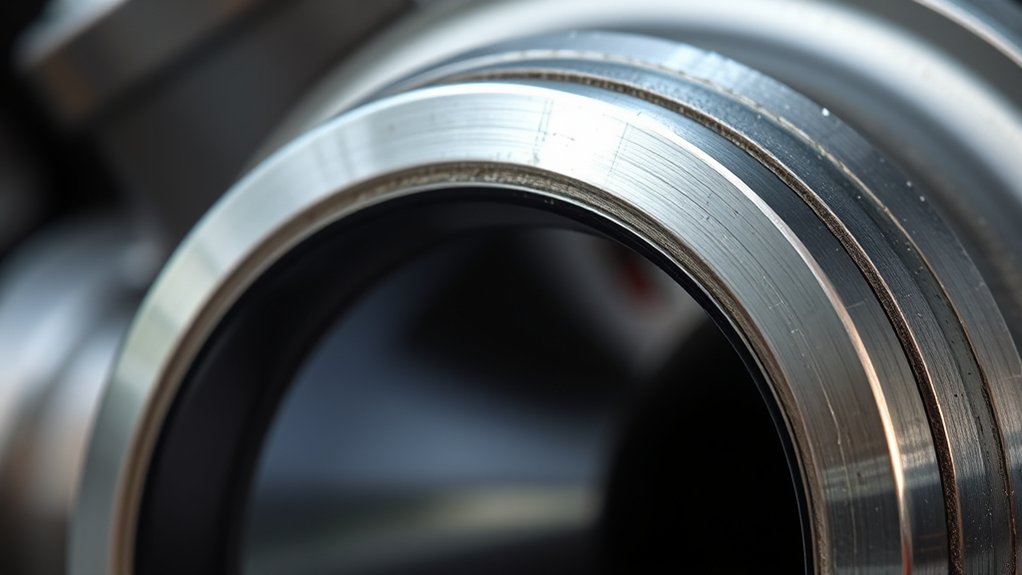
A motor shaft journal end refers to the specific portion of a motor shaft designed to interface with bearings or other mechanical components. When you examine this area, you’ll notice the critical role of the journal diameter, which must align precisely with the bearing bore to avoid bore mismatch.
If the journal humor, the lubrication film between the journal and bearing, is inadequate due to dimensional inconsistencies, you risk increased friction, wear, and premature failure. You need to ensure the journal end maintains tight tolerances, as even minor deviations can disrupt the journal humor, compromising the hydrodynamic lubrication essential for smooth rotation.
Why the Journal End Matters in Motor Performance
Why does the journal end hold such critical importance in motor performance? It directly influences balance optimization by determining how evenly the motor shaft rotates under load. An improperly designed journal end creates imbalances, leading to vibrations that reduce efficiency and increase wear.
Additionally, the journal end affects energy storage within the rotating system. Its geometry and mass distribution impact the shaft’s moment of inertia, which governs how effectively the motor can store and release kinetic energy during operation.
By ensuring precise dimensions and surface finishes at the journal end, you enhance bearing support and reduce friction losses. This precision not only maintains system stability but also improves dynamic response, enabling better control over motor torque and speed.
Ultimately, the journal end’s role is vital for achieving reliable, high-performance motor operation.
How the Motor Shaft Journal End Fits Into Shaft Design
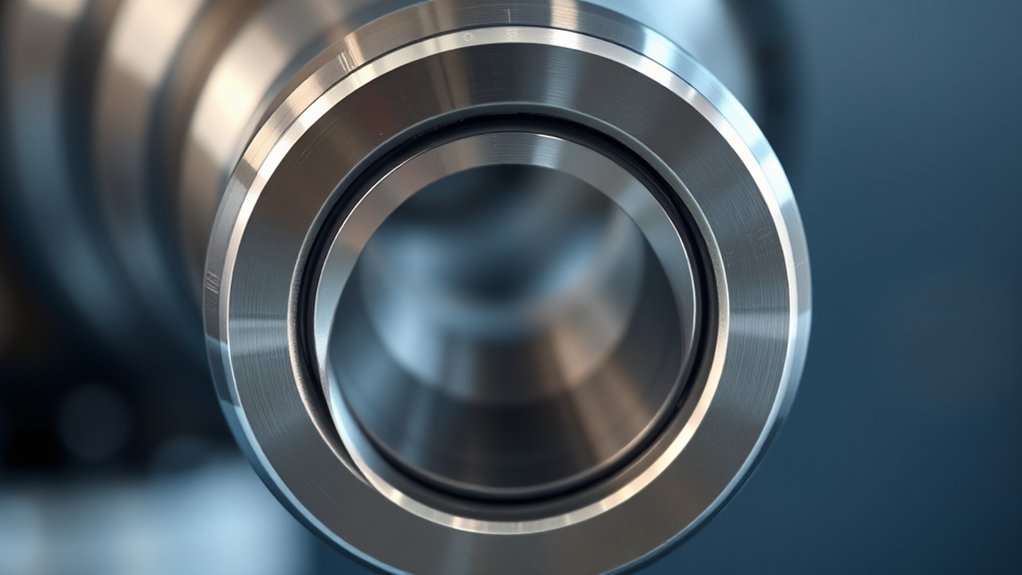
How does the motor shaft journal end integrate with the overall shaft design to ensure optimal performance? The journal end acts as a critical interface where the shaft’s mechanical integrity and functional precision converge.
You’ll find the journal end designed to accommodate an end cap, which protects against contamination and secures the assembly. Additionally, the shaft sleeve often fits over the journal end to provide wear resistance and simplify maintenance without compromising shaft dimensions.
This integration ensures that the shaft maintains alignment and dimensional stability under operational loads. By carefully selecting materials and tolerances for the journal end, including the end cap and shaft sleeve, you optimize durability and reduce stress concentrations.
This precise fit within the shaft design directly influences motor reliability and longevity.
How Journal Ends Support Bearings
Where exactly do journal ends fit in bearing support within motor shafts? Journal ends act as the critical interface transferring loads from the shaft to the bearing, ensuring stability and minimizing wear. They manage irreversible reactions caused by continuous friction and stress, preserving bearing integrity over time.
Quantum tunneling effects, though subtle, influence the microscopic adhesion and sliding at the journal interface, affecting lubrication efficiency.
| Function | Impact on Bearings |
|---|---|
| Load Transmission | Maintains shaft alignment |
| Friction Management | Reduces wear and tear |
| Surface Interaction | Controls molecular adhesion |
Common Materials for Motor Shaft Journal Ends
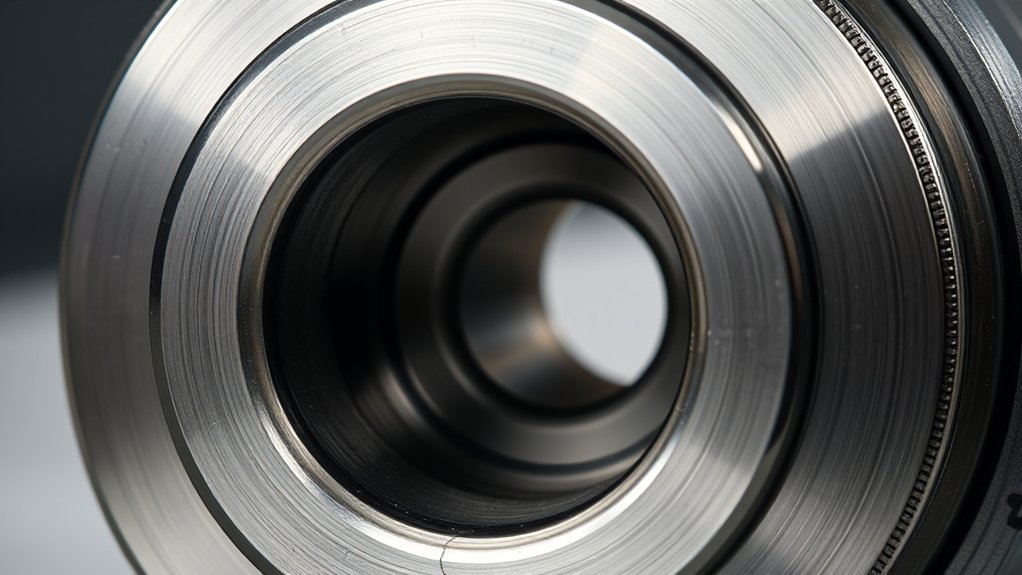
Understanding the role journal ends play in load transmission and friction management helps clarify why material selection directly impacts bearing performance and longevity. You’ll find that common materials for motor shaft journal ends include hardened steel alloys like AISI 52100, which offer high fatigue resistance and wear durability.
Stainless steels provide corrosion resistance but may compromise hardness. Sometimes, bronze or brass is used in low-load applications, though these are less common. Avoid considering irrelevant topics such as electrical insulation properties or unrelated concepts like polymer composites, which don’t meet the mechanical demands here.
Selecting the appropriate material ensures optimal surface hardness, dimensional stability, and compatibility with lubrication regimes, factors critical to preventing premature bearing failure. Material choice is a foundational decision that you must approach analytically to enhance motor shaft reliability.
How Journal End Design Impacts Motor Efficiency
You’ll find that optimizing journal end design directly reduces friction, which enhances motor efficiency. Choosing materials with low wear rates and high thermal conductivity further minimizes energy loss.
Friction Reduction Techniques
How does the design of a motor shaft journal end influence friction levels and overall motor efficiency? By optimizing journal geometry, you reduce contact stress and minimize frictional losses.
Precise machining ensures uniform surface finish, which decreases abrasive wear and heat generation. Incorporating oil grooves or lubrication channels in the journal end design facilitates consistent lubricant distribution, preventing metal-to-metal contact.
Avoid considering irrelevant topics like unrelated concepts in aerodynamics or electrical insulation here; they don’t affect friction at the journal interface. Instead, focus on how journal diameter, clearance, and surface treatments directly impact friction reduction.
These design factors collectively enhance efficiency by lowering energy loss due to friction, improving heat dissipation, and extending motor lifespan. Consequently, a well-designed motor shaft journal end is pivotal for achieving optimal operational performance.
Material Selection Benefits
Why does the choice of material for a motor shaft journal end matter so much for efficiency? Selecting the right material directly influences friction, wear resistance, and thermal conductivity, all critical for optimal motor performance. You’ll want materials that minimize energy loss while enduring mechanical stresses.
For instance, advanced composites or hardened steels can reduce friction and extend service life, improving efficiency. Additionally, consider environmental impact; materials with lower carbon footprints or recyclability contribute to sustainable manufacturing.
However, balancing these benefits against manufacturing cost is vital. High-performance alloys may boost efficiency but raise production expenses. Ultimately, your material choice affects motor durability, energy consumption, and ecological footprint.
Signs of Wear and Damage on Journal Ends
You’ll want to recognize common wear patterns like scoring, pitting, and uneven surfaces on journal ends to prevent motor failure. Early detection of these damages through regular inspection can save you costly repairs and downtime.
Focus on identifying subtle changes in texture and shape that signal developing issues.
Common Wear Patterns
Wear patterns on motor shaft journal ends reveal essential information about the operational condition and potential issues within the bearing system. You’ll often encounter common wear patterns such as scoring, which indicates abrasive particles between the journal and bearing.
Another frequent pattern is pitting, a sign of fatigue or corrosion, often overlooked as an irrelevant topic but vital for diagnosis. You must also recognize signs of uneven wear, which can result from misalignment or improper lubrication, not a red herring as sometimes assumed.
Additionally, you may see heat discoloration, signaling excessive friction or insufficient cooling. By accurately identifying these wear patterns, you can avoid misdiagnosis and focus maintenance efforts effectively, ensuring motor longevity and reliable performance.
Detecting Damage Early
Recognizing early signs of damage on motor shaft journal ends allows you to address issues before they escalate into costly failures. Pay close attention to surface irregularities such as scoring, pitting, and corrosion, which indicate lubrication breakdown or contamination.
Measuring journal surface roughness and diameter deviation provides quantitative data to track wear progression precisely. Early detection minimizes unexpected downtime, reducing exposure to inflation risk driven by repair cost increases and market volatility affecting spare parts availability.
Implement regular vibration analysis and thermographic inspections to identify anomalies signaling misalignment or bearing distress. By systematically monitoring these parameters, you maintain operational reliability and optimize maintenance schedules.
This proactive approach mitigates financial risks and ensures the motor shaft journal end functions within design tolerances, safeguarding your equipment investment efficiently and effectively.
Measuring and Inspecting Motor Shaft Journal Ends
How do you accurately measure and inspect motor shaft journal ends to ensure optimal performance? Start by using precision instruments like micrometers and dial indicators to measure diameter, roundness, and surface finish.
Avoid topic drift by focusing strictly on parameters affecting journal ends, steering clear of off-topic pairings such as unrelated shaft components. Document measurements meticulously to detect wear or deformation early.
| Inspection Parameter | Recommended Tool |
|---|---|
| Diameter Accuracy | Micrometer |
| Surface Finish | Profilometer |
| Roundness | Dial Indicator |
Regular inspection prevents failure by identifying deviations from specifications. You should also check for scratches, corrosion, or scoring, which compromise journal integrity and motor reliability.
Choosing the Right Motor Shaft Journal End
Accurate measurement and inspection provide the data you need to select the appropriate motor shaft journal end for your application. When choosing, analyze wear patterns carefully; uneven or excessive wear indicates misalignment or inadequate support, signaling the need for a more robust or differently designed journal end.
Consider materials and finishes that minimize friction and resist wear. Address lubrication problems by selecting a journal end compatible with your lubrication system, whether grease, oil, or advanced synthetic lubricants, to ensure consistent film formation and prevent metal-to-metal contact.
Also, evaluate operating conditions such as load, speed, and environment, as these directly influence your choice. By integrating precise measurements with operational parameters, you can optimize performance, extend service life, and reduce maintenance frequency of the motor shaft journal end effectively.
Troubleshooting Common Motor Shaft Journal End Problems
You’ll want to start by inspecting the shaft for signs of wear that could affect performance.
Next, check the bearing alignment carefully, as misalignment often leads to premature failure.
Finally, evaluate the lubrication system to guarantee it’s delivering adequate and clean lubricant to minimize friction and heat buildup.
Identifying Shaft Wear
When should you suspect shaft wear on a motor shaft journal end? You should act promptly when you notice irregular wear patterns or signs of lubrication issues. Identifying shaft wear early prevents further damage and costly repairs.
Look for these indicators:
- Uneven or grooved surfaces on the journal end
- Increased vibration or noise during operation
- Evidence of oil film breakdown or contamination
- Elevated operating temperatures around the shaft area
These symptoms often point to improper lubrication or mechanical stress causing material degradation. By precisely analyzing wear patterns and lubrication conditions, you can pinpoint shaft wear before it escalates.
Early detection allows you to intervene with targeted maintenance, ensuring the motor’s reliability and extending its service life.
Bearing Alignment Issues
Detecting irregular wear patterns or lubrication breakdown often signals underlying bearing alignment issues at the motor shaft journal end. You need to carefully assess the bearing alignment, as even slight deviations can cause uneven load distribution, accelerating wear and reducing service life.
A common cause is shaft misfit, where the journal diameter does not perfectly match the bearing bore, leading to misalignment and excessive friction. To troubleshoot, measure the shaft and bearing dimensions precisely, and check for any signs of deformation or improper installation.
Realign the bearing using shims or adjust mounting surfaces to ensure the shaft rotates concentrically within the bearing. Proper alignment minimizes vibration, heat generation, and mechanical stress, preserving motor efficiency and preventing premature failure.
Lubrication Problems
Frequently, lubrication problems at the motor shaft journal end arise from improper grease application or contamination, leading to increased friction and accelerated wear. You need to identify these issues early to prevent irreversible lubrication damage that compromises bearing life.
Consider these troubleshooting points:
- Verify grease type and quantity; over- or under-lubrication disrupts the lubrication film.
- Inspect for contaminants like dust or moisture that degrade lubricant properties.
- Monitor temperature; inadequate magnetic cooling can cause lubricant breakdown.
- Check for surface damage indicating metal-to-metal contact from lubrication failure.
Frequently Asked Questions
How Do Motor Shaft Journal Ends Differ in Electric vs. Combustion Engines?
You’ll find motor shaft journal ends in electric engines face less electrical wear but require precise lubrication impact management.
Combustion engines endure higher mechanical stress, demanding more robust lubrication to handle heat and friction effectively.
Can Journal Ends Be Repaired or Must They Always Be Replaced?
You can repair journal ends if journal end dimensions remain within tolerances, but repair feasibility depends on damage severity. Minor wear often allows machining or welding, while severe deformation usually requires replacement to maintain proper function and reliability.
What Lubrication Methods Are Best for Extending Journal End Life?
Like a well-oiled machine, your lubrication strategy should combine consistent grease application and oil circulation systems to optimize wear prevention.
Using synthetic lubricants under precise monitoring extends journal end life effectively and reduces friction-induced damage.
Are Journal Ends Standardized Across Different Motor Manufacturers?
You’ll find journal ends are not standardized across manufacturers, meaning dimensions and tolerances vary. This lack of uniformity requires careful verification to ensure compatibility when replacing or repairing motor components involving journal ends.
How Does Temperature Affect Motor Shaft Journal End Performance?
You’ll notice temperature effects accelerate journal end wear, increase thermal expansion, and reduce lubrication efficiency.
These factors cause dimensional changes, increase friction, and lead to premature failure, so monitoring heat levels is essential for optimal motor shaft performance.
Conclusion
You can’t underestimate the motor shaft journal end’s role—it’s the linchpin ensuring smooth rotation and bearing alignment. Like a knight’s armor protecting essential joints, its precise dimensions and surface finish guard against friction and wear.
By regularly inspecting and choosing the right material, you maintain superior lubrication and performance. Neglecting this critical interface risks costly downtime.
So, keep your journal ends in prime condition to guarantee your motor runs reliably under all loads, emphasizing the importance of the motor shaft journal end.