Just as a conductor relies on subtle cues to keep an orchestra in sync, your engine depends on the crank shaft sensor’s precise feedback to maintain timing. The crank shaft sensor plays a vital role in monitoring the position and rotational speed of the crankshaft, which is essential for engine management systems.
You might assume this essential component is easy to spot, but its location varies widely across different vehicles and engine designs. Understanding exactly where it sits—and why—can be crucial for accurate diagnostics and repairs.
Let’s explore how placement differs and what that means for you. Knowing the sensor’s location helps in troubleshooting issues related to engine performance and starting problems.
Key Takeaways
- The crankshaft sensor is typically mounted near the crankshaft, either at the front or rear of the engine block.
- Common locations include near the crankshaft pulley, flywheel housing, or timing cover area.
- Honda models often have the sensor near the flywheel housing, while Ford places it at the front of the engine block.
- BMW sensors are usually close to the crankshaft pulley, and Toyota sensors are often near the timing cover.
- The sensor is a small cylindrical component with an electrical connector designed to detect crankshaft rotation electronically.
What Does the Crankshaft Sensor Do?
How does the crankshaft sensor impact your engine’s performance? It precisely monitors the crankshaft’s position and rotational speed, providing critical data to the engine control unit (ECU). This information guarantees accurate timing for fuel injection and ignition, optimizing combustion efficiency.
Contrary to common myths, the sensor does not directly improve fuel economy, but a faulty sensor can cause misfires or stalling, indirectly affecting fuel consumption. When the sensor malfunctions, the ECU struggles to synchronize engine operations, leading to poor acceleration and increased emissions.
Understanding its function helps you diagnose engine issues effectively. By maintaining accurate crankshaft data input, your engine runs smoothly, maximizing performance and reliability without sacrificing fuel economy due to sensor-related errors.
Where Is the Crankshaft Sensor Usually Located?
Where exactly can you find the crankshaft sensor in your vehicle? Typically, it’s mounted near the crankshaft itself, often at the front or rear of the engine block. Its precise position depends on crankshaft anatomy, as the sensor must monitor rotational position accurately to feed data into automotive electronics systems.
Here’s a quick overview:
| Location Area | Reason for Placement |
|---|---|
| Front of Engine | Close to crank pulley |
| Rear of Engine | Near flywheel or flexplate |
| Side of Engine Block | Adjacent to crankshaft sensor ring |
This proximity ensures the sensor detects the teeth or notches on the crankshaft, translating mechanical rotational data into electrical signals for engine timing and fuel injection control.
Crankshaft Sensor Placement by Make and Model
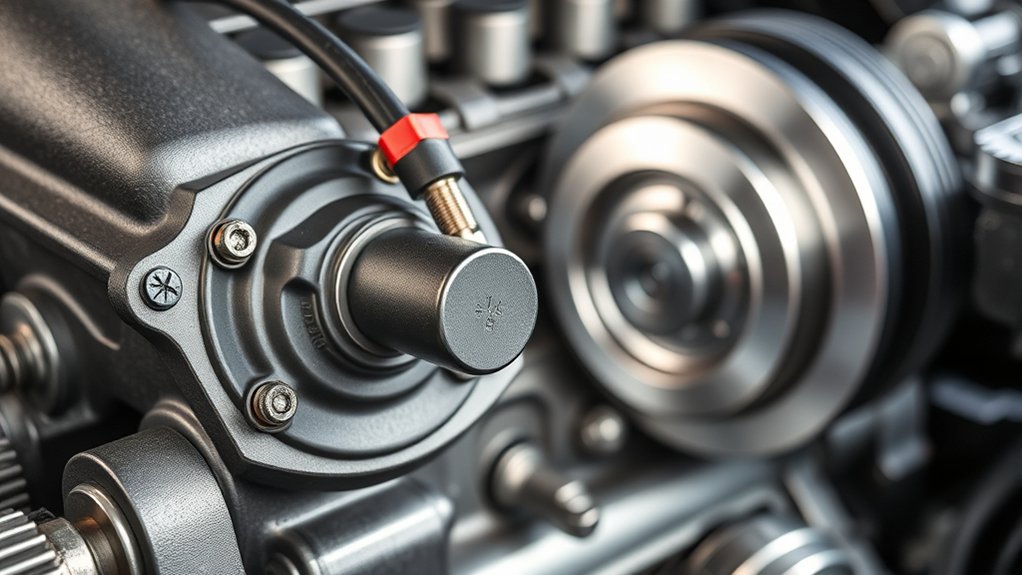
Different vehicle manufacturers position the crankshaft sensor based on engine design and layout, affecting accessibility and diagnostic approaches. For example, Honda often places the sensor near the flywheel housing, while Ford typically mounts it at the front of the engine block.
BMW usually situates it close to the crankshaft pulley, and Toyota often integrates it near the timing cover. Understanding these variations is crucial; mixing subtopic irrelevancy or unrelated ideas about other sensors can confuse your diagnostic process.
When referencing specific makes and models, focus strictly on placement differences without diverging into sensor function or identification methods. This targeted analysis helps you quickly locate the sensor for repair or replacement, optimizing your workflow and avoiding wasted time on irrelevant details.
How to Visually Identify the Crankshaft Sensor
You’ll typically find the crankshaft sensor mounted near the engine’s crankshaft pulley or flywheel housing.
Visually, it’s a small, cylindrical component with an electrical connector and a metal or plastic casing designed to detect rotational speed. Identifying these features helps you distinguish the sensor from nearby parts during inspection.
Common Sensor Locations
How can you accurately identify the crankshaft sensor among the engine components? Focus on common sensor locations, which vary depending on engine design. Typically, you’ll find the sensor near the crankshaft pulley, flywheel, or engine block.
Locating it precisely is essential for any DIY project involving engine diagnostics or tool maintenance, ensuring you target the right component without guesswork.
| Location | Description |
|---|---|
| Near Crankshaft Pulley | Mounted close to the front of the engine, sensing rotation. |
| Flywheel Area | Positioned at the rear, detecting crankshaft position via flywheel teeth. |
| Engine Block | Attached directly to the block, sensing rotational speed internally. |
Knowing these locations streamlines sensor checks and replacements, enhancing accuracy and efficiency.
Sensor Appearance Features
Where can you spot the crankshaft sensor among other engine components? Visually, it resembles a small, compact cylinder with a smooth, rounded tip, somewhat like a miniature disco ball in its reflective quality. This sensor usually has a robust plastic or metal body with an attached wiring harness, akin to a vending machine’s connector slot, designed for secure electrical connections.
Its size typically ranges from 2 to 4 inches in length, making it smaller than many nearby parts. The sensor’s key identifying feature is its proximity to the crankshaft, often mounted near the engine block or transmission bell housing. Its surface is free of complex moving parts, highlighting its static, precise design aimed at detecting the crankshaft’s rotational position electronically.
Tools Needed to Inspect the Crankshaft Sensor
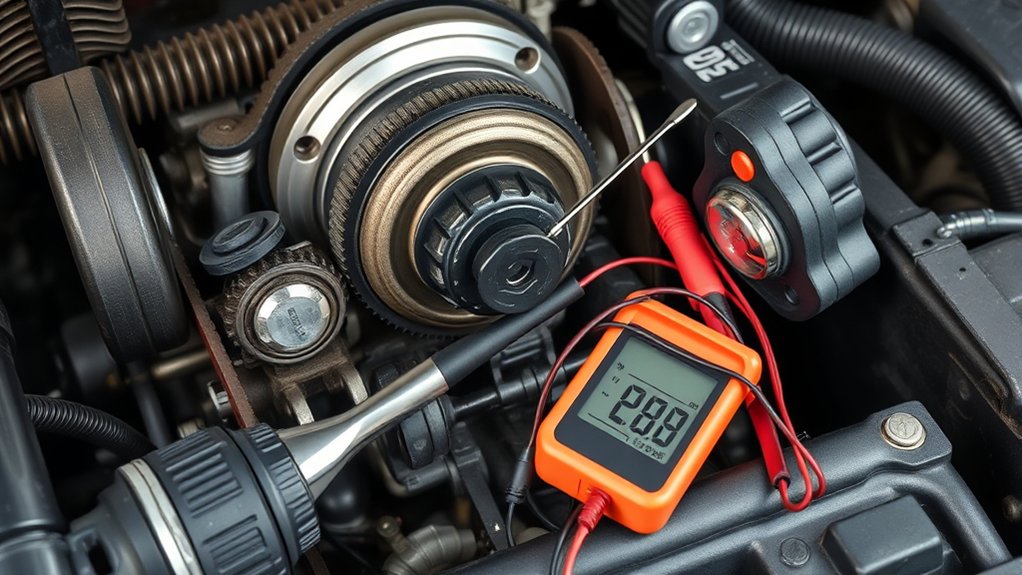
What tools are essential to accurately inspect the crankshaft sensor? You’ll need a digital multimeter to measure resistance and voltage, ensuring the sensor functions within manufacturer specifications.
A scan tool or OBD-II reader lets you check for sensor-related error codes, eliminating irrelevant topics like unrelated concept diagnostics unrelated to the sensor itself.
A basic socket set is necessary to remove sensor mounting bolts precisely without damage. Additionally, a flashlight or inspection mirror helps you visually examine the sensor and its wiring in tight engine compartments.
Avoid using generic tools that don’t provide accurate readings, as this can lead to misdiagnosis. With these specific tools, you can conduct a focused, technical inspection, isolating sensor issues efficiently.
How to Access the Crankshaft Sensor Safely
Accessing the crankshaft sensor requires careful attention to safety and proper procedure to prevent damage to the sensor or surrounding components. First, disconnect the battery to eliminate electrical hazards and avoid unintended sensor activation.
Use appropriate tools to remove any obstructing parts, ensuring you maintain a clean workspace to prevent contamination. During drivetrain maintenance, avoid applying excessive force on connectors or wiring harnesses linked to the sensor.
Once exposed, handle the sensor delicately to preserve its integrity for accurate sensor calibration. Avoid touching the sensor tip or electronics directly, as oils or debris can affect performance. Follow the vehicle manufacturer’s guidelines precisely to ensure you don’t compromise sensor function or misalign its position, which could result in inaccurate readings and operational issues.
Signs Your Crankshaft Sensor Is Failing
You’ll notice engine misfires and hesitation when the crankshaft sensor starts to fail, impacting ignition timing. Stalling can occur unexpectedly as the sensor provides erratic signals to the ECU.
Additionally, a persistent check engine light often indicates sensor-related issues that require diagnostic attention.
Engine Misfire Symptoms
How can you tell if your crankshaft sensor is failing? One clear indicator is engine misfire symptoms caused by improper timing signals. When the sensor malfunctions, your engine control unit (ECU) receives erratic or no data about crankshaft position, disrupting ignition timing and fuel injection.
This results in inconsistent combustion cycles, often producing rough engine noise and vibrations. You may notice decreased fuel economy as the ECU compensates for inaccurate timing by injecting more fuel, leading to inefficient combustion. Additionally, misfires can trigger the check engine light and cause intermittent power loss.
Monitoring these signs precisely allows you to diagnose crankshaft sensor issues early, preventing further engine damage and ensuring optimal performance without guesswork or unnecessary part replacements.
Stalling And Hesitation
Why does your engine suddenly stall or hesitate during acceleration? Often, this points to a failing crankshaft sensor disrupting the engine’s timing signals. Ignoring this and diving into irrelevant speculation or unrelated anecdote won’t help you pinpoint the issue. Instead, focus on these technical signs:
- Engine stalls intermittently without warning
- Hesitation or jerking during throttle input
- Difficulty maintaining consistent RPMs under load
- Sudden power loss during acceleration
These symptoms occur because the sensor fails to accurately relay crankshaft position data to the ECU, causing misfires or improper fuel injection timing. Recognizing stalling and hesitation as direct indicators of sensor malfunction can guide you to correct diagnostics and timely repairs, avoiding misdiagnosis that stems from unrelated anecdote or irrelevant speculation.
Check Engine Light
Beyond stalling and hesitation, the check engine light often signals a failing crankshaft sensor. When this sensor malfunctions, the engine control unit (ECU) detects irregularities in crankshaft position data, triggering the warning light.
You should never dismiss this signal as an irrelevant topic or a random discussion, since it directly impacts engine timing and fuel injection. Use an OBD-II scanner to retrieve specific error codes, commonly P0335, indicating crankshaft sensor issues.
Ignoring this light can lead to severe engine performance degradation or complete shutdown. By addressing the check engine light promptly, you maintain precise engine control and prevent costly repairs.
How to Test a Crankshaft Sensor
Where should you begin when testing a crankshaft sensor? Start by locating the sensor near the timing belt, as its position is critical for monitoring crankshaft rotation. A malfunctioning sensor can disrupt timing signals, negatively impacting fuel economy and engine performance.
Begin testing a crankshaft sensor by locating it near the timing belt for accurate rotation monitoring.
To test the sensor effectively, follow these steps:
Disconnect the sensor’s electrical connector and inspect for corrosion or damage. Use a digital multimeter to measure resistance; compare readings to manufacturer specifications.
Perform an output voltage test by cranking the engine and observing sensor voltage fluctuations. Check the sensor’s physical alignment with the timing belt and ensure no debris obstructs its signal.
What Happens if You Drive With a Faulty Crankshaft Sensor
If you drive with a faulty crankshaft sensor, you’ll likely experience engine performance issues such as misfires or stalling. This condition can create potential safety risks by causing unpredictable engine behavior while on the road.
Ignoring the problem may also lead to increased repair costs due to further engine damage.
Engine Performance Issues
How does a faulty crankshaft sensor impact your engine’s performance? When this sensor malfunctions, your engine control unit (ECU) loses accurate data on crankshaft position and speed, disrupting fuel injection and ignition timing. This results in several issues:
- Idle instability, causing your engine to stall or hesitate.
- Reduced fuel efficiency due to improper timing adjustments.
- Difficulty starting the engine or frequent misfires.
- Potential irreversible damage from running the engine under improper timing conditions.
Ignoring these symptoms risks escalating mechanical wear and costly repairs. By promptly addressing crankshaft sensor faults, you maintain optimal engine performance and prevent degradation. Understanding these performance issues helps you diagnose underlying causes while ensuring your engine operates smoothly and reliably.
Potential Safety Risks
Why should you never ignore a faulty crankshaft sensor while driving? Because it directly affects your vehicle’s safety systems and performance. A malfunctioning sensor can cause erratic engine behavior, which might lead to disabling airbags or incorrect tire pressure monitoring, both critical for safe operation.
The sensor’s data influences the ECU’s decisions, so failure compromises system integrity.
| Risk Factor | Effect on Vehicle | Safety Implication |
|---|---|---|
| Faulty Sensor Signal | Engine misfires | Sudden power loss, stalling |
| Sensor Failure | Disabling airbags | Reduced crash protection |
| Erroneous Data | Incorrect tire pressure | Poor handling, increased wear |
Ignoring it increases your risk on the road. Address sensor issues immediately to maintain safety system functionality.
Increased Repair Costs
What costs escalate when you continue driving with a faulty crankshaft sensor? Ignoring this issue leads to compounding mechanical failures, substantially increasing repair expenses. The sensor directly influences engine timing and fuel injection; neglecting it triggers downstream damage.
It’s crucial to avoid unrelated topic distractions or irrelevant discussion that might downplay these financial risks.
Specifically, you may face:
- Engine misfires causing catalytic converter damage
- Increased fuel consumption and inefficiency
- Extensive diagnostics beyond the sensor itself
- Potential engine stalling requiring costly towing and repairs
When and How to Replace a Crankshaft Sensor
When should you replace a crankshaft sensor? Replace it if you experience engine misfires, stalling, or erratic idling. Begin by disconnecting the battery and locating the sensor near the crankshaft pulley.
Inspect for damage or corrosion, especially around the fastening bolts. When removing the sensor, explore fastening bolts carefully to avoid stripping. Clean the mounting area thoroughly, discussing lubrication only if the manufacturer specifies it to ensure sensor longevity.
Install the new sensor, tighten bolts to the recommended torque, and reconnect the battery. Test the engine for smooth operation and error codes.
| Step | Action | Notes |
|---|---|---|
| Inspection | Check sensor and bolts | Look for corrosion/damage |
| Removal | Unscrew fastening bolts | Avoid stripping bolts |
| Cleaning | Clean mounting surface | Lubricate if specified |
| Installation & Test | Secure sensor, test engine | Use correct torque specs |
Frequently Asked Questions
Can a Faulty Crankshaft Sensor Affect Fuel Efficiency?
Yes, a faulty crankshaft sensor disrupts idle speed control and engine timing, reducing fuel efficiency. Since sensor placement affects signal accuracy, any malfunction leads your engine control unit to mismanage fuel injection, lowering overall performance.
How Much Does It Cost to Replace a Crankshaft Sensor?
Cost calculations commonly cluster around $150 to $300, combining parts and labor. You’ll find two-word ideas like “sensor replacement” and “engine diagnostics” essential, though unrelated topics like “coffee brewing” won’t impact this technical task.
Are Crankshaft Sensors Covered Under Car Warranties?
Crankshaft sensor warranty coverage depends on your car’s specific warranty terms. Typically, it’s included under powertrain warranties, but regular maintenance relevance affects this.
Check your contract carefully to confirm if sensor replacement is covered or considered maintenance.
Can a Bad Crankshaft Sensor Cause a No-Start Condition?
Yes, a bad crankshaft sensor can cause a no-start condition. Don’t fall for crankshaft sensor myths; faulty signals complicate startup diagnostic challenges by preventing proper engine timing and ignition.
This issue requires precise electronic troubleshooting to confirm sensor failure.
Do Crankshaft Sensors Require Regular Maintenance?
Crankshaft sensors generally don’t require regular maintenance, but you should follow maintenance tips like checking for damage or dirt buildup.
Sensor calibration is usually handled by the vehicle’s ECU, so manual calibration isn’t typically necessary.
Conclusion
Now that you know where the crankshaft sensor is and how essential it is for engine timing and performance, can you afford to overlook its maintenance? Ignoring signs of failure can lead to misfires or even engine stalling.
By regularly inspecting and testing this sensor with the right tools, you guarantee your engine runs smoothly and efficiently. Don’t wait until a faulty sensor causes bigger problems—stay proactive.
Keep your vehicle reliable by understanding the importance of the crankshaft sensor and addressing any issues promptly.