Jump-starting your vehicle involves more than just connecting cables—it requires careful attention to where to clamp jumper cables. You’ll want to attach the red positive clamp directly to the battery’s positive terminal or a reliable metal connection nearby.
The black negative clamp should find a clean, unpainted grounding point away from the battery. Choosing the correct spots ensures safety and effectiveness.
But there’s more to contemplate before you begin. Following the right steps can prevent damage and keep you safe throughout the process.
Key Takeaways
- Attach the red clamp to the positive terminal of the dead battery, identified by a plus (+) sign and red cover.
- Connect the other red clamp to the positive terminal or solid metal part linked to the good battery’s positive post.
- Clamp the black negative cable to the negative terminal of the good battery.
- Attach the remaining black clamp to a clean, unpainted metal surface or engine block away from the dead battery.
- Avoid clamping the negative cable directly to the dead battery’s negative terminal to reduce spark and explosion risk.
Where to Attach the Positive (Red) Jumper Cable
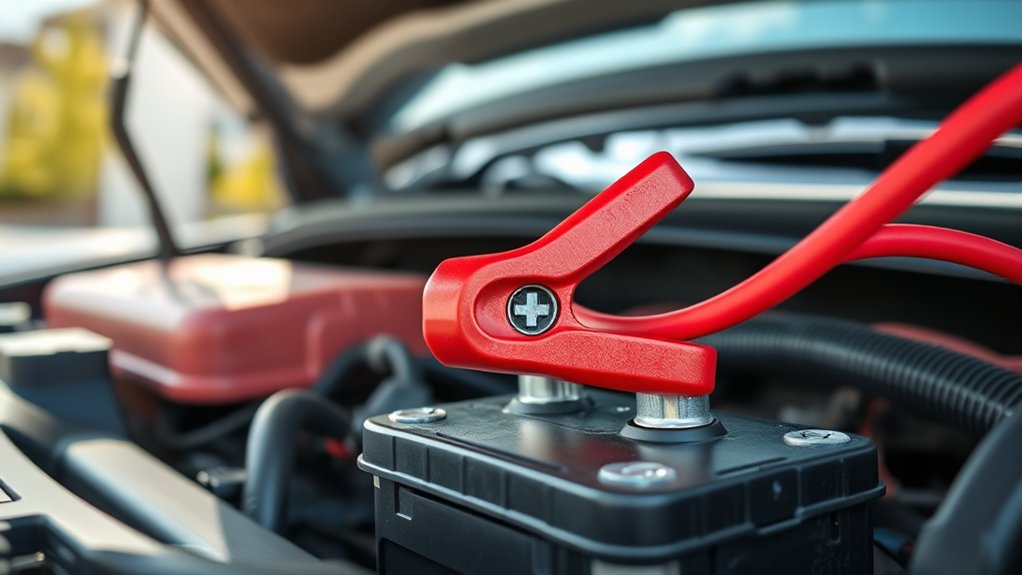
Where exactly should you connect the positive (red) jumper cable when jump-starting a vehicle? You must attach it directly to the positive terminal of the dead battery. This terminal is usually marked with a plus (+) sign and often has a red cover.
Following proper car battery safety, ensure the cable clamp is secure and makes good contact without touching any other metal parts. This prevents sparks and potential short circuits.
Adhering to jump start etiquette, avoid connecting the positive cable to painted surfaces or engine components, as this risks damage or poor conductivity. By connecting the positive cable precisely to the positive terminal, you ensure efficient power transfer and reduce hazards, maintaining a safe and effective jump-start procedure.
Where to Attach the Negative (Black) Jumper Cable Safely
To attach the negative (black) jumper cable, clamp it to a solid engine block ground rather than the battery’s negative terminal to reduce spark risk. Select a clean, unpainted metal surface to guarantee a good connection. This approach guarantees safety and proper current flow during the jump-start.
Engine Block Grounding
How do you ensure a safe and effective connection for the negative (black) jumper cable during engine block grounding? First, locate a clean, unpainted metal surface on the engine block, away from moving components and engine cooling parts.
This grounding point must provide a solid electrical path without risking sparks near the battery or fuel system. Avoid areas that can heat excessively or vibrate during operations like tire replacement.
Clamp the negative cable securely to this metal surface to complete the circuit safely. This method reduces the risk of electrical shorts and protects sensitive electronics.
Avoid Battery Negative Terminal
Attaching the negative (black) jumper cable directly to the battery’s negative terminal might seem straightforward, but it increases the risk of sparks and potential damage. To avoid battery negative terminal hazards, you should opt for engine block grounding or another secure, clean metal surface away from the battery.
This reduces the chance of explosive gases igniting near the battery. Here’s a clear comparison:
| Connection Point | Safety Consideration |
|---|---|
| Battery Negative Terminal | High spark risk, gas ignition |
| Engine Block Grounding | Low spark risk, stable connection |
| Clean Metal Surface | Safe, reduces damage potential |
| Battery Positive Terminal | Only for positive cable |
| Jumper Cable Clamp | Must be secure, corrosion-free |
Avoid battery negative terminal clamping to ensure a safe, effective jump-start.
Choose Clean Metal Surface
A clean metal surface offers the safest and most effective ground point for the negative (black) jumper cable. When choosing clamp positioning, look for unpainted, rust-free metal on the vehicle’s engine block or chassis. This ensures a solid electrical connection and minimizes sparking risks.
Avoid painted or oily areas, as they increase resistance and reduce current flow. Grounding alternatives like bolt heads or designated grounding points can also serve well if accessible. Always secure the clamp firmly to prevent movement during starting.
Proper clamp positioning on a clean metal surface stabilizes the electrical circuit, enhancing jump-start efficiency and safety. By prioritizing these grounding alternatives over the battery negative terminal, you mitigate hazards and improve jumper cable performance.
Why Avoid Clamping Jumper Cables on the Dead Battery’s Negative Terminal
Why should you avoid clamping jumper cables directly to the dead battery’s negative terminal? Connecting the negative clamp here increases the risk of creating a short circuit. When you attach the cable directly to the negative terminal, any spark produced during connection can ignite flammable gases emitted by the battery.
This ignition can cause an explosion, posing serious battery risk and personal injury. Additionally, the battery’s surface may be corroded or damaged, reducing the effectiveness of the connection and risking further damage. To minimize these hazards, it’s critical to avoid the dead battery’s negative terminal as a clamping point.
Instead, select a clean, unpainted metal surface on the vehicle’s frame or engine block to safely complete the circuit while mitigating electrical and safety risks.
Why You Should Use the Vehicle Frame or Engine Block as a Ground
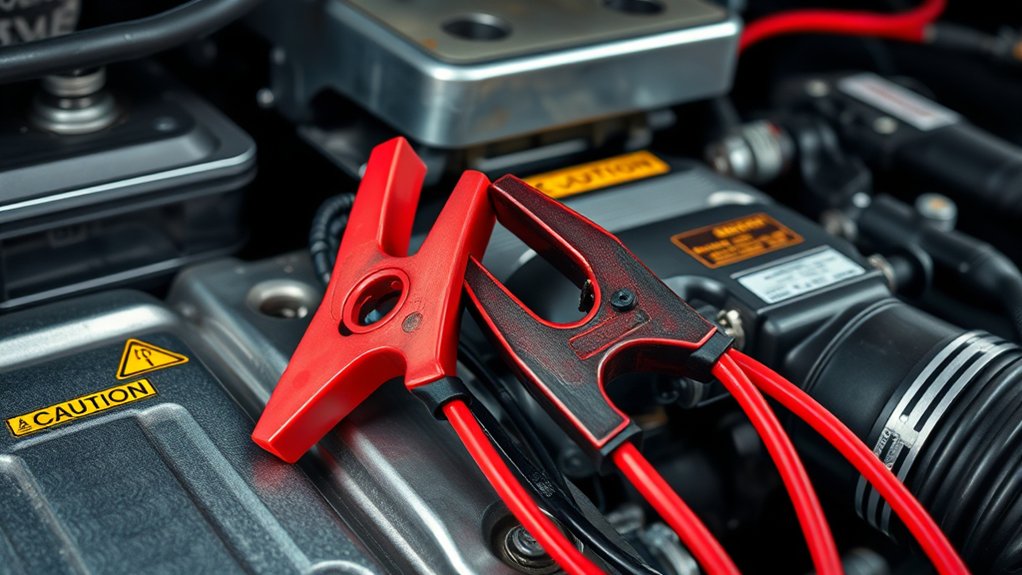
When you clamp the jumper cable to the vehicle frame or engine block, you create a safer ground connection that reduces the risk of sparks near the battery. This helps prevent potential damage from explosive gases that can accumulate around the battery terminals.
Using the frame or engine block as a ground guarantees a stable and secure electrical path for jump-starting.
Safety Benefits of Grounding
How does grounding to the vehicle frame or engine block enhance safety during jump-starting? Using these metal parts as your grounding point reduces electrical resistance and minimizes the risk of electrical shorts or sparks, which can be hazardous.
The vehicle frame or engine block provides a stable, conductive path for current flow, essential for maintaining circuit integrity. This practice is especially important when dealing with vehicles that incorporate alternative energy systems, where complex electronics require precise grounding to avoid damage.
Additionally, proper grounding supports towing safety by preventing electrical faults that could interfere with vehicle controls or trailer connections. By clamping negative jumper cables to the frame or engine block instead of the battery’s negative terminal, you ensure a safer, more reliable jump-start process while protecting both vehicles’ electrical systems.
Preventing Sparks and Damage
Grounding jumper cables to the vehicle frame or engine block markedly reduces the chance of sparks that can cause damage or injury during a jump-start. When you choose an unpainted metal surface on the frame or engine block for clamp placement, you assure a solid electrical ground, minimizing resistance and preventing electrical arcs.
This spark prevention technique is critical because attaching the negative clamp directly to the battery’s negative terminal can produce sparks near the battery, which may emit flammable gases. By using the frame or engine block, you divert the current safely away from the battery compartment, reducing explosion risks.
Always verify that the clamp contacts bare metal, avoiding painted or greasy areas, to maintain superior conductivity and ensure effective spark prevention during the jump-start process.
How to Clamp Jumper Cables Safely
Why is clamping jumper cables correctly essential? Proper clamping ensures battery safety and prevents electrical shorts or sparks during a jump start.
Proper clamping of jumper cables is crucial to ensure battery safety and prevent sparks during jump starts.
First, always connect the positive (red) clamp to the positive terminal of the dead battery. Then, attach the other positive clamp to the positive terminal of the good battery.
Next, connect the negative (black) clamp to the negative terminal of the good battery. Finally, clamp the remaining negative cable to an unpainted metal surface on the disabled vehicle’s engine block or chassis, away from the battery.
This grounding step minimizes spark risks near the battery, reducing explosion hazards. By following this precise sequence, you maintain circuit integrity and protect both vehicles’ electrical systems during the jump start process.
What to Do When Ideal Clamping Spots Aren’t Available
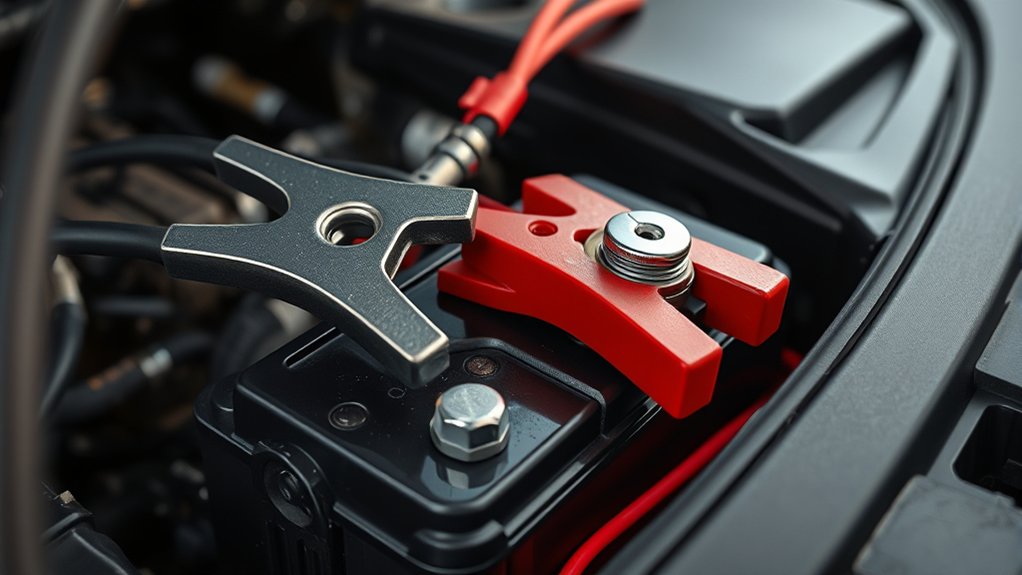
When you can’t find the ideal clamping spots on a vehicle, you’ll need to identify alternative secure locations that still assure a safe and effective connection. For the dead battery positive terminal, locate a solid, unpainted metal part connected directly to the battery’s positive post, such as a battery terminal clamp or a nearby bolt.
For the negative connection, avoid the battery’s negative terminal if inaccessible; instead, clamp onto a clean, unpainted metal surface on the engine block or chassis away from fuel lines or moving parts. This approach maintains jump start safety by preventing sparks near the battery, reducing explosion risk.
Always ensure clamps have firm contact and avoid corrosion. If you’re uncertain, consult the vehicle’s manual for manufacturer-recommended alternative points before attempting to jump start a dead battery.
Frequently Asked Questions
Can Jumper Cables Damage My Vehicle’s Electrical System?
You might not expect it, but improper jumper cable compatibility can damage your vehicle’s electrical system. Incorrect connections cause voltage spikes, risking electrical system painting issues and component failure.
Always match cables precisely for safe, effective jump-starts.
How Long Should I Hold the Jumper Cables Connected?
You should hold the jumper cables connected for about 3 to 5 minutes, ensuring jump start safety and allowing the dead battery to gain enough charge to start.
Avoid prolonged connection to protect battery health.
Is It Safe to Jump-Start a Hybrid or Electric Vehicle?
You shouldn’t jump-start hybrid or electric vehicles due to unsafe battery handling risks. Their complex battery systems require specialized equipment.
Common charging myths can cause serious damage or injury if ignored during improper jump-start attempts.
What Type of Jumper Cables Is Best for Cold Weather?
Like a winter coat guarding you from frostbite, cold weather gear jumper cables with thick insulation and low-resistance copper clamps protect your battery temperature,
ensuring efficient power transfer and reliable starts in freezing conditions.
Can I Jump-Start a Car With a Different Battery Voltage?
You shouldn’t jump-start a car with a different voltage battery, as this can damage electrical systems. Using an incompatible battery risks shorts or failure, so always match voltage ratings to guarantee safe, effective jump-starting.
Conclusion
When jump-starting, think of clamping jumper cables like connecting a circuit with care—each connection must be secure and clean. Always attach the red clamp directly to the positive terminal or a solid metal connected to it.
Clamp the black cable to a grounded metal surface away from the battery to prevent sparks. Avoid the dead battery’s negative terminal to stay safe.
Following these steps ensures a safe, effective jump-start every time, like a well-oiled machine working smoothly. Proper knowledge of where to clamp jumper cables is key to a successful and safe jump-start.