Measuring boot shaft height might seem straightforward, but accuracy is key for both comfort and style. You’ll need to position the boot correctly, use the right tools, and follow precise steps to get a reliable measurement. Small errors can affect fit and how the boot looks on your leg.
Understanding this process will help you choose boots that suit your needs perfectly—so let’s explore how to measure shaft height with exactness and care.
Key Takeaways
- Stand the boot upright on a flat surface and align the back seam vertically for an accurate measurement.
- Use a flexible measuring tape to measure vertically from the base of the heel to the top edge of the boot shaft.
- Keep the measuring tape straight and taut along the shaft contour without bending or twisting.
- Record the measurement in both inches and centimeters for clear comparison and conversion.
- Measure boots while upright and extended, avoiding uneven surfaces and pressure that alter the boot’s natural shape.
What Is Boot Shaft Height and Why It Matters
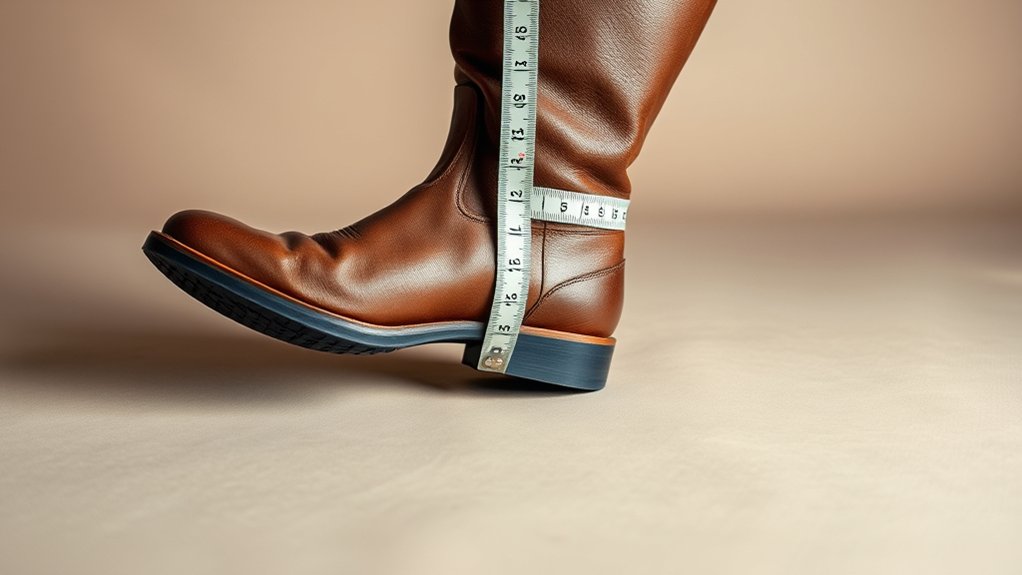
Although it may seem like a simple measurement, boot shaft height plays a pivotal role in the fit, comfort, and style of your boots. The boot shaft refers to the vertical length from the top of the boot’s sole to the uppermost edge of the boot.
Understanding this dimension ensures your boots provide the intended ankle or calf coverage, impacting both support and protection. The measurement relevance extends beyond aesthetics; a precise boot shaft height prevents chafing and improper fit, which can lead to discomfort or injury.
When you measure accurately, you align the boot’s functional design with your needs, whether for work, fashion, or outdoor activities. Therefore, mastering the boot shaft measurement is essential for selecting boots that perform and feel right.
Tools Needed to Measure Boot Shaft Height
Knowing the importance of boot shaft height, the next step is to gather the right tools to measure it accurately. You’ll need a flexible measuring tape, ideally marked in both inches and centimeters, to accommodate different measurement preferences.
Accurate boot shaft measurement begins with the right flexible tape, marked in inches and centimeters for precision.
A ruler or a yardstick can also work if you want rigid consistency, especially when comparing multiple boots. To address boot shaft variation, use a flat surface to position the boot upright during measurement.
Ensure the measuring tape follows the shaft’s contour without slack to maintain measuring consistency. Additionally, having a notepad or digital device handy helps record precise measurements immediately, reducing errors.
These tools together ensure you capture an exact shaft height, essential for sizing, fitting, and comparing boots effectively.
How to Prepare Your Boots for Measuring Shaft Height
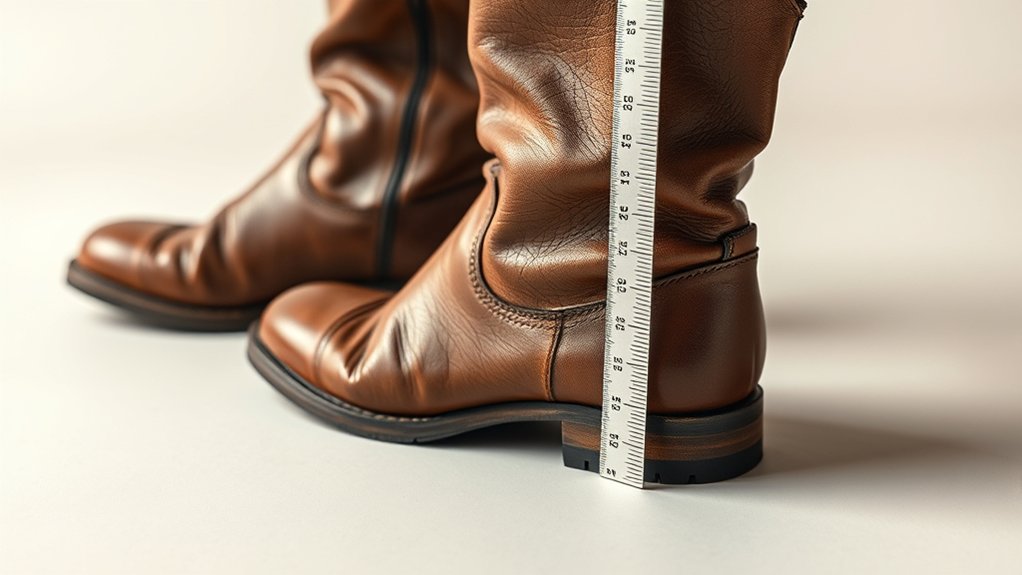
Before measuring, make sure your boots are clean and free of dirt or debris that could affect accuracy. Stand the boots upright on a flat surface to maintain their natural shape. This preparation ensures you get a precise shaft height measurement.
Clean Boots Thoroughly
Dirt and debris can interfere with accurate boot shaft height measurements, so you’ll need to clean your boots thoroughly before starting. A consistent boot care cleaning routine ensures no residue alters the shaft’s dimensions.
Begin by removing loose dirt with a soft brush, then apply a suitable cleaner based on the boot material. Use a damp cloth to wipe down surfaces, paying close attention to creases and seams.
| Cleaning Step | Recommended Tools |
|---|---|
| Remove loose dirt | Soft brush |
| Apply cleaner | Material-specific cleaner |
| Wipe surfaces | Damp cloth |
Following this precise cleaning routine ensures your shaft height measurement is both accurate and reliable.
Ensure Boots Are Upright
How should you position your boots to get an accurate shaft height measurement? Make sure your boots are perfectly upright on a stable surface. This positioning accounts for material flexibility, preventing compression or bending that could distort the shaft height.
Proper alignment also reflects true boot comfort, as a slouched boot may misrepresent the fit and support. Follow these steps to ensure precision:
Place boots on a flat, level surface free of debris
Use boot trees or inserts to maintain shaft rigidity
Align the back seam vertically to avoid leaning
Check that the boot shaft isn’t sagging or folded
Avoid applying pressure that alters the boot’s natural shape
This method provides a consistent, reliable measurement of shaft height, critical for assessing boot fit and function.
How to Measure Boot Shaft Height: Step-by-Step
To measure your boot shaft height accurately, you’ll need a flexible measuring tape or ruler and a flat surface to position the boot. Start by placing the boot upright, then measure from the base of the heel to the top edge of the shaft using a straight, vertical line.
Make sure to record your measurements precisely to ensure consistent sizing.
Tools Needed
Which tools will you need to accurately measure the boot shaft height? Precise measurement requires specific tools to ensure your results align with fit guidelines and support your shopping tips. Here’s what you’ll need:
Flexible measuring tape: For conforming to the boot’s contours.
Ruler or yardstick: To verify measurements and ensure straight lines.
Marker or chalk: To mark key points on the boot shaft.
Flat surface: A level area to position the boot upright.
Notepad and pen: To record measurements accurately for reference.
Using these tools ensures that you capture exact dimensions, avoiding errors that could affect fit guidelines. This preparation supports effective shopping tips by helping you select boots with the right shaft height for comfort and style.
Measuring Technique
When measuring boot shaft height, start by placing the boot upright on a flat surface to guarantee accuracy. Align your measuring tape vertically from the flat surface to the highest point of the boot shaft. Maintain precision orientation by keeping the tape straight and taut without bending or slack.
Use measurement ergonomics by positioning yourself comfortably to avoid errors caused by awkward angles. Record the vertical distance carefully as this measurement defines the shaft height.
| Step | Action |
|---|---|
| 1. Precision Setup | Place boot on flat surface |
| 2. Alignment | Hold tape vertically, taut |
| 3. Measurement | Measure from sole to top edge |
Following this technique ensures consistent, reproducible measurements essential for accurate boot fitting and comparison.
Recording Measurements
After setting up the boot and aligning your measuring tape correctly, focus on accurately recording the measurement. Precise documentation ensures consistent boot maintenance and aids in assessing proper footwear storage. Note the measurement in both inches and centimeters for versatility.
Always measure the shaft height from the boot’s arch point to the top edge, avoiding fabric folds or creases that can distort data. Use a dedicated log or digital tool for tracking these figures alongside other boot care details.
Write down the exact measurement immediately after reading it. Record the date of measurement for future reference. Note the boot model and size to avoid confusion.
Keep measurements organized by footwear type for efficient maintenance. Store boots upright to maintain shaft shape and accuracy in future measurements.
Measuring Shaft Height on Different Boot Styles
How do you accurately measure the shaft height across various boot styles? Start by placing the boot on a flat surface. For ankle boots, measure from the top of the heel counter straight up to the boot’s opening.
With mid-calf or riding boots, measure from the heel counter base up to the highest point of the shaft. For knee-high or tall boots, extend your tape measure from the heel counter to the top edge, ensuring the boot is upright without wrinkles.
Remember, shaft height varies with style, so precise positioning is key. While boot fashion often emphasizes aesthetics, accurate measurements ensure fit and comfort.
Avoid confusing shaft height with unrelated boot storage dimensions, which focus on volume rather than vertical length. This approach guarantees exact, consistent shaft height readings across styles.
Common Mistakes When Measuring Boot Shaft Height
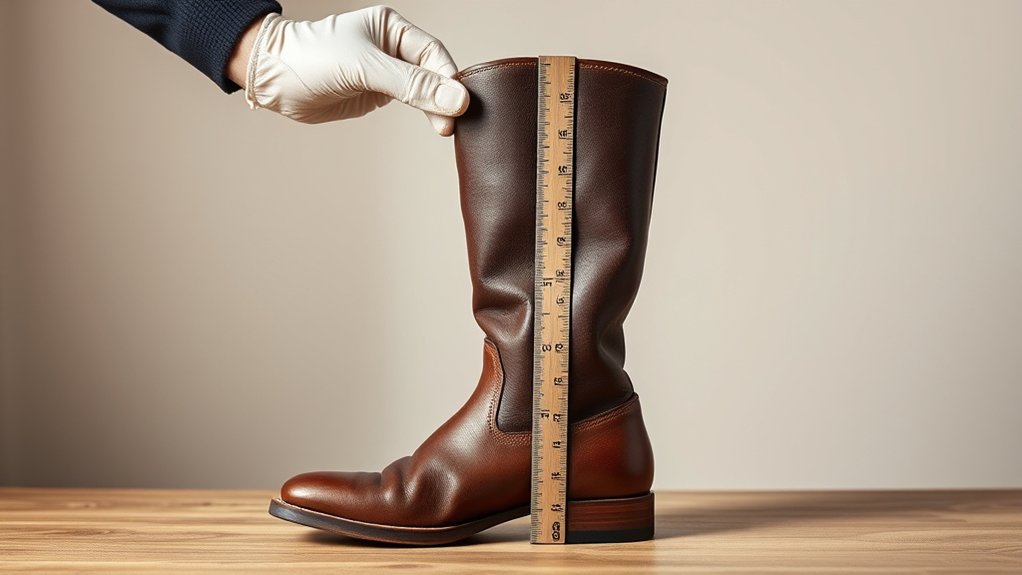
Why do inaccurate measurements of boot shaft height occur so frequently? It’s often due to overlooked details affecting boot sizing and fit preferences. You might assume measuring from the heel to the top is enough, but precision requires more.
Common mistakes include:
- Measuring on uneven surfaces, skewing results
- Ignoring boot shaft flexibility, causing inconsistent lengths
- Using improper tools like a tape measure that bends easily
- Neglecting to account for heel height variations
- Failing to measure with the boot upright and fully extended
Avoid these errors to ensure your boot shaft height aligns perfectly with your fit preferences and overall sizing requirements. Accurate measurement is essential for comfort and style, so take care with your technique.
Choosing the Right Boot Fit Using Shaft Height
Where exactly should your boot shaft height fall to ensure an optimal fit? The shaft height must align with your calf’s widest point without causing tightness or excessive looseness.
Use precise measurement tips: measure from the floor to the point on your leg where you want the boot to end while standing straight. This allows you to select a boot shaft that offers proper support and comfort, crucial for the ideal boot fit.
When choosing boots, compare your measurements against manufacturer sizing charts, as shaft heights vary significantly. Remember, a correct shaft height prevents pressure points and ensures mobility.
How Shaft Height Influences Boot Style and Function
In what ways does shaft height impact both the style and function of your boots? Shaft height directly affects boot fit, influencing comfort and support. Taller shafts offer increased ankle and lower leg protection, while shorter shafts allow greater mobility.
Material stretch plays a key role in accommodating different calf sizes, especially in taller boots. Understanding shaft height helps you select boots that balance aesthetics with practical needs.
- Higher shafts enhance protection against debris and weather.
- Shorter shafts provide increased flexibility for active use.
- Material stretch ensures a snug, comfortable fit around the calf.
- Shaft height influences the boot’s silhouette and style profile.
- Proper shaft height prevents chafing and improves overall wearability.
Choosing the right shaft height optimizes both the functional performance and visual appeal of your boots.
Converting Boot Shaft Height Between Inches and Centimeters
How do you accurately convert boot shaft height between inches and centimeters to guarantee a proper fit? Start by understanding that 1 inch equals exactly 2.54 centimeters. To convert inches to centimeters, multiply the shaft height in inches by 2.54.
Conversely, divide the measurement in centimeters by 2.54 to switch back to inches. This measurement conversion ensures you interpret boot size labels correctly when shopping across different regions or brands.
Remember that boot size labels often use inches in the U.S. and centimeters in Europe, so precise conversions prevent sizing errors. Use a digital calculator or conversion app for exactness, avoiding rounding until the final step.
This technical approach guarantees your boot shaft height aligns with your foot and leg dimensions for optimum comfort and style.
When Is the Best Time to Measure Boot Shaft Height for Online Shopping?
When should you measure your boot shaft height to ensure accuracy for online shopping? The ideal time is before you start browsing, ensuring you avoid fashion misconceptions and sizing myths that can lead to improper fit.
Measure when your legs are relaxed and at room temperature to prevent swelling effects. Also, do it while wearing the type of socks you plan to use with the boots, as thickness impacts fit. Keep these points in mind:
- Measure standing with feet flat for consistent shaft height.
- Use a flexible tape measure to follow leg contours.
- Measure from the base of the heel to where you want the shaft to end.
- Avoid measuring immediately after exercise to prevent leg swelling inaccuracies.
- Record measurements in both inches and centimeters for easy comparison.
This approach guarantees precise, reliable measurements for online purchases.
Frequently Asked Questions
Can Boot Shaft Height Affect Boot Durability?
Yes, boot shaft height can affect durability. Taller shafts often face more flexing and abrasion, so you’ll want to consider shaft variation and material quality carefully.
This helps ensure consistent durability across different boot heights.
Do Shaft Heights Vary by Boot Brand?
Yes, shaft heights vary by brand due to differing boot measurements and design standards. When comparing boots, focus on two-word discussion ideas like “shaft length” and “calf circumference” for precise, technical evaluation across manufacturers.
How Does Boot Shaft Height Impact Weather Protection?
You’ll find that higher boot shafts improve how weather elements like rain and snow are kept out, enhancing waterproofing durability. This increased coverage protects your feet better, especially in harsh or wet conditions, ensuring long-lasting performance.
Are Taller Shafts Better for Hiking Boots?
Picture rugged trails; taller boot height shields your ankles from debris and twists, enhancing support.
While hiking fashion varies, prioritize shaft height for stability and protection, ensuring your boots perform optimally in challenging terrains.
Can Shaft Height Influence Boot Break-In Time?
Yes, shaft height can influence boot break-in time. Taller shafts provide more ankle support but may require longer adjustment periods to achieve optimal boot fit, as they restrict movement differently compared to shorter shafts.
Conclusion
So, you’ve mastered measuring boot shaft height—just a simple tape, a steady hand, and a flat surface. Ironically, the one measurement that seems so straightforward can make or break your entire boot fit.
Skip this step, and you might find yourself drowning in boots that don’t quite rise where they should. Precision here isn’t optional; it’s essential.
Now, go measure confidently—your feet (and style) will thank you. Remember, accurately measuring boot shaft height is the key to finding boots that fit perfectly every time.