When your car battery dies, knowing how to jumpstart a battery with jumper cables can save you time and a tow.
You’ll need to follow a precise sequence to avoid damage and guarantee safety—starting with properly positioning both vehicles and identifying terminals correctly.
Missing a step or connecting cables improperly can cause sparks or injury, so understanding the exact procedure is essential before you even reach for the cables.
Taking the time to prepare ensures a smooth and safe jumpstart every time.
Key Takeaways
- Park both vehicles off, in neutral or park, with parking brakes engaged before connecting jumper cables.
- Connect red clamps to the positive terminals of both batteries first.
- Attach one black clamp to the donor battery’s negative terminal and the other to an unpainted metal surface on the dead vehicle.
- Start the donor vehicle, run it for a few minutes, then attempt to start the dead vehicle.
- Disconnect cables in reverse order and keep the jumped vehicle running for at least 20 minutes to recharge the battery.
Preparing Your Car and Jumper Cables Safely
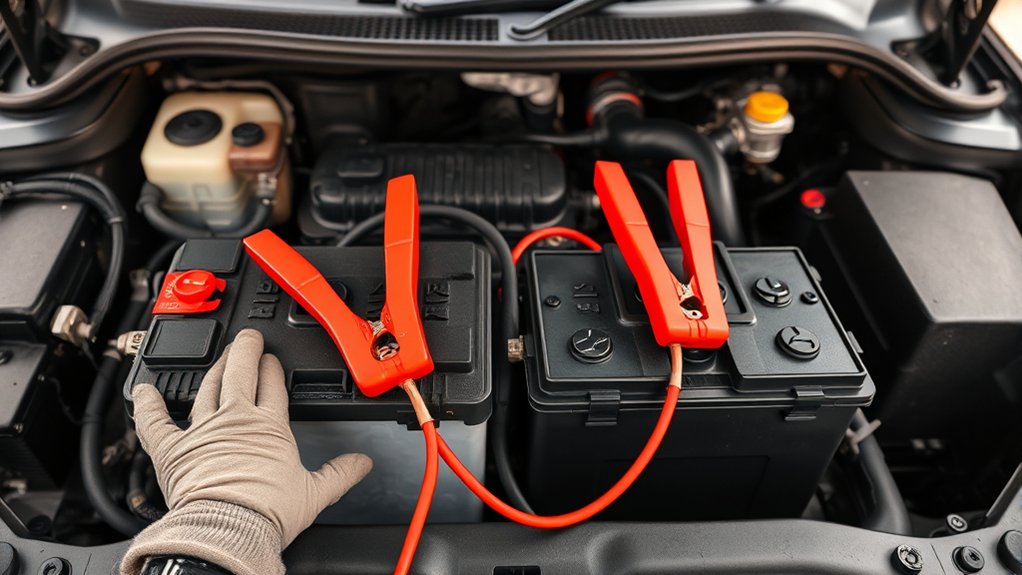
How do you guarantee a safe setup before jumpstarting a battery? Begin by ensuring both vehicles are off, parked in neutral or park, and with parking brakes engaged. Identify the battery terminals, positive (+) and negative (–), to understand battery basics critical for safe startup.
Inspect jumper cables for damage or corrosion to prevent hazards. Connect the red clamp to the dead battery’s positive terminal first, then to the good battery’s positive terminal. Attach the black clamp to the good battery’s negative terminal next.
Finally, clamp the remaining black connector to an unpainted metal surface on the dead car’s engine block, away from the battery, to avoid sparks. Following this exact sequence ensures a secure, safe startup and prevents electrical damage or injury.
Common Jumpstart Mistakes to Avoid
After setting up your vehicle and jumper cables correctly, it’s important to avoid common mistakes that can disrupt the jumpstart process or cause damage. Misleading safety assumptions often lead to errors that could be hazardous. Maintain fumes awareness by performing the jumpstart in a well-ventilated area to prevent inhalation of toxic gases.
- Incorrect cable connection order: Always connect positive clamps first, then negative clamps to the grounded metal surface, not the battery, to avoid sparks.
- Using damaged or incompatible cables: Ensure cables are heavy-duty and free of corrosion or frayed wires to guarantee proper current flow.
- Ignoring vehicle electronics: Turn off all electronics in both vehicles before jumpstarting to prevent voltage spikes and damage.
Avoid these errors to jumpstart safely and effectively every time.
Step-by-Step Battery Jumpstart Guide
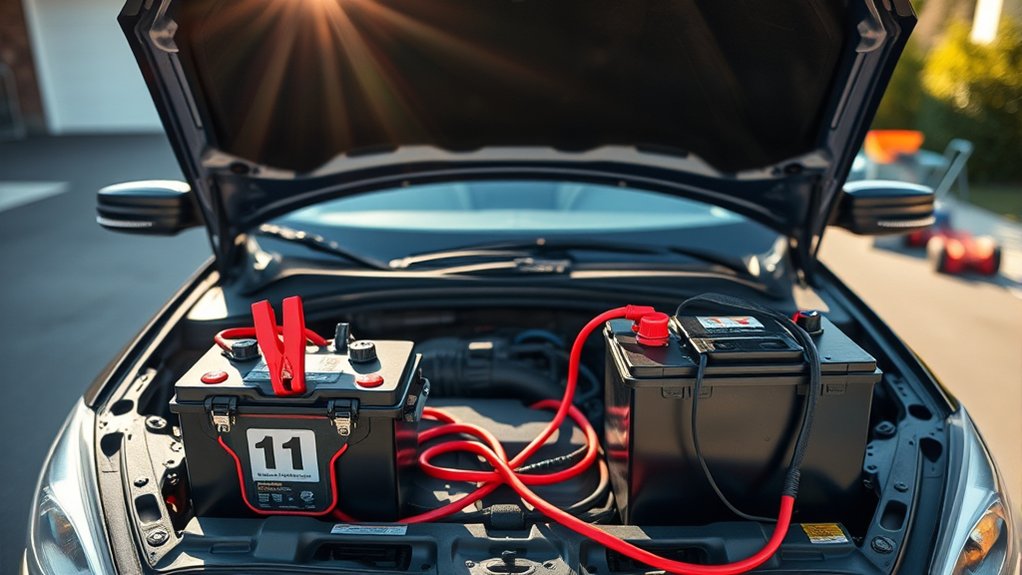
When jumpstarting a battery, which steps should you follow to ensure safety and efficiency? First, position the donor vehicle close but not touching, then turn off both engines. Attach one red clamp to the positive terminal of the dead battery, then connect the other red clamp to the positive terminal on the donor battery.
Next, connect one black clamp to the donor battery’s negative terminal. For jumpstart safety, attach the final black clamp to an unpainted metal surface on the dead vehicle away from the battery to prevent sparks.
Start the donor vehicle and let it run for a few minutes. Then, attempt to start the dead vehicle. Once started, carefully disconnect cables in reverse order.
Regular battery maintenance helps avoid frequent jumpstarts.
What to Do After Jumpstarting Your Battery
Once you’ve successfully jumpstarted your battery, keep the engine running for at least 20 minutes to allow the alternator to recharge the battery fully. This prevents insufficient voltage issues that can cause a dead battery again.
Afterward, follow these steps:
- Disconnect Jumper Cables in Reverse Order: Remove cables starting with the negative terminal on the dead battery, then the donor battery, to avoid sparks or shorts.
- Monitor Battery Performance: Check for warning lights or dimming electrical components, which may indicate battery or alternator problems.
- Drive Continuously: Avoid turning off the engine immediately; a steady drive helps maintain voltage and prevents the battery from dying again.
Following these steps ensures your battery regains a stable charge and avoids repeated jumpstarts.
Troubleshooting Jumpstarting Problems
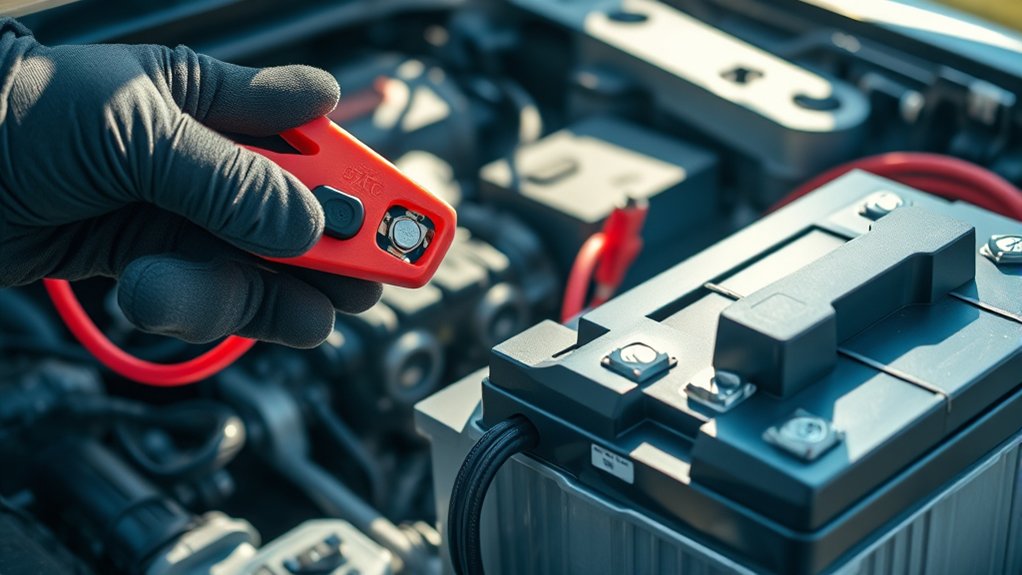
Why isn’t your car starting even after using jumper cables? First, verify the jumper cables are connected properly: positive to positive, negative to a grounded metal surface on the dead battery car. A loose or incorrect connection can prevent current flow.
Ensure jumper cables connect positive to positive and negative to grounded metal to allow current flow.
Next, consider the battery’s condition; a severely dead battery may not hold a charge enough for cold starts, especially in low temperatures. If the engine cranks slowly or not at all, the battery might be beyond jumpstarting.
Also, check the donor car’s engine is running during the jump to provide adequate voltage. If problems persist, inspect the battery terminals for corrosion or damage, as poor contact limits voltage transfer.
Finally, if your car still won’t start, the issue could extend beyond the dead battery to the starter or alternator.
Frequently Asked Questions
Can I Jumpstart a Battery in Cold Weather?
Yes, you can jumpstart a battery in cold weather, but cold weather effects reduce battery efficiency and increase battery sulfation risk.
Ensure cables connect properly, and act quickly to minimize damage and restore power safely.
Are All Jumper Cables the Same Length and Thickness?
Think of jumper cables like ropes in a tug-of-war: shorter cables with thicker gauge handle power better and reduce resistance.
Not all cables are equal; choose thicker gauge and appropriate length for safe, efficient battery jumpstarts.
How Often Should I Replace My Car Battery?
You should replace your car battery every 3 to 5 years, depending on battery maintenance and charging indicators.
Regularly check voltage levels and corrosion to guarantee peak performance and avoid unexpected failures.
Can a Dead Battery Damage My Car’s Electrical System?
A dead battery itself won’t damage your car’s electrical system, but improper jumpstarting can cause an electrical surge. Always connect jumper cables correctly to prevent voltage spikes that might harm sensitive electronic components.
Is It Safe to Jumpstart a Hybrid or Electric Vehicle?
Think of jumpstarting a hybrid or electric vehicle as navigating isolated hazards on a minefield; you must follow strict electrical safety protocols to avoid damage.
Always consult the manual and use proper equipment to ensure safety and success.
Conclusion
Now that you’ve successfully revived your car’s energy, remember to treat the battery with care to avoid future surprises. Following the proper steps guarantees a smooth and safe jumpstart, sparing you from inconvenient delays.
Keep your cables ready and your knowledge sharp—you’re well-equipped to handle this common hiccup calmly and confidently. Taking these precautions helps maintain your vehicle’s vitality, so you’re never caught off guard on the road again.
By mastering how to jumpstart a battery with jumper cables, you ensure your car remains reliable and ready whenever you need it most.