Choosing the right driver shaft length isn’t just about grabbing the longest option for extra distance. Finding the ideal driver shaft length requires considering your swing speed, height, and arm length. These factors help you achieve a balance between power and control.
A shaft that’s too long or too short could throw off your accuracy and feel. Understanding how these elements interact is key to improving your game. So, what’s the best way to pinpoint the ideal length for you?
Key Takeaways
- Standard driver shafts typically range from 43.5 to 45.5 inches, but ideal length depends on your height, arm length, and swing mechanics.
- Longer shafts can increase distance by generating more clubhead speed but may reduce control and accuracy.
- Shorter shafts enhance maneuverability and shot precision, often benefiting players with higher swing speeds seeking stability.
- Testing different shaft lengths in half-inch increments helps find the best balance between distance, control, and comfort.
- Custom fitting is recommended if standard lengths cause inconsistent ball flight, discomfort, or do not match your swing dynamics.
How Driver Shaft Length Affects Distance, Accuracy, and Comfort
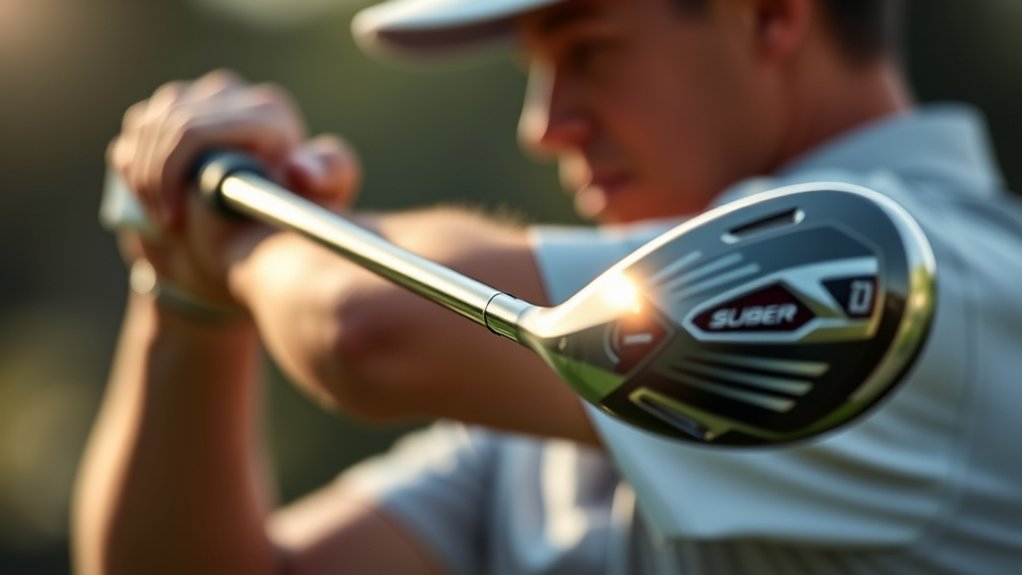
How does the length of your driver shaft impact your game? It directly influences distance, accuracy, and comfort. A longer shaft can generate more clubhead speed, potentially increasing distance, but it may sacrifice control, affecting your accuracy.
Conversely, a shorter shaft offers better maneuverability and consistency but might reduce your maximum distance. Comfort also plays a crucial role; the right length helps you maintain a natural, relaxed swing, preventing strain.
While discussing equipment aesthetics, don’t overlook how shaft length pairs with style. Exploring shaft color options can personalize your club and boost confidence.
Ultimately, balancing performance with visual appeal ensures you feel good and play your best. Your ideal shaft length isn’t just about numbers; it’s about how it fits your unique swing and style.
How to Measure Your Ideal Driver Shaft Length
Wondering how to find the perfect driver shaft length for your swing? Start by measuring your current shaft and noting any issues like toe contact or difficulty with long putts.
Use a tape measure from the end of the grip to the bottom of the clubhead. Adjust length in half-inch increments to see what feels balanced and improves your shot consistency.
Here’s a quick guide:
| Shaft Length (inches) | Swing Feedback | Common Issues |
|---|---|---|
| 43 | More control | Reduced distance |
| 44 | Balanced feel | Occasional toe contact |
| 45 | Increased distance | Possible accuracy loss |
| 46 | Maximum distance | Risk of toe contact |
| 47+ | Less control | Difficult long putts |
Test different lengths to find your ideal fit.
Why Your Height and Arm Length Affect Driver Shaft Length
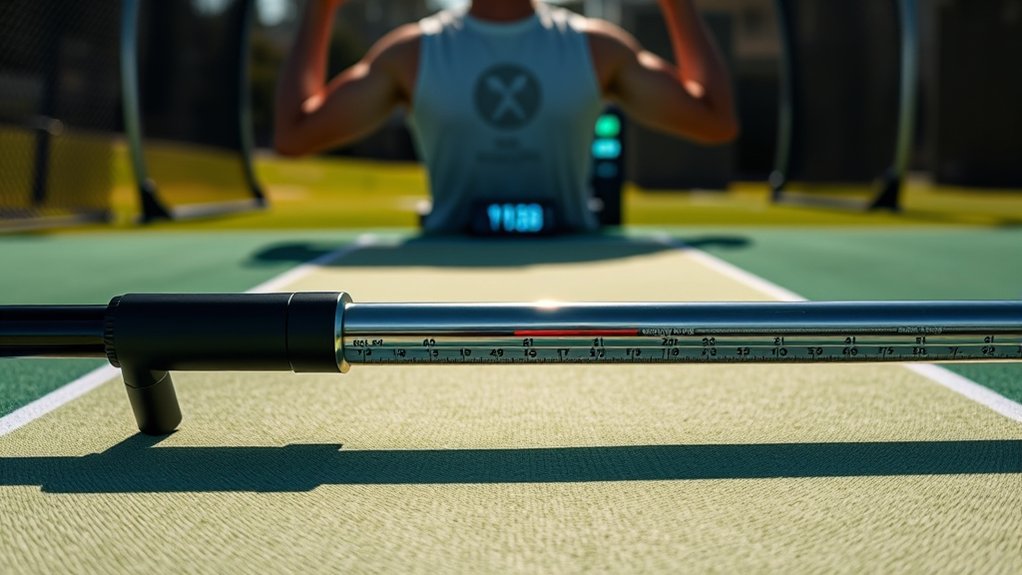
Why does your height and arm length play an essential role in determining the ideal driver shaft length? Your height impact directly influences your stance and swing plane, making a standard shaft length less effective if you’re significantly taller or shorter than average.
Similarly, your arm length affects how comfortably you can control the club throughout your swing. Longer arms typically require a longer shaft to maintain proper posture and swing mechanics, while shorter arms benefit from a slightly shorter shaft for better control and accuracy.
Ignoring these factors can lead to inconsistent strikes and reduced distance. By considering both your height impact and arm length, you ensure the driver shaft length complements your body’s natural movements, optimizing performance and comfort on the course.
How Your Swing Speed Helps Pick the Right Driver Shaft
Your swing speed plays an essential role in selecting the right driver shaft length and flex. By measuring how fast you swing, you can match a shaft that maximizes control and distance.
Choosing the correct flex guarantees the shaft responds properly to your speed, improving your overall performance.
Swing Speed Measurement
How can knowing your swing speed improve your choice of driver shaft? Measuring your swing speed offers key insights for selecting a shaft that complements your tempo, enhancing distance and control. Accurate swing speed measurement aids in explaining launch dynamics and tracking efficiency, crucial for optimizing your performance.
To measure swing speed effectively, consider:
- Using a launch monitor for precise data on clubhead speed and ball flight.
- Recording multiple swings to account for consistency.
- Comparing your speed to recommended shaft length and weight ranges.
- Consulting with a professional fitter to interpret data for personalized shaft selection.
Shaft Flex and Speed
When should you consider adjusting your driver shaft’s flex based on your swing speed? If your swing speed is on the higher side, a stiffer flex can provide better control and feedback, preventing the shaft from over-bending during your swing.
Conversely, a slower swing speed benefits from a more flexible shaft, which helps generate additional clubhead speed and distance. Ensuring the shaft flex matches your speed enhances both performance and grip comfort, reducing strain and improving your overall feel.
Pay attention to the feedback you get from your shots; if the ball consistently veers off target or your shots feel jerky, your shaft flex might be mismatched. Tailoring shaft flex to your speed and grip comfort is essential for maximizing your driver’s efficiency and consistency.
How Your Playing Style Affects Your Driver Shaft Length Needs

Your playing style directly shapes the ideal driver shaft length for your game. If you prioritize swing speed, a longer shaft might boost distance, but it can also affect your shot accuracy.
Balancing these factors guarantees you get the right fit for consistent, controlled drives.
Swing Speed Impact
Why does swing speed play such a pivotal role in determining driver shaft length? Your swing speed directly influences how the shaft responds through shaft resonance and torque interaction. Faster swings generate more torque, affecting shaft stability and feel, so you need a shaft length that complements this dynamic.
Consider these factors:
- Higher swing speeds often benefit from slightly shorter shafts to reduce unwanted torque and improve control.
- Slower swings may gain distance with longer shafts but risk undesirable shaft resonance.
- Matching shaft flexibility to your swing speed ensures efficient energy transfer.
- Adjusting shaft length can fine-tune your timing and release, optimizing performance.
Understanding how your swing speed interacts with shaft characteristics helps you select a driver shaft length that maximizes both power and comfort.
Shot Accuracy Considerations
Understanding how swing speed affects shaft length is just one part of the equation. Your playing style, particularly your shot accuracy, plays a crucial role in determining the ideal driver shaft length.
If you tend to generate excessive side spin or struggle with toe misalignment at impact, a slightly shorter shaft can help you maintain better control and reduce errant shots. Shorter shafts often improve your ability to square the clubface consistently, minimizing side spin that leads to slices or hooks.
On the other hand, if you have a smooth, controlled swing with minimal toe misalignment, a longer shaft might enhance your distance without sacrificing accuracy. Ultimately, balancing your swing nuances with shaft length ensures you optimize both power and precision for your game.
Pros and Cons of Long vs. Short Driver Shafts
How do you decide between a longer or shorter driver shaft for your game? Both options have unique benefits and drawbacks that affect your swing and control. Longer shafts can increase your clubhead speed, potentially adding distance. However, they may reduce accuracy and control, making it harder to square the face at impact.
Shorter shafts improve precision and consistency, similar to how you handle long irons, but might sacrifice some distance.
Consider these points when choosing:
- Longer shafts can amplify swing flaws, impacting shot dispersion
- Shorter shafts offer better feel and control, enhancing accuracy
- Adjusting golf grips may be necessary to optimize comfort and performance
- Shaft length influences your swing plane and tempo, essential for consistency
Balancing these factors helps tailor your driver to your strengths.
Testing Driver Shaft Length With Real Swings
When should you test different driver shaft lengths to find the best fit for your swing? Ideally, you should experiment during practice sessions where you can focus on consistency without pressure. Use real swings to evaluate how changes in shaft length affect your driving accuracy and feel.
Longer shafts might increase distance but can compromise control, while shorter shafts often improve precision. Don’t forget to consider shaft weight, as a heavier shaft can help control tempo but may slow your swing, impacting distance.
Test various lengths and weights, paying close attention to shot dispersion and ball flight. Recording your data helps you make informed decisions. This hands-on approach ensures you choose a driver shaft length that complements your natural swing, optimizing both accuracy and distance.
When to Consider Custom Driver Shaft Fitting
After testing different driver shaft lengths and weights to see what suits your swing, you might find that off-the-shelf options don’t quite match your needs. Custom driver shaft fitting becomes essential when you want precise control over your club’s performance and long term maintenance. Unlike generic models, custom shafts cater to your unique swing dynamics and ensure durability beyond marketing tactics.
Consider custom fitting if you:
- Experience inconsistent ball flight despite standard adjustments
- Have unique physical attributes affecting swing mechanics
- Seek to optimize launch conditions and spin rates
- Want a shaft designed for durability and minimal maintenance
Investing in a custom shaft fitting helps you avoid compromises, delivering a driver that truly complements your game and holds up over time, not just one promoted through clever marketing tactics.
Frequently Asked Questions
What Materials Are Commonly Used for Driver Shafts?
You’ll find materials used in driver shafts mainly include graphite and steel, with graphite favored for lightweight, flexible shaft construction. These materials impact performance, feel, and durability, so choose based on your swing and preferences.
How Does Shaft Flex Impact My Driver Performance?
Shaft flex directly affects your driver performance by matching your swing tempo; too stiff or too soft can reduce accuracy and distance.
Choosing the right flex helps optimize energy transfer and control for consistent, powerful shots.
Can Weather Conditions Affect My Driver Shaft Choice?
Yes, weather impact and climate considerations affect your driver shaft choice. Temperature and humidity alter shaft stiffness and ball flight, so you should adjust your shaft flex and material to maintain optimal performance in varying conditions.
How Often Should I Replace My Driver Shaft?
Think of your driver shaft like a well-tuned engine; you should monitor driving shaft wear and set a shaft replacement cadence based on performance drops or damage. Usually, replacing it every 1-2 years if you play regularly leads to optimal results.
Are There Brand Differences in Driver Shaft Quality?
Yes, you’ll find brand consistency varies, impacting performance and durability. Trusted brands offer reliable shaft warranties, ensuring quality.
Always check these warranties and reviews to choose a shaft that matches your game and provides dependable support.
Conclusion
Choosing the right driver shaft length is key to balancing distance, accuracy, and comfort. Have you ever wondered how a half-inch change could transform your game? By considering your height, arm length, swing speed, and playing style, you can find a shaft that feels natural and performs well.
Don’t hesitate to test different lengths or seek a custom fitting. Your ideal driver shaft might be the missing link to unlocking your best shots on the course. Ultimately, understanding how long your driver shaft should be can greatly enhance your overall performance.